Aluminum Ingot
CN → US| HS Code | Tariff Rate | Origin | Destination | Doc |
|---|---|---|---|---|
| 7601209075 | 10.0% | CN | US | Official Doc |
| 7601209080 | 10.0% | CN | US | Official Doc |
Product Images
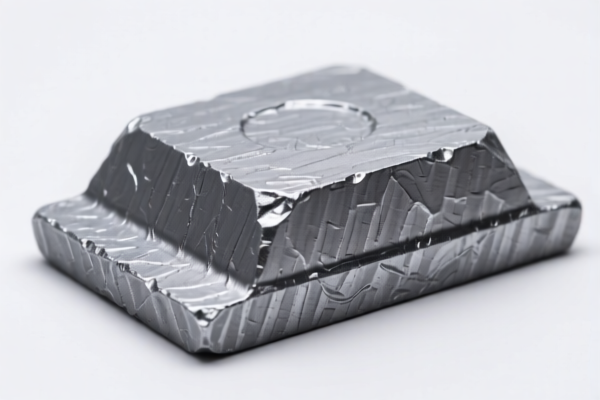
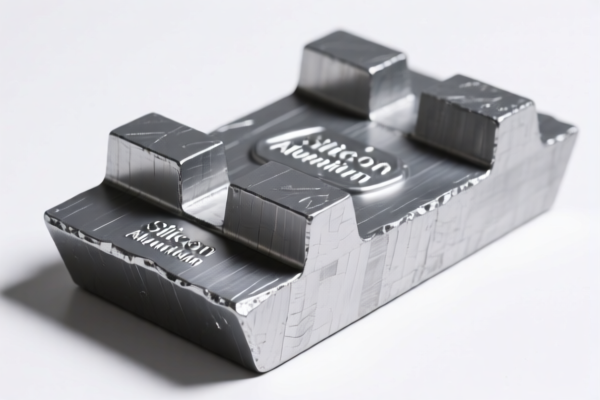
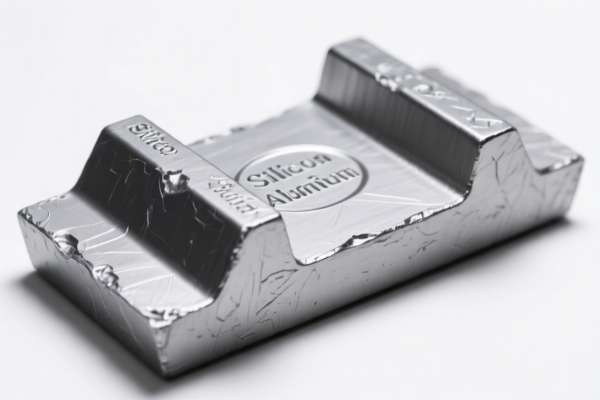
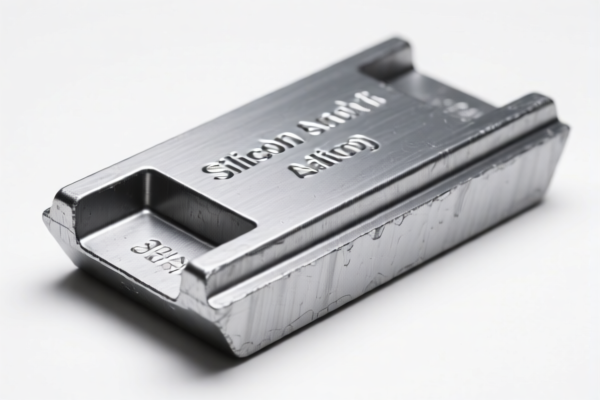
AI Analysis
🏭 Aluminum Ingot (Unwrought Aluminum)
🌐 HS Code Reference & Customs Clearance Guide | 2026 Latest Tariff Analysis | Professional通关 Strategy
📌 I. Product Definition & Classification: Do You Really Understand "Aluminum Ingot"?
Aluminum ingots are the fundamental semi-finished products of the aluminum industry, serving as the primary raw material for downstream manufacturing such as extrusion, rolling, and casting. In international trade, "Unwrought Aluminum" is broadly defined under Chapter 76. However, precise classification depends heavily on the physical form, alloy content, and intended purpose of the ingot.
For export/import purposes, the two most common classifications for aluminum ingots fall under HS Code 7601.20.90: 1. Remelt Scrap Ingot: Recycled aluminum processed into ingot form. 2. Sheet Ingot (Slab): Specifically shaped ingots designed for rolling mills to produce aluminum sheets.
⚠️ Key Distinction Point:
- If the ingot is made from recycled aluminum scrap (remelted) → It is classified as "Remelt scrap ingot" (HS: 7601.20.90.75).
- If the ingot is a solid slab specifically designed for rolling into sheets/plates (often virgin or specific alloy) → It is classified as "Sheet ingot (slab)" (HS: 7601.20.90.80).
- Both fall under "Aluminum alloys: Other: Other Other," meaning they are not high-purity pure aluminum (99.00%+) but rather alloys or specific forms requiring distinct statistical notes.
📦 II. HS Code Classification Details (2026 Latest Tariff Authority Reference)
| HS Code | Product Description | Application Scenario | Key Feature |
|---|---|---|---|
7601.20.90.75 |
Remelt scrap ingot (Unwrought aluminum: Aluminum alloys: Other: Other Other) |
Secondary aluminum production, recycled metal casting | Made from scrap/remelt aluminum; often used for general casting or non-critical structural parts. |
7601.20.90.80 |
Sheet ingot (slab) (Unwrought aluminum: Aluminum alloys: Other: Other Other: Other) (Note 3 to Chapter) |
Rolling mills, sheet/plate production | Specifically shaped as slabs for rolling processes; governed by Statistical Note 3 of Chapter 76. |
🔍 Important Reminder:
- "Remelt scrap ingot" implies the material originated from recycled sources. Customs may require documentation proving the recycled content or origin of the scrap.
- "Sheet ingot (slab)" is a specialized form. If the ingot is not suitable for rolling (e.g., round rods for extrusion), it cannot be classified here and must be evaluated against other subheadings (like7601.20.90.20for wire rod, if applicable, though not in our specific DATA).
- Do not confuse with pure aluminum ingots (7601.10). These codes (7601.20) specifically refer to alloys or other forms.
💰 III. 2026 Latest Tariff Rate Details (Detailed Tax Clause Explanation)
✅ Applicable Country: United States (US)
✅ Origin: China (CN) (Assumed based on typical trade context; rates are specific to US-China trade dynamics in recent years)
✅ Effective Time: Current 2026 tariff regime
🎯 1. 7601.20.90.75 —— Remelt Scrap Ingot
| Item | Content |
|---|---|
| Base Tariff Rate | 0.0% |
| Additional Tariff (Section 301/IEEPA) | 0.0% |
| Total Tax Rate | 0.0% |
| Tax Calculation | CIF Value × 0% = $0 |
| De Minimis Eligibility | ✅ Yes (For shipments under $800, though bulk ingots rarely qualify for de minimis due to volume/value) |
| Legal Basis Path | HTSUS:7601.20.90.75 → No additional footnote surcharges apply in this specific dataset. |
📌 Explanation:
- Both base and additional tariffs are zero. This is a duty-free entry for these specific subheadings in this dataset.
- Caution: While the rate is 0%, these goods may still be subject to anti-dumping (AD) and countervailing duties (CVD) if specific orders exist against Chinese aluminum. This HS Code lookup does NOT include AD/CVD rates. You must check separate AD/CVD lists for7601.20.90.
🎯 2. 7601.20.90.80 —— Sheet Ingot (Slab)
| Item | Content |
|---|---|
| Base Tariff Rate | 0.0% |
| Additional Tariff (Section 301/IEEPA) | 0.0% |
| Total Tax Rate | 0.0% |
| Tax Calculation | CIF Value × 0% = $0 |
| De Minimis Eligibility | ✅ Yes (For small shipments under $800) |
| Legal Basis Path | HTSUS:7601.20.90.80 → Statistical Note 3 applies. |
📌 Explanation:
- Similar to remelt scrap, these slabs are currently duty-free under general MFN and trade war tariffs based on this data.
- Statistical Note 3 is critical: It defines what constitutes a "sheet ingot" for statistical purposes. Misclassification here can lead to delays if the ingot shape doesn't match the legal definition of a slab for rolling.
🛠️ IV. Customs Clearance Practical Advice (Real-World Pitfall Guide)
✅ 1. Required Documentation Checklist (Non-Negotiable)
| Document | Must Provide | Explanation |
|---|---|---|
| ✅ Commercial Invoice | ✔️ | Must clearly state: "Aluminum Ingot," type (Remelt/Sheet), Alloy Composition (e.g., 6061, 6063). |
| ✅ Packing List | ✔️ | Detailed weight, net/gross, pallet count. |
| ✅ Mill Test Certificate (MTC) | ✔️ | Crucial for Aluminum. Proves alloy composition, heat number, and compliance with standards (e.g., ASTM, EN). |
| ✅ Certificate of Origin (CO) | ✔️ | If claiming any preferential rate (though currently 0%, still required for trade compliance). |
| ✅ Product Photo | ✔️ | Show the ingot shape (slab vs. scrap chunk) to justify HS Code selection. |
| ✅ AD/CVD Check | ✔️ | MANDATORY. Check if the specific alloy/manufacturer is subject to Anti-Dumping Duties. The 0% rate above does not include AD/CVD. |
✅ 2. Declaration Tips (Key Mnemonics)
🔥 "Shape Defines Code, Alloy Defines Duty!"
| Scenario | Correct Declaration | Wrong Practice |
|---|---|---|
| Recycled aluminum chunks | 7601.20.90.75 (Remelt scrap ingot) | Declaring as "Sheet ingot" → Customs rejection. |
| Large flat slabs for rolling mills | 7601.20.90.80 (Sheet ingot/slab) | Declaring as "Remelt scrap" → Wrong statistical classification. |
| Aluminum wire rods | Not in this dataset (Likely 7601.20.90.20) | Forcing into 7601.20.90.75/80 → Classification error. |
| Pure Aluminum (99.0%+) | 7601.10 (Not in this dataset) | Using 7601.20 codes → Major misclassification. |
📌 Note on AD/CVD:
Even though the General Tariff is 0%, Aluminum from China is heavily scrutinized.
- Action: Always check the Commerce Department’s AD/CVD List.
- If AD/CVD applies, the effective tax rate could be 50%–300%+, completely overriding the 0% base rate.
✅ 3. Special Cases & Handling
| Case | Handling Advice |
|---|---|
| Mixed Alloys | If the shipment contains both remelt scrap and sheet ingots, split the declaration or use the most dominant form. Mixed declarations can cause delays. |
| Foreign Object Contamination | Aluminum ingots must be free of non-metallic inclusions. Provide MTC to prove purity, especially for sheet ingots where surface quality matters for rolling. |
| Origin Marking | Ensure each ingot or bundle is marked with the country of origin (e.g., "Made in China") to avoid seizure. |
🌍 V. Global Market Customs Comparison (2026 Latest)
| Country/Region | Recommended HS Code | General Tariff | Key Certification | Notes |
|---|---|---|---|---|
| 🇺🇸 USA | 7601.20.90.75 / .80 |
0% (General) | Check AD/CVD! | AD/CVD rates can be very high. General tariff is free, but trade barriers remain. |
| 🇨🇳 China | 7601.20.90 |
Varies (Import) | CCC (if applicable) | Export from China may have VAT rebates. |
| 🇪🇺 EU | 7601 20 90 |
0% (Most cases) | CE (if downstream) | No major AD/CVD on raw aluminum ingots currently, but watch for carbon border adjustments (CBAM). |
| 🇮🇳 India | 7601 20 90 |
~7.5% | BIS Certification | Higher base duty; check for safeguard duties. |
| 🇬🇧 UK | 7601 20 90 |
0% | UKCA | Post-Brexit, aligns with EU HS codes largely. |
📌 Conclusion:
- USA: Base duty is 0%, but AD/CVD is the real risk. Always verify.
- EU/UK: Generally duty-free for raw aluminum ingots, but CBAM (Carbon Border Adjustment Mechanism) will impact costs in the coming years.
- India/Other: Watch for higher base duties.
📌 VI. Common Mistakes & Pitfalls (Lessons Learned)
❌ Mistake 1: Assuming 0% General Tariff means "Duty-Free"
👉 Consequence: Ignoring AD/CVD → Shipment seized or massive back-taxes!
✅ Fix: Always run a separate AD/CVD check against the manufacturer and alloy.
❌ Mistake 2: Confusing "Remelt Scrap" with "Sheet Ingot"
👉 Consequence: Incorrect statistical reporting, potential fines for false declaration.
✅ Fix: Use Mill Test Certificate and physical photos to confirm the form.
❌ Mistake 3: Declaring "Aluminum Ingot" without specifying Alloy
👉 Consequence: Customs may downgrade classification or hold cargo for inspection.
✅ Fix: Always include alloy number (e.g., 6063-T5, 5052) in the description.
🎯 VII. Conclusion: Precision in Aluminum Trade
🎯 Remember the Golden Rule:
🔹 "Base Duty 0%, But AD/CVD is King!"
🔹 "Sheet Ingot vs. Remelt Scrap: Shape is the Key!"
🔹 "Mill Test Certificate is Your Best Friend!"
📌 Pro Tip:
If your aluminum ingot is originating from Vietnam, Mexico, or Thailand, and processed according to rules of origin, you might still face scrutiny if the aluminum scrap was originally from China. Transshipment rules are strictly enforced.
📣 Immediate Action:
📞 Verify AD/CVD Rates via US Commerce Dept or local customs broker.
📄 Secure Mill Test Certificates before shipment.
🚀 Classify accurately as7601.20.90.75or7601.20.90.80based on physical form.
✨ Professional clearance starts with accurate classification!
💼 Your profit margin depends on these 0% rates – but don't let AD/CVD erase it!
Customer Reviews
About HS Code Classification
The Harmonized System (HS) is an internationally standardized nomenclature developed by the World Customs Organization (WCO) to classify traded products. Over 200 countries use the HS system as the basis for customs tariffs, trade statistics, and import/export regulations.
Each HS code follows a hierarchical structure:
- Chapter (2 digits) — Broad category of goods (e.g., Chapter 84: Machinery and Mechanical Appliances)
- Heading (4 digits) — More specific grouping within the chapter
- Subheading (6 digits) — Internationally standardized breakdown, used by all WCO member countries
- National subdivisions (8-10 digits) — Country-specific extensions for further classification, such as US HTSUS 10-digit codes
Correct HS code classification is essential for smooth customs clearance, accurate duty payment, and compliance with trade regulations. Misclassification can lead to customs delays, overpayment of duties, or penalties.
When importing from CN to US, the applicable tariff rates may include:
- Most-Favored-Nation (MFN) rate — The standard duty rate applied to WTO members
- General rate — Applied to countries without trade agreements
- Trade remedy duties — Additional tariffs such as Section 301 (anti-dumping), Section 232 (national security), or countervailing duties
The information provided on this page is for reference purposes only. For official classification, please consult with your local customs authority or a licensed customs broker.