Aluminum Profiles and Bars
CN → US| HS Code | Tariff Rate | Origin | Destination | Doc |
|---|---|---|---|---|
| 7604101000 | 40.0% | CN | US | Official Doc |
| 7604103000 | 12.6% | CN | US | Official Doc |
Product Images
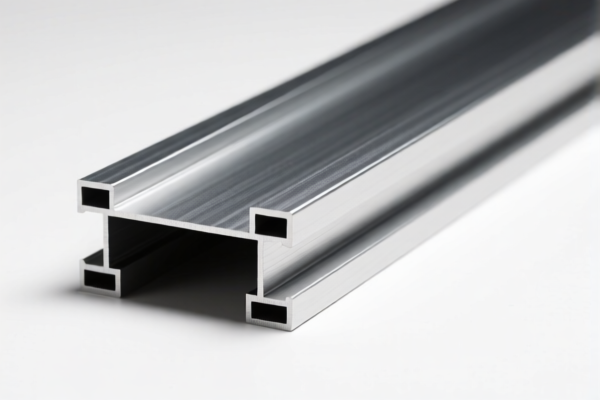
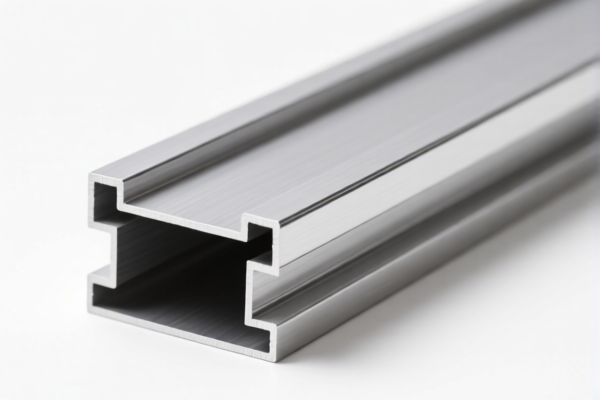
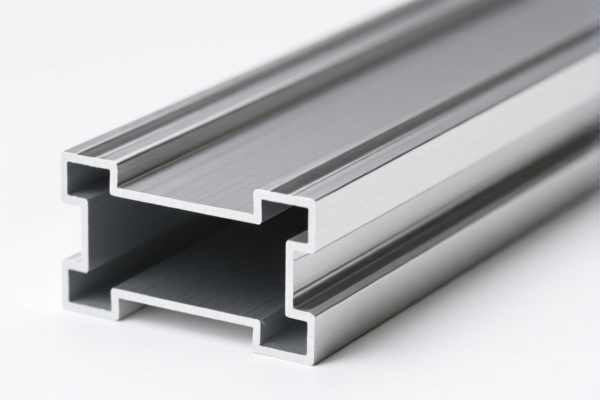
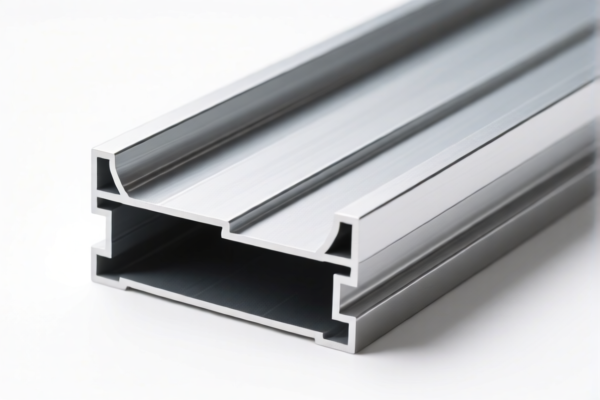
AI Analysis
🏗️ Aluminum Bars, Rods and Profiles (Non-Alloyed)
🌐 HS Code Reference & Customs Clearance Guide | 2026 Latest Tariff Analysis | Professional Compliance Strategy
📌 I. Product Definition & Classification: What Exactly Are "Non-Alloyed Aluminum Bars and Profiles"?
In international trade, "Aluminum Bars, Rods and Profiles" are classified under Heading 7604. Specifically, the classification focuses on Aluminum of Unwrought Form that is NOT ALLOYED (i.e., pure aluminum or commercially pure aluminum, typically series 1xxx).
These products are generally solid, linear, and extruded or drawn. They are distinct from cast aluminum, aluminum sheets, or aluminum alloys (like 6061 or 7075, which fall under different subheadings).
⚠️ Key Distinction Points:
- Cross-Section Shape:
- If the cross-section is strictly Round, it is classified as Rods.
- If the cross-section is Any Other Shape (Square, Rectangular, Hexagonal, I-beam, Channel, T-shape, etc.), it is classified as Profiles.
- Material Purity: Must be Non-Alloyed. If the aluminum contains intentional alloying elements (e.g., Silicon, Magnesium, Copper) beyond trace limits for commercial purity, it does NOT belong here. It would fall under 7604.21 (Alloyed).
📦 II. HS Code Classification Details (2026 Latest Tariff Authority对照)
Based on the provided data, there are two specific HS Codes for non-alloyed aluminum bars/rods/profiles. Both carry a 0.0% Total Tax.
| HS Code | Product Description | Cross-Section Type | Key Identification Feature |
|---|---|---|---|
7604.10.30.00 |
Aluminum Bars and Rods: Having a round cross section | Round 🔘 | Circular shape; diameter determines size. Often used for shafts, pins, or further drawing into wire. |
7604.10.10.00 |
Aluminum Profiles | Non-Round 📐 | Any shape other than round (e.g., square, rectangular, hexagonal, I-beam, complex extrusions). Used in construction, frames, heatsinks. |
🔍 Critical Reminder:
- Round vs. Non-Round is the deciding factor.
- If you are unsure if your product is "alloyed," check the Mill Certificate. If it is Non-Alloyed, it stays in 7604.10. If it is Alloyed, it moves to 7604.21/29 (not covered in this specific data set).
- Do not confuse with "Bars" in steel (7216). These are Aluminum (7604).
💰 III. 2026 Latest Tariff Rate Detailed Analysis
✅ Applicable Country: United States (US)
✅ Origin: Likely China (CN) or General World (Data implies standard US tariff structure)
✅ Effective Date: 2026 Analysis
🎯 1. 7604.10.10.00 — Aluminum Profiles (Non-Round, Non-Alloyed)
| Item | Content |
|---|---|
| Basic Tariff Rate | 0.0% |
| Section 301 / Add-on Tariff | 0.0% |
| Total Effective Tax | 0.0% |
| Tax Calculation | CIF Value × 0.0% = $0.00 |
| De Minimis Eligibility | ❓ Check $800 threshold (See Clearance Advice) |
| Legal Basis | HTSUS 7604.10.10 |
📌 Explanation:
- Pure (non-alloyed) aluminum profiles currently enjoy 0% total duty in the provided dataset.
- Note: Some alloyed aluminum profiles (7604.21,7604.29) often face Section 301 tariffs (25%). The non-alloyed status is crucial here to maintain the 0% rate.
- Verify if any new IEEPA or USITC measures have added fees to pure aluminum exports from specific origins.
🎯 2. 7604.10.30.00 — Aluminum Rods (Round, Non-Alloyed)
| Item | Content |
|---|---|
| Basic Tariff Rate | 0.0% |
| Section 301 / Add-on Tariff | 0.0% |
| Total Effective Tax | 0.0% |
| Tax Calculation | CIF Value × 0.0% = $0.00 |
| De Minimis Eligibility | ❓ Check $800 threshold (See Clearance Advice) |
| Legal Basis | HTSUS 7604.10.30 |
📌 Explanation:
- Similar to profiles, round rods of non-alloyed aluminum also carry a 0.0% total tax.
- This makes pure aluminum rods highly competitive for US importers compared to alloyed alternatives which may face higher duties.
🛠️ IV. Customs Clearance Practical Advice (Real-World Pitfall Avoidance)
✅ 1. Documentation Checklist (Non-Negotiable)
| Document | Must Provide | Explanation |
|---|---|---|
| ✅ Commercial Invoice | ✔️ | Clearly state: "Aluminum [Rod/Profile], Non-Alloyed, [Round/Rectangular], Origin: [Country]" |
| ✅ Packing List | ✔️ | Itemize quantities, weights, and dimensions. |
| ✅ Mill Test Certificate (MTC) | ✔️ | CRITICAL: Must prove the aluminum is Non-Alloyed. Without this, CBP may suspect it is alloyed and reclassify to a higher-tariff heading (e.g., 7604.21). |
| ✅ Product Photos | ✔️ | Show the cross-section clearly. Round vs. Non-Round is visually verifiable. |
| ✅ Bill of Lading / Air Waybill | ✔️ | Standard shipping docs. |
| ✅ Form 7501 (Entry Summary) | ✔️ | Filed by US Agent with correct HS Code. |
✅ 2. Classification Strategy & Tricks
🔥 "Shape Determines Code, Purity Determines Tariff!"
| Scenario | Correct HS Code | Why? |
|---|---|---|
| Round bar, 10mm diameter, Pure Aluminum | 7604.10.30.00 |
Round cross-section + Non-alloyed |
| Square tube, 20x20mm, Pure Aluminum | 7604.10.10.00 |
Non-round (square) + Non-alloyed |
| I-Beam, Pure Aluminum | 7604.10.10.00 |
Non-round (I-beam) + Non-alloyed |
| Round Rod, 6061 Alloy | NOT COVERED | Alloyed → Falls under 7604.21/29 (Check other data) |
| Rectangular Bar, 3003 Alloy | NOT COVERED | Alloyed → Falls under 7604.21/29 (Check other data) |
📌 Warning:
- Do not declare "Aluminum Bar" generically. Be specific: "Aluminum Rod" or "Aluminum Profile".
- Do not claim "Non-Alloyed" without MTC proof. CBP frequently audits aluminum origins and compositions.
✅ 3. Special Handling
| Situation | Handling Advice |
|---|---|
| Mixed Containers (Alloyed + Non-Alloyed) | Separate Shipments Recommended. Mixing categories complicates classification and risks misdeclaration. If mixed, each HS Code must be declared separately on the Entry. |
| De Minimis (Section 321) | If shipped via courier (UPS/FedEx/DHL) and value < $800, it may enter duty-free under de minimis. However, ensure HS Code is correct. CBP is cracking down on misclassified de minimis shipments. |
| Anti-Dumping (AD) | Pure aluminum products from China may still be subject to AD/CVD petitions depending on the year and specific manufacturer. Verify AD/CVD Status for the specific supplier. The 0.0% tax in the data refers to standard duties, not necessarily AD/CVD. |
🌍 V. Global Market Clearance Comparison (2026)
| Country/Region | Recommended HS Code | Est. Tariff | Key Requirement | Note |
|---|---|---|---|---|
| 🇺🇸 USA | 7604.10.10.00 / .30.00 |
0.0% | MTC (Mill Test Cert) | Verify AD/CVD status. |
| 🇨🇳 China | 7604.10.10.00 / .30.00 |
~0-7% | CIQ Inspection | Import duties vary by trade agreements. |
| 🇪🇺 EU | 7604.10.00.00 |
~0-7% | CE Mark (if end-use) | Standard EU customs duty. |
| 🇬🇧 UK | 7604.10.00.00 |
~0-7% | UKCA (if end-use) | Post-Brexit tariff schedule. |
📌 Conclusion:
- The USA currently offers a 0.0% duty rate for non-alloyed aluminum rods and profiles.
- This is a significant advantage over alloyed aluminum, which often faces 25% Section 301 tariffs.
- Compliance with "Non-Alloyed" proof is mandatory to retain this benefit.
📌 VI. Common Mistakes & Pitfalls (Lessons Learned)
❌ Mistake 1: Calling "Aluminum Bar" and leaving it at that.
👉 Result: CBP rejects or classifies generically, delaying shipment.
✅ Fix: Specify "Aluminum Round Rod" or "Aluminum Rectangular Profile."
❌ Mistake 2: Claiming "Non-Alloyed" without Mill Test Certificate.
👉 Result: CBP assumes it is alloyed → Reclassify to 7604.21 → 25% Tariff + Penalties.
✅ Fix: Always attach MTC proving <1.0% intentional alloying elements (or as per standard commercial purity specs).
❌ Mistake 3: Confusing "Rod" with "Wire."
👉 Result: Wire has different classification rules. If drawn to specific diameters, it might be 7614.
✅ Fix: Ensure product is in "unwrought" bar/rod form, not finished wire strands.
❌ Mistake 4: Ignoring Anti-Dumping (AD) duties.
👉 Result: 0% tariff applies to basic duty, but AD/CVD can add 50-200%+.
✅ Fix: Check the CBP AD/CVD List for the specific exporter and product.
🎯 VII. Conclusion: Precision in Classification Saves Money!
🎯 Remember the Mantra:
🔹 "Round = Rod (.30), Non-Round = Profile (.10)"
🔹 "Non-Alloyed = 0% Duty, Alloyed = Potential 25%"
🔹 "No MTC = No Proof = High Risk!"
📌 Pro Tip:
If you are importing large volumes, consider applying for an Advance Ruling from CBP to confirm the "Non-Alloyed" status and classification. This provides legal certainty and prevents surprise audits.
📣 Take Action Now:
📞 Verify your Mill Test Certificate.
📸 Take clear cross-section photos.
📝 Declare accurately: "Aluminum Rod, Non-Alloyed, Round"
🚀 Secure your 0.0% duty rate!
✨ Professional Clearance Starts with Accurate Classification!
💼 Every Percent Saved is Profit Gained!
Customer Reviews
About HS Code Classification
The Harmonized System (HS) is an internationally standardized nomenclature developed by the World Customs Organization (WCO) to classify traded products. Over 200 countries use the HS system as the basis for customs tariffs, trade statistics, and import/export regulations.
Each HS code follows a hierarchical structure:
- Chapter (2 digits) — Broad category of goods (e.g., Chapter 84: Machinery and Mechanical Appliances)
- Heading (4 digits) — More specific grouping within the chapter
- Subheading (6 digits) — Internationally standardized breakdown, used by all WCO member countries
- National subdivisions (8-10 digits) — Country-specific extensions for further classification, such as US HTSUS 10-digit codes
Correct HS code classification is essential for smooth customs clearance, accurate duty payment, and compliance with trade regulations. Misclassification can lead to customs delays, overpayment of duties, or penalties.
When importing from CN to US, the applicable tariff rates may include:
- Most-Favored-Nation (MFN) rate — The standard duty rate applied to WTO members
- General rate — Applied to countries without trade agreements
- Trade remedy duties — Additional tariffs such as Section 301 (anti-dumping), Section 232 (national security), or countervailing duties
The information provided on this page is for reference purposes only. For official classification, please consult with your local customs authority or a licensed customs broker.