Aluminum Tube
CN → US| HS Code | Tariff Rate | Origin | Destination | Doc |
|---|---|---|---|---|
| 7608200030 | 40.7% | CN | US | Official Doc |
| 7608100030 | 40.7% | CN | US | Official Doc |
| 3917390010 | 38.1% | CN | US | Official Doc |
| 7608100090 | 40.7% | CN | US | Official Doc |
| 7604210090 | 11.5% | CN | US | Official Doc |
Product Images
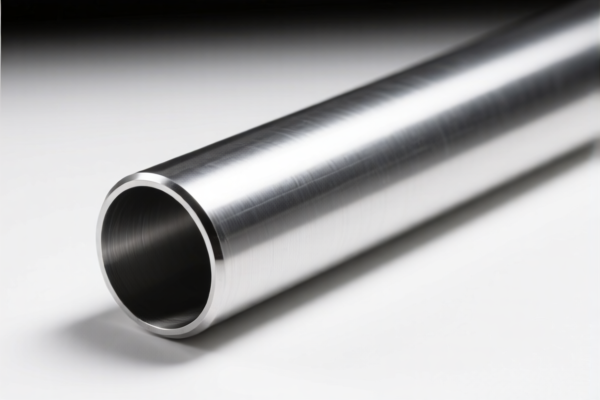
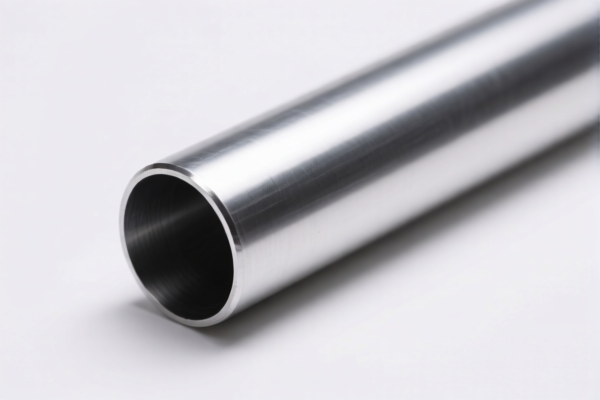
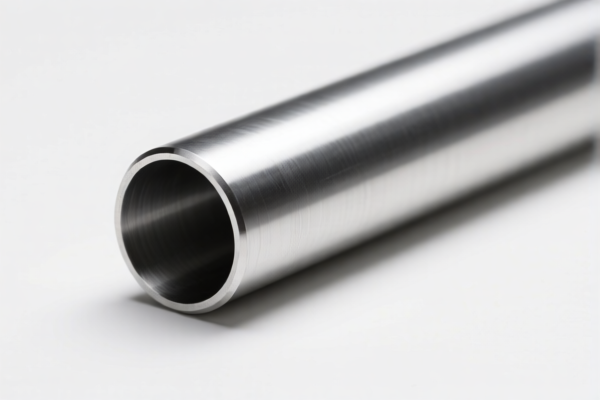
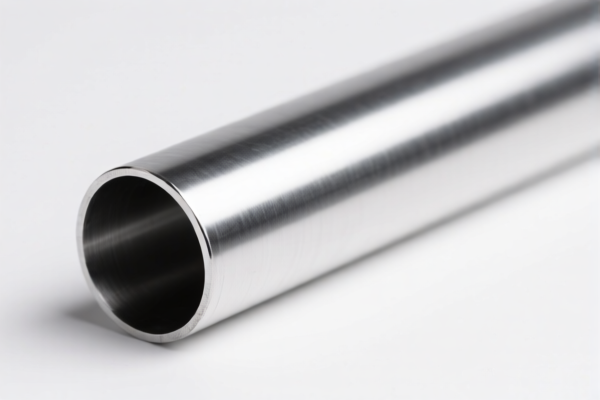
AI Analysis
🚀 Aluminum Tube (Aluminum Pipes)
🌐 HS Code Reference & Customs Clearance Guide | 2026 Latest Tariff Analysis | Professional Strategy for US Imports
📌 I. Product Definition & Classification: Do You Really Know "Aluminum Tube"?
Aluminum tubes are essential components in construction, transportation, machinery, and heat exchange systems. In international trade, they are classified primarily by material composition (Pure Aluminum vs. Aluminum Alloy) and manufacturing process (Seamless vs. Welded/Seamless).
Key Classification Logic: 1. Material: Is it Pure Aluminum (Non-alloy) or Aluminum Alloy? 2. Shape/Process: Is it a seamless tube or a welded/seamed tube (often classified under profiles/hollow sections)? 3. Reinforcement: Does it contain metal reinforcement that might classify it as a plastic pipe with metal strength?
⚠️ Critical Distinction Points: - Seamless Pure Aluminum Tubes: Usually fall under 7608.10 or 7608.20 depending on specific manufacturing details. - Alloy Hollow Profiles/Tubes: Often classified under 7604 (Aluminum profiles) if they are extruded or have specific cross-sections. - Reinforced Pipes: If primarily plastic with aluminum reinforcement, it may fall under 3917. - Welded/Seamed vs. Seamless: The distinction between "seamless" and "other" (welded/seamed) significantly affects the HS code and tax rate.
📦 II. HS Code Classification Details (2026 Latest Tariff Authority Comparison)
Based on the provided data, here are the potential HS Codes for Aluminum Tubes, categorized by their specific attributes:
| HS Code | Product Description | Applicable Scenario | Key Characteristics |
|---|---|---|---|
7608.20.00.30 |
Aluminum tubes, pipes, and hollow profiles, seamless, of aluminum alloys | Seamless aluminum alloy tubes | Alloy + Seamless. High tax burden. |
7608.10.00.30 |
Aluminum tubes, pipes, and hollow profiles, seamless, of non-alloy aluminum | Seamless pure aluminum tubes | Non-Alloy + Seamless. High tax burden. |
7608.10.00.90 |
Aluminum tubes, pipes, and hollow profiles, other, of non-alloy aluminum | Non-seamless (e.g., welded) pure aluminum tubes | Non-Alloy + Other/Welded. High tax burden. |
3917.39.00.10 |
Rigid tubes, pipes, and hoses, with metal reinforcement or accessories | Plastic pipes reinforced with aluminum foil/metal | Plastic + Metal Reinforcement. Lower base tax, but high add-ons. |
7604.21.00.90 |
Aluminum profiles and sections, hollow | Aluminum alloy hollow sections/tubes | Alloy + Hollow Profile. Lowest Tax Rate! |
🔍 Key Insight:
- HS 7604 vs. HS 7608: If your "tube" is actually an extruded hollow profile made of aluminum alloy, it likely falls under 7604.21.00.90. This code has a significantly lower tax rate (11.5%) compared to the 7608 series (40.7%).
- Seamless vs. Non-Seamless: The 7608 codes distinguish between seamless (.30) and other (.90). Both carry high tariffs.
- Material Matters: Non-alloy (pure) aluminum often has different sub-codes than alloys.
💰 III. 2026 Latest Tariff Rate Breakdown (Including Additional Taxes & Policy Surcharges)
✅ Applicable Country: United States (US)
✅ Country of Origin: China (CN)
✅ Effective Date: 2025 November 10 onwards (and subsequent imports)
🎯 1. 7608.20.00.30 & 7608.10.00.30 & 7608.10.00.90 —— Aluminum Tubes (High Tax Category)
These codes cover most standard seamless and welded aluminum tubes. They face the maximum tariff burden due to Section 301 and IEEPA measures.
| Item | Content |
|---|---|
| Base Tariff | 5.7% (Ad Valorem) |
| Section 301 Additional Tariff | +25.0% (From USITC Footnote 9903.88.01) |
| IEEPA Additional Tariff | +10.0% (Against Chinese/HK products, from Nov 10, 2025) |
| Total Tax Rate | 40.7% |
| Tax Calculation | CIF Value × 40.7% |
| De Minimis Exemption | ❌ Not Applicable (deny_de_minimis) |
| Legal Basis Path | IEEPA:9903.01.25 → IEEPA:9903.01.24 → USITC:7608.xx.xx.xx → FOOTNOTE:9903.88.01 |
📌 Explanation:
- The 5.7% base rate is standard for aluminum products. - The 25% Section 301 tariff is applied to Chinese aluminum products. - The 10% IEEPA tariff is an additional surcharge effective from late 2025. - Total 40.7% makes these codes extremely expensive for importers. Strategic re-classification is critical!
🎯 2. 3917.39.00.10 —— Reinforced Plastic Pipes with Metal (Lower Base Tax)
This code applies if the product is primarily a plastic pipe (e.g., PEX, PVC) that is reinforced with aluminum foil or metal for strength.
| Item | Content |
|---|---|
| Base Tariff | 3.1% (Ad Valorem) |
| Section 301 Additional Tariff | +25.0% |
| IEEPA Additional Tariff | +10.0% |
| Total Tax Rate | 38.1% |
| Tax Calculation | CIF Value × 38.1% |
| De Minimis Exemption | ❌ Not Applicable (deny_de_minimis) |
| Legal Basis Path | IEEPA:9901.25 → IEEPA:9903.01.24 → USITC:3917.39.00.10 → FOOTNOTE:9903.88.01 |
📌 Note:
- Although the base tax is lower (3.1% vs 5.7%), the total tax (38.1%) is still high. - Misclassification Risk: If the product is mostly metal, it cannot be classified here. It must have a clear plastic matrix with metal reinforcement.
🎯 3. 7604.21.00.90 —— Aluminum Alloy Hollow Profiles (Lowest Tax Rate!) 🌟
If your "tube" is an extruded hollow profile made of aluminum alloy, it may fall under this code. This is the optimal classification for cost savings.
| Item | Content |
|---|---|
| Base Tariff | 1.5% (Ad Valorem) |
| Section 301 Additional Tariff | 0.0% (Note: Check specific footnote; some profiles may be exempt or have lower rates) |
| IEEPA Additional Tariff | +10.0% |
| Total Tax Rate | 11.5% |
| Tax Calculation | CIF Value × 11.5% |
| De Minimis Exemption | ❌ Not Applicable (deny_de_minimis) |
| Legal Basis Path | IEEPA:9901.25 → IEEPA:9903.01.24 → USITC:7604.21.00.90 |
📌 Advantage:
- Savings of 29.2% compared to 7608 codes (40.7% - 11.5% = 29.2% difference). - Condition: Must be an aluminum alloy product. Pure aluminum profiles may fall under 7604.11, which might have different rates (check specific 7604 sub-codes for pure aluminum). - Shape: Must be a "profile" (hollow section with specific cross-sections), not a simple seamless pipe.
🛠️ IV. Customs Clearance Practical Advice (Real-World Pitfall Guide)
✅ 1. Preparation Checklist (Missing Items = Delays)
| Document | Required | Description |
|---|---|---|
| ✅ Product Specification Sheet | ✔️ | Must clearly state: Material (Alloy % or Pure), Process (Seamless/Welded/Extruded), Dimensions, Standard (ASTM/ISO). |
| ✅ Cross-Section Diagram | ✔️ | Crucial for 7604 vs. 7608. Shows if it's a "hollow profile" (7604) or a "pipe/tube" (7608). |
| ✅ Product Photos (Including Label) | ✔️ | Clear images of the cut end, outer surface, and any markings. |
| ✅ Mill Test Certificate (MTC) | ✔️ | Proves material composition (Aluminum vs. Alloy). |
| ✅ Commercial Invoice | ✔️ | Description must match HS Code (e.g., "Aluminum Hollow Profile" vs. "Seamless Aluminum Tube"). |
| ✅ Packing List | ✔️ | Details quantity, weight, and packaging. |
| ✅ Certificate of Origin | ✔️ | Required for tariff determination. |
✅ 2. Declaration Strategy (Key Mantra)
🔥 "Profile is King, Alloy is Key, Seamless is Pain, Welding is Gain (if 7604)!"
| Scenario | Correct Declaration | Wrong Action |
|---|---|---|
| Alloy Hollow Tube/Profile | 7604.21.00.90 (11.5%) |
Misdeclare as 7608 → 40.7% Tax! |
| Pure Aluminum Seamless Tube | 7608.10.00.30 (40.7%) |
Cannot avoid 40.7% unless material is different. |
| Aluminum Alloy Seamless Tube | 7608.20.00.30 (40.7%) |
High tax. Check if it can be classified as a profile. |
| Plastic Pipe w/ Aluminum Reinforcement | 3917.39.00.10 (38.1%) |
Do not declare as "Aluminum Tube". |
| Welded Aluminum Tube (Non-Alloy) | 7608.10.00.90 (40.7%) |
Same high tax as seamless non-alloy. |
📌 Critical Tip:
- If your product is extruded and has a hollow cross-section (like a square, rectangle, or complex shape) made of alloy, strongly consider 7604.21.00.90.
- If it is a simple round seamless pipe, you are likely stuck with 7608.
- Do not try to misclassify a simple round seamless tube as a "profile" to save tax. CBP (Customs and Border Protection) audits these cases aggressively. Provide robust engineering drawings to justify "profile" status if applicable.
✅ 3. Special Case Handling
| Situation | Handling Advice |
|---|---|
| Round Seamless Aluminum Tube | Likely 7608. No easy way to reduce tax below 40.7%. Consider supply chain diversification. |
| Square/Rectangular Hollow Aluminum Tube | Likely 7604.21.00.90 (11.5%). Apply this code! Provide cross-section drawings. |
| Aluminum Pipe for Heat Exchanger | If seamless, 7608. If finned tubes, may have different rules. |
| OEM Custom Profiles | Provide customer design drawings to prove "profile" nature. |
| Mixed Shipments (Alloy + Pure) | Declare separately. Do not mix in one line item. |
🌍 V. Global Market Clearance Comparison (2026 Latest)
| Country/Region | Recommended HS Code (Alloy Profile) | Tax Rate (China Origin) | Certification Required | Notes |
|---|---|---|---|---|
| 🇺🇸 USA | 7604.21.00.90 |
11.5% | None specific | Best Market for Savings |
| 🇨🇳 China | 7604.21.00.90 |
5% (Export) | N/A | Export duty may apply |
| 🇪🇺 EU | 7604.21.00 |
0% - 5% | CE (if applicable) | Anti-dumping duties may apply |
| 🇯🇵 Japan | 7604.21.00 |
0% - 5% | JIS Standard | Free Trade Agreement benefits |
| 🇬🇧 UK | 7604.21.00 |
0% - 5% | UKCA | Post-Brexit rules apply |
📌 Conclusion:
- USA offers the best potential for tax optimization IF the product qualifies as a hollow profile (7604).
- Round seamless tubes face high tariffs globally due to trade tensions.
- EU/UK may have anti-dumping duties on Chinese aluminum products; check current AD rates.
📌 VI. Common Errors & Pitfall Guide (Lessons Learned)
❌ Error 1: Declaring a hollow rectangular aluminum tube as a "seamless pipe" (7608).
👉 Consequence: Pay 40.7% instead of 11.5%. Loss of 29.2% in profit!
❌ Error 2: Declaring a pure aluminum tube as an alloy tube to fit a better code.
👉 Consequence: Customs audit fails MTC (Mill Test Certificate). Penalty + Back Taxes + Seizure Risk.
❌ Error 3: Using vague descriptions like "Metal Pipe" on the invoice.
👉 Consequence: Customs officer assigns their own HS code, likely a high-tax one. Delay + Additional Inspection Fees.
❌ Error 4: Assuming "Tube" and "Profile" are the same.
👉 Consequence: If it's a simple round tube, it's not a profile. Misclassification leads to fraud allegations if intentional.
✅ Correct Approach:
"Aluminum Alloy Hollow Profile, Extruded, Rectangular Cross-Section, 50mm x 30mm, T6 Temper, ASTM B221, Model XYZ"
🎯 VII. Conclusion: Professional Classification, Save Costs, Ensure Compliance!
🎯 Remember the Mantra:
🔹 "Round Seamless = High Tax (40.7%)".
🔹 "Hollow Profile = Low Tax (11.5%)".
🔹 "Pure vs. Alloy = Different Codes (7608 vs 7604/7608).
🔹 "Plastic + Metal = 3917 (38.1%)".
🔹 "Shape Determines Code, Material Determines Sub-code!"
📌 Pro Tip:
If your product is a hollow aluminum tube (even if round), check if it can be considered an "extruded profile" under 7604.21.00.90. If you can provide engineering drawings showing it's a hollow extruded section, you can save ~29% in taxes.
Apply for an Advance Ruling (CBP Ruling) before shipping to confirm the classification.
📣 Take Action Now:
📞 Contact a licensed customs broker + Provide Cross-Section Drawings + Request CBP Advance Ruling.
🚀 Ensure your aluminum tubes clear customs smoothly, maximize your profit margins, and stay compliant!
✨ Professional Customs Clearance Starts with Accurate Classification!
💼 Every Percentage Point Saved is Pure Profit!
Customer Reviews
About HS Code Classification
The Harmonized System (HS) is an internationally standardized nomenclature developed by the World Customs Organization (WCO) to classify traded products. Over 200 countries use the HS system as the basis for customs tariffs, trade statistics, and import/export regulations.
Each HS code follows a hierarchical structure:
- Chapter (2 digits) — Broad category of goods (e.g., Chapter 84: Machinery and Mechanical Appliances)
- Heading (4 digits) — More specific grouping within the chapter
- Subheading (6 digits) — Internationally standardized breakdown, used by all WCO member countries
- National subdivisions (8-10 digits) — Country-specific extensions for further classification, such as US HTSUS 10-digit codes
Correct HS code classification is essential for smooth customs clearance, accurate duty payment, and compliance with trade regulations. Misclassification can lead to customs delays, overpayment of duties, or penalties.
When importing from CN to US, the applicable tariff rates may include:
- Most-Favored-Nation (MFN) rate — The standard duty rate applied to WTO members
- General rate — Applied to countries without trade agreements
- Trade remedy duties — Additional tariffs such as Section 301 (anti-dumping), Section 232 (national security), or countervailing duties
The information provided on this page is for reference purposes only. For official classification, please consult with your local customs authority or a licensed customs broker.