Aluminum Windowsill
CN → US| HS Code | Tariff Rate | Origin | Destination | Doc |
|---|---|---|---|---|
| 7606123015 | 13.0% | CN | US | Official Doc |
| 7606123035 | 13.0% | CN | US | Official Doc |
| 7610100020 | 73.2% | CN | US | Official Doc |
| 7610100030 | 73.2% | CN | US | Official Doc |
Product Images
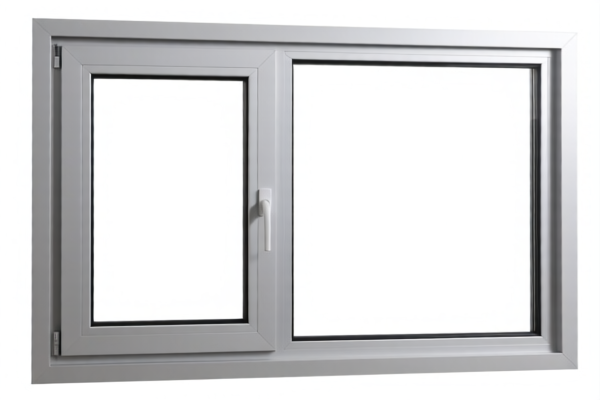
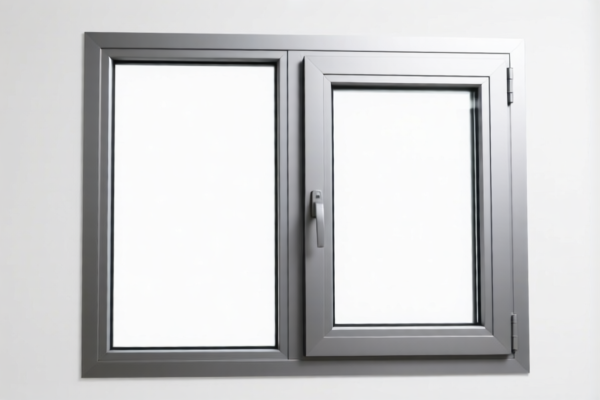
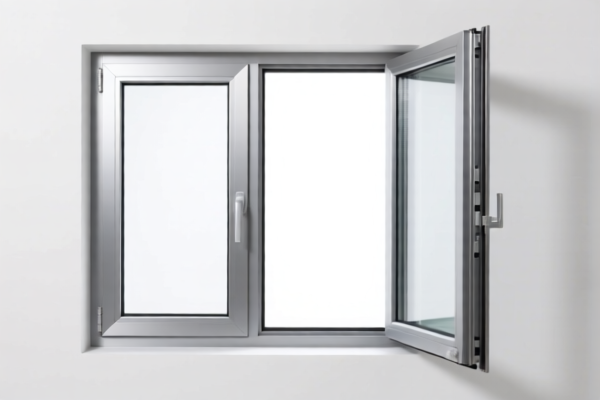

AI Analysis
🪟 Aluminum Windowsill (Aluminum Alloy Sill Boards)
🌐 HS Code Reference & Customs Clearance Guide | 2026 Latest Tariff Analysis | Professional Clearance Strategy
📌 I. Product Definition & Classification: Do You Really Understand "Aluminum Windowsill"?
An Aluminum Windowsill is a building component made primarily of aluminum alloy, typically shaped as a flat board or panel. In international trade, its classification depends heavily on its physical state (thickness/form) and intended structural function.
It falls into two distinct categories in the Harmonized System (HS): 1. Aluminum Plates/Sheets: Flat products of specific thicknesses, classified under Chapter 76. 2. Aluminum Structures/Parts: Finished or semi-finished building parts integrated into doors, windows, or frames, classified under Chapter 76 Section 10.
⚠️ Critical Distinction Point: - If it is a generic aluminum plate/board (even if destined for windowsills) →归入 7606 series (Lower Tax). - If it is classified as a building construction part (specifically for windows/doors frames or sills) →归入 7610 series (Higher Tax due to anti-dumping/Section 301/122 measures).
📦 II. HS Code Classification Details (2026 Latest Tariff Authority对照)
| HS Code | Product Description | Application Scenario | Tax Category |
|---|---|---|---|
7606.12.30.15 |
Aluminum alloy windowsill boards, material: aluminum alloy, form: plate | Standard aluminum plate boards meeting the aluminum plate category | Low Tax |
7606.12.30.35 |
Aluminum alloy windowsill boards, material: aluminum alloy, form: plate (>6.3mm thickness, other categories) | Plates thicker than 6.3mm, not otherwise specified | Low Tax |
7610.10.00.20 |
Aluminum alloy windowsill boards, material: aluminum alloy, use: door/window structure parts | Functionally consistent with thresholds/frames; classified as building construction parts | High Tax |
7610.10.00.30 |
Aluminum alloy windowsill boards, material: aluminum alloy, belongs to door/window structure components | Classified under "Other" for doors, windows, frames, and thresholds | High Tax |
🔍 Key Reminder: -
7606Codes: Treat the item as a raw/semi-finished material (plate). -7610Codes: Treat the item as a finished structural element for construction. - Risk: Misclassifying a structural part as a plate (7606) when it should be7610can lead to significant underpayment of duties, as the latter carries heavy additional tariffs.
💰 III. 2026 Latest Tariff Rate Breakdown (Including Surcharges & Policy Add-ons)
✅ Applicable Country: United States (US)
✅ Origin: China (CN)
✅ Effective Time: Current rates applicable as of latest trade policy updates (including Section 301, 122, and Steel/Aluminum tariffs).
🎯 1. 7606.12.30.15 & 7606.12.30.35 —— Aluminum Plates/Boards
| Item | Content |
|---|---|
| Base Tariff | 3.0% (ad valorem) |
| Additional Tariff (Section 301/Other) | 0.0% |
| Section 122 Tariff | +10% |
| Total Effective Tax Rate | 13.0% |
| Tax Calculation | CIF Value × 13.0% |
| De Minimis Exemption | ❌ Not Applicable (Standard duty rules apply) |
| Legal Basis Path | Base Duty: 3.0% + Sec 122: 10% |
📌 Explanation: - These codes classify the windowsill as an aluminum plate. - The 13% rate is significantly lower than the structural classification. - This classification assumes the product is treated primarily as a material (plate) rather than a specialized building component.
🎯 2. 7610.10.00.20 & 7610.10.00.30 —— Aluminum Building Structures/Parts
| Item | Content |
|---|---|
| Base Tariff | 5.7% |
| Additional Tariff (Section 301) | +7.5% |
| Section 122 Tariff | +10% |
| Steel, Aluminum, Copper Products Tariff | +50% |
| Total Effective Tax Rate | 73.2% |
| Tax Calculation | CIF Value × 73.2% |
| De Minimis Exemption | ❌ Not Applicable (Deny de minimis) |
| Legal Basis Path | Base: 5.7% → Sec 301: 7.5% → Sec 122: 10% → Aluminum Surcharge: 50% |
📌 Explanation: - These codes classify the windowsill as a structure or part of doors/windows. - The 73.2% rate is extremely high due to the叠加 (stacking) of multiple tariffs: 1. Base duty (5.7%) 2. Section 301 additional duty (7.5%) 3. Section 122 tariff (10%) 4. Steel and Aluminum Surcharge (50%): This is the critical differentiator. Products classified as aluminum structures or parts often attract the higher 50% surcharge intended for aluminum products in construction or industrial applications.
🛠️ IV. Customs Clearance Practical Advice (Real-World Pitfall Guide)
✅ 1. Required Documentation Checklist (All Mandatory)
| Document | Mandatory? | Description |
|---|---|---|
| ✅ Product Specification Sheet | ✔️ | Must detail: Material (Al Alloy 6063/6061), Thickness, Dimensions, Surface Treatment (Anodized/Powder-coated). |
| ✅ Technical Drawing/Blueprint | ✔️ | Crucial for proving whether the item is a "plate" (7606) or a "structure/part" (7610). |
| ✅ Product Photos (With Label) | ✔️ | Clear view of the item, showing it is a board/panel and not a complex assembled frame. |
| ✅ Commercial Invoice | ✔️ | Must accurately describe the item. Avoid vague terms like "Hardware"; use "Aluminum Alloy Plate" or "Window Structure Part". |
| ✅ Packing List | ✔️ | Show quantity, weight, and packaging details. |
| ✅ Certificate of Origin (CO) | ✔️ | If applicable for other markets, but for US, origin declaration is critical for tariff calculation. |
✅ 2. Declaration Strategy (Key Mnemonics)
🔥 “Plate vs. Structure: The 60% Tax Difference!”
| Scenario | Correct Declaration Approach | Consequence of Error |
|---|---|---|
| Flat Aluminum Board (even if for window) | 7606.12.30.xxDescribe as: "Aluminum Alloy Plate, For Window Sill Use" |
❌ If misclassified as 7610: Pay 73.2% instead of 13%.⚠️ High risk of audit. |
| Complex Assembly/Frame Part | 7610.10.00.xxDescribe as: "Aluminum Window Structure Component" |
❌ If misclassified as 7606: Pay 13% instead of 73.2%.⚠️ Risk of penalty, duty underpayment, and potential seizure. |
| Standard Sill Board | 7606.12.30.15/35 |
✅ Best for simple, flat, extruded, or rolled boards. |
| Integrated Frame/Sill Assembly | 7610.10.00.20/30 |
✅ Required if the item includes framing elements or is clearly a structural component. |
✅ 3. Special Considerations
| Situation | Handling Advice |
|---|---|
| Extruded Profiles | If the windowsill is an extruded profile, it may still fall under 7606 if it’s a simple plate-like shape, but if it’s a complex structural profile, 7610 is more likely. Provide cross-section diagrams. |
| Surface Treatment | Anodized or coated aluminum plates are still 7606. Coating does not change the chapter. |
| Pre-Order Ruling | Highly Recommended. Given the 60% tax difference, apply for an Advance Ruling (Pre-Landing Ruling) with US CBP before shipping to ensure classification certainty. |
| Packaging | Ensure packaging does not make it look like a "finished window unit" if you aim for 7606. Ship as loose plates/boards. |
🌍 V. Global Market Clearance Comparison (2026 Update)
| Country/Region | Recommended HS Code | Tariff Rate | Notes |
|---|---|---|---|
| 🇺🇸 USA | 7606.12.30.15/35 or 7610.10.00.20/30 |
13% vs 73.2% | Critical Decision Point. 50% Aluminum Surcharge applies to 7610. |
| 🇨🇳 China | 7606.12.30 or 7610.10 |
5-13% | Import duties vary, but no Section 301/122 add-ons. |
| 🇪🇺 EU | 7606.12 or 7610.10 |
0-5% | Generally lower tariffs, no equivalent to US 50% surcharge. |
| 🇬🇧 UK | 7606.12 or 7610.10 |
0-5% | Post-Brexit tariffs, generally favorable. |
| 🇯🇵 Japan | 7606.12 or 7610.10 |
0-5% | Low tariffs, strict quality standards. |
📌 Conclusion: - The USA is the most complex market due to the 50% Aluminum Surcharge on structural parts (
7610). - Strategic Recommendation: If the product is a simple flat board, argue for7606classification to save ~60% in duties. If it is a complex structural component, accept7610or consider supply chain adjustments (e.g., sourcing from non-China origins if applicable, though aluminum rules of origin are strict).
📌 VI. Common Errors & Pitfall Guide (Lessons Learned)
❌ Mistake 1: Declaring a structural window sill as a "Plate" (7606) without evidence of its simple form.
👉 Consequence: Customs issues a Notice of Liability for underpaid duties (60% difference) + penalties.
❌ Mistake 2: Declaring a simple aluminum plate as a "Structure" (7610) due to fear of complexity.
👉 Consequence: Overpaying ~60% in duties unnecessarily. Profit margin destroyed.
❌ Mistake 3: Ignoring the Section 122 and Steel/Aluminum Tariffs in calculations. 👉 Consequence: Budget shortfall, cash flow issues for importers.
❌ Mistake 4: Vague Description: "Aluminum Hardware". 👉 Consequence: CBP may reclassify the entire shipment based on their interpretation, leading to delays.
✅ Correct Practice:
"Aluminum Alloy Plate, 6063-T5, Anodized, Size: 1200mm x 300mm x 5mm, For Use in Window Sills, HS Code: 7606.12.30.15"
🎯 VII. Conclusion: Professional Declaration, Cost Savings, Efficiency!
🎯 Remember Mnemonic:
🔹 "Plate is 13%, Structure is 73%. Classify wisely, don't let taxes win!"
🔹 "Simple Board? Go 7606. Complex Frame? Go 7610. Accuracy saves thousands."
📌 Pro Tip: If your aluminum windowsills are sourced from Vietnam, Malaysia, or Thailand (and meet Rules of Origin), they may be exempt from US Section 301 and Aluminum Surcharges. Check your supply chain origin!
📣 Immediate Action:
📞 Contact a licensed customs broker.
📤 Provide detailed product photos and technical drawings.
🚀 Apply for an Advance Ruling to lock in the favorable 13% rate if possible!
✨ Professional Customs Clearance Starts with Accurate Classification!
💼 Every percentage point matters in international trade!
Customer Reviews
About HS Code Classification
The Harmonized System (HS) is an internationally standardized nomenclature developed by the World Customs Organization (WCO) to classify traded products. Over 200 countries use the HS system as the basis for customs tariffs, trade statistics, and import/export regulations.
Each HS code follows a hierarchical structure:
- Chapter (2 digits) — Broad category of goods (e.g., Chapter 84: Machinery and Mechanical Appliances)
- Heading (4 digits) — More specific grouping within the chapter
- Subheading (6 digits) — Internationally standardized breakdown, used by all WCO member countries
- National subdivisions (8-10 digits) — Country-specific extensions for further classification, such as US HTSUS 10-digit codes
Correct HS code classification is essential for smooth customs clearance, accurate duty payment, and compliance with trade regulations. Misclassification can lead to customs delays, overpayment of duties, or penalties.
When importing from CN to US, the applicable tariff rates may include:
- Most-Favored-Nation (MFN) rate — The standard duty rate applied to WTO members
- General rate — Applied to countries without trade agreements
- Trade remedy duties — Additional tariffs such as Section 301 (anti-dumping), Section 232 (national security), or countervailing duties
The information provided on this page is for reference purposes only. For official classification, please consult with your local customs authority or a licensed customs broker.