Aluminum Wire
CN → US| HS Code | Tariff Rate | Origin | Destination | Doc |
|---|---|---|---|---|
| 7614902030 | 39.9% | CN | US | Official Doc |
| 7614902060 | 39.9% | CN | US | Official Doc |
| 7605190000 | 14.2% | CN | US | Official Doc |
| 7605290000 | 14.2% | CN | US | Official Doc |
Product Images
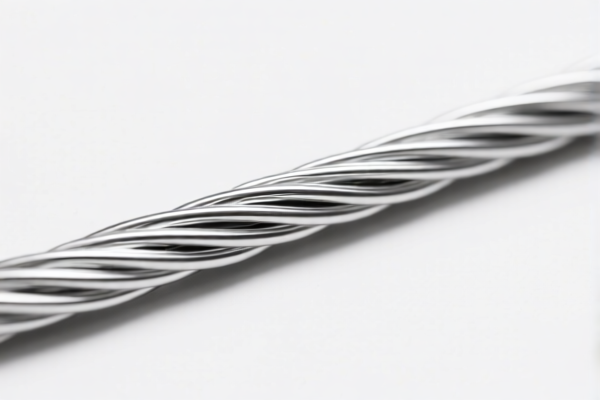
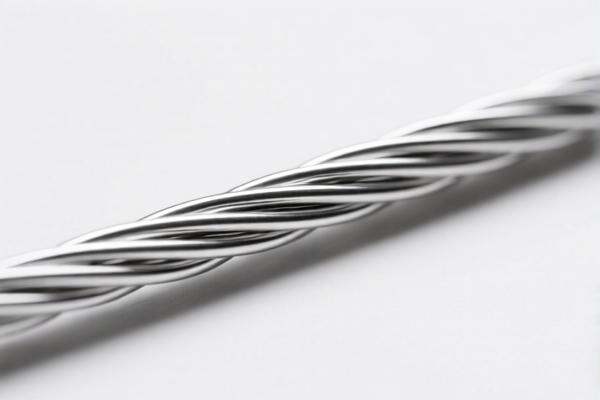
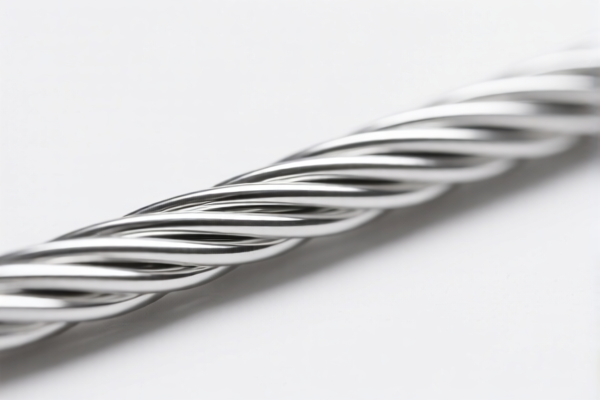
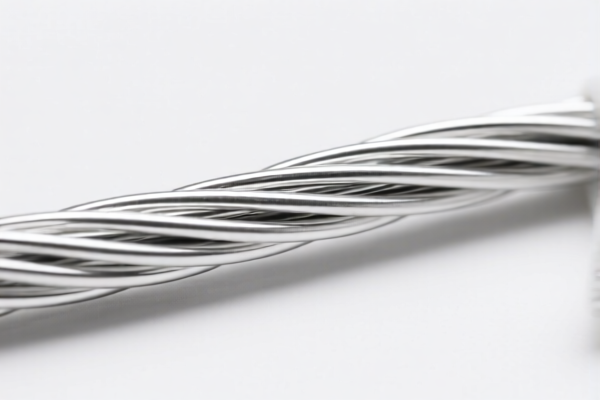
AI Analysis
🏗️ Aluminum Wire (Uninsulated Electrical Conductors & Wires)
🌐 HS Code Reference & Customs Clearance Guide | 2026 Latest Tariff Analysis | Professional Strategy for US Imports from China
📌 I. Product Definition & Classification: Do You Truly Understand "Aluminum Wire"?
Aluminum wire is a critical component in electrical infrastructure, power transmission, and industrial manufacturing. In international trade, classification depends strictly on insulation status, alloy composition, and specific usage. Misclassification here can lead to massive tariff discrepancies, as some categories are subject to aggressive trade remedy tariffs while others are not.
Key Distinctions: * Uninsulated Conductors (7614): Aluminum strands twisted together, specifically designed to be insulated later or used in overhead lines. Subject to high "Section 301" and "Section 122" tariffs. * Solid/Stranded Aluminum Wire (7605): Basic aluminum wire or rods, not yet configured as electrical conductors. Subject to significantly lower tariffs.
⚠️ Critical Classification Point:
- If the product is stranded aluminum wire specifically for electrical use (uninsulated) → It likely falls under 7614.90.20.
- If it is solid aluminum wire or non-alloy aluminum wire (not yet formed into electrical conductors) → It falls under 7605.
- Do not assume all "Aluminum Wire" is the same. The presence of "electrical conductor" intent and strand configuration changes the HS Code entirely.
📦 II. HS Code Classification Details (2026 Latest Tariff Authority Comparison)
Based on the provided data, here are the four specific classifications for Aluminum Wire products:
| HS Code | Product Description | Applicable Scenario | Insulation Status | Alloy Type |
|---|---|---|---|---|
7614.90.20.30 |
Aluminum uninsulated electrical conductors, matching aluminum wire material & form | Overhead power lines, busbars, custom electrical assemblies | ❌ Uninsulated | Aluminum (Specific Form) |
7614.90.20.60 |
Aluminum uninsulated electrical conductors, conforming to aluminum wire usage | Industrial electrical distribution, transformer windings (raw) | ❌ Uninsulated | Aluminum (Specific Form) |
7605.19.00.00 |
Non-alloy aluminum wire, matching aluminum wire material & form | General purpose wiring, raw material processing, non-electrical structural wire | ❌ (Usually) | Non-Alloy (Pure Aluminum) |
7605.29.00.00 |
Aluminum alloy / Aluminum wire, conforming to aluminum wire classification | High-strength electrical applications, automotive wiring harnesses (raw) | ❌ (Usually) | Aluminum Alloy |
🔍 Key Reminder:
- 7614 codes are for "Electrical Conductors" (twisted strands). If your product is a single solid strand, it does not belong here.
- 7605 codes are for "Wire and Rods" (basic form). If it is not specifically shaped as a multi-strand conductor, use these.
- Alloy vs. Non-Alloy: Determine if the wire contains other metals (like Magnesium, Silicon, Iron) in specific ratios. Pure aluminum goes to 7605.19; Alloys go to 7605.29.
💰 III. 2026 Latest Tariff Rate Details (Including Surcharges & Policy Add-ons)
✅ Applicable Country: United States (US)
✅ Country of Origin: China (CN)
✅ Effective Time: Current applicable rates including Section 301 and Section 122 surcharges.
🎯 1. 7614.90.20.30 & 7614.90.20.60 —— Aluminum Uninsulated Electrical Conductors
These two codes share the same tariff structure due to their similar nature as finished electrical components.
| Item | Content |
|---|---|
| Base Tariff Rate | 4.9% (Most Favored Nation) |
| Section 301 Surcharge | +25.0% (USITC Footnote 8849/8850 - China-specific) |
| Section 122 Surcharge | +10.0% (Trade Remedies/Specific China Measures) |
| Total Tariff Rate | 39.9% |
| Tax Calculation | CIF Value × 39.9% |
| De Minimis Exemption? | ❌ NO (High value, specific manufacturing sector) |
| Legal Basis Path | HTSUS:7614.90.20 → USITC:301_China → TradeRemedy:122_China |
📌 Explanation:
- The 39.9% rate is extremely high. This reflects the US policy to protect domestic electrical infrastructure manufacturing.
- Section 301 (25%) applies because aluminum electrical conductors are a key manufacturing input targeted by US-China trade tensions.
- Section 122 (10%) is an additional layer often applied to specific industrial materials from China.
- Cost Impact: For a $10,000 shipment, the duty alone is $3,990. This must be factored into your landed cost immediately.
🎯 2. 7605.19.00.00 —— Non-Alloy Aluminum Wire
| Item | Content |
|---|---|
| Base Tariff Rate | 4.2% |
| Section 301 Surcharge | 0.0% (Not included in this specific subheading's list in provided data) |
| Section 122 Surcharge | +10.0% |
| Total Tariff Rate | 14.2% |
| Tax Calculation | CIF Value × 14.2% |
| De Minimis Exemption? | ❌ NO (Generally, wire goods are scrutinized) |
| Legal Basis Path | HTSUS:7605.19.00 → TradeRemedy:122_China |
📌 Explanation:
- This is a much more favorable rate compared to 7614.
- Why no 25% Section 301? The provided data indicates 0.0% for this specific code. This suggests that basic non-alloy aluminum wire may be treated differently than "electrical conductors" in certain contexts, or the specific data source excludes it. Verify with CBP if possible, but based on the input, the saving is significant.
- Only the 10% Section 122 and 4.2% base apply.
🎯 3. 7605.29.00.00 —— Aluminum Alloy Wire
| Item | Content |
|---|---|
| Base Tariff Rate | 4.2% |
| Section 301 Surcharge | 0.0% (Not included in this specific subheading's list in provided data) |
| Section 122 Surcharge | +10.0% |
| Total Tariff Rate | 14.2% |
| Tax Calculation | CIF Value × 14.2% |
| De Minimis Exemption? | ❌ NO |
| Legal Basis Path | HTSUS:7605.29.00 → TradeRemedy:122_China |
📌 Explanation:
- Identical tariff treatment to Non-Alloy wire (7605.19).
- Aluminum alloys (e.g., 6101 alloy commonly used in solar frames or EV batteries) still benefit from the lower 14.2% rate in this classification, avoiding the brutal 39.9% hit if correctly classified as basic wire rather than electrical conductors.
- Crucial: Ensure the product is not marketed or described as "finished electrical conductor" to avoid being bumped up to 7614.
🛠️ IV. Customs Clearance Practical Advice (Battle-Tested Pitfall Guide)
✅ 1. Required Documentation Checklist (Non-Negotiable)
| Document | Required | Description |
|---|---|---|
| ✅ Product Specification Sheet | ✔️ | Must detail: Diameter, Strand Count, Alloy Composition (e.g., AA-1350, AA-6101), Tensile Strength. |
| ✅ Technical Data Sheet (TDS) | ✔️ | Proves if it is "Uninsulated" vs. "Insulated". If insulated, HS Code changes completely (e.g., to 8544). |
| ✅ Commercial Invoice | ✔️ | Must clearly state: "Aluminum Wire, Uninsulated, [Alloy Type], For Electrical Use" or "Raw Aluminum Wire". |
| ✅ Certificate of Origin (CO) | ✔️ | Essential to prove CN origin and apply correct trade remedy rates. |
| ✅ Bill of Lading (B/L) | ✔️ | Consistent description with Invoice. |
| ✅ Alloy Analysis Report | ✔️ | Critical for 7605.29: Must prove alloy composition to distinguish from non-alloy. |
✅ 2. Declaration Strategy (Key Mantras)
🔥 "Describe Form, Not Just Name. 'Conductor' Triggers 40%."
| Scenario | Correct Declaration | Wrong Declaration | Consequence of Error |
|---|---|---|---|
| Stranded Wire for Grid | 7614.90.20.30 - "Aluminum Uninsulated Electrical Conductor" |
"Aluminum Wire" (Vague) | High risk of audit. If deemed correct, pay 39.9%. |
| Solid Aluminum Rod/Wire | 7605.19.00.00 - "Non-Alloy Aluminum Wire" |
"Electrical Wire" | Penalty. If it's not a conductor, don't use 7614. Saves ~25% in duties. |
| Alloy Wire for Solar Frames | 7605.29.00.00 - "Aluminum Alloy Wire" |
"Solar Frame Part" | Misclassification. Must be raw material. Rate 14.2%. |
| Insulated Wire | Wrong HS Entirely (See 8544) | "Aluminum Wire" | 8544 codes have different tariffs. Do not mix insulated/uninsulated. |
✅ 3. Special Handling Tips
| Situation | Handling Advice |
|---|---|
| OEM Custom Sizes | Provide exact mill diameter and length. Custom specs should not change HS Code if form/usage is same. |
| Mixed Alloy/Non-Alloy | If shipment contains both, separate shipments or precise breakdown in invoice. Do not blend descriptions. |
| "For Electrical Use" Label | If product is labeled "For Electrical Use" but is basic wire (7605), CBP may reclassify to 7614. Avoid "Electrical Conductor" in name unless it is truly stranded/conductor. |
| Origin Marking | Ensure physical products are marked "Made in China" if required by US law to avoid seizure. |
🌍 V. Global Market Clearance Comparison (2026 Latest)
| Country/Region | Recommended HS Code | Tariff Rate (CN Origin) | Certification | Notes |
|---|---|---|---|---|
| 🇺🇸 USA | 7614.90.20.xx |
39.9% | N/A | High barriers. Use 7605 if eligible to save 25%. |
| 🇺🇸 USA | 7605.19.00.00 |
14.2% | N/A | Significant savings for non-conductor wire. |
| 🇨🇳 China | 7614 / 7605 |
~4-5% | CCC (if electrical) | Export duties may apply to raw aluminum. |
| 🇪🇺 EU | 7614 / 7605 |
~0-6.5% | CE (if finished product) | No Section 301 equivalents, but anti-dumping on some Al products exists. |
| 🇻🇳 Vietnam | Varies | Varies | N/A | Re-export hub. Must ensure substantial transformation to avoid US origin rules. |
📌 Conclusion:
- The US is the most challenging market for aluminum wire due to layered tariffs.
- Strategy: If your product is basic wire (solid or basic strand) and not a finished "electrical conductor," aggressively argue for 7605 classification to drop from 39.9% to 14.2%.
- Documentation is Key: Alloy reports and product photos are your best defense against misclassification audits.
📌 VI. Common Mistakes & Pitfall Guide (Blood-Teaching Lessons)
❌ Mistake 1: Calling all aluminum wire "Electrical Conductors"
👉 Result: Forced into 7614 → 39.9% duty.
✅ Fix: If it's solid wire or raw material, use 7605 → 14.2% duty.
❌ Mistake 2: Ignoring "Insulation" Status
👉 Result: If wire is insulated, 7614/7605 is wrong. Must use 8544.
✅ Fix: Inspect product. If plastic/rubber coating is present, switch to 8544.xx.xx.
❌ Mistake 3: Vague Invoice Description "Aluminum Wire"
👉 Result: CBP issues "Request for Information" (RFI) → Delayed clearance + potential penalties.
✅ Fix: Use precise language: "Aluminum Alloy Stranded Wire, AA-6101, Uninsulated, Diameter 2mm".
❌ Mistake 4: Assuming De Minimis (Section 321) Applies
👉 Result: Small shipments still face full duties because metal goods are often excluded or scrutinized.
✅ Fix: Plan for full duty payment even for small batches.
🎯 VII. Conclusion: Precise Classification, Maximize Profit!
🎯 Remember the Mantra:
🔹 "Stranded + Electrical = 39.9% (7614)"
🔹 "Basic Wire + Alloy/Non-Alloy = 14.2% (7605)"
🔹 "Insulated = 8544 (Check Rates)"
🔹 "Don't Guess, Document!"
📌 Pro Tip:
If you are importing large volumes, consider Advance Rulings from US CBP. Spend a few hundred dollars on a binding ruling to lock in the 14.2% rate if your product qualifies, rather than risking the 39.9% penalty.
📣 Immediate Action:
📞 Review your product specs against the 4 HS Codes.
📄 Prepare Alloy Analysis Reports.
🚀 Optimize your invoice description to match the lower-tariff classification if legally applicable.
✨ Professional Clearance Starts with Precise Classification!
💼 Your Bottom Line Depends on This 25% Difference!
Customer Reviews
About HS Code Classification
The Harmonized System (HS) is an internationally standardized nomenclature developed by the World Customs Organization (WCO) to classify traded products. Over 200 countries use the HS system as the basis for customs tariffs, trade statistics, and import/export regulations.
Each HS code follows a hierarchical structure:
- Chapter (2 digits) — Broad category of goods (e.g., Chapter 84: Machinery and Mechanical Appliances)
- Heading (4 digits) — More specific grouping within the chapter
- Subheading (6 digits) — Internationally standardized breakdown, used by all WCO member countries
- National subdivisions (8-10 digits) — Country-specific extensions for further classification, such as US HTSUS 10-digit codes
Correct HS code classification is essential for smooth customs clearance, accurate duty payment, and compliance with trade regulations. Misclassification can lead to customs delays, overpayment of duties, or penalties.
When importing from CN to US, the applicable tariff rates may include:
- Most-Favored-Nation (MFN) rate — The standard duty rate applied to WTO members
- General rate — Applied to countries without trade agreements
- Trade remedy duties — Additional tariffs such as Section 301 (anti-dumping), Section 232 (national security), or countervailing duties
The information provided on this page is for reference purposes only. For official classification, please consult with your local customs authority or a licensed customs broker.