Aluminum Wire Mesh
CN → USProduct Images
AI Analysis
🏗️ Aluminum Wire Mesh (Aluminum Window Screen / Mosquito Netting)
🌐 HS Code Reference & Clearance Guide | 2026 Latest Tariff Analysis | Professional Customs Strategy
📌 I. Product Definition & Classification: What is "Aluminum Wire Mesh"?
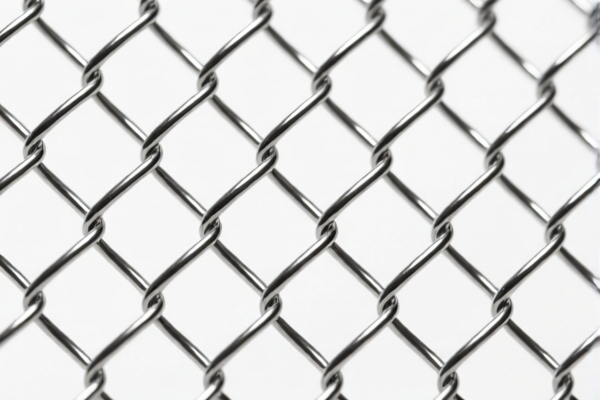
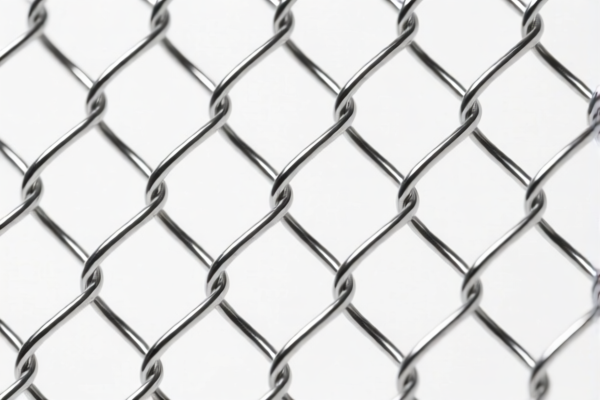
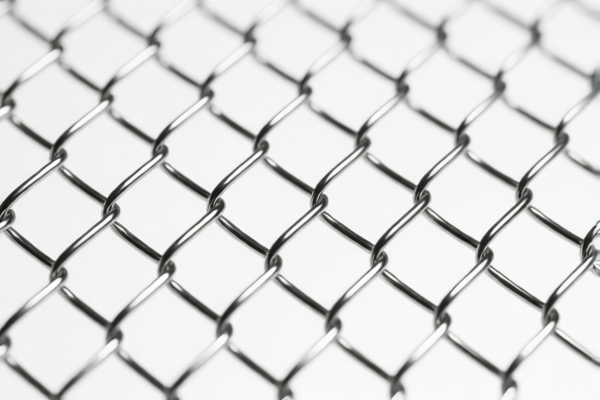
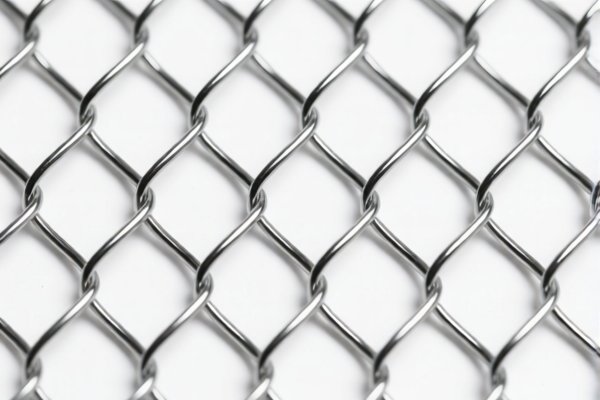
Aluminum wire mesh, commonly known as aluminum window screens, insect screens, or mosquito nets, is a mesh fabric made from aluminum alloy wire. It is primarily used for ventilation, insect protection, and decoration in windows, doors, and air conditioning units.
In international trade, it is strictly distinguished from steel mesh or synthetic fiber nets by its material composition. The key classification factor is whether it is "plain weave" (standard mesh) or a specialized industrial filter.
⚠️ Key Distinction Points:
- Raw Material: Must be specified as Aluminum (not stainless steel, iron, or plastic).
- Structure: Typically plain woven, fixed on a frame (if framed) or rolled (if unframed).
- Usage: If used for general building/window protection → HS 7318 (if steel) or HS 7615/7614 (if aluminum). Note: Aluminum mesh is often controversially classified under Chapter 76 (Aluminum) or Chapter 73 (Articles of Iron/Steel) depending on specific national interpretations, but US Customs generally views aluminum mesh under 7615 or 7614 unless it is specifically a "wire cloth" for industrial filtering.
📦 II. HS Code Classification Details (2026 Latest Tariff Reference)
🇺🇸 Note for US Imports:
Aluminum wire mesh for windows/screens is often classified under 7615.19 or 7614.19 depending on whether it is considered "household articles" or "stranded wire/cables". However, the most common and defensible classification for plain woven aluminum screen mesh is:
| HS Code | Product Description | Applicable Scenario | Material Key |
|---|---|---|---|
7615.19.00.00 |
Other aluminum household, kitchen, or pharmaceutical articles; parts thereof | Rolled or unframed aluminum mesh, screens, grills | ✅ Aluminum |
7614.10.00.00 |
Stranded cables, ropes, and other products, of aluminum | Twisted aluminum strands, heavy-duty aluminum mesh (if structured as cable) | ✅ Aluminum |
7610.10.00.00 |
Aluminum structures (excluding prefabricated buildings) | Pre-assembled window frames with mesh attached (if frame is substantial) | ✅ Aluminum |
7318.15.00.00 |
Screws, bolts, nuts, etc. | Hardware used to attach the mesh (not the mesh itself) | ❌ Steel |
5911.10.00.00 |
Textile products for technical uses (filters) | Industrial filtration mesh (if used for chemical/liquid filtration, not insects) | ❌ Fiber/Paper |
🔍 Critical Reminder:
- Do NOT classify as Steel (7318): Even if it looks like "wire mesh," aluminum has its own chapter (Chapter 76). Misclassification can lead to severe penalties.
- Framed vs. Unframed:
- Unframed/Rolled Mesh: Usually7615.19.00.00.
- Fully Assembled Window Unit: May be classified under7610.10.00.00(Aluminum structures) or7615.19.
- Industrial vs. Household: If used for industrial filtration (not insects), it may fall under5911(textile/technical) or7615. Specify usage clearly.
💰 III. 2026 Latest Tariff Rate Details (Including Surcharges & Policies)
✅ Applicable Country: United States (US)
✅ Origin: China (CN)
✅ Effective Date: 2025-11-10 onwards (including subsequent imports)
🎯 1. 7615.19.00.00 —— Aluminum Household Articles (including Mesh/Screens)
| Item | Content |
|---|---|
| Base Tariff Rate | 5.7% (ad valorem) |
| USITC Surcharge (Section 301) | +25% (Footnote 9903.88.01 applies to many aluminum products from China) |
| IEEPA Surcharge | +10% (Targeting China/HK products, effective Nov 10, 2025) |
| Total Tariff Rate | 40.7% |
| Tax Calculation | CIF Value × 40.7% |
| De Minimis Eligibility | ❌ No (deny_de_minimis applies to Section 301 goods) |
| Legal Basis Path | IEEPA:9903.01.25 → USITC:7615.19.00.00 → FOOTNOTE:9903.88.01 |
📌 Explanation:
- Aluminum products from China are heavily scrutinized.
- The 25% Section 301 tariff is standard for many aluminum articles.
- The 10% IEEPA tariff is a new addition for many Chinese goods post-2025.
- Total 40.7% is a significant cost driver.
🎯 2. 7614.10.00.00 —— Aluminum Stranded Cables/Ropes
| Item | Content |
|---|---|
| Base Tariff Rate | 5.7% |
| USITC Surcharge | +25% |
| IEEPA Surcharge | +10% |
| Total Tariff Rate | 40.7% |
| Tax Calculation | CIF Value × 40.7% |
| De Minimis Eligibility | ❌ No |
| Legal Basis Path | IEEPA:9903.01.25 → USITC:7614.10.00.00 → FOOTNOTE:9903.88.01 |
📌 Note:
- If the mesh is marketed as "aluminum cable" or "stranded wire," the same high tariff applies.
- There is no duty-free exemption for aluminum mesh/cables from China.
🛠️ IV. Clearance Practical Advice (Battle-Tested Pitfall Guide)
✅ 1. Required Documentation Checklist (Non-negotiable)
| Document | Must Provide | Description |
|---|---|---|
| ✅ Product Specification Sheet | ✔️ | Material: 100% Aluminum Alloy (e.g., 1100, 3003), Wire Diameter, Mesh Count (e.g., 18x16) |
| ✅ Commercial Invoice | ✔️ | Must state: "Aluminum Wire Mesh Screen, Not for Industrial Filtration, Not Steel" |
| ✅ Packing List | ✔️ | Net Weight vs. Gross Weight (aluminum is light, ensure accurate weight declaration) |
| ✅ Certificate of Origin (CO) | ✔️ | Must explicitly state "Aluminum" content. If non-Chinese origin, claim FTZ benefits |
| ✅ Material Safety Data Sheet (MSDS) | ✔️ | For shipping safety (aluminum is non-hazardous, but required by some carriers) |
| ✅ Photo of Label/Tag | ✔️ | Show composition label: "100% Aluminum" |
✅ 2. Declaration Tips (Key Mantras)
🔥 "Aluminum, Not Steel! Usage, Clear and Direct!"
| Scenario | Correct Declaration | Wrong Practice |
|---|---|---|
| Rolled Aluminum Screen | 7615.19.00.00 - "Aluminum Mesh Roll" |
Declaring as "Steel Wire Mesh" → 40.7% risk + penalty |
| Framed Window Screen | 7610.10.00.00 or 7615.19 |
Declaring as "Furniture Part" → Misclassification |
| Industrial Filter Mesh | 5911.10.00.00 (if technical use) |
Declaring as "Household Mesh" → Customs may reclassify |
| Mixed Material (Al+Plastic) | 7615.19 (if aluminum is essential character) |
Declaring as "Plastic Mesh" → Duty evasion flag |
✅ 3. Special Circumstances Handling
| Situation | Handling Advice |
|---|---|
| OEM Private Label | Ensure invoice matches brand. No "Made in China" stamp on product itself if re-exporting. |
| Aluminum vs. Steel Confusion | If unsure, provide Material Test Report from lab. Aluminum is lighter and non-magnetic. |
| Small Quantity (De Minimis) | ❌ Do NOT use De Minimis for aluminum mesh from China. It triggers Section 301 duties. |
| Transshipment (Vietnam/Malaysia) | If processed in Vietnam, ensure Substantial Transformation occurs. Otherwise, US Customs may still view it as Chinese origin. |
🌍 V. Global Market Clearance Comparison (2026 Latest)
| Country/Region | Recommended HS Code | Tariff | Certification | Remarks |
|---|---|---|---|---|
| 🇺🇸 USA | 7615.19.00.00 |
40.7% | None | High tariff due to Section 301 + IEEPA |
| 🇨🇳 China | 7615.19.00.00 |
0% | None | Duty-free for imports into China |
| 🇪🇺 EU | 7615.19.00.00 |
5.5% | CE (if electrical component) | No special surcharges |
| 🇮🇳 India | 7615.19.00.00 |
7.5% + SWS | BIS (if applicable) | Anti-dumping duties may apply |
| 🇯🇵 Japan | 7615.19.00.00 |
6.0% | PSE (if active) | Standard MFN rate |
📌 Conclusion:
- USA is the most expensive market for aluminum wire mesh from China due to 40.7% total tariffs.
- EU, Japan, and China are much more competitive.
- Strategic Tip: If exporting to the US, consider sourcing from Southeast Asia (Vietnam, Thailand) where aluminum processing might qualify for lower tariffs, but ensure rules of origin are strictly met.
📌 VI. Common Mistakes & Pitfall Guide (Blood Lessons)
❌ Mistake 1: Declaring "Aluminum Mesh" as "Steel Wire Mesh" to avoid Section 301
👉 Consequence: Customs lab tests will detect aluminum. Penalty + 25% back duty + potential fraud charges.
❌ Mistake 2: Ignoring IEEPA 10% Surcharge
👉 Consequence: Underpayment by 10%. Seizure of goods + fine.
❌ Mistake 3: Using "De Minimis" for aluminum mesh
👉 Consequence: Entry flagged. Goods held at border. Aluminum is not de minimis-exempt.
❌ Mistake 4: Vague Description ("Screen Mesh")
👉 Consequence: Customs asks for clarification. Delay in clearance + storage fees.
✅ Correct Practice:
"Aluminum Window Screen Mesh, Plain Weave, 18x16 Count, 100% Aluminum Alloy 1100, Unframed, For Insect Protection Only"
🎯 VII. Conclusion: Precision in Classification Saves Thousands!
🎯 Remember the Mantra:
🔹 "Aluminum is Key, Steel is Trap!"
🔹 "40.7% is the Price for China Origin!"
🔹 "De Minimis is Dead for Aluminum!"
📌 Pro Tip:
If your aluminum mesh is originally from Vietnam, Malaysia, or Thailand, and undergoes substantial transformation (e.g., cutting, weaving, framing), you may apply for preferential duty rates under USMCA or FTAs.
Request Advance Ruling from US Customs if you are unsure about the "Essential Character" of framed vs. unframed products.
📣 Immediate Action:
📞 Consult a licensed customs broker + Provide Lab Test Report proving aluminum content
🚀 Optimize your supply chain to mitigate the 40.7% tariff burden.
✨ Professional clearance starts with accurate classification!
💼 Every percentage point matters in international trade!
Customer Reviews
About HS Code Classification
The Harmonized System (HS) is an internationally standardized nomenclature developed by the World Customs Organization (WCO) to classify traded products. Over 200 countries use the HS system as the basis for customs tariffs, trade statistics, and import/export regulations.
Each HS code follows a hierarchical structure:
- Chapter (2 digits) — Broad category of goods (e.g., Chapter 84: Machinery and Mechanical Appliances)
- Heading (4 digits) — More specific grouping within the chapter
- Subheading (6 digits) — Internationally standardized breakdown, used by all WCO member countries
- National subdivisions (8-10 digits) — Country-specific extensions for further classification, such as US HTSUS 10-digit codes
Correct HS code classification is essential for smooth customs clearance, accurate duty payment, and compliance with trade regulations. Misclassification can lead to customs delays, overpayment of duties, or penalties.
When importing from CN to US, the applicable tariff rates may include:
- Most-Favored-Nation (MFN) rate — The standard duty rate applied to WTO members
- General rate — Applied to countries without trade agreements
- Trade remedy duties — Additional tariffs such as Section 301 (anti-dumping), Section 232 (national security), or countervailing duties
The information provided on this page is for reference purposes only. For official classification, please consult with your local customs authority or a licensed customs broker.