Amino Resin Emulsion
CN → US| HS Code | Tariff Rate | Origin | Destination | Doc |
|---|---|---|---|---|
| 3202105000 | 41.5% | CN | US | Official Doc |
| 3202101000 | 41.5% | CN | US | Official Doc |
| 3909390000 | 41.5% | CN | US | Official Doc |
| 3909100000 | 41.5% | CN | US | Official Doc |
| 3911909110 | 41.5% | CN | US | Official Doc |
Product Images
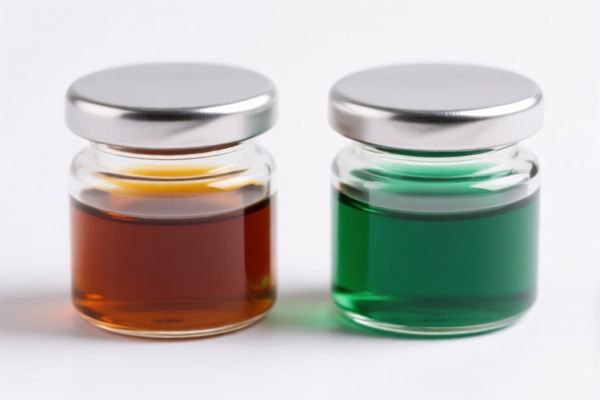


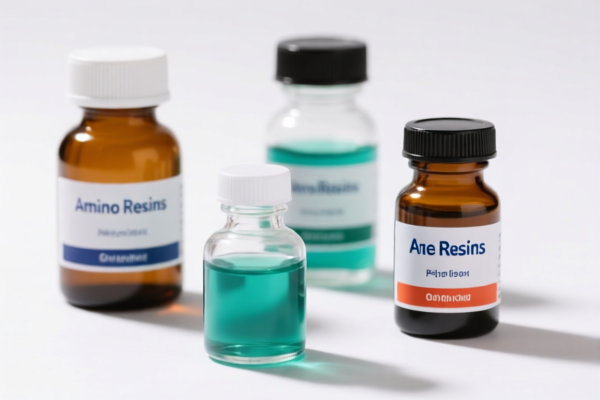
AI Analysis
🧪 Amino Resin Emulsion (Amino Resin Solution)
🌐 HS Code Reference & Customs Clearance Guide | 2024/2025 Latest Tariff Analysis | Professional Clearance Strategy
📌 I. Product Definition & Classification: What is "Amino Resin Emulsion"?
Amino Resins (such as Melamine-Formaldehyde, Urea-Formaldehyde, and Phenol-Formaldehyde resins) are a class of thermosetting synthetic organic polymers. In international trade, Amino Resin Emulsion (often referred to as Amino Resin Solution) typically refers to these resins dissolved or dispersed in water or solvents, used extensively as: 1. Tanning Agents in the leather industry (Synthetic Organic Tanning Agents). 2. Binding Agents/Coatings in textiles, paper, and wood products. 3. Chemical Raw Materials for paints, adhesives, and laminates.
The classification depends heavily on whether it is deemed a tanning agent (Chapter 32) or a raw resin/plastic material (Chapter 39).
⚠️ Key Distinction Point:
- If primarily used for tanning leather and formulated specifically as a tanning agent → Chapter 32.
- If primarily used as a raw polymer/plastic material (e.g., for further processing into plastics or coatings) → Chapter 39.
📦 II. HS Code Classification Details (Based on Provided Data)
| HS Code | Product Description | Applicability | Tax Rate |
|---|---|---|---|
3202.10.50.00 |
Synthetic Organic Tanning Agents | Leather tanning agents formulated from amino resins | 41.5% |
3202.10.10.00 |
Synthetic Organic Tanning Agents | Other synthetic organic tanning substances (Amino-based) | 41.5% |
3909.39.00.00 |
Amino Resins (Primary Forms) | Amino resin solutions/emulsions classified as primary forms of resins | 41.5% |
3909.10.00.00 |
Amino Resins in Primary Forms | Raw amino resin forms (solid/powder/liquid base) | 41.5% |
3911.90.91.10 |
Other Resins in Primary Forms | Other synthetic resins not specified elsewhere | 41.5% |
🔍 Key Reminder:
- All five HS Codes listed above carry the exact same total tax rate of 41.5%.
- Despite different classifications (Tanning Agent vs. Raw Resin), the financial impact is identical.
- Do not assume that "Chemical" (Ch 32) is cheaper than "Plastic Raw Material" (Ch 39) for this specific product under current US-China trade policies.
💰 III. Detailed Tariff Rate Breakdown (Including Surtaxes & Policy Add-ons)
✅ Applicable Country: United States (US)
✅ Origin: China (CN)
✅ Effective Time: Current (Subject to 301/122 Clause Regulations)
🎯 1. All HS Codes (3202.10.50.00, 3202.10.10.00, 3909.39.00.00, 3909.10.00.00, 3911.90.91.10)
| Item | Content |
|---|---|
| Base Duty Rate | 6.5% (Ad Valorem) |
| Section 301 Surtax | +25.0% (Targeted Chinese Goods) |
| Section 122 Surtax | +10.0% (Specific Clause for Certain Chemicals/Resins) |
| Total Tariff Rate | 41.5% |
| Tax Calculation | CIF Value × 41.5% |
| De Minimis Exemption | ❌ Not Applicable (High-value chemical imports generally excluded or below threshold but still taxed) |
| Legal Basis Path | USITC Base Duty → Section 301 (Footnote 1) → Section 122 (Specific Clause) |
📌 Explanation:
- Base 6.5%: Standard Most Favored Nation (MFN) duty for chemical/resin products.
- Section 301 25%: Imposed on a wide range of Chinese imports, including synthetic organic chemicals and plastics.
- Section 122 10%: Additional surtax applied to specific categories of goods, often including certain resin emulsions and tanning agents.
- Total 41.5%: This is a high-cost import category. Profit margins must account for this nearly doubling of the CIF value in tariffs.
🛠️ IV. Customs Clearance Practical Advice (Real-World Pitfall Avoidance)
✅ 1. Document Preparation Checklist (Essential)
| Document | Mandatory? | Notes |
|---|---|---|
| ✅ Technical Data Sheet (TDS) | ✔️ | Must specify: Solid content, pH, viscosity, intended use (tanning vs. coating). |
| ✅ Formula/Composition List | ✔️ | To prove it is an "Amino Resin" and not a different chemical (e.g., Epoxide). |
| ✅ Certificate of Analysis (COA) | ✔️ | Batch-specific test results. |
| ✅ Commercial Invoice | ✔️ | Clearly state "Amino Resin Emulsion/Solution" and NOT just "Glue" or "Chemical". |
| ✅ Bill of Lading (B/L) | ✔️ | Ensure commodity description matches invoice. |
| ✅ MSDS/SDS | ✔️ | Required for hazardous material handling during transport. |
| ✅ Origin Certificate | ✔️ | Essential for determining Section 301 applicability. |
✅ 2. Declaration Tips (Key Mnemonic)
🔥 "Be Specific: Amino Resin, Not Generic Chemical! Chapter 32 or 39, But Pay 41.5%!"
| Scenario | Correct Declaration | Incorrect Action |
|---|---|---|
| Used for Leather Tanning | 3202.10.xx.xx (Synthetic Tanning Agent) |
Declare as "General Chemical" → Risk of reclassification |
| Used as Coating Raw Material | 3909.xx.xx (Amino Resin) |
Declare as "Paint" → Wrong Chapter (3204) |
| Water-Based Solution | Emphasize "Emulsion/Solution" | Declare as "Solid Resin" → Inconsistent with physical state |
| Any of the above | Total Tax: 41.5% | Assume 0% or low duty → Severe Penalty! |
✅ 3. Special Cases & Handling
| Situation | Handling Suggestion |
|---|---|
| Mixed Use (Tanning + Binding) | Declare based on principal use. If >50% for tanning, use 3202. If primarily for plastics, use 3909. Tax is same, but compliance differs. |
| Import from Non-China Origin | If origin is USA, Germany, or India → 0% Section 301 Tax. Total tax drops to 6.5%. Verify CO! |
| Small Sample Shipments | Even small quantities are subject to 41.5% if not under de minimis thresholds (currently $800, but check specific exclusions). |
| Hazardous Classification | Check if the resin is flammable or corrosive. May require IMDG/IATA compliant packaging. |
🌍 V. Global Market Clearance Comparison (2024/2025)
| Country/Region | Recommended HS Code | Est. Tariff (China Origin) | Certification | Notes |
|---|---|---|---|---|
| 🇺🇸 USA | 3202.10.xx / 3909.xx |
41.5% | None specific | High due to Section 301 + 122 |
| 🇨🇳 China (Export) | 3202.10.xx / 3909.xx |
0% (Export Duty) | REACH (if EU bound) | No export tax, but check EU REACH |
| 🇪🇺 EU | 3202.10 / 3909 |
0% - 4.5% | REACH Registration | Very strict chemical registration requirements |
| 🇯🇵 Japan | 3202.10 / 3909 |
2.0% - 5.0% | None | JIS standards may apply |
📌 Conclusion:
- The US market is the most expensive for Amino Resin Emulsions from China due to the 41.5% combined tariff.
- EU/Japan have lower duties but higher regulatory barriers (REACH in EU, FPR in Japan).
- Cost-Saving Strategy: If sourcing from Vietnam, India, or USA, tariffs drop significantly (to ~6.5% or 0%).
📌 VI. Common Mistakes & Pitfalls (Lessons Learned)
❌ Mistake 1: Declaring as "General Chemicals" with vague description.
👉 Consequence: Customs may reclassify, causing delays, fines, and back-tariffs.
👉 Fix: Use precise terms: "Melamine-Formaldehyde Resin Solution, for Tanning."
❌ Mistake 2: Assuming "Emulsion" means it's a "Paint" or "Coating" (HS 3208/3209).
👉 Consequence: Wrong HS code. Paints have different duties and EPA regulations.
👉 Fix: Amino resin emulsion as a raw material is Ch 32 or 39. Finished paint is Ch 3208/3209.
❌ Mistake 3: Ignoring Section 122 Surtax.
👉 Consequence: Underpaying by 10%. Customs audits will catch this.
👉 Fix: Always add the 10% to the 25% + 6.5%.
🎯 VII. Conclusion: Professional Declaration, Cost Optimization!
🎯 Remember the Formula:
🔹 Base 6.5% + Section 301 25% + Section 122 10% = 41.5% Total Duty.
🔹 HS Code Choice (32 vs 39) Does NOT Change Tax, Only Compliance Requirements.
🔹 Origin is Key! Non-China Origin = Lower Duty.
📌 Tips:
- If you are importing large volumes, consider Bonded Warehouses or Foreign Trade Zones (FTZ) to defer duty payment.
- Check for Section 301 Exclusions annually (though currently, Amino Resins are mostly included).
- For EU exports, start REACH Registration early—it can take months and cost thousands.
📣 Immediate Action:
📞 Confirm Origin & Use Case with your supplier.
📄 Prepare Detailed TDS highlighting "Amino Resin" and "Emulsion/Solution".
💡 Calculate Landed Cost including 41.5% duty if from China.
✨ Precise Classification, Smooth Customs, Optimized Costs!
💼 Your Supply Chain Success Starts with Accurate HS Codes!
Customer Reviews
About HS Code Classification
The Harmonized System (HS) is an internationally standardized nomenclature developed by the World Customs Organization (WCO) to classify traded products. Over 200 countries use the HS system as the basis for customs tariffs, trade statistics, and import/export regulations.
Each HS code follows a hierarchical structure:
- Chapter (2 digits) — Broad category of goods (e.g., Chapter 84: Machinery and Mechanical Appliances)
- Heading (4 digits) — More specific grouping within the chapter
- Subheading (6 digits) — Internationally standardized breakdown, used by all WCO member countries
- National subdivisions (8-10 digits) — Country-specific extensions for further classification, such as US HTSUS 10-digit codes
Correct HS code classification is essential for smooth customs clearance, accurate duty payment, and compliance with trade regulations. Misclassification can lead to customs delays, overpayment of duties, or penalties.
When importing from CN to US, the applicable tariff rates may include:
- Most-Favored-Nation (MFN) rate — The standard duty rate applied to WTO members
- General rate — Applied to countries without trade agreements
- Trade remedy duties — Additional tariffs such as Section 301 (anti-dumping), Section 232 (national security), or countervailing duties
The information provided on this page is for reference purposes only. For official classification, please consult with your local customs authority or a licensed customs broker.