Amino Resistant Flame Retardant Board
CN → US| HS Code | Tariff Rate | Origin | Destination | Doc |
|---|---|---|---|---|
| 3921905010 | 39.8% | CN | US | Official Doc |
| 3921905050 | 39.8% | CN | US | Official Doc |
Product Images
AI Analysis
🧱 Amino Resistant Flame Retardant Board (Decorative Laminates)
🌐 HS Code Reference & Customs Clearance Guide | 2026 Latest Tariff Analysis | Professional-Grade Clearance Strategy
📌 I. Product Definition & Classification: What Exactly Is This "Board"?
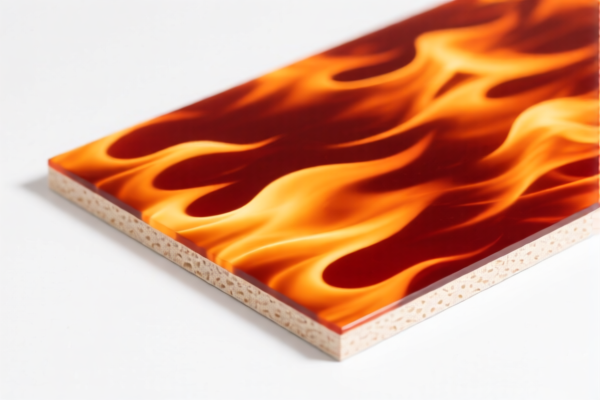
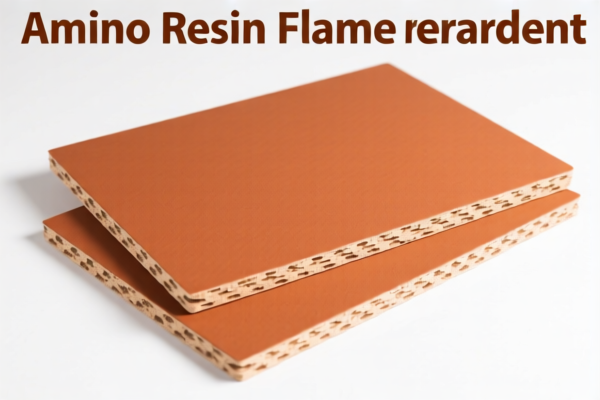
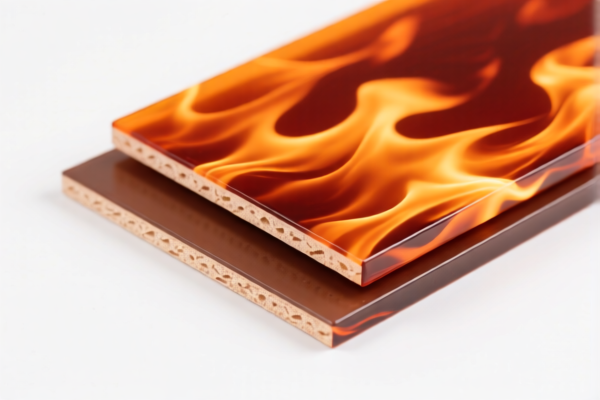
Amino Resistant Flame Retardant Board, commonly known in the industry as High-Pressure Decorative Laminates (HPL) or Compact Laminates, is a composite material primarily used for furniture surfaces, countertops, cabinetry, and wall paneling.
In international trade, this product is classified under Chapter 39: Plastics and Articles Thereof, specifically as plates, sheets, film, foil, and strip.
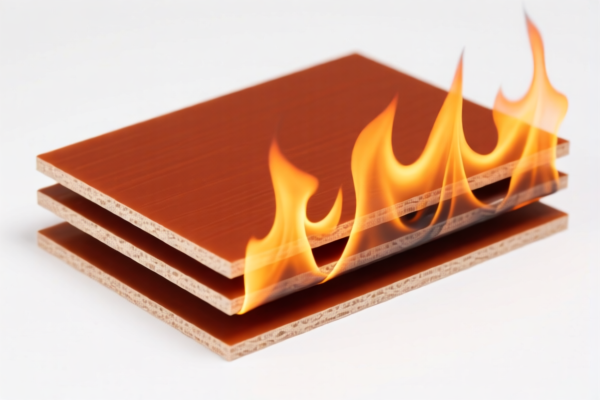
Key Components: 1. Base Material: Kraft paper impregnated with aminoplast resins (melamine-formaldehyde or urea-formaldehyde). 2. Surface Layer: Decorative paper with a transparent overlay. 3. Processing: High pressure and high temperature curing. 4. Features: * Amino Resistant: Resistant to stains, chemicals, and heat due to the melamine resin. * Flame Retardant: Treated or formulated to meet fire safety standards (e.g., Class A, B1).
⚠️ Critical Classification Point:
- If it is a sheet/panel made of plastics (resin-impregnated paper) → HS Code 3921.
- If it is a finished wooden furniture item → HS Code 9403 (NOT applicable here as the input implies the board material itself).
- This guide focuses on the raw/semi-finished laminated boards.
📦 II. HS Code Classification Details (2026 Latest Tariff Authority)
Based on the provided data, there are two specific sub-categories for "Other plates, sheets, film, foil and strip, of plastics" within heading 3921. The distinction lies in whether the product is specifically identified as "High pressure paper reinforced decorative laminates" or falls under "Other."
| HS Code | Product Description | Application Scenario | Specific Characteristic |
|---|---|---|---|
3921.90.50.10 |
Other High pressure paper reinforced decorative laminates | Furniture surfaces, kitchen countertops, wall cladding | ✅ Specifically decorative and high-pressure reinforced with paper |
3921.90.50.50 |
Other Other | Industrial laminates, non-decorative protective sheets, generic plastic sheets | ❌ Generic "other" plastics; not specifically identified as decorative laminates |
🔍 Key Distinction for Customs:
- HS 3921.90.50.10 is the standard classification for typical decorative laminates (like Formica, Caesarstone, or HPL sheets) used in home/office interiors. It explicitly mentions "paper reinforced" and "decorative."
- HS 3921.90.50.50 is a catch-all for plastic sheets/plates that do not fit other specific descriptions. Use this ONLY if the product is not decorative (e.g., pure industrial protection sheet) or if customs authorities require a broader category.
- Recommendation: For Amino Resistant Decorative Boards,3921.90.50.10is the most accurate and commonly accepted code.
💰 III. 2026 Latest Tariff Rate Details (Including Surcharge & Policy Add-ons)
✅ Applicable Country: United States (US)
✅ Country of Origin: China (CN)
✅ Effective Date: 2025 November 10 onwards (and subsequent imports)
🎯 1. 3921.90.50.10 — High Pressure Paper Reinforced Decorative Laminates
| Item | Content |
|---|---|
| Basic Tariff Rate | 4.8% (ad valorem) |
| Section 301 Surcharge | +25.0% (USITC Footnote 9903.88.01) |
| Total Tax Rate | 29.8% |
| Tax Calculation | CIF Value × 29.8% |
| De Minimis Eligibility | ❌ Not Eligible (deny_de_minimis) |
| Legal Basis Path | USITC:3921.90.50.10 → FOOTNOTE:9903.88.01 → Section 301 |
📌 Explanation:
- The 4.8% is the standard MFN (Most Favored Nation) tariff for other plastic plates/sheets.
- The 25.0% is the Section 301 Additional Duty imposed on Chinese-origin goods under HTS 3921.90.50.
- Total Burden: 29.8% is significant. This must be factored into landed cost calculations.
- Note: No tariff exclusions currently apply to decorative laminates from China.
🎯 2. 3921.90.50.50 — Other Other (Plastic Plates/Sheets)
| Item | Content |
|---|---|
| Basic Tariff Rate | 4.8% (ad valorem) |
| Section 301 Surcharge | +25.0% (USITC Footnote 9903.88.01) |
| Total Tax Rate | 29.8% |
| Tax Calculation | CIF Value × 29.8% |
| De Minimis Eligibility | ❌ Not Eligible (deny_de_minimis) |
| Legal Basis Path | USITC:3921.90.50.50 → FOOTNOTE:9903.88.01 → Section 301 |
📌 Note:
- The tax rate is identical (29.8%) to the decorative laminate code.
- However, misclassifying decorative laminates as "Other Other" may trigger customs audits or re-classification penalties if evidence of decorative use is found.
- Always provide product samples and specs to prove the nature of the laminate.
🛠️ IV. Customs Clearance Practical Advice (Risk Mitigation Guide)
✅ 1. Documentation Checklist (Mandatory)
| Document | Required | Description |
|---|---|---|
| ✅ Commercial Invoice | ✔️ | Must clearly state "Amino Resistant Flame Retardant Decorative Laminate Board" |
| ✅ Packing List | ✔️ | Detail net/gross weight, dimensions, and number of sheets |
| ✅ Product Specification Sheet | ✔️ | Include: Thickness, Size, Resin Type (Melamine/Urea), Flame Rating (e.g., ASTM E84 Class A), Density |
| ✅ Certificate of Origin | ✔️ | If originating from China, confirm country of origin to apply 301 duties correctly |
| ✅ Flame Retardancy Test Report | ✔️ | Provide lab results (e.g., UL 94, ASTM E84) to justify "Flame Retardant" claim |
| ✅ HS Code Pre-Ruling | ✔️ | Highly recommended to avoid disputes over 3921.90.50.10 vs .50 |
✅ 2. Declaration Strategy (Key Tips)
🔥 "Be Specific, Declare Clearly, Avoid Ambiguity!"
| Scenario | Correct Declaration | Wrong Practice |
|---|---|---|
| Standard Decorative HPL | 3921.90.50.10 – "High pressure paper reinforced decorative laminates, amino resin, flame retardant" |
Generic "Plastic Sheet" → May be reclassified |
| Industrial Non-Decorative Sheet | 3921.90.50.50 – "Other plastic plates, non-decorative" |
Claiming decorative if not → Penalty |
| Mixed Shipment | Split HS codes if both types present | Combining into one generic code → Audit risk |
| Origin Declaration | Clearly mark "Made in China" on invoice | Omitting origin → Delayed clearance |
✅ 3. Special Considerations
| Issue | Handling Advice |
|---|---|
| Flame Retardant Certification | Ensure reports are from ACcredited Labs (e.g., UL, Intertek, SGS). Customs may request this to verify safety claims. |
| Amino Resin Content | If resin content is <50%, it may still be classified as plastic if it retains essential character. Provide formulation details. |
| Sample Submission | For new suppliers, submit a physical sample for Customs Advance Ruling to lock in the HS code. |
| Anti-Dumping/Countervailing | Check if specific anti-dumping duties apply to melamine-formaldehyde resins from your specific producer. |
🌍 V. Global Market Comparison (2026 Latest)
| Country/Region | Recommended HS Code | Tariff (China Origin) | Certification Requirements | Notes |
|---|---|---|---|---|
| 🇺🇸 USA | 3921.90.50.10 |
29.8% | ASTM E84, UL 94 | High 301 tariff applies; no exemption |
| 🇨🇳 China | 3921.90.50.10 |
0% (Export) / Varies (Import) | GB/T 15102, GB 8624 | Domestic standard compliance |
| 🇪🇺 EU | 3921.90.90 |
6.5% | CE, REACH, CPR (Euroclass B-s1,d0) | No 301-style surcharge |
| 🇬🇧 UK | 3921.90.90 |
6.5% | UKCA, Fire Rating | Post-Brexit rules apply |
| 🇨🇦 Canada | 3921.90.90.10 |
5% | CAN/ULC-S102 | CUSMA eligible if originating |
📌 Conclusion:
- USA is the most expensive market due to the 25% Section 301 surcharge.
- EU/UK have lower base tariffs but strict fire safety certifications (Euroclass).
- Canada offers better rates under CUSMA if manufactured in North America.
📌 VI. Common Errors & Pitfalls (Lessons Learned)
❌ Error 1: Declaring as "Wood Panels" (HS 4418)
👉 Consequence: Misclassification; customs may reject or impose higher duties + penalties.
❌ Error 2: Omitting "Flame Retardant" in description
👉 Consequence: If flagged, customs may require additional testing, causing delays.
❌ Error 3: Using Generic "Plastic Sheet" Code
👉 Consequence: Triggers audit for missing specific sub-heading (decorative vs. non-decorative).
❌ Error 4: Not Providing Test Reports
👉 Consequence: Customs may deny the "Flame Retardant" claim, affecting insurance or building code compliance.
✅ Correct Practice:
"Amino Resin Decorative Laminate, High Pressure, Flame Retardant Class A, 12mm, Melamine Overlay, HS 3921.90.50.10"
🎯 VII. Conclusion: Professional Clearance, Cost Efficiency
🎯 Remember the Rules:
🔹 "Decorative = 3921.90.50.10; Industrial = 3921.90.50.50"
🔹 "USA Tax = 4.8% + 25% = 29.8% — Plan Your Margin!"
🔹 "Fire Rating Report is Mandatory for Safe Clearance"
📌 Pro Tip:
If your product is shipped to the US, calculate the 29.8% duty into your FOB price. For non-US markets, focus on local fire safety certifications (Euroclass, GB, etc.) to ensure smooth entry.
📣 Immediate Action:
📞 Contact your customs broker + Provide Test Reports + Verify HS Code Pre-Ruling
🚀 Ensure your Amino Resistant Flame Retardant Boards clear customs without delays!
✨ Professional clearance starts with accurate classification!
💼 Every percentage point of duty affects your bottom line!
Customer Reviews
About HS Code Classification
The Harmonized System (HS) is an internationally standardized nomenclature developed by the World Customs Organization (WCO) to classify traded products. Over 200 countries use the HS system as the basis for customs tariffs, trade statistics, and import/export regulations.
Each HS code follows a hierarchical structure:
- Chapter (2 digits) — Broad category of goods (e.g., Chapter 84: Machinery and Mechanical Appliances)
- Heading (4 digits) — More specific grouping within the chapter
- Subheading (6 digits) — Internationally standardized breakdown, used by all WCO member countries
- National subdivisions (8-10 digits) — Country-specific extensions for further classification, such as US HTSUS 10-digit codes
Correct HS code classification is essential for smooth customs clearance, accurate duty payment, and compliance with trade regulations. Misclassification can lead to customs delays, overpayment of duties, or penalties.
When importing from CN to US, the applicable tariff rates may include:
- Most-Favored-Nation (MFN) rate — The standard duty rate applied to WTO members
- General rate — Applied to countries without trade agreements
- Trade remedy duties — Additional tariffs such as Section 301 (anti-dumping), Section 232 (national security), or countervailing duties
The information provided on this page is for reference purposes only. For official classification, please consult with your local customs authority or a licensed customs broker.