Ammonia Water
CN → US| HS Code | Tariff Rate | Origin | Destination | Doc |
|---|---|---|---|---|
| 2814200000 | 35.0% | CN | US | Official Doc |
| 2814100000 | 35.0% | CN | US | Official Doc |
Product Images
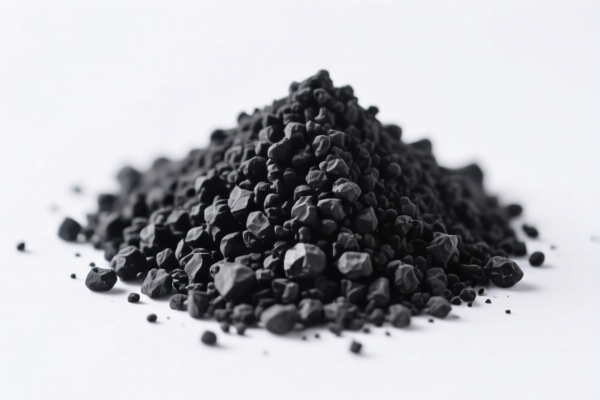
AI Analysis
💧 Ammonia Water (Aqueous Ammonia Solution)
🌐 HS Code Reference & Clearance Guide | 2026 Latest Tariff Analysis | Professional Customs Strategy
📌 1. Product Definition & Classification: Understanding "Ammonia Water"
Ammonia Water, scientifically known as Aqueous Ammonia Solution, is a solution of ammonia gas ($NH_3$) in water. In international trade, the distinction between "Anhydrous Ammonia" (pure, liquid under pressure) and "Aqueous Solution" (ammonia dissolved in water) is critical for accurate HS Code classification and tariff calculation.
⚠️ Key Distinction:
- Anhydrous Ammonia: Pure ammonia, typically stored in pressurized tanks. → Classified under 2814.10.
- Aqueous Ammonia Solution: Ammonia dissolved in water (common concentrations range from 10% to 30%+). → Classified under 2814.20.
- If the product is "Ammonia Water" or "Ammonia Solution," it MUST be classified under 2814.20.00.00, NOT 2814.10.00.00.
📦 2. HS Code Classification Details (2026 Latest Tariff Authority)
Based on the provided data, here are the relevant HS Codes and their descriptions. Note that while Anhydrous Ammonia is listed, Ammonia Water specifically maps to the aqueous solution code.
| HS Code | Product Description | Applicable Scenario | Tax Rate (Total) |
|---|---|---|---|
2814.20.00.00 |
Ammonia, anhydrous or in aqueous solution: Ammonia in aqueous solution | Ammonia Water, cleaning agents, industrial alkaline solutions | 25.0% |
2814.10.00.00 |
Ammonia, anhydrous or in aqueous solution: Anhydrous ammonia | Pure ammonia gas/liquid (pressurized), refrigerant, fertilizer precursor | 25.0% |
🔍 Critical Reminder:
- Ammonia Water =2814.20.00.00.
- Do NOT misclassify Ammonia Water as Anhydrous Ammonia (2814.10.00.00) even though the tax rate is currently the same in this dataset. Misclassification can lead to inspection delays, additional duties, or penalties if the physical state (liquid vs. pressurized gas) is checked.
- Both codes currently share the same 25.0% total tax rate in this specific dataset.
💰 3. 2026 Latest Tariff Rate Breakdown (Including Surcharges)
✅ Applicable Country: United States (US)
✅ Origin: China (CN) (Note: Tax details provided in DATA suggest this applies to Chinese-origin goods)
✅ Effective Time: Current rates as per provided data
🎯 1. 2814.20.00.00 —— Ammonia in Aqueous Solution (Ammonia Water)
| Item | Content |
|---|---|
| Base Duty Rate | 0.0% (ad valorem) |
| Additional Tariff | +25.0% |
| Total Tax Rate | 25.0% |
| Tax Calculation | CIF Value × 25% |
| De Minimis Exemption | ❌ Not Applicable (Chemicals often excluded or low threshold) |
| Legal Basis Path | USITC:2814.20.00.00 → FOOTNOTE:Section 301 Tariffs |
📌 Explanation:
- The Base Rate is 0%, meaning without any trade disputes or surcharges, it would be duty-free.
- However, a 25.0% Additional Tariff is applied. This is typically associated with Section 301 tariffs on Chinese goods.
- Total Effective Duty: 25%.
- Since Ammonia Water is a chemical intermediate and often used in industrial cleaning or agriculture, it is heavily regulated. Ensure proper safety data sheets (SDS) are provided.
🎯 2. 2814.10.00.00 —— Anhydrous Ammonia (For Comparison)
| Item | Content |
|---|---|
| Base Duty Rate | 0.0% |
| Additional Tariff | +25.0% |
| Total Tax Rate | 25.0% |
| Tax Calculation | CIF Value × 25% |
📌 Note: While Anhydrous Ammonia has the same rate in this dataset, it is a hazardous material with different packaging requirements (pressure vessels) compared to Aqueous Solution (drums/IBCs).
🛠️ 4. Customs Clearance Practical Advice (Real-World Pitfall Guide)
✅ 1. Required Documentation Checklist (Essential)
| Document | Must Provide | Description |
|---|---|---|
| ✅ Safety Data Sheet (SDS) | ✔️ Critical | Must comply with OSHA/Hazcom standards. Clearly state concentration of $NH_3$. |
| ✅ Product Specification Sheet | ✔️ | Include exact percentage of ammonia in water (e.g., 25% solution). |
| ✅ Commercial Invoice | ✔️ | Clearly describe as "Ammonia, Aqueous Solution, [X]% NH3". Avoid vague terms like "Cleaning Chemical." |
| ✅ UN Packing Certificate | ✔️ | Ammonia is a hazardous good. Must be packed in compliant IBCs or drums with proper UN markings. |
| ✅ Certificate of Origin | ✔️ | To prove origin for tariff calculation. |
| ✅ Hazmat Declaration | ✔️ | For ocean/air freight, a proper Hazardous Materials Declaration is required. |
✅ 2. Declaration Tips (Key Mantra)
🔥 "Concentration Matters, SDS is King, Hazmat Compliance is Non-Negotiable!"
| Scenario | Correct Declaration | Wrong Practice |
|---|---|---|
| Ammonia dissolved in water (e.g., 25%) | 2814.20.00.00 – "Aqueous Ammonia Solution, 25%" |
Declaring as "Cleaning Agent" without HS code → Delay |
| Pure Ammonia (under pressure) | 2814.10.00.00 – "Anhydrous Ammonia" |
Declaring as "Liquid" without pressure specs → Safety Violation |
| Ammonia with other additives | Check Chapter 38 or 2814 depending on primary purpose | Mixing codes → Audit Risk |
📌 Key Point:
- Aqueous Ammonia is considered a hazardous substance for transport (UN 2672).
- Ensure the HS Code2814.20.00.00is explicitly stated on the commercial invoice.
- The 25% tariff is significant. Plan cash flow accordingly.
✅ 3. Special Handling
| Situation | Handling Advice |
|---|---|
| High Concentration (>30%) | Still 2814.20.00.00. Ensure proper labeling as "Corrosive." |
| Dilute Solution (<10%) | Still 2814.20.00.00 unless exempted by local laws (check if it qualifies as a simple cleaning solution with no chemical regulatory status). |
| Packaging: Use IBCs or HDPE drums. Ensure UN certification. | |
| Origin: If not from China, verify if the 25% surcharge still applies (e.g., Vietnam, Mexico may have different rates). |
🌍 5. Global Market Comparison (2026 Latest)
| Country/Region | Recommended HS Code | Tariff (China Origin) | Certification Requirements | Notes |
|---|---|---|---|---|
| 🇺🇸 USA | 2814.20.00.00 |
25.0% | SDS, Hazmat Compliant | High tariff due to Section 301. |
| 🇨🇳 China | 2814.20.00.00 |
0% | GB Standards | No import duty for domestic production. |
| 🇪🇺 EU | 2814.20.00.00 |
0% (often) | REACH, CLP | Check REACH registration status. |
| 🇬🇧 UK | 2814.20.00.00 |
0% | UK REACH | Post-Brexit regulations apply. |
📌 Conclusion:
- The USA imposes a 25% additional duty on Ammonia Water from China.
- EU/UK generally have lower or zero base duties, but REACH registration is a major barrier.
- Always verify the exact concentration and hazard class to ensure proper classification.
📌 6. Common Mistakes & Pitfalls (Lessons Learned)
❌ Mistake 1: Declaring Ammonia Water as "Cleaning Chemical" without specifying HS Code
👉 Consequence: Customs may reclassify it under a higher duty rate or demand additional testing.
❌ Mistake 2: Confusing Aqueous Ammonia with Anhydrous Ammonia
👉 Consequence: Even if rates are similar, the transport mode and safety requirements differ drastically. Misdeclaration can lead to shipment rejection.
❌ Mistake 3: Ignoring the 25% Tariff in Cost Calculations
👉 Consequence: Profit margins wiped out. 25% is a significant cost addition.
✅ Correct Practice:
"Aqueous Ammonia Solution, 25% NH3, UN 2672, Hazard Class 8, For Industrial Use, HS Code 2814.20.00.00"
🎯 7. Conclusion: Professional Declaration Saves Money and Time
🎯 Remember the Mantra:
🔹 "Aqueous = 2814.20, Anhydrous = 2814.10"
🔹 "25% Tariff for US Imports from China"
🔹 "SDS is Mandatory, Hazmat Compliance is Critical"
📌 Pro Tip:
If you are importing Ammonia Water into the US, budget for the 25% additional duty.
Consider duty drawback programs if the ammonia is used in manufacturing and re-exported.
Ensure your supplier provides accurate SDS with the correct UN number (UN 2672) for safe transport.
📣 Immediate Action:
📞 Contact a licensed customs broker
📄 Prepare SDS and Commercial Invoice
💰 Calculate Total Landed Cost (CIF + 25% Duty + Handling)
🚀 Ensure smooth, compliant clearance!
✨ Professional Customs Clearance Starts with Accurate Classification!
💼 Every percent of duty matters in your bottom line!
Customer Reviews
About HS Code Classification
The Harmonized System (HS) is an internationally standardized nomenclature developed by the World Customs Organization (WCO) to classify traded products. Over 200 countries use the HS system as the basis for customs tariffs, trade statistics, and import/export regulations.
Each HS code follows a hierarchical structure:
- Chapter (2 digits) — Broad category of goods (e.g., Chapter 84: Machinery and Mechanical Appliances)
- Heading (4 digits) — More specific grouping within the chapter
- Subheading (6 digits) — Internationally standardized breakdown, used by all WCO member countries
- National subdivisions (8-10 digits) — Country-specific extensions for further classification, such as US HTSUS 10-digit codes
Correct HS code classification is essential for smooth customs clearance, accurate duty payment, and compliance with trade regulations. Misclassification can lead to customs delays, overpayment of duties, or penalties.
When importing from CN to US, the applicable tariff rates may include:
- Most-Favored-Nation (MFN) rate — The standard duty rate applied to WTO members
- General rate — Applied to countries without trade agreements
- Trade remedy duties — Additional tariffs such as Section 301 (anti-dumping), Section 232 (national security), or countervailing duties
The information provided on this page is for reference purposes only. For official classification, please consult with your local customs authority or a licensed customs broker.