Ammonium Nitrate
CN → US| HS Code | Tariff Rate | Origin | Destination | Doc |
|---|---|---|---|---|
| 3102210000 | 35.0% | CN | US | Official Doc |
| 3105900050 | 35.0% | CN | US | Official Doc |
| 3102290000 | 35.0% | CN | US | Official Doc |
| 3105590000 | 35.0% | CN | US | Official Doc |
| 2808000010 | 35.0% | CN | US | Official Doc |
Product Images
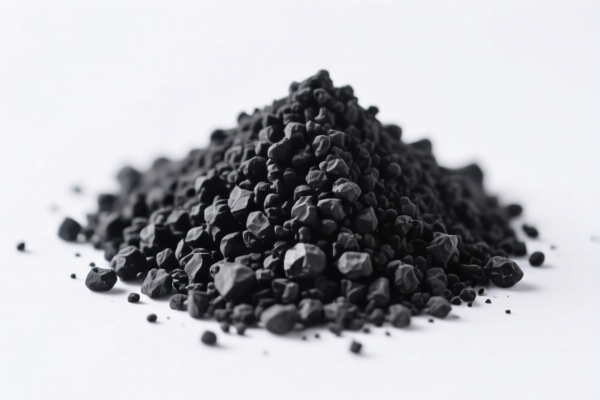
AI Analysis
🧪 Ammonium Nitrate (Fertilizers & Inorganic Acids)
🌐 HS Code Reference & Customs Clearance Guide | 2026 Tariff Full Analysis | Professional Clearance Strategy
📌 I. Product Definition & Classification: Do You Really Know "Ammonium Nitrate"?
Ammonium Nitrate (NH₄NO₃) is a chemical compound widely used in agriculture as a high-nitrogen fertilizer and in industrial applications (such as explosives). In international trade, its classification depends heavily on its purity, formulation, and specific chemical characteristics.
Based on the provided data, it is classified under four potential HS Codes, all falling under the broader category of Fertilizers (Chapter 31) and Inorganic Acids (Chapter 28).
⚠️ Key Distinction:
- Pure/Single-Component Fertilizers: Directly used as nitrogen sources →3102.21.00.00/3102.29.00.00
- Compound Fertilizers: Contains N, P, K combinations →3105.90.00.50/3105.59.00.00
- Inorganic Acid Variant: If classified as a raw inorganic acid intermediate →2808.00.00.10
📦 II. HS Code Classification Details (2026 Latest Tariff Authority Comparison)
| HS Code | Product Description | Applicability Scenario | Key Feature |
|---|---|---|---|
3102.21.00.00 |
Ammonium Nitrate; belonging to nitrogen mineral or chemical fertilizers | Pure ammonium nitrate fertilizer; basic nitrogen source | ✅ Single-element N fertilizer |
3102.29.00.00 |
Nitrogenous fertilizers; belonging to the nitrogen fertilizer category, fitting other category material characteristics | Other forms of ammonium nitrate not specifically listed in 3102.21 | ✅ Other N-fertilizer forms |
3105.90.00.50 |
Nitrogenous fertilizer; fits mineral or chemical fertilizers containing two or three fertilizer elements (N, P, K) | Compound fertilizer containing N + P/K or other combinations | ✅ Multi-element compound |
3105.59.00.00 |
Nitrogenous fertilizer; fits containing nitrogen and phosphorus two fertilizer elements | DAP/MAP blends or specific N-P compounds | ✅ N + P combination |
2808.00.00.10 |
Nitric Acid/Nitrogenous compounds; inorganic acid, completely consistent with material classification in explanatory notes | Raw chemical intermediate or specific inorganic acid form | ❌ Industrial Chemical/Inorganic Acid |
🔍 Key Reminder:
- Agricultural Grade (high purity, granular/pelletized for farming) typically falls under Chapter 31 (3102or3105).
- Industrial Grade or specific inorganic acid derivatives may fall under Chapter 28 (2808), but this is less common for direct agricultural application.
- Misclassification Risk: Declaring a compound fertilizer (N+P) as simple ammonium nitrate (3102) to avoid complexity can lead to customs rejection or penalties.
💰 III. 2026 Latest Tariff Rate Details (Including Surcharge Taxes & Policy Add-ons)
✅ Applicable Country: United States (US)
✅ Origin: China (CN)
✅ Effective Time: 2025 November 10 onwards (including subsequent imports)
🎯 1. 3102.21.00.00 —— Ammonium Nitrate (Pure Nitrogen Fertilizer)
| Item | Content |
|---|---|
| Base Tariff | 0.0% (ad valorem) |
| Retaliatory Surcharge (Section 301) | +25.0% |
| Section 122 Tariff | +10.0% |
| Total Tax Rate | 35.0% |
| Tax Calculation | CIF Value × 35% |
| De Minimis Exemption Eligible? | ❌ No (deny_de_minimis) |
| Legal Basis Path | Section 301 → Section 122 → USITC:3102.21.00.00 |
📌 Explanation:
- "Retaliatory Surcharge 25%": From the US Trade Act Section 301 list targeting Chinese goods.
- "Section 122 Tariff 10%": Specific additional duty applied to agricultural/chemical inputs under Section 122.
- Total 35%: A significant cost burden. Must be factored into pricing strategies.
🎯 2. 3102.29.00.00 —— Other Nitrogenous Fertilizers (Ammonium Nitrate Variant)
| Item | Content |
|---|---|
| Base Tariff | 0.0% |
| Retaliatory Surcharge (Section 301) | +25.0% |
| Section 122 Tariff | +10.0% |
| Total Tax Rate | 35.0% |
| Tax Calculation | CIF Value × 35% |
| De Minimis Exemption Eligible? | ❌ No |
| Legal Basis Path | Section 301 → Section 122 → USITC:3102.29.00.00 |
📌 Note:
- Identical tax structure to3102.21.00.00.
- Applies to ammonium nitrate forms that do not fit the specific description of3102.21but remain pure nitrogen fertilizers.
🎯 3. 3105.90.00.50 —— Compound Fertilizers (N+P/K Mix)
| Item | Content |
|---|---|
| Base Tariff | 0.0% |
| Retaliatory Surcharge (Section 301) | +25.0% |
| Section 122 Tariff | +10.0% |
| Total Tax Rate | 35.0% |
| Tax Calculation | CIF Value × 35% |
| De Minimis Exemption Eligible? | ❌ No |
| Legal Basis Path | Section 301 → Section 122 → USITC:3105.90.00.50 |
📌 Note:
- Applies if the product is a compound fertilizer containing Nitrogen AND Phosphorus/Potassium.
- Even if it contains ammonium nitrate as a component, the presence of other elements shifts it to Chapter 31.05.
🎯 4. 3105.59.00.00 —— Fertilizers Containing N & P
| Item | Content |
|---|---|
| Base Tariff | 0.0% |
| Retaliatory Surcharge (Section 301) | +25.0% |
| Section 122 Tariff | +10.0% |
| Total Tax Rate | 35.0% |
| Tax Calculation | CIF Value × 35% |
| De Minimis Exemption Eligible? | ❌ No |
| Legal Basis Path | Section 301 → Section 122 → USITC:3105.59.00.00 |
📌 Note:
- Specifically for fertilizers containing Nitrogen and Phosphorus.
- Common for DAP (Diammonium Phosphate) or similar blends involving nitrogen sources.
🎯 5. 2808.00.00.10 —— Inorganic Acids (Nitric Acid/Nitrogen Compounds)
| Item | Content |
|---|---|
| Base Tariff | 0.0% |
| Retaliatory Surcharge (Section 301) | +25.0% |
| Section 122 Tariff | +10.0% |
| Total Tax Rate | 35.0% |
| Tax Calculation | CIF Value × 35% |
| De Minimis Exemption Eligible? | ❌ No |
| Legal Basis Path | Section 301 → Section 122 → USITC:2808.00.00.10 |
📌 Note:
- If the product is declared as an inorganic acid (e.g., nitric acid or specific nitrogen chemical intermediates not classified as fertilizers), it falls here.
- Caution: Misclassifying a fertilizer as an inorganic acid (or vice versa) is a common audit trigger. Ensure the chemical composition matches the "Inorganic Acid" definition in Chapter 28 explanatory notes.
🛠️ IV. Customs Clearance Practical Advice (Real-World Pitfall Guide)
✅ 1. Required Documentation Checklist (None Can Be Omitted)
| Document | Mandatory? | Description |
|---|---|---|
| ✅ Product Specification Sheet | ✔️ | Detailed chemical composition, purity %, physical form (granules, powder), and intended use (agricultural vs. industrial). |
| ✅ MSDS (Material Safety Data Sheet) | ✔️ | Critical for hazardous material handling. Ammonium nitrate is an oxidizer. |
| ✅ Certificate of Origin (CO) | ✔️ | Required to determine origin status (China vs. other). |
| ✅ Commercial Invoice | ✔️ | Must explicitly state "Ammonium Nitrate Fertilizer" or "Inorganic Acid" as per HS code. |
| ✅ Packing List | ✔️ | Net weight, gross weight, package dimensions. |
| ✅ Fertilizer Registration/Approval | ✔️ | If for agricultural use, some US states or federal agencies may require registration proof. |
✅ 2. Declaration Tips (Key Mnemonic)
🔥 "Specify Use, Match Composition, Avoid Ambiguity, Save 35% Headache!"
| Scenario | Correct Declaration | Wrong Practice |
|---|---|---|
| Pure Ammonium Nitrate (Agri) | 3102.21.00.00 "Ammonium Nitrate Fertilizer" |
Vague "Chemical Fertilizer" |
| N+P Compound | 3105.59.00.00 "Fertilizer Containing Nitrogen and Phosphorus" |
Declaring as pure N-fertilizer |
| Inorganic Acid Intermediate | 2808.00.00.10 "Nitric Acid / Inorganic Compound" |
Declaring as "Fertilizer" |
| Mixed Bag (Fertilizer + Accessory) | Declare Main Item | Splitting items unnecessarily |
📌 Warning:
- Do NOT use generic terms like "White Powder" or "Salt."
- Do NOT assume all nitrogen products are3102. If it contains P or K, it is3105.
- Do NOT ignore the 35% total tax. Budget accordingly.
✅ 3. Special Case Handling
| Scenario | Handling Advice |
|---|---|
| Hazardous Material Transport | Ammonium nitrate is an oxidizer. Ensure proper UN packaging and labeling for IATA/IMDG compliance. |
| Industrial vs. Agricultural | If used for explosives (strictly regulated), additional ATF (Bureau of Alcohol, Tobacco, Firearms and Explosives) documentation may be required. Agricultural use is simpler but still taxed. |
| Origin Determination | Verify if the product is 100% Chinese origin. If partially processed elsewhere, consult a customs broker for origin rules. |
🌍 V. Global Market Comparison (2026 Latest)
| Country/Region | Recommended HS Code | Tariff Rate | Certification Requirements | Notes |
|---|---|---|---|---|
| 🇺🇸 USA | 3102.21.00.00 / 3105.xxxx |
35% (China Origin) | MSDS, SDS, Fertilizer Reg | High tariffs; strict hazardous material checks |
| 🇨🇳 China | 3102.21.00.00 |
~0-5% | CCC (if applicable) | Low tariff; domestic production |
| 🇪🇺 EU | 3102.21.00 |
~0% (if no anti-dumping) | REACH, CLP | Anti-dumping duties may apply to Chinese N-fertilizers |
| 🇦🇺 Australia | 3102.21.00 |
~5% | GMP, Chemical List | Standard import controls |
| 🇯🇵 Japan | 3102.21.00 |
~0% | JIS Standards | Low tariff; high quality standards |
📌 Conclusion:
- USA imposes a significant 35% tariff on Chinese ammonium nitrate/fertilizers.
- Supply Chain Adjustment: Consider sourcing from non-China origins (e.g., Middle East, Europe) if possible to mitigate tariff impact.
- Alternative HS Code: While2808exists, it is generally for industrial acids, not fertilizers. Ensure correct classification to avoid penalties.
📌 VI. Common Errors & Pitfall Guide (Lessons Learned)
❌ Error 1: Declaring Compound Fertilizer (N+P) as Pure Ammonium Nitrate (3102)
👉 Consequence: Customs rejection, potential fines for misdeclaration. The correct code is 3105.59.00.00.
❌ Error 2: Ignoring the 35% Total Tariff
👉 Consequence: Cash flow issues, inability to pay duties at port, cargo demurrage fees.
❌ Error 3: Vague Description ("Chemical Powder")
👉 Consequence: Customs audit, delay in clearance, request for additional documentation.
❌ Error 4: Misclassifying as Inorganic Acid (2808) for Non-Acid Products
👉 Consequence: Regulatory mismatch. Ammonium nitrate is primarily a fertilizer (Chapter 31). Using 2808 without justification is risky.
✅ Correct Practice:
"Ammonium Nitrate Granules, 34.4% Nitrogen, Agricultural Fertilizer, HS Code 3102.21.00.00, Origin: China"
🎯 VII. Conclusion: Precise Declaration, Cost Control, Efficiency!
🎯 Remember the Mnemonic:
🔹 "N Only = 3102, N+P = 3105, Acid = 2808, Tax is 35%, No Exemption!"
🔹 "HS Code Determines Fate, 35% Tax is Real, Declare Accurately, Avoid Delays!"
📌 Pro Tip:
If your ammonium nitrate is originating from Vietnam, Indonesia, or other non-China sources, check for FATF (ASEAN-China FTA) or other regional trade agreements that may offer lower or zero tariffs.
Recommend Applying for a Pre-Ruling (Advance Ruling) from US Customs and Border Protection (CBP) to confirm the correct HS Code and tariff rate before shipment.
📣 Immediate Action:
📞 Contact a Professional Customs Broker + Provide Product Specs + Apply for HS Code Pre-Ruling
🚀 Ensure your Ammonium Nitrate, Smooth Customs, Efficient Export, Profit Protected!
✨ Professional Clearance Starts with Accurate Classification!
💼 Every Penny of Cost is Worth Precise Calculation!
Customer Reviews
About HS Code Classification
The Harmonized System (HS) is an internationally standardized nomenclature developed by the World Customs Organization (WCO) to classify traded products. Over 200 countries use the HS system as the basis for customs tariffs, trade statistics, and import/export regulations.
Each HS code follows a hierarchical structure:
- Chapter (2 digits) — Broad category of goods (e.g., Chapter 84: Machinery and Mechanical Appliances)
- Heading (4 digits) — More specific grouping within the chapter
- Subheading (6 digits) — Internationally standardized breakdown, used by all WCO member countries
- National subdivisions (8-10 digits) — Country-specific extensions for further classification, such as US HTSUS 10-digit codes
Correct HS code classification is essential for smooth customs clearance, accurate duty payment, and compliance with trade regulations. Misclassification can lead to customs delays, overpayment of duties, or penalties.
When importing from CN to US, the applicable tariff rates may include:
- Most-Favored-Nation (MFN) rate — The standard duty rate applied to WTO members
- General rate — Applied to countries without trade agreements
- Trade remedy duties — Additional tariffs such as Section 301 (anti-dumping), Section 232 (national security), or countervailing duties
The information provided on this page is for reference purposes only. For official classification, please consult with your local customs authority or a licensed customs broker.