Ammonium Vanadate
CN → US| HS Code | Tariff Rate | Origin | Destination | Doc |
|---|---|---|---|---|
| 3822190080 | 10.0% | CN | US | Official Doc |
| 2842909050 | 10.0% | CN | US | Official Doc |
| 3822190030 | 10.0% | CN | US | Official Doc |
| 3822190080 | 10.0% | CN | US | Official Doc |
| 2842909050 | 10.0% | CN | US | Official Doc |
Product Images
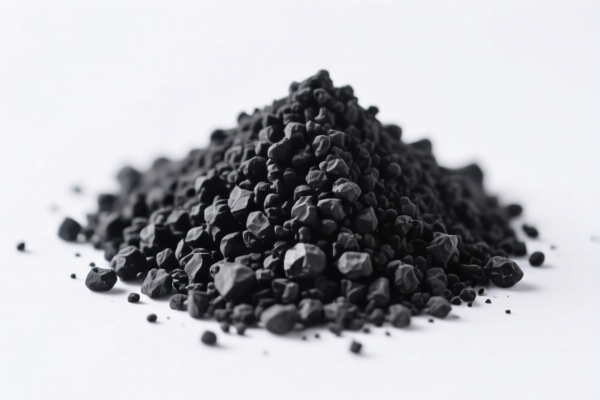
AI Analysis
🧪 Ammonium Vanadate (NH₄VO₃)
🌐 HS Code Reference & Customs Clearance Guide | 2026 Latest Tariff Analysis | Professional Entry Strategy
📌 I. Product Definition & Classification: Is Your Ammonium Vanadate a Chemical or a Reagent?
Ammonium Vanadate is a white crystalline powder, primarily used as an analytical reagent, catalyst, and in the production of vanadium alloys. In international trade, its classification depends entirely on its intended use and purity level.
There are two distinct pathways for customs clearance:
1. Laboratory/Diagnostic Reagent (HS 3822):
- If the Ammonium Vanadate is packaged for specific laboratory use, labeled as a "reagent," and intended for diagnostic or analytical purposes.
- Key Attribute: It is treated as a specialized chemical preparation rather than a raw industrial chemical.
2. Inorganic Salt (HS 2842):
- If the Ammonium Vanadate is intended for industrial processing, chemical synthesis, or general manufacturing, and not specifically packaged/labeled as a laboratory reagent.
- Key Attribute: It falls under the category of "other salts of inorganic acids."
⚠️ Critical Distinction Point:
- If the packaging explicitly states "For Laboratory Use" or "Reagent Grade" with specific purity/analytical details → Classify under 3822.19.00.80 / 3822.19.00.30.
- If it is bulk industrial grade, used as a catalyst precursor, or for material science manufacturing without specific reagent labeling → Classify under 2842.90.90.50.
📦 II. HS Code Classification Details (2026 Latest Tariff Authority Reference)
| HS Code | Product Description | Application Scenario | Material Attribute |
|---|---|---|---|
3822.19.00.80 |
Ammonium Vanadate Reagent; diagnostic/laboratory chemical | Analytical labs, quality control, specific diagnostic tests | ✅ Reagent (Chemical Preparation) |
3822.19.00.30 |
Ammonium Vanadate Reagent; specific chemical composition, no material conflict | Specialized laboratory applications, high-purity testing | ✅ Reagent (Chemical Preparation) |
2842.90.90.50 |
Ammonium Vanadate as an Inorganic Salt; other salts of inorganic acids (excluding selenides/tellurides) | Industrial catalysts, chemical synthesis, material production | ✅ Raw Chemical (Inorganic Salt) |
🔍 Key Reminder:
- Reagent Grade (3822): Requires clear labeling as a "Reagent" or "Diagnostic Chemical." Even if the chemical formula is the same, the packaging and declared purpose shift the code from 28xx to 38xx.
- Industrial Grade (2842): If used for making vanadium steel or as a general catalyst, it does not qualify as a reagent, regardless of purity, unless packaged specifically for lab use.
- No Conflicts: Both classifications explicitly exclude selenides and tellurides, but Ammonium Vanadate (a Vanadium compound) fits squarely into the "Other" categories for both.
💰 III. 2026 Latest Tariff Rate Breakdown (Including Additional Taxes & Policies)
✅ Applicable Country: United States (US)
✅ Origin: China (CN)
✅ Effective Date: From Nov 10, 2025 (and subsequent imports)
🎯 1. 3822.19.00.80 & 3822.19.00.30 —— Ammonium Vanadate Reagent
| Item | Details |
|---|---|
| Base Tariff | 0.0% (ad valorem) |
| Section 301 / Addl. Tariff | 0.0% |
| Section 122 Tariff | +10.0% |
| Total Effective Rate | 10.0% |
| Tax Calculation | CIF Value × 10% |
| De Minimis Eligibility | ❌ Not Applicable (Generally, chemicals are subject to full duty; check specific 321/501 exemptions if applicable, but standard entry is full duty) |
| Legal Basis Path | USITC:3822.19.00.80/30 → SECTION:122 |
📌 Explanation:
- The Base Tariff is 0%, which is advantageous.
- However, a 10% Section 122 Tariff applies. Note: Section 122 is often associated with specific national emergency provisions or retaliatory measures. Ensure your entry summary cites the correct statutory authority.
- No Section 301 (25%) or IEEPA (10%) applies to these reagent codes, making them significantly cheaper than other industrial chemical categories.
🎯 2. 2842.90.90.50 —— Ammonium Vanadate (Inorganic Salt)
| Item | Details |
|---|---|
| Base Tariff | 0.0% (Implied, as not listed in tax_detail, usually 0% for other salts) |
| Addl. Tariff | 0.0% |
| Section 122 Tariff | +10.0% |
| Total Effective Rate | +10.0% |
| Tax Calculation | CIF Value × 10% |
| De Minimis Eligibility | ❌ Not Applicable |
| Legal Basis Path | USITC:2842.90.90.50 → SECTION:122 |
📌 Explanation:
- Despite being an "Inorganic Salt" under Chapter 28, the tax detail shows Base: [Blank/0%] and Section 301/IEEPA: 0%.
- The 10% Section 122 Tariff still applies.
- Important: Do not confuse this with IEEPA tariffs. The data explicitly states "122 Clause Tariff 10%" and "Base Tariff 0.0%, Section 301 0.0%, IEEPA 0.0%."
- Net Result: Both classifications result in a 10% total duty, but the reagent code (3822) is explicitly listed with a clear 0% base, while the salt code (2842) shows a blank base (which typically means 0% in US HTS for many other salts, but confirmation with a broker is wise).📌 Critical Note on "122 Clause":
- Section 122 of the Tariff Act of 1930 allows the President to adjust tariffs for national defense reasons. This is distinct from Section 301 (Trade Act of 1974) or IEEPA (International Emergency Economic Powers Act).
- Ensure your customs broker files under Section 122, not 301, to avoid incorrect 25% or 10% IEEPA surcharges.
🛠️ IV. Customs Clearance Operational Advice (Practical Pitfall Guide)
✅ 1. Documentation Checklist (Mandatory)
| Document | Required | Description |
|---|---|---|
| ✅ Product Specification Sheet | ✔️ | Must clearly state: Ammonium Vanadate (NH₄VO₃), CAS Number (7803-86-1), Purity, and Intended Use. |
| ✅ Certificate of Analysis (COA) | ✔️ | Essential for reagents (3822) to prove purity and lab-grade status. |
| ✅ Commercial Invoice | ✔️ | Must explicitly state: "Ammonium Vanadate, Laboratory Reagent Grade" or "Ammonium Vanadate, Industrial Grade, Inorganic Salt". Do not leave "Use" blank. |
| ✅ Packaging Label Photos | ✔️ | Show labels like "For Laboratory Use Only" (for 3822) or generic chemical labels (for 2842). |
| ✅ MSDS (SDS) | ✔️ | Required for safety clearance. Section 2 (Hazardous Identification) and Section 14 (Transport Info) are critical. |
| ✅ HS Code Pre-Ruling | ✔️ | Recommended to confirm whether your specific batch qualifies as a "Reagent" under 3822 or a "Salt" under 2842. |
✅ 2. Declaration Strategy (Key Mantras)
🔥 "Reagent Label = 3822, Industrial Bulk = 2842. Both 10%, but 3822 is safer for purity claims!"
| Scenario | Correct Declaration | Risk of Error |
|---|---|---|
| Lab Reagent | 3822.19.00.80 |
Misclassifying as 2842 is low risk, but 3822 is more accurate for packaged reagents. |
| Industrial Catalyst | 2842.90.90.50 |
Misclassifying as 3822 (Reagent) may lead to rejection if "Reagent" labeling is missing. |
| Mixed Shipment | Separate Lines | Do not mix reagent packs with industrial bulk in one line item. |
📌 Warning:
- If you declare 2842 but provide a "Reagent" COA, Customs may ask for clarification.
- If you declare 3822 but the product is bulk industrial grade without reagent packaging, Customs may reclassify to 2842 (no penalty if tariff is same, but causes delay).
- Best Practice: Use 3822.19.00.80 if it is sold as a reagent. Use 2842.90.90.50 if it is a bulk chemical intermediate.
✅ 3. Special Circumstances
| Situation | Handling Advice |
|---|---|
| Small Quantity (Research) | If under $2,500 (de minimis), check if Section 321 applies. However, chemicals are often excluded from de minimis. Assume full duty. |
| Vanadium Content High | Ensure no "Vanadium Metal" or "Vanadium Alloy" components. It must be a Salt or Reagent. |
| Dual-Use Risk | Vanadium compounds are not typically dual-use restricted, but if used in nuclear or military applications, additional ITAR/EAR checks may apply. |
🌍 V. Global Market Comparison (2026 Latest)
| Country/Region | Recommended HS Code | Tariff | Certification | Notes |
|---|---|---|---|---|
| 🇺🇸 USA | 3822.19.00.80 or 2842.90.90.50 |
10% (Section 122) | None (Standard) | No Section 301/IEEPA if correctly classified under 122. |
| 🇨🇳 China | 3822.10.00.00 or 2842.90.90.00 |
Varies | N/A | Export from China usually has 0% export duty. |
| 🇪🇺 EU | 3822.00.90 or 2842.90 |
0%~6.5% | REACH Registration | REACH registration is mandatory for chemicals in EU. |
| 🇬🇧 UK | 3822.00.90 or 2842.90 |
0%~6.5% | UK REACH | Post-Brexit UK REACH registration required. |
| 🇯🇵 Japan | 3822.00.90 or 2842.90 |
0%~10% | CSV/JIS | No major barriers for chemical reagents. |
📌 Conclusion:
- The USA imposes a flat 10% tariff (Section 122) on both classifications, with no additional 25% or 10% IEEPA/301 tariffs if correctly categorized under this specific provision.
- EU/UK require REACH registration, which can be costly and time-consuming. Plan for this if exporting to Europe.
- China has no export duty, but ensure the US importer has the correct entry type.
📌 VI. Common Errors & Pitfall Guide (Lessons Learned)
❌ Error 1: Declaring Ammonium Vanadate as 2842 but labeling it as "Reagent" without proper chemical safety data.
👉 Consequence: Customs holds shipment for additional documentation → Delay + Storage Fees.
❌ Error 2: Assuming all Vanadium chemicals are subject to Section 301 (25%).
👉 Consequence: Overpayment. The data shows Section 122 (10%) applies, not 301. Do not pay 25% if 10% is correct.
❌ Error 3: Failing to distinguish between "Reagent" and "Industrial Salt" in the invoice.
👉 Consequence: Customs may reclassify. While the rate is the same (10%), the HS Code change triggers a different regulatory review, causing delays.
❌ Error 4: Ignoring Section 122 in the entry summary.
👉 Consequence: Automated systems may flag the entry for 100% exam because Section 122 is less commonly used and requires manual justification.
✅ Correct Action:
"Ammonium Vanadate, NH₄VO₃, Reagent Grade, for Laboratory Use Only, CAS 7803-86-1, HS 3822.19.00.80, Subject to Section 122 Tariff (10%)."
🎯 VII. Conclusion: Professional Declaration, Save Time, Reduce Cost!
🎯 Remember the Mantra:
🔹 "Reagent vs. Salt: Label Clearly!"
🔹 "10% Total, Not 25%! Check Section 122!"
🔹 "REACH for EU, Section 122 for US!"📌 Pro Tip:
- For USA Imports: Ensure your customs broker files under Section 122. Do not let automation apply Section 301 if 122 is applicable.
- For EU Imports: Start REACH registration early. It is the biggest barrier, not the tariff.
- Documentation: Keep the COA and Invoice perfectly aligned with the HS Code declaration.
📣 Immediate Action:
📞 Contact your Customs Broker → Provide Product Spec + Invoice + COA → Confirm Section 122 applicability.
🚀 Ensure Smooth Clearance, Avoid 25% Overpayment, and Optimize Supply Chain!
✨ Professional Clearance Starts with Accurate Classification!
💼 Every percent of duty matters in chemical trading!
Customer Reviews
About HS Code Classification
The Harmonized System (HS) is an internationally standardized nomenclature developed by the World Customs Organization (WCO) to classify traded products. Over 200 countries use the HS system as the basis for customs tariffs, trade statistics, and import/export regulations.
Each HS code follows a hierarchical structure:
- Chapter (2 digits) — Broad category of goods (e.g., Chapter 84: Machinery and Mechanical Appliances)
- Heading (4 digits) — More specific grouping within the chapter
- Subheading (6 digits) — Internationally standardized breakdown, used by all WCO member countries
- National subdivisions (8-10 digits) — Country-specific extensions for further classification, such as US HTSUS 10-digit codes
Correct HS code classification is essential for smooth customs clearance, accurate duty payment, and compliance with trade regulations. Misclassification can lead to customs delays, overpayment of duties, or penalties.
When importing from CN to US, the applicable tariff rates may include:
- Most-Favored-Nation (MFN) rate — The standard duty rate applied to WTO members
- General rate — Applied to countries without trade agreements
- Trade remedy duties — Additional tariffs such as Section 301 (anti-dumping), Section 232 (national security), or countervailing duties
The information provided on this page is for reference purposes only. For official classification, please consult with your local customs authority or a licensed customs broker.