Amusement Park Rides and Fairground Equipment
CN → US| HS Code | Tariff Rate | Origin | Destination | Doc |
|---|---|---|---|---|
| 9508300000 | 10.0% | CN | US | Official Doc |
| 9508290000 | 10.0% | CN | US | Official Doc |
| 7326908688 | 87.9% | CN | US | Official Doc |
| 7326190080 | 87.9% | CN | US | Official Doc |
| 3926305000 | 22.8% | CN | US | Official Doc |
| 3926909989 | 22.8% | CN | US | Official Doc |
Product Images

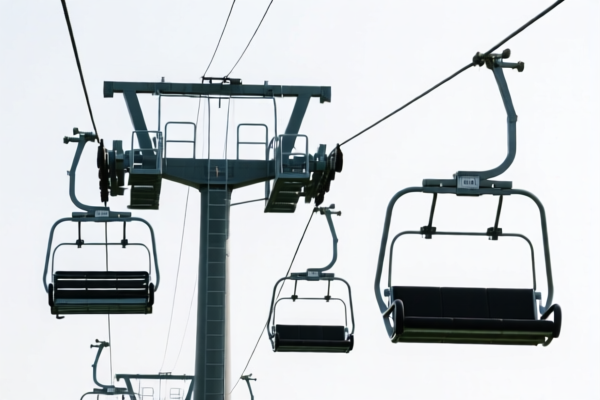

AI Analysis
🎢 Amusement Park Rides and Fairground Equipment
🌐 HS Code Reference & Customs Clearance Guide | 2024-2025 Tariff Analysis | Professional Logistics Strategy
📌 I. Product Definition & Classification: What Makes an Amusement Ride?
Amusement park rides and fairground equipment are the backbone of the entertainment industry, ranging from thrill rides to family-friendly attractions. In international trade, they are not a single unified category. Classification depends heavily on the material composition, function, and whether they are complete units or spare parts.
⚠️ Critical Distinction for Importers:
- Complete Rides (with power, control systems, seats) often fall under HS 9508.
- Spares & Accessories vary wildly: Metal parts may trigger steel tariffs, while plastic parts fall under 3926.
- Material is Key: Steel/Aluminum/Copper parts face severe US "Section 232" and "Section 301" tariffs, potentially pushing rates to 87.9%.
📦 II. Detailed HS Code Breakdown & Tax Liability (Based on Data)
| HS Code | Product Description | Material/Category | Total Tariff | Tax Composition |
|---|---|---|---|---|
| 9508.30.00.00 | Amusement Equipment Parts | General Parts matching fairground entertainment usage | 10.0% | Base: 0% + Add: 0% + Sec 301 (122): 10% |
| 9508.29.00.00 | Amusement Equipment Parts | Other Category parts for amusement facilities | 10.0% | Base: 0% + Add: 0% + Sec 301 (122): 10% |
| 7326.90.86.88 | Amusement Parts | Steel/Iron制品 (Metal) | 87.9% | Base: 2.9% + Add: 25% + Sec 301: 10% + Steel/Al/Cu: 50% |
| 7326.19.00.80 | Amusement Parts | Steel/Iron制品 (Other) | 87.9% | Base: 2.9% + Add: 25% + Sec 301: 10% + Steel/Al/Cu: 50% |
| 3926.30.50.00 | Amusement Parts | Plastic Components (Connectors, etc.) | 22.8% | Base: 5.3% + Add: 7.5% + Sec 301 (122): 10% |
| 3926.90.99.89 | Amusement Parts | Plastic/Synthetic (General/Bottom-line) | 22.8% | Base: 5.3% + Add: 7.5% + Sec 301 (122): 10% |
🔍 Key Insight:
- Category 9508: The "Goldilocks Zone." If you can classify spare parts as specific "Amusement Equipment Parts" (not general iron/plastic), you only pay 10%.
- Category 7326: The "Trap." If the parts are inferred to be general "Steel/Iron products" (e.g., bolts, structural beams, frames) rather than dedicated ride parts, the Section 232 (50%) + Section 301 (25%) + Sec 122 (10%) stack up to 87.9%.
- Category 3926: The "Middle Ground." Plastic parts avoid the steel tariffs but still carry a 22.8% rate.
💰 III. Deep Dive: Tariff Structure & Policy Add-ons
✅ Applicable Market: USA (US)
✅ Origin: China (CN)
✅ Relevant Clauses: Section 301, Section 232 (Steel/Aluminum)
🎯 1. The "Safe" Route: HS 9508 (Dedicated Amusement Parts)
- Codes:
9508.30.00.00,9508.29.00.00 - Rate: 10.0% Total
- Breakdown:
- MFN Base: 0% (Free trade baseline for these items)
- Section 301 (List 3/4): +10% (The "122 Clause" specifically targeting Chinese imports)
- Section 232: Not Applicable (Because these are classified as amusement goods, not generic steel/iron).
- Why it matters: This is the lowest possible tariff for ride components. You must prove the parts are specifically designed for amusement rides.
🚨 2. The "Steel Trap": HS 7326 (Metal Parts)
- Codes:
7326.90.86.88,7326.19.00.80 - Rate: 87.9% Total (Disastrous for margins)
- Breakdown:
- MFN Base: 2.9%
- Section 232 (Steel): +25% (Generic steel duty)
- Section 301: +10% (China-specific)
- Steel/Al/Cu Penalty: +50% (The "122 Clause" or specific "Section 232" escalation for steel/aluminum/copper products).
- The Math:
2.9% + 25% + 10% + 50% = 87.9% - Risk: If a simple metal bracket is misclassified as "Other Steel Products" instead of "Amusement Ride Parts," you pay 8.8x more tax.
⚙️ 3. The "Plastic Compromise": HS 3926 (Plastic Parts)
- Codes:
3926.30.50.00,3926.90.99.89 - Rate: 22.8% Total
- Breakdown:
- MFN Base: 5.3%
- Section 301: +7.5% (General Chinese plastic duty)
- Section 301 (122 Clause): +10% (Specific tariff layer)
- Note: Plastic is safer than steel but still significantly taxed compared to dedicated "Amusement" classification.
🛠️ IV. Customs Clearance Strategy & Pro Tips
✅ 1. The "Dedicated Use" Defense (Crucial!)
To avoid the 87.9% steel tax, you must argue that the metal part is not a "General Iron Product" but a "Specific Amusement Equipment Part."
| Scenario | Correct Classification | Wrong Classification | Consequence |
|---|---|---|---|
| Metal Frame for a Swing Set | 9508.29.00.00 (Amusement Part) |
7326.90.86.88 (Steel Product) |
Save $77.9% on tax |
| Plastic Connector for Ride | 3926.30.50.00 (Ride Part) |
7326... (If mislabeled as metal) |
Avoid Steel Penalties |
| Generic Steel Bolts | 7326.90.86.88 |
9508... |
Pay 87.9% (Unavoidable) |
Pro Tip: If you are shipping screws, nuts, and generic bolts, you cannot claim 9508. Those are "Steel Products" by nature. You must classify them under 7326 or 7318. However, structural beams, custom seats, safety bars, and control arms should be pushed to 9508.
✅ 2. Documentation Checklist (Avoid Delays)
To justify the 9508 classification to Customs (CBP):
- Detailed Product Drawing: Must show the part is designed specifically for a ride (e.g., a curved support beam for a roller coaster, not a straight pipe).
- Bill of Materials (BOM): Explicitly list the part as "Amusement Ride Component."
- Installation Manual: Show the part being installed into a ride system.
- Commercial Invoice: Do NOT write "Steel Bar" or "Plastic Fitting." Write "Ride Accessory - Model XYZ" or "Amusement Equipment Part."
- Material Certs: If using steel, provide proof that it is a finished product for amusement, not raw steel.
✅ 3. Smart Shipping Strategy
- Consolidate: If a shipment contains both Metal Parts (Steel) and Plastic Parts, try to separate them.
- If mixed, the whole shipment might be scrutinized.
- Strategy: Ship "Pure 9508" items (complex ride parts) separately from "Raw Material/Steel" items.
- Valuation: Since the tax rates differ wildly (10% vs 88%), ensure your Valuation is accurate. Over-declaring value on a low-tax HS Code doesn't help; under-declaring invites audits.
🌍 V. Market Comparison (USA vs. Others)
| Region | Recommended HS Code | Est. Tariff | Key Risk |
|---|---|---|---|
| 🇺🇸 USA | 9508.29.00.00 |
10% (Best) | Steel Trap (87.9%) if misclassified |
| 🇪🇺 EU | 9508.29.00 |
0% - 2% | Generally lower, but CE certification required |
| 🇨🇦 Canada | 9508.29.00 |
0% | CUSMA free trade if origin qualifies |
| 🇦🇺 Australia | 9508.29.00 |
5% | Low, but strict safety standards |
Conclusion: The USA is the most dangerous market for Steel amusement parts due to Section 232/301 stacking. The EU/Canada are much friendlier.
📌 VI. Common Pitfalls & "Do Not Do" List
❌ Mistake 1: Calling a "Steel Frame" a "General Iron Product" in the description.
👉 Fix: Describe it as "Ride Support Structure" or "Amusement Equipment Component."
❌ Mistake 2: Mixing "Ride Parts" with "Raw Steel" in one shipment.
👉 Fix: Split shipments. Ship the complex parts (9508) separately from the raw materials (7326).
❌ Mistake 3: Assuming "Plastic" parts are tax-free.
👉 Fix: They are 22.8% in the US. Do not plan margins on 0% tax for plastics.
✅ Golden Rule:
"If it looks like a Ride Part, Classify it as a Ride Part (9508). If it looks like Raw Metal, Pay 87.9%."
🎯 VII. Final Recommendation: Action Plan
- Audit Inventory: Separate all dedicated ride parts (seats, safety bars, custom frames) from generic hardware (bolts, raw tubes).
- Re-Classify: Move dedicated parts to 9508.29.00.00 or 9508.30.00.00.
- Prepare Docs: Update invoices to reflect "Amusement Equipment Parts" rather than "Metal/Plastic Products."
- Pre-Ruling: For large shipments of complex metal parts, consider applying for an Advance Ruling from US Customs to lock in the 10% rate.
🚀 Bottom Line: In the USA, the difference between 10% and 87.9% tax is purely about how you describe and classify the material. Precision is profit!
✨ Professional Customs Strategy: Don't let tariffs ruin your ride!
💼 Your next shipment could save thousands with the right HS Code.
Customer Reviews
About HS Code Classification
The Harmonized System (HS) is an internationally standardized nomenclature developed by the World Customs Organization (WCO) to classify traded products. Over 200 countries use the HS system as the basis for customs tariffs, trade statistics, and import/export regulations.
Each HS code follows a hierarchical structure:
- Chapter (2 digits) — Broad category of goods (e.g., Chapter 84: Machinery and Mechanical Appliances)
- Heading (4 digits) — More specific grouping within the chapter
- Subheading (6 digits) — Internationally standardized breakdown, used by all WCO member countries
- National subdivisions (8-10 digits) — Country-specific extensions for further classification, such as US HTSUS 10-digit codes
Correct HS code classification is essential for smooth customs clearance, accurate duty payment, and compliance with trade regulations. Misclassification can lead to customs delays, overpayment of duties, or penalties.
When importing from CN to US, the applicable tariff rates may include:
- Most-Favored-Nation (MFN) rate — The standard duty rate applied to WTO members
- General rate — Applied to countries without trade agreements
- Trade remedy duties — Additional tariffs such as Section 301 (anti-dumping), Section 232 (national security), or countervailing duties
The information provided on this page is for reference purposes only. For official classification, please consult with your local customs authority or a licensed customs broker.