Analytical Balance
CN → USProduct Images
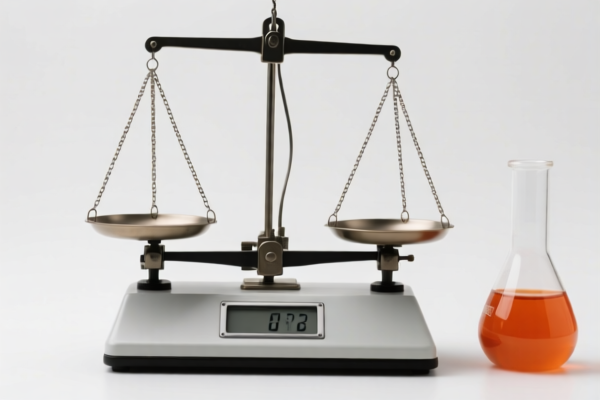
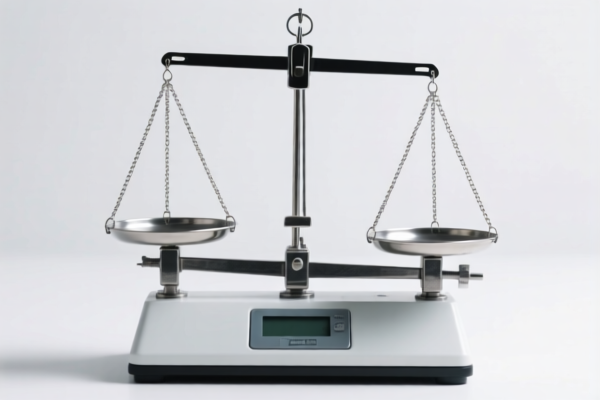
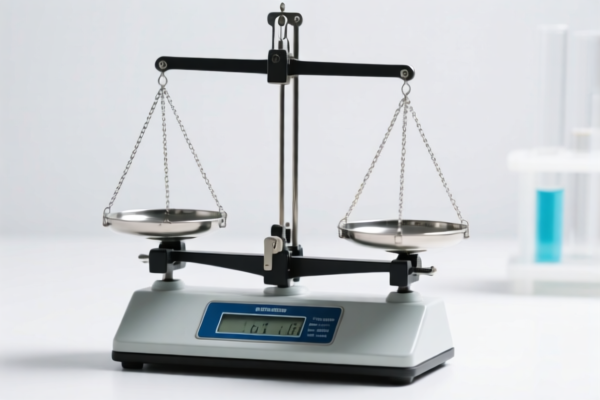
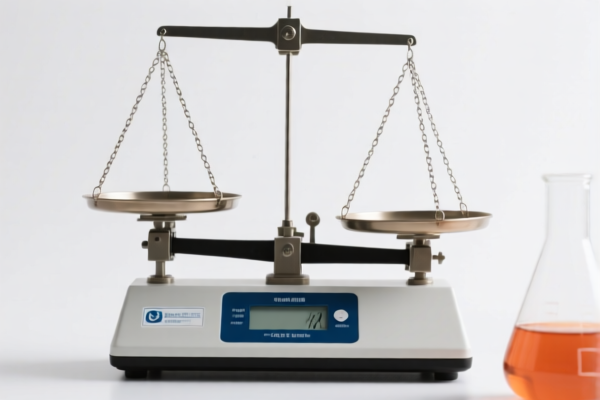
AI Analysis
⚖️ Analytical Balances (Precision Measurement Instruments)
🌐 HS Code Reference & Customs Clearance Guide | 2026 Latest Tariff Analysis | Professional-Grade Strategy
📌 I. Product Definition & Classification: Do You Really Understand "Analytical Balances"?
An Analytical Balance is a high-precision laboratory instrument used to measure mass to a very high degree of accuracy (typically to 0.1 mg, 0.01 mg, or even 0.001 mg). Unlike standard bench scales, analytical balances are designed for quantitative chemical analysis and require protection from environmental factors (air currents, vibration, temperature).
In international trade, they are strictly classified under Chapter 90 (Optical, Photographic, Cinematographic, Measuring, Checking, Precision, Medical or Surgical Instruments).
Key Distinction: * Analytical Balances: High precision (≥ 0.1 mg), enclosed draft shields, calibrated weights. → HS 9031 * General Laboratory Scales: Lower precision (grams/kg range), open pan, no draft shield. → HS 9031.80 or 8423 (depending on type) * Portable/Field Balances: Handheld or battery-operated low-precision scales. → HS 8423.89
⚠️ Critical Classification Point:
- If the device is designed for laboratory quantitative analysis with high precision (micro-gram range) and includes a draft shield, it belongs to 9031.80.
- If it is a commercial retail scale or a general-purpose weighing scale for non-lab use, it may fall under 8423.
- Misclassification Risk: Declaring a high-precision lab balance as a "general scale" (8423) can lead to audits, as the tariff rates and regulatory requirements differ significantly.
📦 II. HS Code Classification Details (2026 Latest Tariff Authority Comparison)
| HS Code | Product Description | Application Scenario | Precision Level |
|---|---|---|---|
9031.80.40.00 |
Other measuring or checking instruments, appliances and machines (Laboratory Balances) | High-precision analytical balances, microbalances, semi-microbalances | ✅ High (0.1mg - 1mg) |
9031.80.80.00 |
Other measuring instruments (General Lab Instruments) | Lower precision lab scales, non-analytical testing devices | ✅ Medium/Low |
8423.89.00.00 |
Other weighing machinery (General Purpose) | Commercial kitchen scales, industrial platform scales, basic bench scales | ❌ Low (Grams/Kg) |
8423.90.00.00 |
Parts and accessories of weighing machinery | Weights, calibration kits, pans for general scales | ✅ N/A |
9031.90.80.00 |
Parts and accessories of measuring instruments (Lab Equipment) | Calibration weights, draft shields, leveling kits for analytical balances | ✅ N/A |
🔍 Key Reminder:
- 9031.80.40.00 is the most common code for true analytical balances used in chemistry, pharmaceuticals, and research labs.
- 8423 codes are for commercial/industrial scales, NOT for precision lab equipment.
- If the balance includes digital display and microprocessor control, it still falls under 9031 because its primary function is measurement/analysis, not just weighing for commerce.
💰 III. 2026 Latest Tariff Rate Details (Including Surtaxes, Policy Add-ons)
✅ Applicable Country: United States (US)
✅ Origin: China (CN)
✅ Effective Date: November 10, 2025 onwards (including subsequent imports)
🎯 1. 9031.80.40.00 —— Analytical Balances (High Precision Lab Instruments)
| Item | Content |
|---|---|
| Base Tariff Rate | 0% (Ad Valorem) |
| USITC Surtax | +25% (From USITC Footnote 9903.90.01) |
| IEEPA Surtax | +10% (For Chinese/HK products, effective Nov 10, 2025) |
| Total Tariff Rate | 35% |
| Tax Calculation | CIF Value × 35% |
| De Minimis Eligibility | ❌ Not Allowed (deny_de_minimis) |
| Legal Basis Path | IEEPA:9903.01.25 → IEEPA:9903.01.24 → USITC:9031.80.40.00 → FOOTNOTE:9903.90.01 |
📌 Explanation:
- "USITC Surtax 25%": Comes from Section 301 of the Trade Act under "Additional Duties";
- "IEEPA 10%": International Emergency Economic Powers Act additional duty for China;
- Total 35%: This is a high tariff for scientific instruments. It is crucial to verify if the balance qualifies for Exemption 1 or 2 (see below).
🎯 2. 9031.80.80.00 —— Other Measuring Instruments (General Lab Use)
| Item | Content |
|---|---|
| Base Tariff Rate | 0% |
| USITC Surtax | +25% |
| IEEPA Surtax | +10% |
| Total Tariff Rate | 35% |
| Tax Calculation | CIF × 35% |
| De Minimis Eligibility | ❌ Not Allowed |
| Legal Basis Path | IEEPA:9901.25 → IEEPA:9903.01.24 → USITC:9031.80.80.00 → FOOTNOTE:9903.90.01 |
📌 Note:
- Same tariff structure as 9031.80.40.00.
- Even if the balance is "semi-micro" or "micro," if it is for laboratory analysis, it is subject to the 35% total rate.
🛠️ IV. Customs Clearance Practical Advice (Battle-Tested Pitfall Guide)
✅ 1. Preparation Checklist (All Required)
| Document | Required | Description |
|---|---|---|
| ✅ Product Specification Sheet | ✔️ | Must include precision (e.g., 0.1mg), readability, capacity, power supply. |
| ✅ Photographs (Clear & Detailed) | ✔️ | Show the draft shield, control panel, brand, model, and certification labels. |
| ✅ Certificate of Calibration | ✔️ | Proves it is a calibrated instrument, not a generic scale. |
| ✅ Commercial Invoice | ✔️ | Must state: "Analytical Balance, Lab Grade, Precision 0.1mg, Model XYZ" |
| ✅ ** packing List** | ✔️ | List all components: Balance, power adapter, calibration weights, manual. |
| ✅ FCC Declaration (if applicable) | ✔️ | For electronic components controlling the balance. |
| ✅ Exemption Request (if eligible) | ✔️ | If used for R&D or medical, apply for IEEPA Exemption. |
✅ 2. Declaration Tips (Key Mantra)
🔥 “Lab Use, High Precision, Draft Shield, HS 9031!”
| Scenario | Correct Declaration | Wrong Practice |
|---|---|---|
| High Precision Lab Balance | 9031.80.40.00 – "Analytical Balance" |
Declare as "Scale" (8423) → Audit Risk |
| General Bench Scale | 8423.89.00.00 – "Weighing Scale" |
Declare as "Analytical Balance" → Overpay Tax |
| Parts (Calibration Weights) | 9031.90.80.00 – "Parts of Measuring Instrument" |
Declare as "Metal Weights" (7115) → Wrong Chapter |
| Combined Shipment | Separate HS Codes | Bundle all into one HS → Classification Error |
✅ 3. Special Cases Handling
| Scenario | Handling Advice |
|---|---|
| OEM Custom Balances | Provide design specs and intended use (Lab vs. Retail). |
| Digital vs. Mechanical | Both can be 9031 if for lab use. Mechanical balances with high precision are still lab instruments. |
| Used/Refurbished Balances | Must declare as "Used." Some labs require proof of calibration history. |
| With Built-in Printer | Still 9031.80.40.00. The printer is a functional accessory. |
🌍 V. Global Market Clearance Comparison (2026 Latest)
| Country/Region | Recommended HS Code | Tariff | Certification | Notes |
|---|---|---|---|---|
| 🇺🇸 USA | 9031.80.40.00 |
35% (China) | FCC + ISO 9001 Proof | High surtax; apply for exemption if possible. |
| 🇨🇳 China | 9031.80.40.00 |
5% | CCC (if applicable) | No surtax. |
| 🇪🇺 EU | 9031.80.00 |
0% (if CE) | CE + RoHS | No surtax. Strict WEEE compliance. |
| 🇦🇺 Australia | 9031.80.00 |
5% | RCM | No surtax. |
| 🇯🇵 Japan | 9031.80.00 |
0% | PSE | No surtax. |
📌 Conclusion:
- USA is the only major market with high additional tariffs for Chinese-made analytical balances.
- EU, Japan, Australia, China have low or zero tariffs (0-5%), making them more cost-effective for Chinese exports.
- Strategy: If exporting to the US, consider Exemption Applications (IEEPA) for R&D or medical use to reduce costs.
📌 VI. Common Errors & Pitfall Guide (Lessons Learned)
❌ Error 1: Declaring "Analytical Balance" as "General Scale" (8423)
👉 Consequence: Customs may flag it as undervalued or misclassified. If audited, you may face back duties + penalties. Also, 8423 has different regulatory requirements (e.g., NTEP for commercial use in the US).
❌ Error 2: Not providing precision details in the invoice
👉 Consequence: Customs cannot determine if it’s a lab instrument (9031) or commercial scale (8423). Leads to customs hold and delay.
❌ Error 3: Ignoring IEEPA Exemptions
👉 Consequence: Paying 35% tariff when you could have paid 0-25% with an exemption.
👉 Solution: If the balance is for research, medical, or specific industrial use, apply for Exemption 1 or 2 before shipment.
✅ Correct Practice:
"Analytical Balance, 220g capacity, 0.1mg readability, with draft shield, digital display, Model XYZ, FCC Certified, for Laboratory Use Only"
🎯 VII. Conclusion: Precise Classification, Cost Efficiency!
🎯 Remember the Mantra:
🔹 "Lab Grade, High Precision, HS 9031, Not 8423!"
🔹 "35% Tax in US, Apply for Exemption if Eligible!"
🔹 "Invoice Must Specify 'Analytical' and 'Precision'!"
📌 Pro Tip:
If your analytical balance is manufactured in Vietnam, Thailand, or Mexico, it may qualify for IEEPA Exemption or lower tariffs under USMCA (for Mexico) or GSP (if eligible).
👉 Action: Always verify Country of Origin and apply for Advance Ruling if unsure.
📣 Immediate Action:
📞 Contact a licensed customs broker + Provide Product Photos + Check for IEEPA Exemption Eligibility
🚀 Ensure your analytical balances clear customs smoothly, efficiently, and cost-effectively!
✨ Professional Clearance Starts with Accurate Classification!
💼 Every Percent Saved is Pure Profit!
Customer Reviews
About HS Code Classification
The Harmonized System (HS) is an internationally standardized nomenclature developed by the World Customs Organization (WCO) to classify traded products. Over 200 countries use the HS system as the basis for customs tariffs, trade statistics, and import/export regulations.
Each HS code follows a hierarchical structure:
- Chapter (2 digits) — Broad category of goods (e.g., Chapter 84: Machinery and Mechanical Appliances)
- Heading (4 digits) — More specific grouping within the chapter
- Subheading (6 digits) — Internationally standardized breakdown, used by all WCO member countries
- National subdivisions (8-10 digits) — Country-specific extensions for further classification, such as US HTSUS 10-digit codes
Correct HS code classification is essential for smooth customs clearance, accurate duty payment, and compliance with trade regulations. Misclassification can lead to customs delays, overpayment of duties, or penalties.
When importing from CN to US, the applicable tariff rates may include:
- Most-Favored-Nation (MFN) rate — The standard duty rate applied to WTO members
- General rate — Applied to countries without trade agreements
- Trade remedy duties — Additional tariffs such as Section 301 (anti-dumping), Section 232 (national security), or countervailing duties
The information provided on this page is for reference purposes only. For official classification, please consult with your local customs authority or a licensed customs broker.