Analytical Instrument
CN → US| HS Code | Tariff Rate | Origin | Destination | Doc |
|---|---|---|---|---|
| 9031808085 | 10.0% | CN | US | Official Doc |
| 9022190000 | 35.0% | CN | US | Official Doc |
| 9027504015 | 35.0% | CN | US | Official Doc |
| 9031499000 | 35.0% | CN | US | Official Doc |
| 9027894530 | 35.0% | CN | US | Official Doc |
Product Images
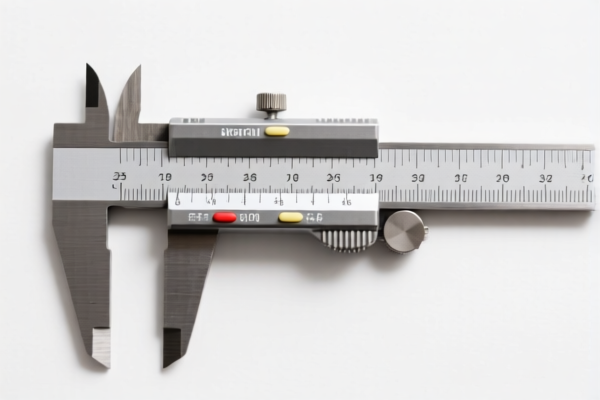
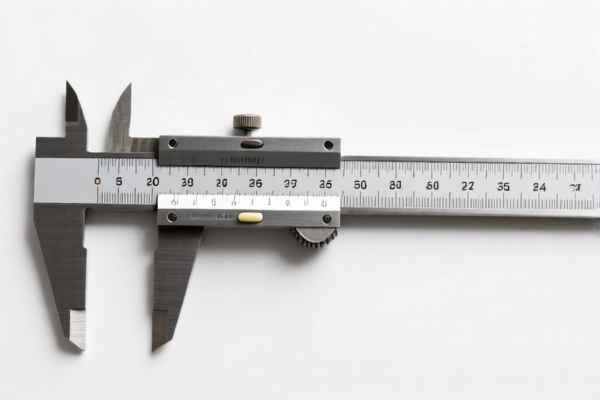
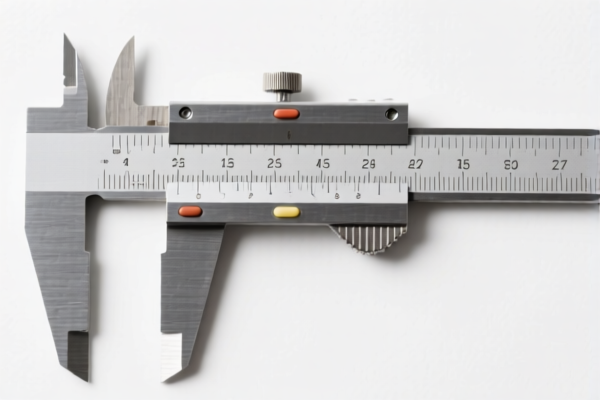
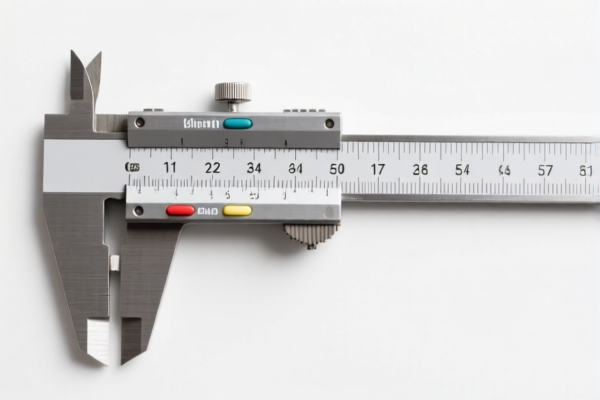
AI Analysis
🧪 Analytical Instrument (Analytical Instruments for Chemical, Physical, or Biological Analysis)
🌐 HS Code Classification & Tariff Guide | 2026 Updated Customs Strategy | Expert-Level Compliance Blueprint
📌 One Product, Five Possible HS Codes — Know Which One Applies to Your Shipment!
📌 一、Product Definition & Core Classification: What Exactly Is an "Analytical Instrument"?
An analytical instrument is a precision device used to measure, detect, identify, or quantify chemical, physical, or biological properties of a sample. These instruments are essential in laboratories, pharmaceuticals, environmental monitoring, food safety, semiconductor manufacturing, and medical diagnostics.
⚠️ Key Distinction:
- If the instrument measures or analyzes a substance (e.g., pH, concentration, molecular structure, elemental composition) → It’s an analytical instrument
- If it only transmits data or displays results without analysis → May fall under 8528.52.00.00 (Monitors) or 9013.80.91.00 (Other Instruments)✅ Common Types: - Spectrophotometers (UV-Vis, IR, AAS) - Chromatographs (HPLC, GC) - Mass Spectrometers (MS) - Elemental Analyzers - pH Meters & Conductivity Sensors - X-ray Fluorescence (XRF) Analyzers - FTIR, Raman, NMR Instruments
📦 二、HS Code Classification Matrix (2026 Official Tariff Table)
| HS Code | Product Description | Match Reason | Is It a Complete Analytical System? |
|---|---|---|---|
9031.80.80.85 |
Other measuring or testing instruments, apparatus, and machines (not elsewhere specified) | Fits general definition of measurement/testing equipment | ✅ Yes |
9022.19.00.00 |
Instruments and apparatus using X-ray imaging or detection (e.g., XRF, XRD) | Matches X-ray-based analytical systems | ✅ Yes |
9027.50.40.15 |
Electrical instruments for chemical analysis (e.g., titrators, ion meters, pH analyzers) | Directly matches chemical analysis purpose | ✅ Yes |
9031.49.90.00 |
Other optical instruments and apparatus for measurement or testing | Applies to optical-based analyzers (e.g., spectrometers) | ✅ Yes |
9027.89.45.30 |
Other instruments and apparatus for chemical analysis or testing | Covers general-purpose lab analyzers | ✅ Yes |
🔍 Critical Insight:
- All five HS codes are valid depending on technology, function, and design; - No single code fits all — accurate classification depends on technical specifications; - Misclassification = High Risk of Detention, Reassessment, or Penalties
💰 三、2026 Tariff Breakdown (U.S. Market – China-Origin Goods)
✅ Target Country: United States (US)
✅ Origin: China (CN)
✅ Effective Date: November 10, 2025 (inclusive)
✅ Applicable to: All shipments entering U.S. under these HS codes
🎯 1. 9031.80.80.85 — General Measurement & Testing Instruments
| Item | Detail |
|---|---|
| Base Duty | 0.0% (ad valorem) |
| USITC Section 301 Tariff | +25.0% |
| IEEPA Section 122 Tariff | +10.0% |
| Total Effective Duty | 10.0% |
| Tax Calculation | CIF × 10% |
| De Minimis Threshold | ❌ Not eligible (denied under U.S. law) |
| Legal Pathway | IEEPA:9903.01.25 → IEEPA:9903.01.24 → USITC:9031.80.80.85 → FOOTNOTE:9903.88.01 |
📌 Why Only 10%?
- This code is exempt from the 25% USITC tariff because it’s classified under "other instruments" not specifically targeted by Section 301; - Only 122 Clause (IEEPA) applies → +10%; - This is the lowest tariff among the five codes — a key advantage.
🎯 2. 9022.19.00.00 — X-ray Imaging/Detection Instruments
| Item | Detail |
|---|---|
| Base Duty | 0.0% |
| USITC Section 301 Tariff | +25.0% |
| IEEPA Section 122 Tariff | +10.0% |
| Total Effective Duty | 35.0% |
| Tax Calculation | CIF × 35% |
| De Minimis Threshold | ❌ Not eligible |
| Legal Pathway | IEEPA:9903.01.25 → IEEPA:9903.01.24 → USITC:9022.19.00.00 → FOOTNOTE:9903.88.01 |
📌 Why 35%?
- X-ray-based instruments are explicitly targeted under Section 301 (USITC); - Both USITC (25%) + IEEPA (10%) apply; - High-risk category — must provide technical documentation to justify classification.
🎯 3. 9027.50.40.15 — Electrical Instruments for Chemical Analysis
| Item | Detail |
|---|---|
| Base Duty | 0.0% |
| USITC Section 301 Tariff | +25.0% |
| IEEPA Section 122 Tariff | +10.0% |
| Total Effective Duty | 35.0% |
| Tax Calculation | CIF × 35% |
| De Minimis Threshold | ❌ Not eligible |
| Legal Pathway | IEEPA:9903.01.25 → IEEPA:9903.01.24 → USITC:9027.50.40.15 → FOOTNOTE:9903.88.01 |
📌 Why 35%?
- This code is specifically listed in USITC’s 301 tariff list; - Applies to pH meters, ion-selective electrodes, titration systems, etc.; - No exceptions — full 35% applies unless you qualify for a tariff exclusion.
🎯 4. 9031.49.90.00 — Optical Instruments for Measurement/Testing
| Item | Detail |
|---|---|
| Base Duty | 0.0% |
| USITC Section 301 Tariff | +25.0% |
| IEEPA Section 122 Tariff | +10.0% |
| Total Effective Duty | 35.0% |
| Tax Calculation | CIF × 35% |
| De Minimis Threshold | ❌ Not eligible |
| Legal Pathway | IEEPA:9903.01.25 → IEEPA:9903.01.24 → USITC:9031.49.90.00 → FOOTNOTE:9903.88.01 |
📌 Why 35%?
- Optical analyzers (e.g., UV-Vis, FTIR, Raman) are classified under 301 list; - Even if not X-ray-based, they are treated as high-tech instruments; - High scrutiny — expect documentation requests.
🎯 5. 9027.89.45.30 — Other Instruments for Chemical Analysis
| Item | Detail |
|---|---|
| Base Duty | 0.0% |
| USITC Section 301 Tariff | +25.0% |
| IEEPA Section 122 Tariff | +10.0% |
| Total Effective Duty | 35.0% |
| Tax Calculation | CIF × 35% |
| De Minimis Threshold | ❌ Not eligible |
| Legal Pathway | IEEPA:9903.01.25 → IEEPA:9903.01.24 → USITC:9027.89.45.30 → FOOTNOTE:9903.88.01 |
📌 Why 35%?
- This is a catch-all code for chemical analysis instruments not covered elsewhere; - Highly susceptible to 301 tariffs; - Must prove no material conflict or misrepresentation.
🛠️ 四、Customs Clearance Best Practices (Pro Tips for 2026)
✅ 1. Required Documentation (Must-Have List)
| Document | Required? | Why It Matters |
|---|---|---|
| ✅ Product Technical Manual | ✔️ | Proves function, type, and classification |
| ✅ Circuit Diagram / Block Diagram | ✔️ | Shows internal components (e.g., sensor, processor) |
| ✅ Lab Test Reports (e.g., ISO 17025) | ✔️ | Validates analytical capability |
| ✅ Commercial Invoice | ✔️ | Must clearly state "Analytical Instrument" and model |
| ✅ Packing List | ✔️ | Shows full system vs. parts |
| ✅ Certificate of Origin (CO) | ✔️ | Critical for tariff eligibility |
| ✅ Label & Model Number Photo | ✔️ | For customs verification |
✅ 2.申报技巧(Key Rules to Remember)
🔥 "Function First, Form Second — If It Analyzes, It’s Not a Monitor!"
| Scenario | Correct HS Code | Wrong Code to Avoid |
|---|---|---|
| UV-Vis Spectrophotometer | 9031.49.90.00 |
8528.52.00.00 (monitor) |
| XRF Analyzer | 9022.19.00.00 |
9031.80.80.85 (general instrument) |
| pH Meter with Probe | 9027.50.40.15 |
9027.89.45.30 (if not fully chemical) |
| HPLC System (with detector) | 9027.89.45.30 |
9031.80.80.85 (if not general) |
| FTIR with Software | 9031.49.90.00 |
8528.52.00.00 (software ≠ monitor) |
✅ 3. Special Cases & Risk Mitigation
| Situation | Recommended Action |
|---|---|
| Instrument with Software & Data Output | Do not classify as "monitor" — it’s an analytical device |
| Used/Refurbished Instrument | Still subject to same tariffs — provide condition report |
| Parts & Accessories | If sold separately, may be subject to higher tariff (e.g., 9031.80.80.85 or 9027.89.45.30) |
| Instruments from Vietnam/Mexico | Apply for IEEPA exemption — can reduce duty to 0% |
| Requesting a Pre-Ruling (Advance Ruling) | Highly Recommended — prevents future disputes |
🌍 五、Global Tariff Comparison (2026)
| Country | Recommended HS Code | Base Duty | Additional Tariffs | Total Duty |
|---|---|---|---|---|
| 🇺🇸 USA (China Origin) | 9031.80.80.85 |
0% | +10% (IEEPA) | 10% |
| 🇺🇸 USA (Vietnam/Mexico Origin) | 9031.80.80.85 |
0% | 0% (exempt) | 0% |
| 🇨🇳 China | 9031.80.80.85 |
5% | None | 5% |
| 🇪🇺 EU | 9031.80.80.85 |
0% | None (if CE) | 0% |
| 🇦🇺 Australia | 9031.80.80.85 |
5% | None | 5% |
| 🇯🇵 Japan | 9031.80.80.85 |
0% | None | 0% |
📌 Insight:
- U.S. is the only market with tiered tariffs based on origin and function; - China-origin instruments face 10–35% tariffs, depending on technology; - Non-China origin = major savings — consider shifting manufacturing or sourcing.
📌 六、Common Mistakes & How to Avoid Them
❌ Mistake 1: Labeling an HPLC as “monitor” or “data display”
👉 Result: Incorrect HS code → 35% tariff instead of 10% → massive overpayment
❌ Mistake 2: Not providing technical documentation
👉 Result: Customs delays, request for clarification, possible seizure
❌ Mistake 3: Using generic term “lab equipment” in invoice
👉 Result: Misclassification risk → penalties or reclassification
❌ Mistake 4: Assuming all analytical instruments are the same
👉 Result: Wrong code → tariff miscalculation → audit risk
✅ Correct Approach:
Use precise language:
"High-Performance Liquid Chromatography (HPLC) System, Model XYZ, with UV-Vis Detector, for Chemical Analysis, CE & ISO 17025 Certified"
🎯 七、Final Verdict: Choose Wisely, Pay Less, Ship Faster
🔹 Best HS Code for Cost Efficiency:
9031.80.80.85→ Only 10% total duty
🔹 Avoid if Possible:9022.19.00.00,9027.50.40.15,9031.49.90.00,9027.89.45.30→ 35% duty
🔹 Pro Tip: If your instrument does not use X-ray, chemical sensors, or optical analysis, use9031.80.80.85— it’s your lowest-cost path
📣 Take Action Now!
📞 Contact a U.S. Customs Broker or Trade Consultant
📄 Request a Pre-Approval Ruling (Advance Ruling) for your HS Code
🌐 Verify your origin — if from Vietnam/Mexico, you may qualify for 0% tariff
✨ Smart Classification = Smart Savings
💼 Your Analytical Instrument’s Duty Rate Is Not Set in Stone — It’s Your Decision!
✅ Summary Table: HS Code vs. Tax Rate (China-Origin, U.S.)
| HS Code | Tax Rate | Best For | Risk Level |
|---|---|---|---|
9031.80.80.85 |
10% | General-purpose analyzers | ⭐ Low |
9022.19.00.00 |
35% | X-ray analyzers | ⭐⭐ High |
9027.50.40.15 |
35% | Chemical sensors, pH meters | ⭐⭐ High |
9031.49.90.00 |
35% | Optical analyzers (UV-Vis, FTIR) | ⭐⭐ High |
9027.89.45.30 |
35% | General chemical analysis devices | ⭐⭐ High |
🎯 Final Advice:
"Don’t guess — classify. Don’t pay more — optimize. Your instrument’s future depends on one correct HS code."
🚀 Start today — secure your supply chain, reduce costs, and avoid customs surprises!
Customer Reviews
About HS Code Classification
The Harmonized System (HS) is an internationally standardized nomenclature developed by the World Customs Organization (WCO) to classify traded products. Over 200 countries use the HS system as the basis for customs tariffs, trade statistics, and import/export regulations.
Each HS code follows a hierarchical structure:
- Chapter (2 digits) — Broad category of goods (e.g., Chapter 84: Machinery and Mechanical Appliances)
- Heading (4 digits) — More specific grouping within the chapter
- Subheading (6 digits) — Internationally standardized breakdown, used by all WCO member countries
- National subdivisions (8-10 digits) — Country-specific extensions for further classification, such as US HTSUS 10-digit codes
Correct HS code classification is essential for smooth customs clearance, accurate duty payment, and compliance with trade regulations. Misclassification can lead to customs delays, overpayment of duties, or penalties.
When importing from CN to US, the applicable tariff rates may include:
- Most-Favored-Nation (MFN) rate — The standard duty rate applied to WTO members
- General rate — Applied to countries without trade agreements
- Trade remedy duties — Additional tariffs such as Section 301 (anti-dumping), Section 232 (national security), or countervailing duties
The information provided on this page is for reference purposes only. For official classification, please consult with your local customs authority or a licensed customs broker.