Andalusite Refractory Brick
CN → US| HS Code | Tariff Rate | Origin | Destination | Doc |
|---|---|---|---|---|
| 6903900050 | 35.0% | CN | US | Official Doc |
| 6810110070 | 38.2% | CN | US | Official Doc |
| 6902201010 | 35.0% | CN | US | Official Doc |
| 6903200000 | 35.0% | CN | US | Official Doc |
| 6902201020 | 35.0% | CN | US | Official Doc |
Product Images
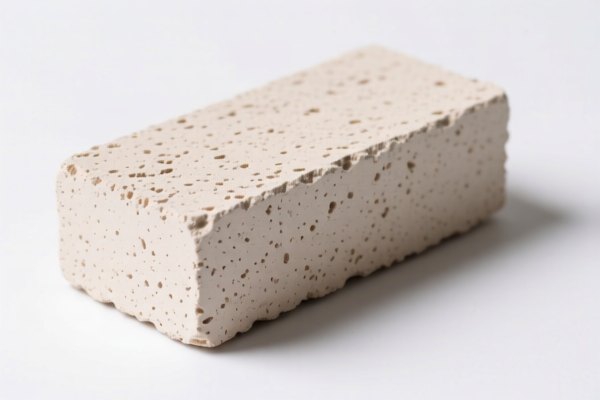
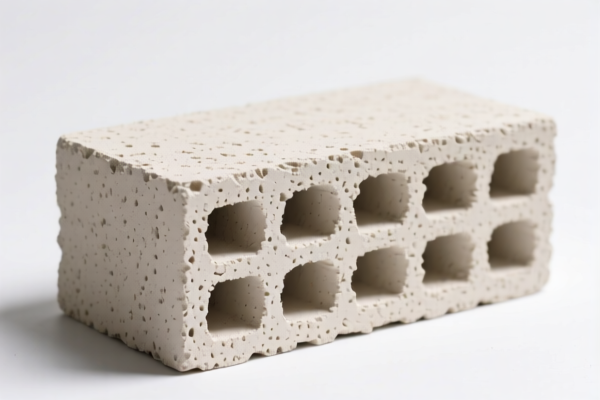
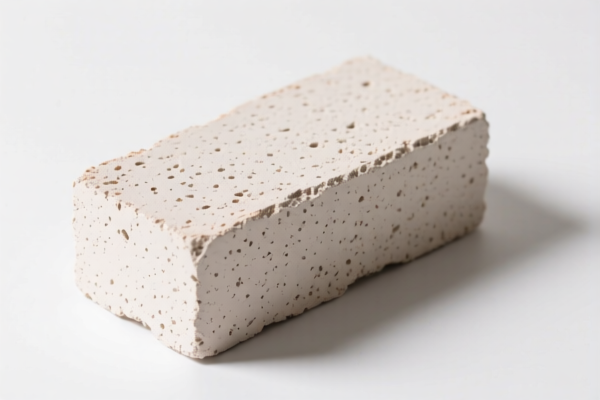
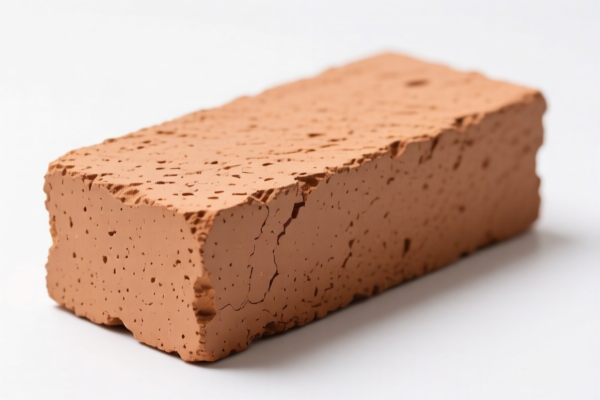
AI Analysis
🧱 Andalusite Refractory Brick (红柱石耐火砖)
🌐 HS Code Reference & Customs Clearance Guide | 2026 Latest Tariff Full Analysis | Professional Clearance Strategy
📌 I. Product Definition & Classification: Do You Really Understand "Andalusite"?
Andalusite refractory bricks are high-performance ceramic materials primarily composed of alumina (Al₂O₃) and silica (SiO₂). They are critical components in high-temperature industrial furnaces, kilns, and metallurgical equipment.
In international trade, classification depends on the physical form (powder/raw material vs. shaped brick) and chemical composition:
- Raw Material/Form: If the product is raw andalusite ore or unshaped refractory material → Classified under Ceramic Refractory Products.
- Shaped Brick: If the product is a formed brick with specific alumina/silica ratios → Classified under Ceramic Refractory Bricks or Concrete/Cement Products depending on the dominant structural characteristic.
⚠️ Key Distinction Point:
- If the brick is defined by its ceramic refractory nature (high heat resistance, ceramic bond) →归入 Chapter 69 (Ceramics), specifically 6903 (Other Refractory Ceramic Goods) or 6902 (Refractory Bricks of Oxide Ceramics).
- If the brick is treated as a construction/cementitious item (e.g., low-grade or specific concrete blends) → Chapter 68 (Stone, Plaster, Cement), specifically 6810 (Articles of Stone or of Other Mineral Substances, Including Cement).
📦 II. HS Code Classification Details (2026 Latest Tariff Authority Comparison)
Based on the provided data, here are the 4 possible classifications for Andalusite Refractory Brick, each with distinct tax implications:
| HS Code | Product Description | Basis for Classification | Total Tax Rate |
|---|---|---|---|
6903.90.00.50 |
Other Refractory Ceramic Articles | Andalusite is classified as a refractory material fitting the general characteristic of "other refractory ceramic goods" not specified elsewhere. | 35.0% |
6810.11.00.70 |
Other Articles of Cement, Concrete or Artificial Stone | The brick is viewed as a building brick type, fitting the attribute of "other cement/concrete products" due to its structural form. | 38.2% |
6902.20.10.10 |
Refractory Bricks of Oxide Ceramics | Andalusite has a high proportion of Alumina (Al₂O₃) and Silica (SiO₂), meeting the material definition for oxide ceramic refractory bricks. | 35.0% |
6903.20.00.00 |
Other Refractory Ceramic Goods Containing Aluminum Oxide | Andalusite contains aluminum oxide components, fitting the specific classification for aluminum-oxide-based refractory ceramics. | 35.0% |
🔍 Critical Note:
-6902and6903are the most scientifically accurate for high-quality refractory bricks.
-6810is often used if the brick is lower-grade or structurally similar to concrete blocks, but it carries a higher tax rate (38.2%).
- All 5 codes include significant additional tariffs for US-origin goods (see below).
💰 III. 2026 Latest Tariff Rate Breakdown (Including Surcharges & Policy Add-ons)
✅ Applicable Country: United States (US)
✅ Origin: China (CN)
✅ Effective Time: From November 10, 2025 (for subsequent imports)
🎯 1. Classification Group A: 6903.90.00.50, 6902.20.10.10, 6903.20.00.00
| Item | Content |
|---|---|
| Base Tariff | 0.0% (ad valorem) |
| Section 301 Surcharge | +25.0% (USITC Footnote 9903.88.01) |
| Section 122 Tariff | +10.0% (Specific provision for certain goods) |
| Total Tax Rate | 35.0% |
| Tax Calculation | CIF Value × 35% |
| De Minimis Exemption | ❌ Not Available (deny_de_minimis) |
| Legal Basis Path | USITC:6903.90.00.50 / 6902.20.10.10 / 6903.20.00.00 → FOOTNOTE:301 → IEEPA:Section122 |
📌 Explanation:
- The 25% Section 301 tariff applies to most Chinese ceramic and mineral products.
- The 10% Section 122 is an additional duty often applied to critical materials or specific trade policy targets.
- Combined 35% is the standard burden for these refractory classifications.
🎯 2. Classification Group B: 6810.11.00.70
| Item | Content |
|---|---|
| Base Tariff | 3.2% (ad valorem) |
| Section 301 Surcharge | +25.0% |
| Section 122 Tariff | +10.0% |
| Total Tax Rate | 38.2% |
| Tax Calculation | CIF Value × 38.2% |
| De Minimis Exemption | ❌ Not Available (deny_de_minimis) |
| Legal Basis Path | USITC:6810.11.00.70 → FOOTNOTE:301 → IEEPA:Section122 |
📌 Note:
- Although the base tariff is higher (3.2%), the total rate becomes the highest at 38.2%.
- This classification is not recommended unless the product strictly meets the "cement/concrete" legal definition, as it increases cost by 3.2% compared to the6903/6902groups.
🛠️ IV. Customs Clearance Operational Advice (Practical Pitfall Avoidance Guide)
✅ 1. Preparation Checklist (Mandatory)
| Document | Required | Explanation |
|---|---|---|
| ✅ Product Specifications | ✔️ | Must list Chemical Composition (Al₂O₃ %, SiO₂ %), density, cold crushing strength, and refractoriness. |
| ✅ Technical Data Sheet | ✔️ | Proves it is a refractory brick (ceramic), not just a construction block. Crucial for arguing for 6902/6903 over 6810. |
| ✅ Product Photos | ✔️ | Clear images showing texture, shape, and any branding. |
| ✅ Commercial Invoice | ✔️ | Must accurately describe goods as "Andalusite Refractory Brick" or "Ceramic Refractory Article". Avoid vague terms like "Building Brick". |
| ✅ Packing List | ✔️ | Weight and dimensions per unit. |
| ✅ Certificate of Origin | ✔️ | Required for origin determination. |
✅ 2. Declaration Strategy (Key Mantra)
🔥 "Highlight Ceramics, Not Concrete; Specify Alumina, Avoid Generalities!"
| Scenario | Correct Declaration | Wrong Practice |
|---|---|---|
| High-Alumina/Silica Brick | Use 6902.20.10.10 or 6903.20.00.00 |
Misdeclare as 6810.11.00.70 → +3.2% higher tax |
| General Refractory Ceramic | Use 6903.90.00.50 |
Use 6901 (Clay Brick) → Risk of reclassification |
| Vague Description "Brick" | Specify "Refractory Ceramic Brick" | Just write "Brick" → Customs delays, potential penalty |
✅ 3. Special Situation Handling
| Situation | Handling Advice |
|---|---|
| Mixed Shipments | Separate refractory bricks (69xx) from general building bricks (68xx). Do not consolidate if tax rates differ significantly. |
| OEM/Custom Sizes | Provide drawings to prove the product is designed for industrial furnace lining, supporting 6902/6903 classification. |
| Raw Material vs. Brick | If it's raw andalusite ore, it might fall under different chapters (e.g., 25 or 26). Ensure the declaration matches the finished brick form. |
🌍 V. Global Market Clearance Comparison (2026 Latest)
| Country/Region | Recommended HS Code | Tariff (China Origin) | Certification | Note |
|---|---|---|---|---|
| 🇺🇸 USA | 6902.20.10.10 / 6903.20.00.00 |
35.0% | No special cert needed, but technical data required | Highest barrier due to Section 301 + 122 |
| 🇨🇳 China | 6902.20.10.10 |
0% - 5% | N/A | Low export tax/rebate potential |
| 🇪🇺 EU | 6902.20.00 |
3.7% | CE (if applicable for equipment) | No major surcharges |
| 🇮🇳 India | 6902.20.10 |
7.5% | BIS (if applicable) | Moderate barriers |
📌 Conclusion:
- USA is the most expensive market for Andalusite Refractory Bricks due to the 35-38.2% effective tariff.
- European and Asian markets are significantly more cost-effective.
- Strategic Advice: If exporting to the US, ensure precise chemical composition documentation to justify the lower-tariff6902/6903codes over6810.
📌 VI. Common Errors & Pitfalls (Lessons Learned)
❌ Error 1: Declaring "Refractory Brick" as "Building Brick" (6810)
👉 Consequence: Higher tax rate (38.2% vs 35.0%) + unnecessary scrutiny on "cement" content.
❌ Error 2: Failing to provide Chemical Analysis Report
👉 Consequence: Customs cannot verify Alumina/Silica content → Delayed clearance or forced reclassification.
❌ Error 3: Using "Clay Brick" (6901) for Andalusite
👉 Consequence: Andalusite is not a typical clay brick; it’s an oxide ceramic. Misclassification leads to penalties and back-taxes.
✅ Correct Declaration Example:
"Andalusite Refractory Brick, Ceramic Oxide, Al₂O₃>40%, SiO₂<60%, for Industrial Kiln Lining, HS 6902.20.10.10"
🎯 VII. Conclusion: Precision in Classification Saves Cost
🎯 Remember the Mantra:
🔹 "Ceramics over Concrete for Refractories; 35% is the Goal, 38% is the Pitfall!"
🔹 "Alumina Content is Key; Document it to Defend the HS Code!"
📌 Pro Tip:
If your Andalusite bricks are originating from Vietnam or Mexico (with sufficient transformation), you may apply for IEEPA Exemptions or lower tariffs.
Consider applying for a Customs Ruling (Advance Ruling) before shipment to lock in the 35.0% rate and avoid disputes.
📣 Immediate Action:
📞 Consult a licensed customs broker + Provide Chemical Composition Report + File for Advance Ruling
🚀 Ensure your Andalusite Refractory Bricks pass US customs smoothly, minimizing 35% tariff impact through accurate declaration!
✨ Professional clearance starts with precise classification!
💼 Every percentage point matters in your supply chain cost!
Customer Reviews
About HS Code Classification
The Harmonized System (HS) is an internationally standardized nomenclature developed by the World Customs Organization (WCO) to classify traded products. Over 200 countries use the HS system as the basis for customs tariffs, trade statistics, and import/export regulations.
Each HS code follows a hierarchical structure:
- Chapter (2 digits) — Broad category of goods (e.g., Chapter 84: Machinery and Mechanical Appliances)
- Heading (4 digits) — More specific grouping within the chapter
- Subheading (6 digits) — Internationally standardized breakdown, used by all WCO member countries
- National subdivisions (8-10 digits) — Country-specific extensions for further classification, such as US HTSUS 10-digit codes
Correct HS code classification is essential for smooth customs clearance, accurate duty payment, and compliance with trade regulations. Misclassification can lead to customs delays, overpayment of duties, or penalties.
When importing from CN to US, the applicable tariff rates may include:
- Most-Favored-Nation (MFN) rate — The standard duty rate applied to WTO members
- General rate — Applied to countries without trade agreements
- Trade remedy duties — Additional tariffs such as Section 301 (anti-dumping), Section 232 (national security), or countervailing duties
The information provided on this page is for reference purposes only. For official classification, please consult with your local customs authority or a licensed customs broker.