Angel Pendant
CN → US| HS Code | Tariff Rate | Origin | Destination | Doc |
|---|---|---|---|---|
| 7113195095 | 23.0% | CN | US | Official Doc |
| 7113195091 | 23.0% | CN | US | Official Doc |
| 7116200500 | 13.3% | CN | US | Official Doc |
| 7117909000 | 28.5% | CN | US | Official Doc |
| 7116201500 | 24.0% | CN | US | Official Doc |
Product Images


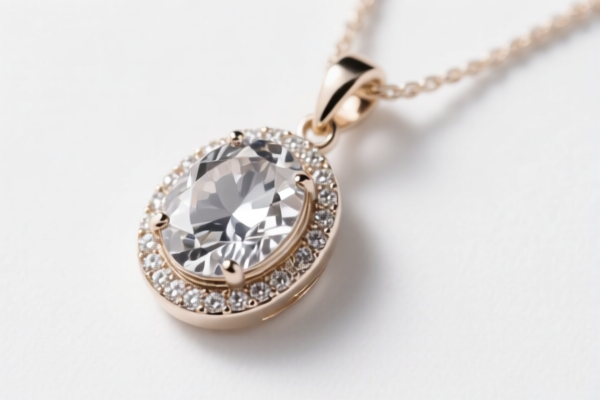
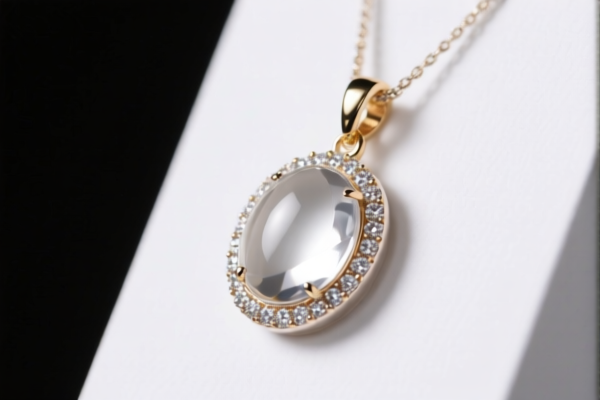
AI Analysis
👼 Angel Pendant (Jewelry Accessories)
🌐 HS Code Reference & Customs Clearance Guide | 2026 Latest Tariff Analysis | Professional Clearance Strategy
📌 I. Product Definition & Classification: Do You Really Understand "Angel Pendant"?
An Angel Pendant is a popular jewelry accessory, typically worn on a chain or cord. In international trade, its classification depends heavily on its material composition and manufacturing origin. It is generally categorized into three main types:
- Precious Metal Pendants: Made from gold, silver, platinum, or clad in precious metals.
- Stone/Gemstone Pendants: Where the primary value or material is semi-precious or precious stones (e.g., diamonds, sapphires, crystals).
- Imitation/Fashion Pendants: Made from base metals, plastic, resin, or other non-precious materials, often serving as costume jewelry.
⚠️ Key Distinction Point:
- If the pendant is primarily precious metal (even if set with stones) → Category 7113.
- If the pendant is primarily worked stones (gold/silver setting is secondary or negligible) → Category 7116.
- If the pendant is not made of precious materials (base metal, plastic, etc.) → Category 7117.
📦 II. HS Code Classification Details (2026 Latest Tariff Authority Comparison)
| HS Code | Product Description | Applicable Scenario | Material Type |
|---|---|---|---|
7113.19.50.95 |
Imitation jewelry: Pendants of precious metal or metal clad with precious metal | Gold/Silver plated angel pendants; Precious metal settings with minor stones | ✅ Precious Metal/Clad |
7113.19.50.91 |
Imitation jewelry: Other articles of precious metal or metal clad with precious metal | Non-chain shaped precious metal jewelry (e.g., standalone pendants, charms) | ✅ Precious Metal/Clad |
7116.20.05.00 |
Articles of jewelry of semi-precious stones | Pendants primarily made of carved semi-precious stones (e.g., jade, agate, crystal) with minimal metal | ✅ Semi-Precious Stone |
7117.90.90.00 |
Imitation jewelry: Other | Base metal, plastic, resin, or mixed materials; "Costume" jewelry angels | ❌ Non-Precious/Imitation |
7116.20.15.00 |
Articles of jewelry of precious or semi-precious stones | Pendants with significant precious or semi-precious stone content, possibly with precious metal elements | ✅ Precious/Semi-Precious Stone |
🔍 Key Reminder:
- Metal Content Matters: If the pendant is >50% precious metal by weight or value, it leans toward 7113.
- Stone Content Matters: If the value/material is predominantly the stone itself, it leans toward 7116.
- "Imitation" Trap: In HS Code terms, "Imitation Jewelry" (Chapter 71) includes all jewelry not in Chapters 71.11-71.13. However, 7117 is specifically for non-precious imitation jewelry. If it contains any precious metal, it usually falls under 7113 or 7116, not 7117, unless the precious metal content is negligible (clad).
💰 III. 2026 Latest Tariff Rate Breakdown (Including Surtaxes, Policy Add-ons)
✅ Applicable Country: USA (US)
✅ Origin: China (CN)
✅ Effective Time: Includes imports after Nov 10, 2025 (subject to current trade policies)
🎯 1. 7113.19.50.95 & 7113.19.50.91 —— Precious Metal Pendants
| Item | Content |
|---|---|
| Base Tariff | 5.5% (ad valorem) |
| Section 301 Surtax | +7.5% |
| Section 122 Tariff | +10% |
| Total Tariff Rate | 23.0% |
| Tax Calculation | CIF Value × 23.0% |
| De Minimis Eligibility | ❌ Not Eligible (High tax rate usually disqualifies from de minimis benefits in practical customs valuation, though legal status depends on specific US CBP rulings. Generally, high-value jewelry is scrutinized.) |
| Legal Basis Path | Section 301: 9903.01.19 → Section 122: 9903.01.24 → HTSUS: 7113.19.50.95/91 |
📌 Explanation:
- Base 5.5%: Standard MFN duty for precious metal jewelry.
- 301 Surtax 7.5%: Applied to Chinese-origin goods under Section 301.
- Section 122 10%: Specific surtax often applied to certain jewelry categories to protect domestic industries.
- Total 23%: This is a significant cost. Importers must calculate profit margins carefully.
🎯 2. 7116.20.05.00 & 7116.20.15.00 —— Stone/Semi-Precious Stone Pendants
| Item | Content |
|---|---|
| Base Tariff | 3.3% (7116.20.05.00) / 6.5% (7116.20.15.00) |
| Section 301 Surtax | 0.0% (7116.20.05.00) / 7.5% (7116.20.15.00) |
| Section 122 Tariff | +10% |
| Total Tariff Rate | 13.3% (05.00) / 24.0% (15.00) |
| Tax Calculation | CIF Value × 13.3% or 24.0% |
| De Minimis Eligibility | ❌ Not Eligible (Generally, jewelry items over $800 are subject to full duty; however, even below $800, misclassification is a risk.) |
| Legal Basis Path | Section 301: 9903.01.16 → Section 122: 9903.01.24 → HTSUS: 7116.20.x |
📌 Note:
-7116.20.05.00has a lower base rate (3.3%) and no 301 surtax in some specific interpretations, but Section 122 (10%) still applies, totaling 13.3%.
-7116.20.15.00has a higher base rate (6.5%) + 301 (7.5%) + 122 (10%) = 24.0%.
- Critical: Verify if the "stone" is considered "worked" (cut/polished) vs. raw. Worked stones fall under 7116.
🎯 3. 7117.90.90.00 —— Imitation/Base Metal Pendants
| Item | Content |
|---|---|
| Base Tariff | 11.0% |
| Section 301 Surtax | +7.5% |
| Section 122 Tariff | +10% |
| Total Tariff Rate | 28.5% |
| Tax Calculation | CIF Value × 28.5% |
| De Minimis Eligibility | ❌ Not Eligible |
| Legal Basis Path | Section 301: 9903.01.18 → Section 122: 9903.01.24 → HTSUS: 7117.90.90.00 |
📌 Warning:
- This is the highest tariff rate among the options.
- "Imitation jewelry" in HS terms does not mean "fake" in the fraudulent sense, but "non-precious material."
- Do not use this code for precious metal pendants, even if plated. If it has precious metal content, it must go to 7113 or 7116. Misclassification leads to severe penalties.
🛠️ IV. Customs Clearance Practical Advice (Actionable Pitfall Avoidance)
✅ 1. Required Documentation Checklist (Non-Negotiable)
| Document | Must Provide | Description |
|---|---|---|
| ✅ Product Specification Sheet | ✔️ | Detailed material breakdown: % of Gold/Silver, type of stones, plating thickness. |
| ✅ Material Composition Statement | ✔️ | Explicitly state: "Pendant made of 925 Silver, set with 0.5ct Cubic Zirconia." |
| ✅ High-Resolution Photos | ✔️ | Show clasp, hallmark (e.g., "925", "14K"), and stone setting. |
| ✅ Commercial Invoice | ✔️ | Clearly describe as "Angel Pendant, Jewelry, [Material]." Avoid vague terms like "Accessories." |
| ✅ Packing List | ✔️ | Weight, dimensions, quantity. |
| ✅ Certificate of Origin | ✔️ | To verify CN origin for surtax application. |
✅ 2. Declaration Tips (Crucial Rules)
🔥 "Material Dictates Code, Code Dictates Cost!"
| Scenario | Correct HS Code | Wrong Action | Consequence |
|---|---|---|---|
| Silver/Gold Plated | 7113.19.50.95 |
Declared as "Plastic Pendant" (7117) |
Audit Risk: CBP will check hallmark. Fine for misclassification. |
| Pure Silver (No Stone) | 7113.19.50.91 |
Declared as "Stone Pendant" (7116) |
Overpayment: Might pay lower rate, but underpayment penalties apply if base rate was higher. |
| Gemstone with Silver Setting | 7116.20.x |
Declared as "Precious Metal Jewelry" (7113) |
Complexity: Requires proof that stone value > metal value. |
| Base Metal/Costume | 7117.90.90.00 |
Declared as "Silver" (7113) |
Severe Penalty: Fraud allegation if no precious metal is present. |
✅ 3. Special Circumstances Handling
| Situation | Handling Advice |
|---|---|
| Mixed Materials (e.g., Gold chain + Stone pendant) | Declare as one unit. The main component determines the code. If the pendant is the primary item, use its code. |
| OEM Custom Jewelry | Provide design sketches and material specs. CBP may request a pre-ruling. |
| "Diamond" Simulants (CZ, Moissanite) | Must declare as "Imitation Diamond" or "Cubic Zirconia". Do not write "Diamond." If declared as real diamond but is fake, it’s fraud. |
| De Minimis ($800 Rule) | While Section 321 allows duty-free entry for shipments <$800, high-tax items like jewelry are heavily scrutinized. CBP often audits these. Ensure accurate HTS code to avoid delays. |
🌍 V. Global Market Clearance Comparison (2026)
| Country/Region | Recommended HS Code (Example) | Est. Duty Rate | Certification Requirements | Notes |
|---|---|---|---|---|
| 🇺🇸 USA | 7113.19.50.95 |
23.0% | No specific cert, but FTC disclosure required | High surtaxes (301 + 122) |
| 🇨🇳 China | 7113.19.50.95 |
5.5% | CCC (if applicable) | No 301/122 surtaxes for imports into China |
| 🇪🇺 EU | 7113.19.50.95 |
2.7% | No specific cert | No Section 122/301 surtaxes |
| 🇬🇧 UK | 7113.19.50.95 |
2.5% | No specific cert | Post-Brexit rules apply |
| 🇨🇦 Canada | 7113.19.50.95 |
6.5% | No specific cert | CUSMA benefits if from US |
📌 Conclusion:
- USA is the most expensive market for Chinese-origin jewelry due to Section 301 (7.5%) and Section 122 (10%) surtaxes.
- EU and Canada are much more favorable, with standard MFN rates.
- Cost Calculation: Always add 23-28.5% to your landed cost for US imports.
📌 VI. Common Errors & Pitfalls (Lessons Learned)
❌ Error 1: Declaring "Angel Pendant" as "Plastic Accessory" (9505) when it’s silver-plated.
👉 Result: CBP reclassifies to 7113, adds 23% duty + penalties.
❌ Error 2: Using "Imitation Jewelry" (7117) for silver-plated items.
👉 Result: Silver-plated items are usually 7113 because they contain precious metal. 7117 is for base metal (e.g., brass, copper) only.
❌ Error 3: Failing to specify stone type.
👉 Result: CBP may default to the highest tax category or hold the shipment for inspection.
❌ Error 4: Not disclosing plating thickness.
👉 Result: If plating is too thin, it may not qualify for 7113 (metal clad) and might fall to 7117 (if base metal is dominant) or be rejected.
✅ Correct Declaration Example:
"Angel Pendant, Jewelry, 925 Sterling Silver, Set with 0.2ct Cubic Zirconia, Model AP-123, No Packaging"
🎯 VII. Conclusion: Precise Classification, Save Money, Clear Smoothly!
🎯 Remember the Mantra:
🔹 "Metal Code: 7113 (23%), Stone Code: 7116 (13-24%), Base Code: 7117 (28.5%). Don't Mix!"
🔹 "Plated is Precious in HS, Base is Imitation. Check Hallmark!"
📌 Pro Tip:
If your pendants are made of base metal but plated with thick gold, ensure you have a plating thickness certificate. If the precious metal content is >5% by weight, it may still qualify for 7113. If not, it might be 7117. Get a Pre-Ruling from CBP if unsure.
📣 Immediate Action:
📞 Contact your Customs Broker + Provide Material Specs + Verify Hallmarks
🚀 Ensure your Angel Pendants pass US customs smoothly, avoiding 28.5% surprises!
✨ Professional Clearance Starts with Accurate Classification!
💼 Your Profit Margin Depends on Your HS Code!
Customer Reviews
About HS Code Classification
The Harmonized System (HS) is an internationally standardized nomenclature developed by the World Customs Organization (WCO) to classify traded products. Over 200 countries use the HS system as the basis for customs tariffs, trade statistics, and import/export regulations.
Each HS code follows a hierarchical structure:
- Chapter (2 digits) — Broad category of goods (e.g., Chapter 84: Machinery and Mechanical Appliances)
- Heading (4 digits) — More specific grouping within the chapter
- Subheading (6 digits) — Internationally standardized breakdown, used by all WCO member countries
- National subdivisions (8-10 digits) — Country-specific extensions for further classification, such as US HTSUS 10-digit codes
Correct HS code classification is essential for smooth customs clearance, accurate duty payment, and compliance with trade regulations. Misclassification can lead to customs delays, overpayment of duties, or penalties.
When importing from CN to US, the applicable tariff rates may include:
- Most-Favored-Nation (MFN) rate — The standard duty rate applied to WTO members
- General rate — Applied to countries without trade agreements
- Trade remedy duties — Additional tariffs such as Section 301 (anti-dumping), Section 232 (national security), or countervailing duties
The information provided on this page is for reference purposes only. For official classification, please consult with your local customs authority or a licensed customs broker.