Angle Scissors Blade
CN → US| HS Code | Tariff Rate | Origin | Destination | Doc |
|---|---|---|---|---|
| 8214203000 | 14.0% | CN | US | Official Doc |
| 8214909000 | 0.0% | CN | US | Official Doc |
Product Images
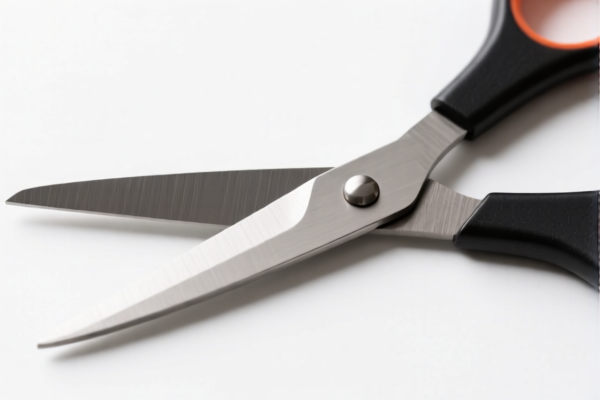
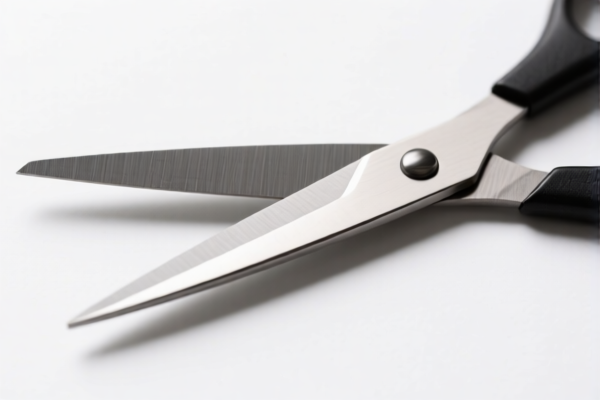
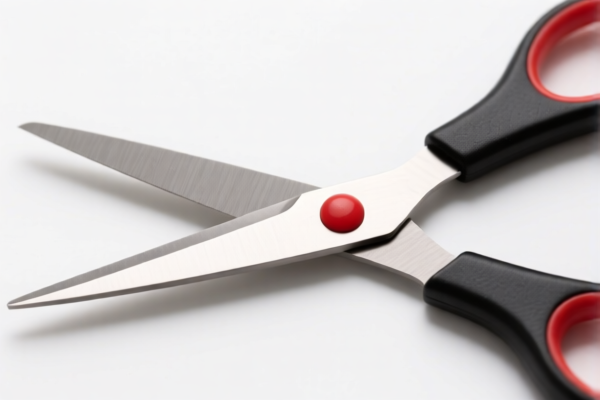
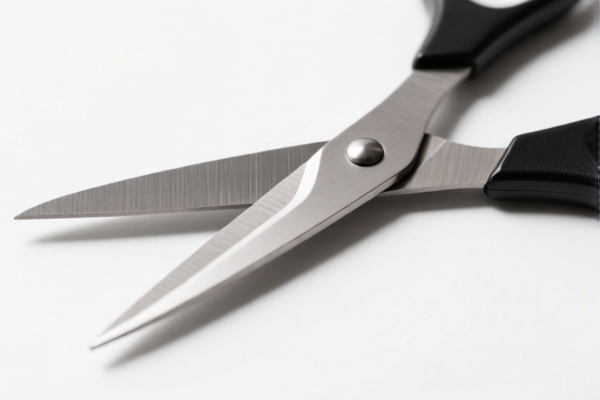
AI Analysis
✂️ Angle Scissors Blade (Scissor Blades for Angled Cuts)
🌐 HS Code Reference & Customs Clearance Guide | 2026 Latest Tariff Analysis | Professional Clearance Strategy
📌 I. Product Definition & Classification: Do You Really Understand "Angle Scissors Blade"?
Angle scissors blades are cutting tools specifically designed to create angled cuts (typically 45° or 90°) for materials such as paper, cardstock, fabric, or thin plastics. In international trade, these are not classified as "scissors" (which are hand tools for general cutting), but rather as "cutlery articles" or "manicure/pedicure instruments" depending on their specific design and intended use.
The critical distinction lies in the primary function and structure: - If designed for hairdressing/beauty purposes (e.g., cutting nails, cuticles, or hair with an angled tip): They fall under manicure/pedicure sets and instruments. - If designed for industrial/craft/general cutting (e.g., paper cutting, metal shearing blades not part of a hand tool): They may fall under "Other articles of cutlery".
⚠️ Key Distinction Point:
- If the blade is part of a manicure/pedicure instrument (e.g., angled nail clippers, cuticle pushers with blades): → Classify under 8214.20.30.00
- If it is a standalone blade or part of a general-purpose cutting tool (not specifically for manicure/pedicure): → Classify under 8214.90.90.00
📦 II. HS Code Classification Details (2026 Latest Tariff Authority Comparison)
| HS Code | Product Description | Applicable Scenario | Included Parts? |
|---|---|---|---|
8214.20.30.00 |
Manicure or pedicure sets and instruments (including nail files); Cuticle or cornknives, cuticle pushers, nail files, nailcleaners, nail nippers and clippers | Angled blades used in manicure/pedicure tools (e.g., angled nail clippers, cuticle scissors) | ✅ Yes (and parts thereof) |
8214.90.90.00 |
Other articles of cutlery (for example, hair clippers, butchers' or kitchen cleavers, chopping or mincing knives, paper knives); Other: Other (including parts) | Standalone angle scissor blades for general use (e.g., craft, paper, industrial) or blades not specifically for manicure/pedicure | ✅ Yes (including parts) |
🔍 Important Reminder:
- If the blade is specifically designed for manicure/pedicure (e.g., angled nail clippers, cuticle pushers with cutting edges), it MUST be classified under 8214.20.30.00.
- If it is a general-purpose cutting blade (e.g., a replacement blade for an angled paper cutter, or a craft scissors blade not for beauty use), it falls under 8214.90.90.00.
- Do not misclassify manicure blades as general cutlery to avoid misdeclaration penalties.
💰 III. 2026 Latest Tariff Rate Details (Including Additional Taxes & Policy Supplements)
✅ Applicable Country: United States (US)
✅ Country of Origin: China (CN)
✅ Effective Time: 2025 November 10 onwards (including subsequent imports)
🎯 1. 8214.20.30.00 —— Manicure/Pedicure Instruments (Including Angled Scissor Blades for Beauty Use)
| Item | Content |
|---|---|
| Base Tariff Rate | 4.0% (ad valorem) |
| Additional Tax | 0.0% |
| Total Tax Rate | 4.0% |
| Tax Calculation | CIF Value × 4.0% |
| De Minimis Eligibility | ✅ Yes (if value ≤ $800, may be exempt under Section 321) |
| Legal Basis Path | HTSUS: 8214.20.30.00 → Base Tariff: 4.0% |
📌 Explanation:
- The 4.0% base tariff applies to manicure/pedicure instruments, including angled blades designed for nail or cuticle care.
- No additional 301 tariffs are currently applied to this specific subheading for Chinese-origin goods.
- Low cost advantage: Only 4% duty, making it cost-effective for beauty product imports.
🎯 2. 8214.90.90.00 —— Other Cutlery Articles (General-Angle Scissors Blades)
| Item | Content |
|---|---|
| Base Tariff Rate | 0.0% (ad valorem) |
| Additional Tax | 0.0% |
| Total Tax Rate | 0.0% |
| Tax Calculation | CIF Value × 0.0% |
| De Minimis Eligibility | ✅ Yes (if value ≤ $800) |
| Legal Basis Path | HTSUS: 8214.90.90.00 → Base Tariff: 0.0% |
📌 Note:
- Zero duty for general-purpose angle scissors blades (e.g., craft, paper, industrial use).
- This makes it highly competitive for general cutting tools.
- Warning: Do not use this code for manicure blades, as it is misclassification.
🛠️ IV. Customs Clearance Practical Advice (Real-World Pitfall Avoidance Guide)
✅ 1. Required Documentation Checklist (Missing items = Delay/Rejection)
| Document | Required | Description |
|---|---|---|
| ✅ Product Specification Sheet | ✔️ | Must clearly state: Blade material (stainless steel, carbon steel), intended use (manicure vs. general), angle (45°, 90°, etc.) |
| ✅ Product Photos | ✔️ | Clear images of the blade, including any packaging that states "manicure/pedicure" or "general use" |
| ✅ Commercial Invoice | ✔️ | Must explicitly state: "Angle Scissors Blade for [Manicure/Pedicure OR General Use]" |
| ✅ Material Certificate | ✔️ | Proof of metal composition (e.g., 420 Stainless Steel) to verify classification |
| ✅ Packing List | ✔️ | Detail quantity, weight, and package dimensions |
| ✅ Origin Certificate | ✔️ | If non-China origin, may qualify for preferential rates |
✅ 2. Declaration Tips (Key Mnemonic)
🔥 “Beauty blades pay 4%, general blades pay 0% – declare use clearly!”
| Scenario | Correct Declaration | Incorrect Practice |
|---|---|---|
| Angled blade for nail/cuticle use | 8214.20.30.00 – “Manicure/Pedicure Instrument Blade” |
Misdeclare as “General Blade” → 0% but risk penalty |
| Angled blade for paper/craft use | 8214.90.90.00 – “Other Cutlery Article” |
Misdeclare as “Manicure” → 4% unnecessarily |
| Blade with handle (full scissor) | Still 8214.20.30.00 or 8214.90.90.00 |
Declare as “Tool” → Wrong classification |
| Replacement blade only | Same as above | Declare as “Part” → Same code applies |
✅ 3. Special Case Handling
| Scenario | Handling Advice |
|---|---|
| OEM Custom Blades | Provide client design drawings to prove intended use (manicure vs. general) |
| Blades with Packaging Labeling “Manicure” | Must use 8214.20.30.00, even if marketed as “multi-use” |
| Blades for Medical/Professional Use | If for podiatry/nail care, still 8214.20.30.00 |
| Blades for Industrial Metal Cutting | If not “cutlery” in traditional sense, may need re-evaluation (but usually 8214.90.90.00 if considered “other cutlery”) |
🌍 V. Global Main Market Clearance Comparison (2026 Latest)
| Country/Region | Recommended HS Code | Tariff | Certification Required | Notes |
|---|---|---|---|---|
| 🇺🇸 USA | 8214.20.30.00 (Beauty) / 8214.90.90.00 (General) |
4.0% / 0.0% | None | No 301 tariffs |
| 🇨🇳 China | 8214.20.30.00 / 8214.90.90.00 |
5% / 5% | CCC (if applicable) | Similar classification |
| 🇪🇺 EU | 8214.20.30.00 / 8214.90.90.00 |
4.0% / 4.0% | CE + RoHS | Harmonized system alignment |
| 🇬🇧 UK | 8214.20.30.00 / 8214.90.90.00 |
4.0% / 4.0% | UKCA + RoHS | Post-Brexit alignment |
| 🇦🇺 Australia | 8214.20.30.00 / 8214.90.90.00 |
5% / 5% | RCM | No additional tariffs |
📌 Conclusion:
- USA offers a 4% duty advantage for manicure blades and 0% for general blades.
- EU and UK apply 4% uniformly, so USA is more cost-effective for general blades.
- No additional 301 tariffs apply to these codes, making them stable for trade.
📌 VI. Common Errors & Pitfall Avoidance Guide (Lessons from Pain)
❌ Error 1: Declaring manicure blades as “General Cutlery” (8214.90.90.00)
👉 Consequence: Penalty for misclassification, potential duty underpayment (0% vs 4%) + interest
👉 Solution: If packaging or design indicates beauty use, MUST use 8214.20.30.00
❌ Error 2: Declaring general blades as “Manicure Instruments” (8214.20.30.00)
👉 Consequence: Overpayment of 4% duty unnecessarily
👉 Solution: Clearly state “General Purpose” in description
❌ Error 3: Failing to specify “Blade” vs “Complete Tool”
👉 Consequence: Confusion with 8213 (scissors) or 8211 (knives)
👉 Solution: Explicitly state “Replacement Blade” or “Blade Only” in description
❌ Error 4: Using vague terms like “Cutting Tool”
👉 Consequence: Customs officer may reclassify to higher-duty code
👉 Solution: Use specific terms: “Angle Scissors Blade for Manicure” or “Craft Scissors Blade”
✅ Correct Declaration Example:
“Stainless Steel Angle Scissors Blade, 45°, for Manicure/Pedicure Use, Model XYZ, Not for Industrial Metal Cutting”
HS Code:8214.20.30.00→ Duty: 4.0%“Carbon Steel Angle Scissors Blade, 90°, for Craft/Paper Cutting, Model ABC, General Use”
HS Code:8214.90.90.00→ Duty: 0.0%
🎯 VII. Conclusion: Precise Classification Saves Costs!
🎯 Remember the Mnemonic:
🔹 “Beauty blades: 4%, General blades: 0% – declare use clearly!”
🔹 “HS Code determines duty – misclassification costs more than correct declaration!”
📌 Pro Tip:
- If your product can be used for both manicure and general purposes, declare based on primary intended use as stated in marketing materials, packaging, and product description.
- Keep documentation ready to prove intended use (e.g., product photos, spec sheets, marketing copy).
📣 Immediate Action:
📞 Contact a licensed customs broker + Provide product images + Request HS Code Advance Ruling
🚀 Ensure smooth clearance, avoid penalties, and maximize profits!
✨ Professional customs clearance starts with accurate classification!
💼 Every cent of duty saved is profit earned!
Customer Reviews
About HS Code Classification
The Harmonized System (HS) is an internationally standardized nomenclature developed by the World Customs Organization (WCO) to classify traded products. Over 200 countries use the HS system as the basis for customs tariffs, trade statistics, and import/export regulations.
Each HS code follows a hierarchical structure:
- Chapter (2 digits) — Broad category of goods (e.g., Chapter 84: Machinery and Mechanical Appliances)
- Heading (4 digits) — More specific grouping within the chapter
- Subheading (6 digits) — Internationally standardized breakdown, used by all WCO member countries
- National subdivisions (8-10 digits) — Country-specific extensions for further classification, such as US HTSUS 10-digit codes
Correct HS code classification is essential for smooth customs clearance, accurate duty payment, and compliance with trade regulations. Misclassification can lead to customs delays, overpayment of duties, or penalties.
When importing from CN to US, the applicable tariff rates may include:
- Most-Favored-Nation (MFN) rate — The standard duty rate applied to WTO members
- General rate — Applied to countries without trade agreements
- Trade remedy duties — Additional tariffs such as Section 301 (anti-dumping), Section 232 (national security), or countervailing duties
The information provided on this page is for reference purposes only. For official classification, please consult with your local customs authority or a licensed customs broker.