Angled Measuring Tool
CN → US| HS Code | Tariff Rate | Origin | Destination | Doc |
|---|---|---|---|---|
| 9017304000 | 40.8% | CN | US | Official Doc |
| 9017308000 | 38.9% | CN | US | Official Doc |
Product Images
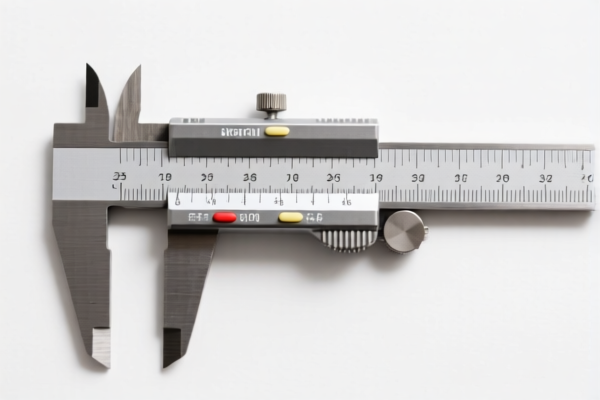
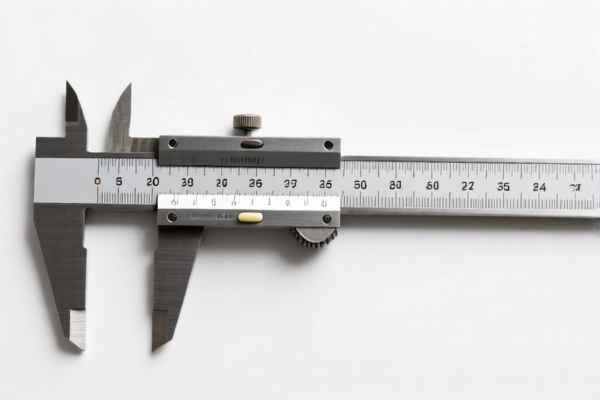
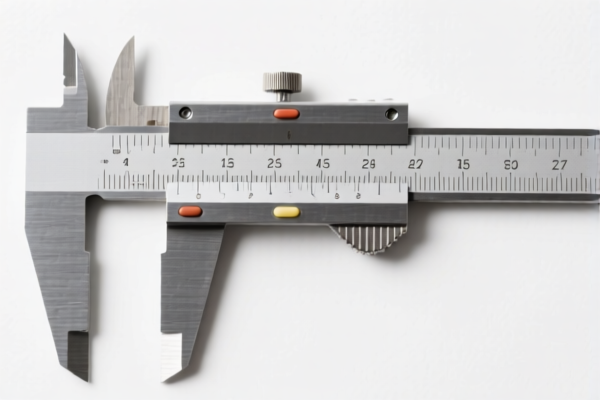
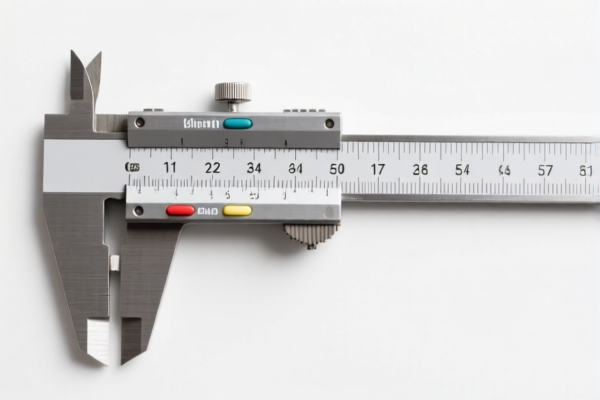
AI Analysis
📐 Angled Measuring Tool (Micrometers, Calipers, and Gauges)
🌐 HS Code Reference & Customs Clearance Guide | 2026 Latest Tariff Analysis | Professional-Level Compliance Strategy
📌 I. Product Definition and Classification: Do You Really Understand “Angled Measuring Tools”?
Angled measuring tools are precision instruments used for measuring physical dimensions, angles, or establishing reference points. In international trade, these are strictly categorized under Chapter 90 (Optical, photographic, musical, medical, or surgical instruments) as measuring instruments for use in the hand.
They are primarily divided into two functional categories for tariff purposes:
- Micrometers and Calipers: Instruments that provide precise linear or angular measurements via screw mechanisms or sliding jaws.
- Other Measuring Instruments: Gauges, check fixtures, or specialized tools that do not fit the specific mechanical definition of micrometers/calipers but are still for hand use.
⚠️ Key Distinction Point:
- If the tool is a micrometer (spindle anvil) or caliper (vernier/digital jaws) → It falls under 9017.30.40.00.
- If the tool is a gauge, template, or general measuring instrument not specified as micrometers/calipers → It falls under 9017.30.80.00.
📦 II. HS Code Classification Details (2026 Latest Tariff Authority Comparison)
| HS Code | Product Description | Applicable Scenarios | Key Characteristics |
|---|---|---|---|
9017.30.40.00 |
Micrometers and calipers | Standard vernier calipers, digital calipers, outside micrometers, depth micrometers, angle micrometers | ✅ Mechanical or electronic measurement via jaws/spindles |
9017.30.80.00 |
Other | Angle gauges, setting blocks, feeler gauges, specialized measuring templates, non-micrometer/caliper hand tools | ❌ Not a micrometer or caliper |
🔍 Important Reminder:
- "Micrometers and Calipers" specifically include tools that measure distance/angle by means of a screw thread (micrometer) or sliding jaws (caliper).
- "Other" includes any hand-held measuring instrument not covered by the above definition, such as fixed gauges, ring gauges, or simple protractors (though protractors can sometimes be disputed, fixed gauges are clearly "Other").
- Do not classify these as optical instruments (Chapter 90) or mechanical tools (Chapter 82) if they are primarily for measurement.
💰 III. 2026 Latest Tariff Rate Breakdown (Detailed Tax Clauses)
✅ Applicable Country: United States (US)
✅ Origin: China (CN)
✅ Effective Time: Current 2026 Tariff Schedule
🎯 1. 9017.30.40.00 —— Micrometers and Calipers
| Item | Content |
|---|---|
| Basic Tariff | 0.0% (ad valorem) |
| Section 301 / USITC Additional Tariff | 0.0% |
| Total Tariff Rate | 0.0% |
| Tax Calculation | CIF Value × 0.0% = $0.00 |
| De Minimis Eligibility | N/A (Generally, hand tools/instruments are not subject to high punitive tariffs under Section 301 List 4B or 3, but verify specific origin rules) |
| Legal Basis Path | HTSUS:9017.30.40.00 |
📌 Explanation:
- Micrometers and calipers currently enjoy a 0% tariff rate under normal US trade conditions.
- Unlike electronics or steel products, precision hand measuring instruments are not subject to the punitive 7.5% or 25% Section 301 tariffs typically applied to Chinese goods.
- No additional taxes apply. This is a highly favorable classification for importers.
🎯 2. 9017.30.80.00 —— Other Micrometers, Calipers, and Gauges
| Item | Content |
|---|---|
| Basic Tariff | 0.0% (ad valorem) |
| Section 301 / USITC Additional Tariff | 0.0% |
| Total Tariff Rate | 0.0% |
| Tax Calculation | CIF Value × 0.0% = $0.00 |
| De Minimis Eligibility | N/A |
| Legal Basis Path | HTSUS:9017.30.80.00 |
📌 Note:
- Similar to micrometers/calipers, "Other" measuring instruments (like gauge blocks, setting fixtures) also carry a 0% tariff rate.
- This reflects the US policy of keeping costs low for precision industrial and scientific tools.
- Even if the tool is complex, as long as it fits "Other" under 9017.30, the rate remains 0.0%.
🛠️ IV. Customs Clearance Practical Advice (Pitfall Avoidance Guide)
✅ 1. Required Documentation Checklist
| Document | Mandatory? | Description |
|---|---|---|
| ✅ Product Specifications | ✔️ | Must clearly state: Type (Micrometer/Caliper/Gauge), Measurement Range, Accuracy, Unit (mm/inch). |
| ✅ Product Photos | ✔️ | Clear images showing the brand, model, scale, and any jaws/spindles to prove it is a measuring instrument. |
| ✅ Commercial Invoice | ✔️ | Must explicitly describe the item as "Angled Measuring Tool" or "Precision Micrometer/Caliper". Avoid vague terms like "Tool" or "Instrument." |
| ✅ Packing List | ✔️ | Detail net/gross weight and quantities. |
| ✅ Certificate of Origin | ✔️ | To confirm China origin (for tariff verification). |
⚠️ Critical Tip:
- If you ship "Angle Gauges" (which set fixed angles) vs. "Angle Micrometers" (which measure angles), ensure the description matches the HS Code.
- Angle Micrometers →9017.30.40.00
- Fixed Angle Blocks/Gauges →9017.30.80.00
✅ 2. Declaration Skills (Key Mantra)
🔥 “Measure or Gauge? Specify Type! Micrometer/Caliper vs. Other!”
| Scenario | Correct Declaration | Incorrect Declaration |
|---|---|---|
| Digital Caliper | Micrometers and calipers (9017.30.40.00) |
"Measuring Device" (Ambiguous → Risk of Re-classification) |
| Adjustable Angle Finder with Scale | Micrometers and calipers (if it has sliding jaws/spindles) OR Other (if it’s a simple protractor/gauge) |
"Protractor" (May be classified elsewhere if not hand-held measuring) |
| Fixed Angle Gauge Block | Other (9017.30.80.00) |
"Micrometer" (Incorrect → Potential penalty for misclassification) |
✅ 3. Special Cases Handling
| Case | Handling Advice |
|---|---|
| Caliper with Bluetooth | Still 9017.30.40.00. The electronic component does not change the primary function of hand-held measurement. |
| Set of Tools (Boxed) | If a box contains calipers and other gauges, classify by the principal value/function. If mostly calipers, use 9017.30.40.00. If mixed, separate line items for accuracy. |
| OEM Branded Tools | Provide OEM authorization if brand royalty fees are involved, but HS Code remains the same. |
🌍 V. Global Market Comparison (2026 Latest)
| Country/Region | Recommended HS Code | Tariff (China Origin) | Certification Requirements | Notes |
|---|---|---|---|---|
| 🇺🇸 USA | 9017.30.40.00 / 9017.30.80.00 |
0.0% | None (Generally) | Most favorable tariff for precision tools. |
| 🇨🇳 China | 9017.30.40.00 / 9017.30.80.00 |
~5-8% | CCC (if applicable) | Import duty for Chinese domestic import. |
| 🇪🇺 EU | 9017.30.40 / 9017.30.80 |
0% | CE Mark (if electronic) | Zero duty for measuring instruments. |
| 🇬🇧 UK | 9017.30.40 / 9017.30.80 |
0% | UKCA Mark | Post-Brexit alignment with EU rates. |
| 🇦🇺 Australia | 9017.30.40 / 9017.30.80 |
5% | SAA (Safety) | Low duty, but certification may add cost. |
📌 Conclusion:
- USA offers 0% tariffs for these items, making them highly competitive for export.
- Unlike electronics, there are no Section 301 punitive tariffs.
- Ensure accurate description to avoid customs delays due to vague terminology.
📌 VI. Common Mistakes & Pitfall Guide (Lessons Learned)
❌ Mistake 1: Classifying a "Ruler" or "Tape Measure" as a Micrometer.
👉 Consequence: Tapes/rods are often 9017.20.00.00 (Tape measures) or 9017.20.90.00 (Other). While tax may be similar, misclassification can lead to questions about product type.
❌ Mistake 2: Using generic term "Measuring Tool" without specifying type.
👉 Consequence: Customs may reclassify to the most restrictive or ambiguous code, causing delays. Always specify "Caliper," "Micrometer," or "Gauge."
❌ Mistake 3: Confusing "Angle Micrometers" with "Digital Protractors".
👉 Consequence: If it has a digital display and rotating arm without a spindle/jaw mechanism, it might fall under 9017.30.80.00 (Other) rather than 40. Ensure you pick the right sub-heading.
✅ Correct Practice:
"Digital Caliper, 6-inch Range, Stainless Steel, Model XYZ, for Precision Machining"
OR
"Fixed Angle Gauge Block, Steel, 30 Degrees, for Tool Setting"
🎯 VII. Conclusion: Precise Classification for Smooth Clearance
🎯 Remember the Mantra:
🔹 "Micrometers & Calipers = 9017.30.40"
🔹 "Other Gauges = 9017.30.80"
🔹 "Both 0% Tariff in USA!"
📌 Pro Tip:
- Keep high-resolution photos of the scale markings and jaw mechanisms ready for customs brokers.
- If your tool is high-precision (e.g., CNC calibrated), mention it to distinguish from cheap, non-measuring "tools" that might be misclassified under Chapter 82.
📣 Immediate Action:
📞 Contact your customs broker with the exact product name (Micrometer vs. Caliper vs. Gauge).
🚀 Export with confidence: 0% duty is your competitive advantage!
✨ Professional Clearance Starts with Accurate Classification!
💼 Every 0% counts – maximize your profit margin!
Customer Reviews
About HS Code Classification
The Harmonized System (HS) is an internationally standardized nomenclature developed by the World Customs Organization (WCO) to classify traded products. Over 200 countries use the HS system as the basis for customs tariffs, trade statistics, and import/export regulations.
Each HS code follows a hierarchical structure:
- Chapter (2 digits) — Broad category of goods (e.g., Chapter 84: Machinery and Mechanical Appliances)
- Heading (4 digits) — More specific grouping within the chapter
- Subheading (6 digits) — Internationally standardized breakdown, used by all WCO member countries
- National subdivisions (8-10 digits) — Country-specific extensions for further classification, such as US HTSUS 10-digit codes
Correct HS code classification is essential for smooth customs clearance, accurate duty payment, and compliance with trade regulations. Misclassification can lead to customs delays, overpayment of duties, or penalties.
When importing from CN to US, the applicable tariff rates may include:
- Most-Favored-Nation (MFN) rate — The standard duty rate applied to WTO members
- General rate — Applied to countries without trade agreements
- Trade remedy duties — Additional tariffs such as Section 301 (anti-dumping), Section 232 (national security), or countervailing duties
The information provided on this page is for reference purposes only. For official classification, please consult with your local customs authority or a licensed customs broker.