Animal Decoration
CN → US| HS Code | Tariff Rate | Origin | Destination | Doc |
|---|---|---|---|---|
| 4205008000 | 35.0% | CN | US | Official Doc |
| 7117909000 | 28.5% | CN | US | Official Doc |
| 4205004000 | 36.8% | CN | US | Official Doc |
| 3926400010 | 15.3% | CN | US | Official Doc |
| 3926400090 | 15.3% | CN | US | Official Doc |
Product Images
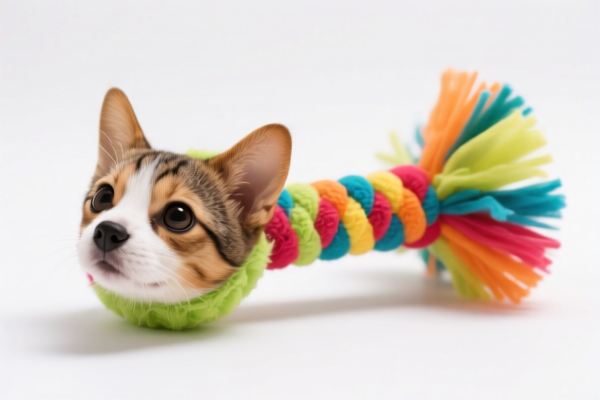
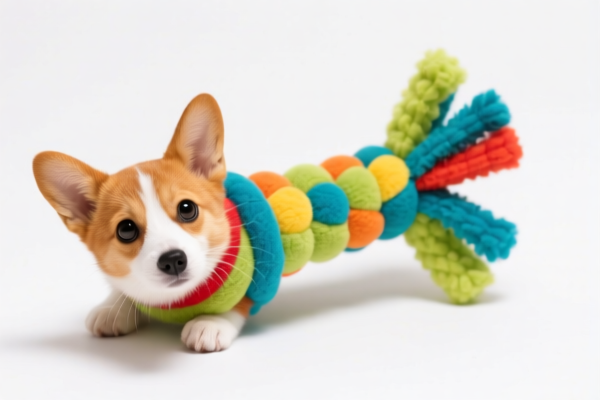
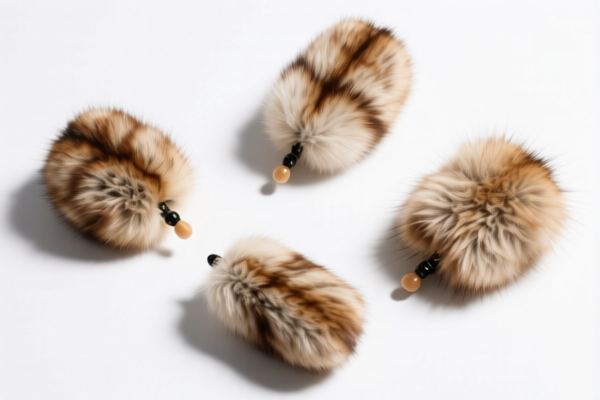
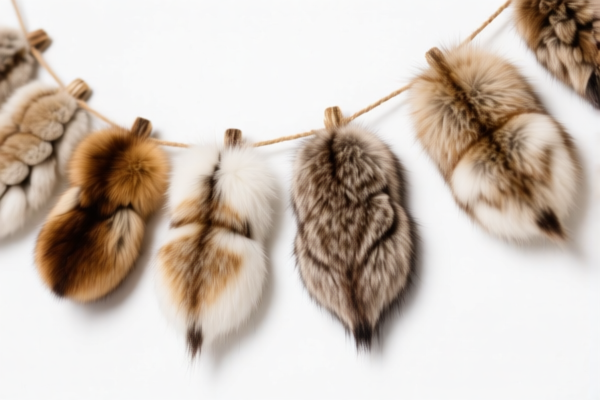
AI Analysis
🐾 Animal Decoration (Pet Accessories & Adornments)
🌐 HS Code Reference & Customs Clearance Guide | 2026 Latest Tariff Analysis | Professional Clearance Strategy
📌 I. Product Definition & Classification: What Exactly Are "Animal Decorations"?
In international trade, "Animal Decorations" (often referred to as pet accessories, pet jewelry, or pet adornments) are items used to embellish domestic animals (primarily dogs and cats). These items are broadly categorized by material and function. Unlike pet toys or food, these are primarily aesthetic or identity-marking items.
Key Material Categories: 1. Leather/Composite Leather: Collars, tags, leashes with decorative elements. 2. Non-Precious Metal/Plastic/Fabric: Imitation jewelry, plastic tags, fabric bows, alloy charms. 3. Plastic Decorative Items: Generic plastic ornaments, tags, or accessories not elsewhere specified.
⚠️ Key Distinction Point:
- If the item is made of leather and resembles jewelry/collars → Often falls under 4205.
- If the item is imitation jewelry (plastic/fabric/alloy) → Often falls under 7117.
- If the item is plastic and considered a general decorative article → Falls under 3926.
📦 II. HS Code Classification Details (2026 Latest Tariff Authority Comparison)
| HS Code | Product Description | Applicable Scenario | Material Basis | Total Tax Rate (US Origin/CN Origin*) |
|---|---|---|---|---|
4205.00.80.00 |
Pet decorations based on leather or composite leather | Leather collars, leather tags, composite leather accessories | Leather / Composite Leather | 35.0% |
7117.90.90.00 |
Imitation jewelry pet decorations based on non-precious metals (plastic, fabric, alloy) | Plastic tags, fabric bows, alloy charms, imitation jewelry | Non-Precious Metal / Plastic / Fabric | 28.5% |
4205.00.40.00 |
Catch-all for pet decorations based on leather or textile products | Leather/textile items not specifically classified elsewhere | Leather / Textile | 36.8% |
3926.40.00.10 |
Other decorative articles based on plastic materials | Pure plastic decorations, plastic tags, plastic ornaments | Plastic | 15.3% |
3926.40.00.90 |
Catch-all for other decorative articles based on plastic etc. | Plastic items not specifically classified elsewhere | Plastic | 15.3% |
Note: The tax rates above include Base Tariff, Additional Tariffs (Section 301), and Section 122 Tariffs for goods originating from China imported into the US.
🔍 Important Reminder:
- Leather items (4205) generally attract higher tariffs (35-36.8%) compared to plastic items (3926, 15.3%).
- Imitation jewelry (7117) sits in the middle at 28.5%.
- Correct material identification is critical; misclassifying leather as plastic can lead to severe penalties.
💰 III. 2026 Latest Tariff Rate Breakdown (Including Additional Taxes & Policy Surcharges)
✅ Applicable Country: United States (US)
✅ Country of Origin: China (CN)
✅ Effective Time: 2025/2026 Tariff Regime
🎯 1. 4205.00.80.00 —— Pet Decorations (Leather/Composite Leather)
| Item | Content |
|---|---|
| Base Tariff | 0.0% |
| Section 301 Additional Tariff | +25.0% |
| Section 122 Tariff | +10.0% |
| Total Tariff Rate | 35.0% |
| Tax Calculation | CIF Value × 35.0% |
| De Minimis Exemption Eligibility | ❌ Not Eligible (Subject to de minimis restrictions) |
| Legal Basis Path | USITC:4205.00.80.00 → Section 301: 25% → Section 122: 10% |
📌 Explanation:
- Base Tariff 0%: Leather articles often have low base duties.
- Section 301 (+25%): Standard additional tariff on many Chinese goods.
- Section 122 (+10%): Specific surcharge applied to certain Chinese imports.
- Total 35%: This is a high cost item for importers.
🎯 2. 7117.90.90.00 —— Imitation Jewelry Pet Decorations (Non-Precious Metals/Plastic/Fabric)
| Item | Content |
|---|---|
| Base Tariff | 11.0% |
| Section 301 Additional Tariff | +7.5% |
| Section 122 Tariff | +10.0% |
| Total Tariff Rate | 28.5% |
| Tax Calculation | CIF Value × 28.5% |
| De Minimis Exemption Eligibility | ❌ Not Eligible |
| Legal Basis Path | USITC:7117.90.90.00 → Section 301: 7.5% → Section 122: 10% |
📌 Note:
- Unlike leather, this category has a higher base tariff (11%) but a lower Section 301 surcharge (7.5%).
- Total rate (28.5%) is lower than leather options but higher than plastic-only options.
🎯 3. 4205.00.40.00 —— Catch-all for Leather/Textile Pet Decorations
| Item | Content |
|---|---|
| Base Tariff | 1.8% |
| Section 301 Additional Tariff | +25.0% |
| Section 122 Tariff | +10.0% |
| Total Tariff Rate | 36.8% |
| Tax Calculation | CIF Value × 36.8% |
| De Minimis Exemption Eligibility | ❌ Not Eligible |
| Legal Basis Path | USITC:4205.00.40.00 → Section 301: 25% → Section 122: 10% |
📌 Warning:
- This is the highest tariff category (36.8%) among the listed options.
- Use only if the item cannot be classified under4205.00.80.00.
🎯 4. 3926.40.00.10 & 3926.40.00.90 —— Plastic Decorative Articles
| Item | Content |
|---|---|
| Base Tariff | 5.3% |
| Section 301 Additional Tariff | 0.0% |
| Section 122 Tariff | +10.0% |
| Total Tariff Rate | 15.3% |
| Tax Calculation | CIF Value × 15.3% |
| De Minimis Exemption Eligibility | ❌ Not Eligible |
| Legal Basis Path | USITC:3926.40.00.10/90 → Section 301: 0% → Section 122: 10% |
📌 Key Advantage:
- Lowest Total Tariff (15.3%).
- Section 301 Surcharge is 0% for these specific plastic decorative codes.
- Strategy: If the product can be reasonably classified as "plastic decorative article," this offers significant cost savings compared to leather or imitation jewelry.
🛠️ IV. Customs Clearance Practical Advice (Battle-Tested Pitfall Guide)
✅ 1. Required Documentation Checklist (Must-Haves)
| Document | Mandatory | Description |
|---|---|---|
| ✅ Product Specifications | ✔️ | Material composition (e.g., "100% Polypropylene" vs. "Genuine Leather"), dimensions, weight. |
| ✅ Material Declaration | ✔️ | Critical for HS Code determination. Must specify if "Composite Leather" or "Genuine Leather." |
| ✅ Product Photos (Clear) | ✔️ | Show the entire product, tags, and any brand labels. Distinguish between "Jewelry" and "Decoration." |
| ✅ Commercial Invoice | ✔️ | Must clearly state the HS Code and product description. Avoid vague terms like "Pet Stuff." |
| ✅ Packing List | ✔️ | Detail contents to prevent misclassification of mixed shipments. |
| ✅ Origin Certificate | ✔️ | Confirm Country of Origin (China). |
✅ 2. Declaration Strategy (Key Mnemonics)
🔥 "Material First, Plastic Saves, Leather Pays, Jewelry Middle!"
| Scenario | Correct HS Code | Error to Avoid |
|---|---|---|
| Plastic Tag/Bow | 3926.40.00.10 or .90 (15.3%) |
❌ Misclassifying as Jewelry → 28.5% |
| Leather Collar | 4205.00.80.00 (35.0%) |
❌ Misclassifying as Plastic → 15.3% (High Risk of Penalty) |
| Alloy Charm/Plastic Jewelry | 7117.90.90.00 (28.5%) |
❌ Misclassifying as Leather → 35% |
| Mixed Material Item | Consult Customs | ❌ Do not arbitrarily choose the lowest rate; must reflect predominant material. |
✅ 3. Special Circumstances Handling
| Situation | Handling Advice |
|---|---|
| Composite Leather | Often falls under 4205. If it has a fabric backing but a leather surface, it is likely 4205, not 3926 (Plastic) or 7117 (Jewelry). |
| "Jewelry" vs. "Decoration" | If the item is primarily aesthetic and resembles fashion jewelry (even if plastic), it may fall under 7117. If it is purely a functional decoration (e.g., a plastic bell cover), it may fall under 3926. |
| Mixed Shipments | Declare each item separately with its correct HS Code. Do not lump all "Pet Accessories" into one code. |
| De Minimis Section 321 | ❌ Do Not Rely on De Minimis: All listed HS codes for China-origin goods are subject to Section 122 and Section 301 tariffs, making small parcel shipments (under $800) still taxable. |
🌍 V. Global Market Comparison (2026 Latest)
| Country/Region | Recommended HS Code | Tariff (China Origin) | Certification | Notes |
|---|---|---|---|---|
| 🇺🇸 USA | 3926.40.00.10 / 4205.00.80.00 |
15.3% ~ 36.8% | None Specific | High Tariffs due to Section 122 & 301. |
| 🇨🇳 China | 3926.40.00.10 / 4205.00.80.00 |
5% ~ 10% | CCC (if applicable) | Lower base tariffs. |
| 🇪🇺 EU | 3926.90.97 / 4205.00.89 |
0% ~ 4.5% | REACH | No Section 301 equivalent. |
| 🇬🇧 UK | 3926.90.97 / 4205.00.89 |
0% ~ 4.5% | UKCA | Post-Brexit rates similar to EU. |
📌 Conclusion:
- USA is the most expensive market for Chinese-origin pet decorations due to Section 122 (+10%) and Section 301 tariffs.
- Plastic items (3926) are the most cost-effective to import into the US.
- Leather items (4205) should be carefully evaluated for profitability due to high duties.
📌 VI. Common Errors & Pitfalls (Blood-Sweet Lessons)
❌ Mistake 1: Classifying Leather collars as Plastic (3926)
👉 Consequence: Severe penalty for misdeclaration. Customs will reclassify and charge back taxes + fines.
❌ Mistake 2: Using vague descriptions like "Pet Toy" for a Jewelry Item
👉 Consequence: Delays in clearance. Customs may detain the goods for inspection.
❌ Mistake 3: Assuming De Minimis ($800) applies
👉 Consequence: Incorrect. Section 122 tariffs apply to de minimis shipments from China. The goods will be held at customs, and taxes will be due upon entry.
✅ Correct Practice:
"Plastic Pet Tag, Decorative, 100% Polyethylene, Model XYZ"
"Genuine Leather Dog Collar, Black, Width 2cm, Model ABC"
🎯 VII. Conclusion: Professional Declaration, Cost Savings!
🎯 Remember the Key Takeaways:
🔹 "Plastic is King (15.3%), Leather is Costly (35-36.8%), Jewelry is Middle (28.5%)."
🔹 "No De Minimis Exemption for Section 122/301 goods from China."
🔹 "Declare Material Accurately to Avoid Penalties."
📌 Pro Tip:
If your product is made of mixed materials (e.g., leather with plastic tags), consult a customs broker to determine the essential character. Sometimes, breaking down the product into components for separate classification might be beneficial, but this requires careful legal advice.
📣 Immediate Action:
📞 Contact a professional customs broker.
📸 Provide clear photos and material declarations.
🚀 Optimize your HS Code to save 10-20% in duties!
✨ Professional Clearance Starts with Accurate Classification!
💼 Every Cent Counts in International Trade!
Customer Reviews
About HS Code Classification
The Harmonized System (HS) is an internationally standardized nomenclature developed by the World Customs Organization (WCO) to classify traded products. Over 200 countries use the HS system as the basis for customs tariffs, trade statistics, and import/export regulations.
Each HS code follows a hierarchical structure:
- Chapter (2 digits) — Broad category of goods (e.g., Chapter 84: Machinery and Mechanical Appliances)
- Heading (4 digits) — More specific grouping within the chapter
- Subheading (6 digits) — Internationally standardized breakdown, used by all WCO member countries
- National subdivisions (8-10 digits) — Country-specific extensions for further classification, such as US HTSUS 10-digit codes
Correct HS code classification is essential for smooth customs clearance, accurate duty payment, and compliance with trade regulations. Misclassification can lead to customs delays, overpayment of duties, or penalties.
When importing from CN to US, the applicable tariff rates may include:
- Most-Favored-Nation (MFN) rate — The standard duty rate applied to WTO members
- General rate — Applied to countries without trade agreements
- Trade remedy duties — Additional tariffs such as Section 301 (anti-dumping), Section 232 (national security), or countervailing duties
The information provided on this page is for reference purposes only. For official classification, please consult with your local customs authority or a licensed customs broker.