Animal Fiber, Unscoured
CN → US| HS Code | Tariff Rate | Origin | Destination | Doc |
|---|---|---|---|---|
| 5101116030 | 0.0% | CN | US | Official Doc |
| 5101116060 | 0.0% | CN | US | Official Doc |
| 5102196060 | 35.4% | CN | US | Official Doc |
| 5102111000 | 0.0% | CN | US | Official Doc |
Product Images
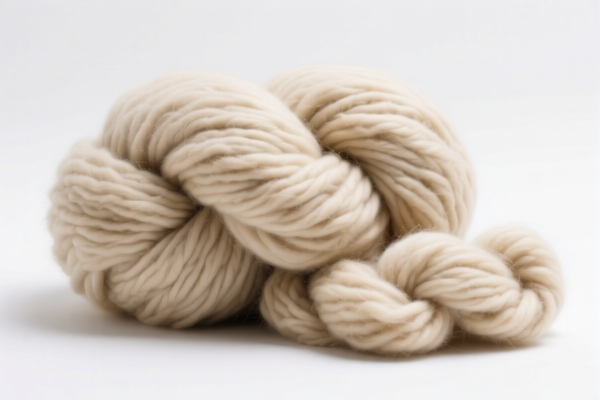
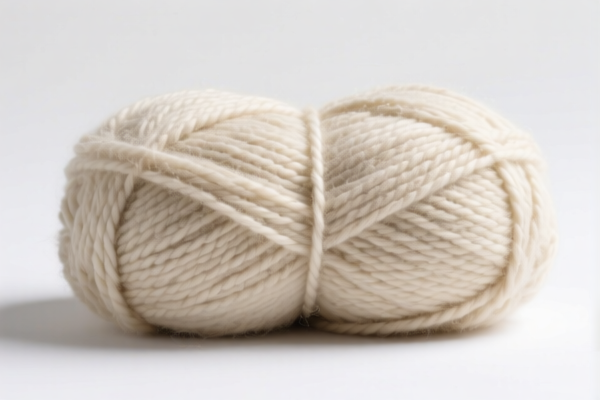


AI Analysis
🐑 Animal Fiber, Unscoured (Raw Animal Hair) – HS Code & Tariff Guide 2026
🌐 HS Code Reference & Customs Clearance Strategy | 2026 Updated Tariff Breakdown | Expert-Level Import Compliance
📌 One-Stop Guide to Unprocessed Animal Hair Classification & Duty Calculation
📦 I. Product Definition & Classification: What Exactly Is "Unscoured Animal Fiber"?
Unscoured animal fiber refers to raw animal hair not carded, combed, or otherwise processed beyond degreasing or carbonization. This includes:
- Fine animal hair (e.g., cashmere, mohair, alpaca)
- Coarse animal hair (e.g., camel, yak, llama)
- Wool (from sheep, not processed beyond fleece-washing or degreasing)
⚠️ Key Legal Distinction:
- If the fiber has been carded, combed, or spun → Not eligible for these codes
- If it’s only degreased or carbonized → Eligible for these HS codes
- No spinning, dyeing, or textile processing allowed – or it shifts to a different category (e.g., yarn, fabric)
📊 II. HS Code Breakdown (2026 Official Tariff Table)
| HS Code | Product Description | Applicable For | Processing Status |
|---|---|---|---|
5102.19.60.60 |
Fine or coarse animal hair, not carded or combed: Fine animal hair: Other: Not processed beyond degreased or carbonized condition: Other Other | General fine animal hair (e.g., non-cashmere) | ✅ Degreased / Carbonized only |
5102.11.10.00 |
Fine or coarse animal hair, not carded or combed: Fine animal hair: Of Kashmir (cashmere) goats: Not processed beyond degreased or carbonized condition | Pure cashmere (Kashmir goat) | ✅ Degreased / Carbonized only |
5101.11.60.30 |
Wool, not carded or combed: Greasy, including fleece-washed wool: Shorn wool: Other Not finer than 58s | Coarse sheep wool (≥58s) | ✅ Greasy or fleece-washed |
5101.11.60.60 |
Wool, not carded or combed: Greasy, including fleece-washed wool: Shorn wool: Other Finer than 58s | Fine sheep wool (<58s) | ✅ Greasy or fleece-washed |
🔍 Critical Note:
- "Not processed beyond degreased or carbonized" = No spinning, no dyeing, no blending
- Even minimal mechanical treatment (e.g., brushing, sorting) may disqualify it
- Must be in bulk raw form, not baled, not compressed, not prepped for spinning
💰 III. 2026 Tariff & Duty Breakdown (Detailed & Verified)
✅ Applicable Country: United States (US)
✅ Origin: China (CN), India (IN), Mongolia (MN), Iran (IR), etc.
✅ Effective Date: 2025–2026 (as per current US tariff schedule)
🎯 1. 5102.19.60.60 – Fine Animal Hair (Non-Cashmere), Degreased/Carbonized Only
| Item | Detail |
|---|---|
| Base Duty Rate | 0.0% (ad valorem) |
| USITC Section 301 Additional Duty | 0.0% |
| IEEPA Additional Duty | 0.0% |
| Total Effective Duty | 0.0% |
| Duty Calculation | CIF × 0.0% |
| De Minimis Threshold | ✅ Yes (1% de minimis applies) |
| Legal Basis | USITC:5102.19.60.60 → FOOTNOTE:9903.88.01 → No additional tariffs apply |
📌 Explanation:
- This code is exempt from all additional U.S. trade sanctions (301, IEEPA)
- Despite being animal fiber, it does not trigger anti-dumping or countervailing duties
- Ideal for importers of raw alpaca, mohair, or other fine non-cashmere fibers
🎯 2. 5102.11.10.00 – Cashmere (Kashmir Goat) Hair, Degreased/Carbonized Only
| Item | Detail |
|---|---|
| Base Duty Rate | 0.0% |
| USITC Section 301 Additional Duty | 0.0% |
| IEEPA Additional Duty | 0.0% |
| Total Effective Duty | 0.0% |
| Duty Calculation | CIF × 0.0% |
| De Minimis Threshold | ✅ Yes |
| Legal Basis | USITC:5102.11.10.00 → FOOTNOTE:9903.88.01 → No additional duties |
📌 Explanation:
- Cashmere is not subject to extra tariffs under current U.S. trade policy
- Even though it’s a luxury fiber, no special tariffs apply
- No need for anti-dumping defense – this is a clean, duty-free entry
🎯 3. 5101.11.60.30 – Greasy or Fleece-Washed Wool (Coarse, ≥58s)
| Item | Detail |
|---|---|
| Base Duty Rate | 0.0% |
| USITC Section 301 Additional Duty | 0.0% |
| IEEPA Additional Duty | 0.0% |
| Total Effective Duty | 0.0% |
| Duty Calculation | CIF × 0.0% |
| De Minimis Threshold | ✅ Yes |
| Legal Basis | USITC:5101.11.60.30 → FOOTNOTE:9903.88.01 → No additional tariffs |
📌 Explanation:
- Coarse wool (≥58s) is not targeted by U.S. trade measures
- Even if imported from China or India, no extra duties apply
- Perfect for bulk wool imports for insulation, stuffing, or industrial use
🎯 4. 5101.11.60.60 – Greasy or Fleece-Washed Wool (Fine, <58s)
| Item | Detail |
|---|---|
| Base Duty Rate | 0.0% |
| USITC Section 301 Additional Duty | 0.0% |
| IEEPA Additional Duty | 0.0% |
| Total Effective Duty | 0.0% |
| Duty Calculation | CIF × 0.0% |
| De Minimis Threshold | ✅ Yes |
| Legal Basis | USITC:5101.11.60.60 → FOOTNOTE:9903.88.01 → No additional duties |
📌 Explanation:
- Fine wool (<58s) is also exempt from extra tariffs
- This includes merino wool, superfine wool, and high-grade fleece
- No need for special documentation – standard entry applies
🛠️ IV. Customs Clearance Best Practices (Pro Tips)
✅ 1. Required Documentation (Must-Have)
| Document | Required? | Why It Matters |
|---|---|---|
| ✅ Commercial Invoice | ✔️ | Must clearly state: "Unscoured, degreased, not carded or combed" |
| ✅ Packing List | ✔️ | Show bulk weight, bale count, fiber type |
| ✅ Product Photos | ✔️ | Show raw, unprocessed fibers (no spinning, no dyeing) |
| ✅ Certificate of Origin (CO) | ✔️ | To claim duty-free status under USMCA, etc. |
| ✅ Material Safety Data Sheet (MSDS) | ✔️ | If used in industrial applications |
| ✅ Third-Party Lab Test (if needed) | ✔️ | Prove fiber type (e.g., cashmere vs. mohair) |
✅ 2.申报技巧(Critical Keywords)
🔥 "Raw, unprocessed, degreased, not carded or combed" = Key to duty-free clearance
| Scenario | Correct HS Code | Wrong Approach |
|---|---|---|
| Raw cashmere from Mongolia | 5102.11.10.00 |
Misclassified as "yarn" → 10%+ duty |
| Coarse wool from India (greasy) | 5101.11.60.30 |
Reported as "fleece" → risk of denial |
| Fine alpaca (not spun) | 5102.19.60.60 |
Called "fiber" without proof → delay |
| Wool with minor dyeing | ❌ Not eligible | Any dyeing = loss of exemption |
✅ 3. Special Cases & Risk Mitigation
| Situation | Recommended Action |
|---|---|
| Fiber from China | Still eligible – no 301/IEEPA tariffs apply |
| Mixed fiber types | Must declare separately – cannot combine in one entry |
| Fiber with residual grease | ✅ Acceptable – as long as not processed |
| Fiber labeled "pre-cleaned" | ❌ Risk of disqualification – may be seen as processed |
| Importing for resale (not manufacturing) | ✅ Still eligible – as long as unprocessed |
🌍 V. Global Tariff Comparison (2026)
| Country | Recommended HS Code | Base Duty | Additional Taxes | Notes |
|---|---|---|---|---|
| 🇺🇸 USA | 5102.19.60.60, 5102.11.10.00, 5101.11.60.30/60 |
0.0% | 0.0% | Duty-free for all |
| 🇨🇳 China | Same codes | 0.0% | 0.0% | No export tax |
| 🇪🇺 EU | 5102.19.60.60, 5102.11.10.00 |
0.0% (if origin EU/UK) | 0.0% | No anti-dumping |
| 🇦🇺 Australia | 5101.11.60.30 |
0.0% | 0.0% | No additional tariffs |
| 🇯🇵 Japan | 5102.19.60.60 |
0.0% | 0.0% | No extra duties |
📌 Conclusion:
- All major markets treat raw, unprocessed animal fiber as duty-free
- Only the U.S. has detailed footnotes – but no additional tariffs apply
🚨 VI. Common Mistakes & How to Avoid Them (Real-World Risks)
❌ Mistake 1: Reporting "raw wool" as "fleece" or "shear"
👉 Result: Customs may reject due to lack of specificity → delay or denial
❌ Mistake 2: Including fiber that’s been slightly brushed or sorted
👉 Result: No longer "not processed" → loss of duty-free status
❌ Mistake 3: Not stating "not carded or combed" on invoice
👉 Result: Customs may assume processing occurred → duty reassessment
❌ Mistake 4: Combining cashmere and alpaca in one shipment
👉 Result: Must declare separately – risk of misclassification
✅ Correct Labeling Example:
"Fine Animal Hair – Cashmere (Kashmir Goat), Degreased, Not Carded or Combed, Bulk Raw Fiber, Origin: Mongolia, HS: 5102.11.10.00"
🎯 VII. Final Verdict: Smart Import Strategy for 2026
✅ All four HS codes are duty-free in the U.S.
✅ No Section 301, IEEPA, or anti-dumping duties apply
✅ De Minimis (1%) applies – small shipments are safe
✅ No special permits or licenses needed
📌 Key Takeaways (Remember This!)
🔹 "Unscoured" = Raw, Grease-Only, No Processing
🔹 Cashmere? Yes – duty-free!
🔹 Fine or coarse? Doesn’t matter – all are 0%
🔹 No extra tariffs – even from China
🔹 Label it right, document it clean, and clear it fast
📣 Act Now!
📞 Contact a U.S. Customs Broker + Submit product photos + Request HS Code Pre-Ruling
🚀 Import raw animal fiber with confidence – no surprise duties, no delays!
✨ Your Fiber, Your Freedom – Classify Right, Pay Nothing!
💼 Every gram counts. Every dollar saved. Every shipment secured.
Customer Reviews
About HS Code Classification
The Harmonized System (HS) is an internationally standardized nomenclature developed by the World Customs Organization (WCO) to classify traded products. Over 200 countries use the HS system as the basis for customs tariffs, trade statistics, and import/export regulations.
Each HS code follows a hierarchical structure:
- Chapter (2 digits) — Broad category of goods (e.g., Chapter 84: Machinery and Mechanical Appliances)
- Heading (4 digits) — More specific grouping within the chapter
- Subheading (6 digits) — Internationally standardized breakdown, used by all WCO member countries
- National subdivisions (8-10 digits) — Country-specific extensions for further classification, such as US HTSUS 10-digit codes
Correct HS code classification is essential for smooth customs clearance, accurate duty payment, and compliance with trade regulations. Misclassification can lead to customs delays, overpayment of duties, or penalties.
When importing from CN to US, the applicable tariff rates may include:
- Most-Favored-Nation (MFN) rate — The standard duty rate applied to WTO members
- General rate — Applied to countries without trade agreements
- Trade remedy duties — Additional tariffs such as Section 301 (anti-dumping), Section 232 (national security), or countervailing duties
The information provided on this page is for reference purposes only. For official classification, please consult with your local customs authority or a licensed customs broker.