Animal Hair Carpet (Non Tufted/Non Flocked, Semi finished)
CN → US| HS Code | Tariff Rate | Origin | Destination | Doc |
|---|---|---|---|---|
| 5701101600 | 35.0% | CN | US | Official Doc |
| 5701101600 | 35.0% | CN | US | Official Doc |
| 5701101600 | 35.0% | CN | US | Official Doc |
Product Images
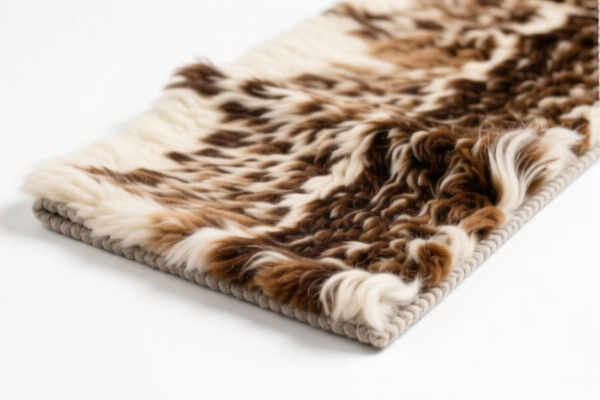
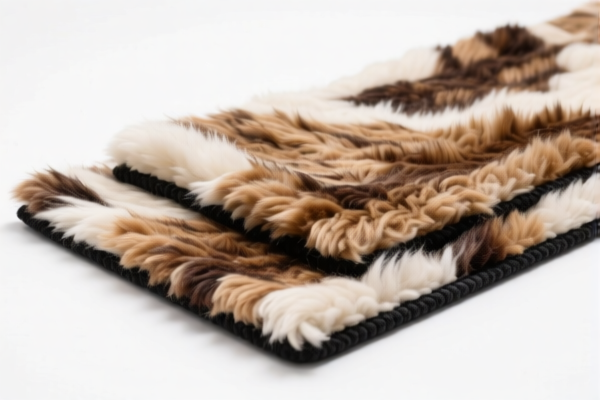
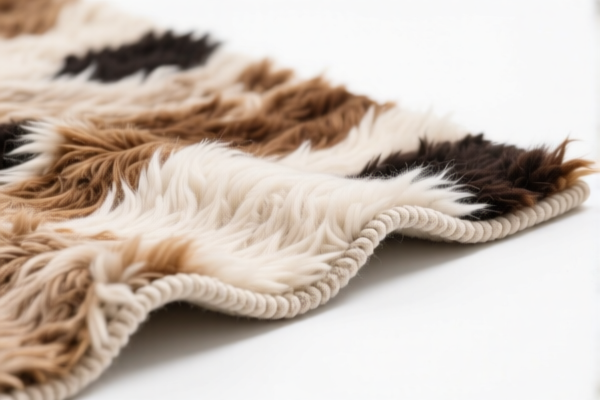
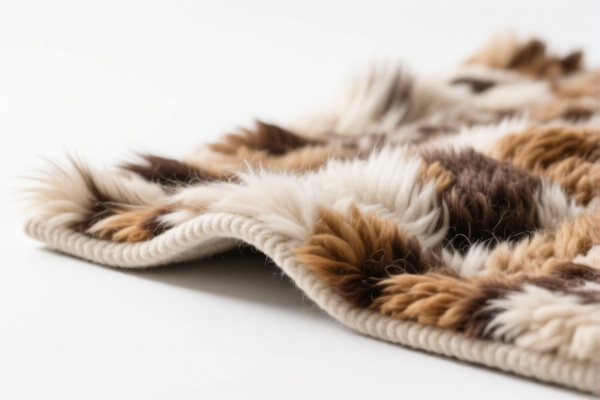
AI Analysis
🧶 Animal Hair Carpets & Textile Floor Coverings (Knotted, Non-Tufted/Non-Flocked, Semi-Finished)
🌐 HS Code Reference & Customs Clearance Guide | 2026 Latest Tariff Analysis | Professional Entry Strategy
📌 I. Product Definition & Classification: Do You Really Understand "Knotted Animal Hair Carpets"?
Animal hair carpets, specifically those described as Non-Tufted/Non-Flocked and Semi-Finished, fall under the category of Knotted Carpets (HS Chapter 57). Unlike tufted carpets (which use needles to insert yarn), knotted carpets are woven by hand or machine, where each knot is tied individually.
In international trade, these products are strictly divided based on the fiber composition and the manufacturing process:
Hand-Knotted/Hand-Inserted (High-End/Folklore): Carpets where the pile is hand-inserted or hand-knotted during weaving, often featuring specific high-value animal hairs (Alpaca, Llama, etc.).
Machine-Made/Other Knotted: Carpets that are knotted but do not meet the strict "hand-loomed/folklore" certification criteria, or use different animal hair blends.
⚠️ Key Distinction:
- If the product is certified as hand-loomed folklore and contains >50% Alpaca/Llama hair, it falls under 5701.10.13.00.
- If it is knotted animal hair carpet but NOT certified as hand-loomed folklore (or fails the specific hair weight criteria), it falls under 5701.10.16.00.
- Crucial Note: "Semi-finished" status does not exempt the product from HS classification; it is still classified as a "carpet or other textile floor covering, whether or not made up" under Chapter 57.
📦 II. HS Code Classification Details (2026 Latest Tariff Authority Comparison)
| HS Code | Product Description | Applicable Scenario | Key Criteria |
|---|---|---|---|
5701.10.13.00 |
Knotted carpets of wool/fine animal hair; Hand-inserted/hand-knotted; >50% Alpaca/Guanaco/Llama hair; Certified hand-loomed folklore | High-end artisanal rugs, Peruvian/Bolivian traditional crafts, certified folklore products | ✅ Must have Folklore Certification ✅ >50% specific hair content |
5701.10.16.00 |
Knotted carpets of wool/fine animal hair; Other (Non-hand-loomed folklore or different composition) | Standard knotted rugs, machine-knotted animal hair blends, semi-finished knotted pieces without folklore status | ❌ No Folklore Certification ❌ Does not meet specific >50% hair criteria |
🔍 Critical Reminder:
- The term "Semi-finished" implies the carpet is not yet edged or backed, but it is still considered a "floor covering" for tariff purposes.
- Alpaca/Llama Hair Content: If the pile is >50% by weight of these specific hairs, it triggers the subheadings under 5701.10.1x. If it is wool-based or mixed with less than 50% of these specific hairs, it may fall under different 5701 subheadings (not listed in<DATA>, so we focus only on the provided codes).
- Certification is Key: For5701.10.13.00, the Folklore Certification is mandatory. Without it, even a hand-knotted alpaca rug must go to5701.10.16.00.
💰 III. 2026 Latest Tariff Rate Breakdown (Including Additional Duties & Policy Surcharges)
✅ Applicable Country: United States (US)
✅ Origin: China (CN)
✅ Effective Date: 2025年11月10日起 (From November 10, 2025)
🎯 1. 5701.10.13.00 —— Hand-Loomed Folklore Carpets (>50% Alpaca/Llama Hair)
| Item | Content |
|---|---|
| Base Tariff | 0.0% (ad valorem) |
| Section 301 Additional Duty | +25.0% |
| Total Tax Rate | 25.0% |
| Tax Calculation | CIF Value × 25% |
| De Minimis Eligibility | ❌ No (Denied for textiles under 301) |
| Legal Basis | USITC 5701.10.13.00 + Section 301 Footnote |
📌 Explanation:
- Although the base tariff is 0%, the 25% Section 301 additional duty applies to all Chinese-origin carpets under this HS code.
- This is a flat 25% effective rate. There are no additional IEEPA surcharges listed in the provided<DATA>for this specific code, only the 25% add-on.
- Total Cost Impact: For every $10,000 CIF value, you pay $2,500 in duties.
🎯 2. 5701.10.16.00 —— Other Knotted Animal Hair Carpets
| Item | Content |
|---|---|
| Base Tariff | 0.0% (ad valorem) |
| Section 301 Additional Duty | +25.0% |
| Total Tax Rate | 25.0% |
| Tax Calculation | CIF Value × 25% |
| De Minimis Eligibility | ❌ No (Denied for textiles under 301) |
| Legal Basis | USITC 5701.10.16.00 + Section 301 Footnote |
📌 Note:
- The tax rate is identical to the folklore category (25% total).
- The difference lies in customs scrutiny:5701.10.13.00requires proof of folklore certification, while5701.10.16.00is for standard knotted animal hair carpets.
- Misclassification Risk: If you claim5701.10.13.00without proper certification, customs may reclassify to5701.10.16.00(same rate) or penalize for false declaration. If you misclassify a wool carpet as animal hair, penalties apply.
🛠️ IV. Customs Clearance Practical Advice (Real-World Pitfall Avoidance)
✅ 1. Required Documentation Checklist (Non-Negotiable)
| Document | Mandatory? | Description |
|---|---|---|
| ✅ Product Specification Sheet | ✔️ | Must detail: Fiber content (e.g., 60% Alpaca, 40% Wool), Knot density, Dimensions, Status (Semi-finished). |
| ✅ Folklore Certification | ✔️ If claiming 5701.10.13.00 | Official document from origin country proving hand-loomed folklore status. |
| ✅ Commercial Invoice | ✔️ | Must clearly state: "Knotted Carpet, Animal Hair, Semi-Finished," not just "Carpet." |
| ✅ Packing List | ✔️ | Detail weight, dimensions, and number of rolls/pieces. |
| ✅ Certificate of Origin | ✔️ | To prove Chinese origin (triggers 301 duties). |
| ✅ Photo of Product | ✔️ | Clear images showing the knotting technique and fiber texture. |
✅ 2. Declaration Tips (Key Mnemonics)
🔥 "Folklore Certified? Go .13. Other? Go .16. No Matter What, 25% Hits You!"
| Scenario | Correct HS Code | Incorrect Action | Consequence |
|---|---|---|---|
| Hand-knotted Alpaca rug with Folklore Cert | 5701.10.13.00 |
Declare as .16 | No financial loss, but risk of audit if cert is missing. |
| Hand-knotted Alpaca rug without Folklore Cert | 5701.10.16.00 |
Declare as .13 | Misdeclaration Penalty, potential seizure. |
| Machine-knotted Wool Carpet | Not in <DATA> (Likely 5701.90) |
Declare as .13/.16 | Major Error, wrong tax base. |
| Tufted Carpet | Not in <DATA> (Likely 5703) |
Declare as Knotted (5701) | Major Error, wrong HS Chapter. |
✅ 3. Special Considerations for "Semi-Finished" Products
| Situation | Handling Advice |
|---|---|
| Semi-Finished Meaning | Clearly state "Semi-Finished" in description. Do not imply it is a finished good ready for immediate use. |
| Edge Treatment | If edges are already bound, it may be considered "Made Up." Semi-finished usually means raw edges or unbacked. |
| Bundle with Finished Goods | If shipping with finished carpets, declare separately. Mixing semi-finished and finished goods can complicate valuation. |
| Alpaca Content Verification | Customs may test fiber content. Ensure the >50% claim for .13/.16 is accurate. If <50%, it may not qualify for these specific subheadings (check other 5701 codes). |
🌍 V. Global Market Comparison (2026 Latest)
| Country/Region | Recommended HS Code | Tariff Rate | Certification Required | Notes |
|---|---|---|---|---|
| 🇺🇸 USA | 5701.10.13.00 or .16.00 |
25% (Section 301) | Folklore Cert (for .13) | High duty burden. |
| 🇨🇳 China | 5701.10.13.00 or .16.00 |
0% - 5% | None | Low import tax. |
| 🇪🇺 EU | 5701.10.90 |
4% - 12% | None | Varies by fiber content. |
| 🇬🇧 UK | 5701.10.90 |
4% - 12% | None | Post-Brexit tariffs apply. |
| 🇦🇺 Australia | 5701.10.90 |
5% | None | No Section 301 equivalent. |
📌 Conclusion:
- The US market is the most expensive for Chinese-origin animal hair carpets due to the 25% Section 301 tariff.
- EU/UK/Australia have lower base tariffs but may have anti-dumping or social compliance requirements.
- Strategy: If targeting the US, consider value-added processing in a third country (e.g., Peru) to change origin, if feasible, to avoid 301 duties.
📌 VI. Common Mistakes & Pitfall Avoidance (Lessons from Blood and Tears)
❌ Mistake 1: Claiming 5701.10.13.00 without Folklore Certification.
👉 Consequence: Customs reclassifies to .16.00 (same rate) but may impose misdeclaration fines and delay cargo.
❌ Mistake 2: Declaring "Semi-Finished" as "Finished Carpet."
👉 Consequence: Valuation errors. Customs may assess duty on a higher "finished" value, leading to underpayment penalties.
❌ Mistake 3: Misstating Animal Hair Content (e.g., claiming 60% Alpaca when it's 40%).
👉 Consequence: If <50%, it may not qualify for .13/.16 (depending on other wool subheadings). Wrong HS code = Wrong Duty Rate + Penalty.
❌ Mistake 4: Using generic terms like "Rug" instead of "Knotted Carpet, Animal Hair."
👉 Consequence: Customs may assign a higher, uncertain tariff rate (e.g., 10-20% base + 25% add-on) due to lack of specificity.
✅ Correct Practice:
"Semi-Finished Knotted Carpet, Hand-Inserted, 60% Alpaca Hair, Folklore Certified, Unbacked, Roll Form, Model XYZ"
🎯 VII. Conclusion: Precise Classification, Cost Control, Smooth Clearance!
🎯 Remember the Mantra:
🔹 "Folklore? .13. Other? .16. Both pay 25%."
🔹 "Semi-finished is still a carpet. Don't hide the truth."
🔹 "Alpaca >50%? Get the cert! Otherwise, it's just 'Other'."
📌 Pro Tip:
- If your product is not from China (e.g., imported from Peru), the 25% Section 301 duty does NOT apply. Base rate is 0%. Always check Origin!
- For Semi-Finished goods, ensure your Commercial Invoice clearly states the stage of production to avoid valuation disputes.
📣 Immediate Action:
📞 Contact your customs broker with Fiber Content Reports and Folklore Certificates (if applicable).
🚀 Ensure your HS code is 5701.10.13.00 or 5701.10.16.00 based on certification, and budget for 25% duty if originating from China.
✨ Professional clearance starts with accurate classification!
💼 Every dollar saved is a dollar earned!
Customer Reviews
About HS Code Classification
The Harmonized System (HS) is an internationally standardized nomenclature developed by the World Customs Organization (WCO) to classify traded products. Over 200 countries use the HS system as the basis for customs tariffs, trade statistics, and import/export regulations.
Each HS code follows a hierarchical structure:
- Chapter (2 digits) — Broad category of goods (e.g., Chapter 84: Machinery and Mechanical Appliances)
- Heading (4 digits) — More specific grouping within the chapter
- Subheading (6 digits) — Internationally standardized breakdown, used by all WCO member countries
- National subdivisions (8-10 digits) — Country-specific extensions for further classification, such as US HTSUS 10-digit codes
Correct HS code classification is essential for smooth customs clearance, accurate duty payment, and compliance with trade regulations. Misclassification can lead to customs delays, overpayment of duties, or penalties.
When importing from CN to US, the applicable tariff rates may include:
- Most-Favored-Nation (MFN) rate — The standard duty rate applied to WTO members
- General rate — Applied to countries without trade agreements
- Trade remedy duties — Additional tariffs such as Section 301 (anti-dumping), Section 232 (national security), or countervailing duties
The information provided on this page is for reference purposes only. For official classification, please consult with your local customs authority or a licensed customs broker.