Animal Hair Carpet Semi Finished Product Non Tufted/Non Flocked
CN → US| HS Code | Tariff Rate | Origin | Destination | Doc |
|---|---|---|---|---|
| 5701101600 | 35.0% | CN | US | Official Doc |
| 5701101600 | 35.0% | CN | US | Official Doc |
| 5701101600 | 35.0% | CN | US | Official Doc |
| 5701101600 | 35.0% | CN | US | Official Doc |
| 5701101600 | 35.0% | CN | US | Official Doc |
Product Images
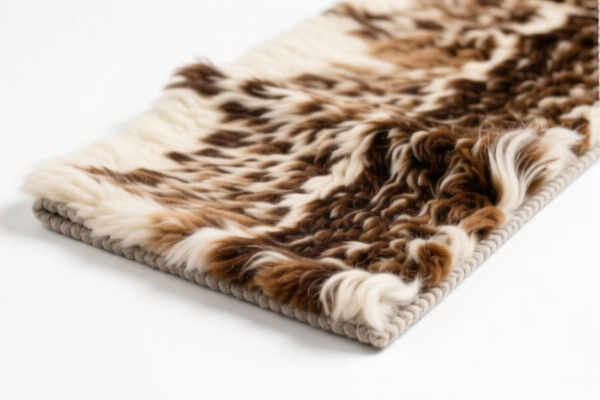
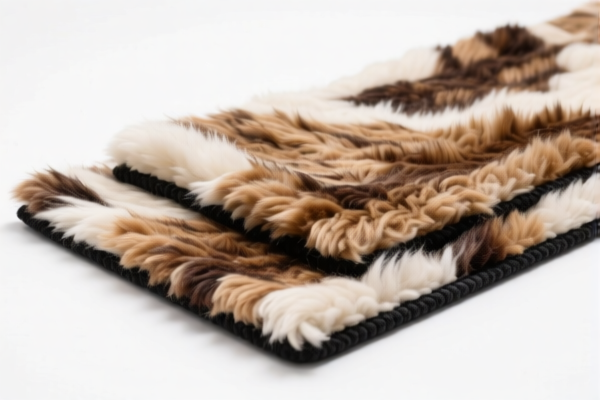
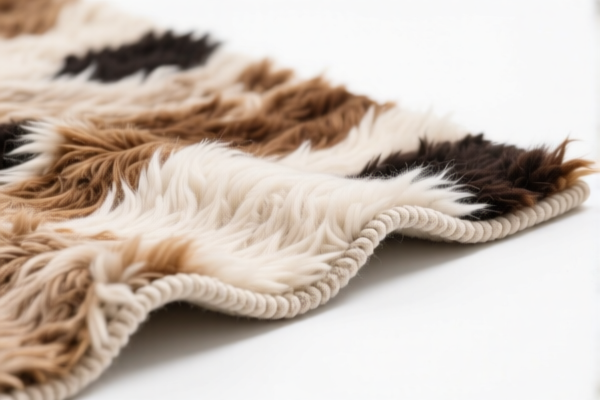
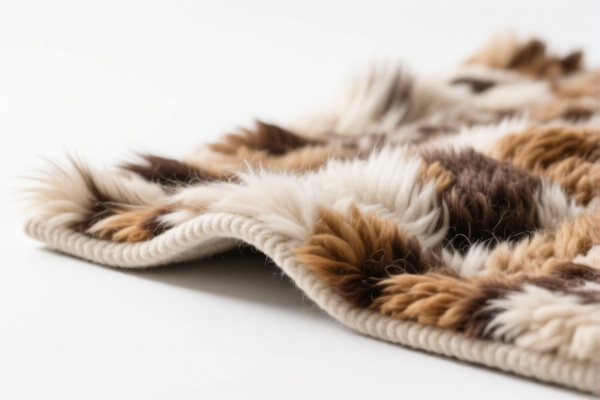
AI Analysis
🧶 Animal Hair Carpet (Semi-Finished / Non-Tufted / Non-Flocked)
🌐 HS Code Reference & Customs Clearance Guide | 2026 Latest Tariff Analysis | Professional Clearance Strategy
📌 I. Product Definition & Classification: Do You Really Understand "Animal Hair Carpet"?
Animal Hair Carpets are flooring materials made from natural fibers (primarily wool, but potentially other animal hair). In international trade, the classification hinges on two critical factors: 1. Construction Method: Specifically "Non-Tufted / Non-Flocked". This excludes carpets made by punching yarn into a backing (tufted) or adhering vertical fibers (flocked). It typically includes woven (pile weave) or knotted (Persian/Kilim style) carpets. 2. Manufacturing Stage: The input specifies "Semi-Finished" or "Unfinished". This means the carpet has not undergone final finishing processes such as shearing, washing, drying, or backing application to the point of being a "finished" good ready for immediate consumer use.
⚠️ Key Distinction Point:
- If the item is a complete, finished carpet with backing, sheared edges, and ready for sale → It might fall under different sub-headings depending on exact width/completeness, but often remains in 5701 if woven.
- If the item is Semi-Finished/Unfinished (e.g., a large loom piece, or a carpet missing final finishing steps) → It is explicitly classified as 5701.10.16.00.
- Material: Must be Animal Hair (Wool, Camel Hair, etc.). Synthetic blends are excluded from this specific sub-heading unless the principal characteristic is animal hair, but the HS code 5701.10.16.00 is strictly defined for "Of wool or fine animal hair."
📦 II. HS Code Classification Details (2026 Latest Tariff Authority Comparison)
Based strictly on the provided data, all variants (Semi-finished, Unfinished, Fabric) map to the same HS Code due to the specific material and construction constraints.
| HS Code | Product Description | Application Scenario | Key Characteristics |
|---|---|---|---|
5701.10.16.00 |
Animal Hair Carpet (Non-Tufted/Non-Flocked, Semi-Finished) | Raw woven carpet pieces, unfinished loom ends, pre-finishing stock | ✅ Animal Hair (Wool/Fine) ✅ Non-Tufted ✅ Semi-Finished/Unfinished |
5701.10.16.00 |
Animal Hair Carpet (Non-Tufted/Non-Flocked, Unfinished) | Carpets lacking final shearing, washing, or backing | ✅ Animal Hair (Wool/Fine) ✅ Non-Tufted ✅ Unfinished |
5701.10.16.00 |
Animal Hair Carpet Fabric (Non-Tufted/Non-Flocked) | Woven animal hair textile not yet formed into final carpet shape | ✅ Animal Hair (Wool/Fine) ✅ Non-Tufted ✅ Fabric Form |
🔍 Important Reminder:
- The provided data indicates that all described variants—whether "Semi-Finished," "Unfinished," or "Carpet Fabric"—are归类 (classified) under5701.10.16.00.
- This implies that for non-tufted, non-flocked animal hair carpets, the customs authority treats the semi-finished/unfinished state and the final fabric form under this single, specific tariff line.
- Do not misclassify as "Tufted" (usually 5703) or "Flocked" (5702/5701 depending on base), as this will lead to significant duty discrepancies.
💰 III. 2026 Latest Tariff Rate Details (Including Additional Duties & Policy Add-ons)
✅ Applicable Country: United States (US)
✅ Country of Origin: China (CN)
✅ Effective Date: From subsequent imports (as per provided data context)
🎯 1. 5701.10.16.00 —— Animal Hair Carpet (Semi-Finished/Unfinished/Fabric)
| Item | Content |
|---|---|
| Base Tariff Rate | 0.0% (ad valorem) |
| Section 301 Additional Duty | +25.0% |
| Section 122 Tariff | +10.0% |
| Total Tariff Rate | 35.0% |
| Tax Calculation | CIF Value × 35% |
| De Minimis Exemption Eligible? | ❌ NO (deny_de_minimis) |
| Legal Basis Path | Base: 0% → Section 301: 25% → Section 122: 10% → Total: 35% |
📌 Explanation:
- "Base Tariff 0%": The standard Most Favored Nation (MFN) rate for this specific type of woven animal hair carpet is zero.
- "Section 301 Additional Duty 25%": This is the standard retaliatory tariff imposed by the US Trade Representative (USTR) on a wide range of Chinese goods.
- "Section 122 Tariff 10%": This refers to additional duties levied under specific trade provisions (often related to national security or specific bilateral agreements, labeled here as "122 Clause Tariff").
- Combined Total: 35%. This is a high-cost tariff bracket. Importers must factor this heavily into their landed cost calculations.
- No De Minimis: Shipments under $800 (Section 321) cannot bypass this duty if classified under this HS Code. Full formal entry is required.
🛠️ IV. Customs Clearance Practical Advice (Real-World Pitfall Avoidance Guide)
✅ 1. Required Documentation Checklist (Mandatory)
| Document | Must Provide | Description |
|---|---|---|
| ✅ Product Specification Sheet | ✔️ | Must clearly state: Material (100% Wool/Animal Hair), Construction (Woven/Knotted, NOT Tufted), and Stage (Semi-Finished/Unfinished). |
| ✅ Photos (Including Labels/Tags) | ✔️ | Clear images showing the pile structure (woven knots) to prove it is not tufted. Show the "unfinished" edges if applicable. |
| ✅ Commercial Invoice | ✔️ | Must explicitly describe goods as: "Animal Hair Carpet, Semi-Finished, Non-Tufted, 100% Wool" with accurate value. |
| ✅ Packing List | ✔️ | Details weight, dimensions, and number of pieces. |
| ✅ Certificate of Origin (CO) | ✔️ | Essential for verifying Chinese origin, which triggers the 35% duty. |
| ✅ Supply Chain Proof | ✔️ | Contracts or proof of manufacturing process to confirm "Non-Tufted" status if challenged. |
✅ 2. Declaration Tips (Critical Mnemonics)
🔥 "Woven Not Tufted, Wool Is Key, 35% Duty Is Steep, Declare with Care!"
| Scenario | Correct Declaration Method | Wrong Approach |
|---|---|---|
| Semi-Finished Woven Carpet | 5701.10.16.00 |
Misclassifying as "Finished Rug" (different sub-code) → Potential penalty. |
| Non-Tufted (Woven/Knotted) | Emphasize "Woven" or "Hand-Knotted" | Calling it "Tufted Carpet" → Wrong HS Code (5703) → Wrong Duty. |
| Animal Hair (Wool) | Specify "100% Wool" or "Fine Animal Hair" | Vague term "Carpet" or "Synthetic Blend" → Risk of re-classification. |
| Semi-Finished State | State "Semi-Finished" or "Unfinished" | Stating "Ready for Sale" when it is not → Risk of valuation/duty dispute. |
✅ 3. Special Case Handling
| Situation | Handling Advice |
|---|---|
| Mixed Materials (Wool + Synthetic) | If wool is not the principal material, it may not qualify for 5701.10.16.00. Verify the "Essential Character" test. |
| Finished vs. Semi-Finished | Ensure your invoice clearly states the stage. If you ship "unfinished" but label it "finished," customs may demand additional duties for finishing services or re-classify. |
| High Tariff Management | With a 35% total duty, consider: 1. Supply Chain Diversification: Source from non-China countries (if eligible for lower duties). 2. Tariff Engineering: Ensure the product strictly meets the "Non-Tufted" and "Animal Hair" criteria to avoid being pushed into higher-duty synthetic categories. 3. Duty Drawback: If re-exported, claim duty drawbacks where applicable. |
🌍 V. Global Market Comparison (2026 Latest)
| Country/Region | Recommended HS Code | Tariff (China Origin) | Certification Requirements | Notes |
|---|---|---|---|---|
| 🇺🇸 USA | 5701.10.16.00 |
35% (0% Base + 25% Sec 301 + 10% Sec 122) | None specific (Textile) | High Duty. No de minimis exemption. |
| 🇨🇳 China | 5701.10.16.00 |
Varies (Import Duty) | N/A | Domestic production hub. |
| 🇪🇺 EU | 5701.10.16.00 |
4.7% (Approx. MFN) | REACH (if treated with chemicals) | No Section 301 equivalent. |
| 🇬🇧 UK | 5701.10.16.00 |
4.7% (Approx. MFN) | UKCA (if applicable) | Post-Brexit tariffs similar to EU. |
| 🇦🇺 Australia | 5701.10.16.00 |
5.0% (Approx. MFN) | None specific | Low duty, no punitive taxes. |
📌 Conclusion:
- The USA imposes a 35% tariff on these specific goods from China, making it the most expensive market due to punitive duties.
- EU/UK/Australia have much lower standard tariffs (~4.7%-5%), but lack the "de minimis" loophole for direct-to-consumer shipments under $800 if classified as commercial goods.
- Strategy: If targeting the US, ensure strict compliance to avoid misclassification penalties, or explore supply chain shifts to third-party countries if volume justifies it.
📌 VI. Common Errors & Pitfall Guide (Lessons from Experience)
❌ Error 1: Misclassifying "Tufted" carpets as "Non-Tufted"
👉 Consequence: Wrong HS Code → Audit & Penalties. Tufted carpets often have different duty rates and documentation requirements.
❌ Error 2: Ignoring the "Semi-Finished" Status
👉 Consequence: If you declare "Finished" but the product is unfinished, customs may charge for "finishing services" or deny entry. Always declare the exact manufacturing stage.
❌ Error 3: Underestimating the 35% Total Duty
👉 Consequence: Profit margins evaporate. Importers often calculate only the "Base 0%" and forget the 35% additional burden.
👉 Solution: Build the 35% into your pricing model immediately.
❌ Error 4: Vague Material Description ("Carpet")
👉 Consequence: Customs may classify it as "Synthetic" (often higher duty or different restrictions) if "Animal Hair" is not explicitly stated and proven.
👉 Solution: Use "100% Wool Animal Hair Carpet" in all documents.
✅ Correct Approach:
"Animal Hair Carpet, Semi-Finished, Non-Tufted, 100% Wool, Woven Construction, No Backing Applied"
🎯 VII. Conclusion: Professional Declaration, Cost Optimization!
🎯 Remember the Mantra:
🔹 "Non-Tufted, Animal Hair, 35% Duty Stare."
🔹 "HS Code 5701.10.16.00 is your key, but the duty is high, so be ready to pay!"
🔹 "De Minimis is Dead for this code, formal entry is the only way."
📌 Pro Tip:
- Since the base duty is 0%, the entire cost burden comes from Section 301 (25%) and Section 122 (10%).
- If your company has existing Section 301 Exclusions (if applicable and valid), check if this specific HS Code is covered. (Note: The provided data does not mention exclusions, so assume none apply by default).
- For high-volume imports, consider Bonded Warehouses or Foreign Trade Zones (FTZs) to defer or potentially reduce the immediate cash flow impact of the 35% duty.
📣 Immediate Action:
📞 Consult a licensed Customs Broker + Provide Material Test Reports + Verify "Non-Tufted" status with photos.
🚀 Plan your landed cost with the 35% total duty in mind to protect your margins.
✨ Precision in Classification, Savings in Clearance!
💼 Every percent matters in global trade!
Customer Reviews
About HS Code Classification
The Harmonized System (HS) is an internationally standardized nomenclature developed by the World Customs Organization (WCO) to classify traded products. Over 200 countries use the HS system as the basis for customs tariffs, trade statistics, and import/export regulations.
Each HS code follows a hierarchical structure:
- Chapter (2 digits) — Broad category of goods (e.g., Chapter 84: Machinery and Mechanical Appliances)
- Heading (4 digits) — More specific grouping within the chapter
- Subheading (6 digits) — Internationally standardized breakdown, used by all WCO member countries
- National subdivisions (8-10 digits) — Country-specific extensions for further classification, such as US HTSUS 10-digit codes
Correct HS code classification is essential for smooth customs clearance, accurate duty payment, and compliance with trade regulations. Misclassification can lead to customs delays, overpayment of duties, or penalties.
When importing from CN to US, the applicable tariff rates may include:
- Most-Favored-Nation (MFN) rate — The standard duty rate applied to WTO members
- General rate — Applied to countries without trade agreements
- Trade remedy duties — Additional tariffs such as Section 301 (anti-dumping), Section 232 (national security), or countervailing duties
The information provided on this page is for reference purposes only. For official classification, please consult with your local customs authority or a licensed customs broker.