Animal Hair Carpet Semi finished Product (Non Tufted/Non Flocked)
CN → US| HS Code | Tariff Rate | Origin | Destination | Doc |
|---|---|---|---|---|
| 5701101600 | 35.0% | CN | US | Official Doc |
| 5701101600 | 35.0% | CN | US | Official Doc |
| 5701101600 | 35.0% | CN | US | Official Doc |
| 5701101600 | 35.0% | CN | US | Official Doc |
| 5701101600 | 35.0% | CN | US | Official Doc |
Product Images
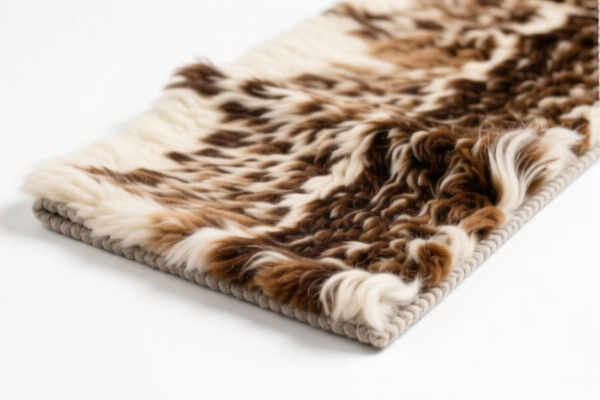
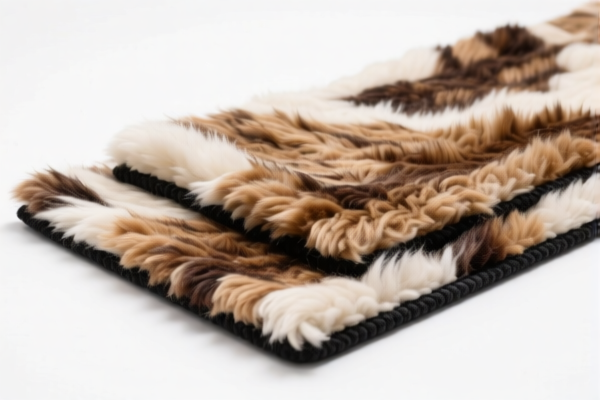
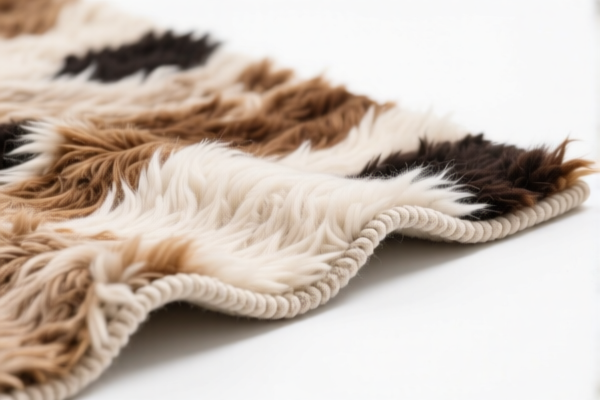
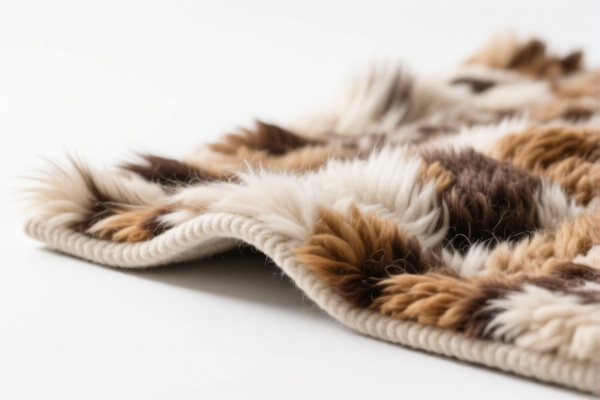
AI Analysis
🧶 Animal Hair Carpet Semi-Finished Products (Non-Tufted/Non-Flocked)
🌐 HS Code Reference & Clearance Guide | 2026 Latest Tariff Analysis | Professional通关 Strategy
📌 1. Product Definition & Classification: Do You Really Understand "Animal Hair Carpets"?
Animal hair carpets, primarily made from wool or coarse animal fibers, are traditional floor coverings. In international trade, they are strictly categorized based on their manufacturing process and completion stage. For this specific query, the key distinction lies in the manufacturing technique and the degree of completion.
Non-Tufted/Non-Flocked Carpets: This includes woven carpets (like Berber or Oriental styles) or needle-punched mats, excluding those made by tufting (inserting yarn into a backing) or flocking (gluing short fibers).
Semi-Finished Status: This indicates the product is not a final, ready-to-use consumer good. It may be a carpet web, uncut pile, or partially woven fabric that requires further processing (such as backing application, cutting, or finishing) before sale.
⚠️ Key Classification Point:
- If it is Tufted (yarn punched into backing) → It belongs to Chapter 57, Heading 5703 (e.g., 5703.10).
- If it is Woven/Non-Tufted → It belongs to Chapter 57, Heading 5701.
- Since the input specifies "Non-Tufted/Non-Flocked" and "Semi-Finished", it falls under Heading 5701.
- The specific subheading5701.10.16.00typically covers Woven Carpets of Wool or Fine Animal Hair, specifically those that are unfinished or semi-finished (e.g., carpet webs).
📦 2. HS Code Classification Details (2026 Latest Tariff Authority Comparison)
Based on the provided data <DATA>, all variations of this product map to a single specific HS Code.
| HS Code | Product Description | Applicable Scenario | Status |
|---|---|---|---|
5701.10.16.00 |
Animal Hair Carpets (Non-Tufted/Non-Flocked, Semi-Finished/Unfinished) | Woven animal hair carpets, carpet webs, unfinished rugs, half-made carpets | ✅ Semi-Finished / Unfinished |
🔍 Critical Note:
- The provided data shows 5 different summary texts (e.g., "Semi-finished," "Unfinished," "Carpet Fabric"), but ALL point to the same HS Code:5701.10.16.00.
- This indicates that regardless of whether the customs broker labels it as "semi-finished," "unfinished," or "carpet fabric," if it is made of animal hair, is non-tufted/non-flocked, and is not a final consumer carpet, it consistently classifies under this code.
- Do not split the declaration into multiple codes. Use5701.10.16.00for all variations described in<DATA>.
💰 3. 2026 Latest Tariff Rate Breakdown (Including Surcharges & Policy Add-ons)
✅ Applicable Country: United States (US)
✅ Origin: China (CN) (Implied by the 122 Clause and typical high-surcharge context)
✅ Effective Time: Current (2025-2026)
🎯 HS Code: 5701.10.16.00 —— Animal Hair Carpets (Semi-Finished/Unfinished)
| Item | Content |
|---|---|
| Base Tariff Rate | 0.0% (Ad Valorem) |
| Section 301 Surcharge | +25.0% (From USITC Footnote 9903.88.01 or similar 301 List) |
| Section 122 Surcharge | +10.0% (Specific policy surcharge for China origin under 122 Clause) |
| Total Tariff Rate | 35.0% |
| Tax Calculation | CIF Value × 35% |
| De Minimis Eligibility | ❌ Not Eligible (Deny de minimis for textiles/carpet products of Chinese origin under these surcharges) |
| Legal Basis Path | Base: 5701.10.16.00 → 301: 25% → 122: 10% |
📌 Explanation:
- "Base Tariff 0%": The US generally has low base tariffs for handmade or high-quality wool carpets under Heading 5701.
- "Section 301 Surcharge 25%": This is the standard punitive tariff applied to many Chinese textile and footwear products.
- "122 Clause Surcharge 10%": This refers to a specific additional duty often applied to certain categories of Chinese goods (sometimes linked to port fees, anti-dumping pre-filing, or specific bilateral clauses). Note: Ensure the "122 Clause" refers to the correct current regulatory code for your specific trade lane; typically, this adds to the 301 duty.
- Total 35%: This is a significant cost that must be factored into your landed cost calculation. It is not eligible for de minimis (Section 321) exemption for shipments under $800 if these surcharges apply.
🛠️ 4. Clearance Operational Advice (Practical Pitfall Avoidance Guide)
✅ 1. Document Preparation Checklist (All Required)
| Document | Mandatory | Description |
|---|---|---|
| ✅ Commercial Invoice | ✔️ | Must clearly state: "Animal Hair Carpet, Non-Tufted, Semi-Finished." |
| ✅ Packing List | ✔️ | Detail weight, dimensions, and quantity. |
| ✅ Product Description | ✔️ | Explicitly mention "Non-Tufted/Non-Flocked" to avoid misclassification as 5703 (Tufted). |
| ✅ Material Composition Proof | ✔️ | Certificate stating % of Animal Hair (Wool/Hair) to confirm Chapter 57, Heading 5701. |
| ✅ Photos | ✔️ | Show the texture and lack of tufting needles/flocking glue to prove non-tufted status. |
| ✅ Origin Certificate | ✔️ | Required to prove Chinese origin (triggers the 35% rate) or to claim any potential exemptions if applicable. |
✅ 2. Declaration Tips (Key Mantra)
🔥 "Non-Tufted is Key, Semi-Finished is Status, HS Code 5701.16.00 is Final!"
| Situation | Correct Declaration | Incorrect Practice |
|---|---|---|
| Semi-Finished Carpet Web | 5701.10.16.00 - "Semi-finished Animal Hair Carpet" |
Declaring as "Finished Carpet" → May face different duty or inspection. |
| Unfinished Woven Piece | 5701.10.16.00 - "Unfinished Wool Carpet" |
Declaring as "Textile Fabric" (Chapter 50-55) → Wrong chapter, penalty risk. |
| Tufted Carpet (Mistake) | If tufted, use 5703.xxxx.xxxx |
Declaring non-tufted as tufted → Lower duty, but fraud risk if discovered. |
| Synthetic Fiber Mix | If >10% synthetic, may change classification | Assuming 100% animal hair without proof → Misclassification. |
✅ 3. Special Case Handling
| Situation | Handling Advice |
|---|---|
| Mixed Materials | If the carpet contains >10% synthetic fibers, it may fall under 5701.90 (Other Textile Materials). Verify composition. |
| Customs Inquiry | If CBP questions "Semi-Finished," provide a process flow chart showing subsequent steps (e.g., backing, cutting). |
| Value Assessment | Ensure CIF value includes freight and insurance. Duty is calculated on CIF, not FOB. |
| 122 Clause Clarification | Confirm with your freight forwarder if the "122 Clause" is still active for your specific commodity code, as policies can change. |
🌍 5. Global Market Clearance Comparison (2026 Latest)
| Country/Region | Recommended HS Code | Tariff (China Origin) | Certification Requirements | Remarks |
|---|---|---|---|---|
| 🇺🇸 USA | 5701.10.16.00 |
35% (0% Base + 25% 301 + 10% 122) | None specific for carpets, but check for lead/chemicals | High duty cost. |
| 🇨🇳 China | 5701.10.16.00 |
~0-5% (Import Duty) | N/A | Exported from China, so this is for re-import or transit. |
| 🇪🇺 EU | 5701.10.00.00 |
~6-12% | CE (if applicable), REACH | No 301/122 surcharges. |
| 🇬🇧 UK | 5701.10.00.00 |
~6-12% | UKCA | Post-Brexit rules apply. |
| 🇨🇦 Canada | 5701.10.10.00 |
~0-16% | N/A | Check CUSMA eligibility if originating in Canada/Mexico. |
📌 Conclusion:
- The US market is the most challenging due to the 35% total tariff.
- No other major market in the list has equivalent punitive surcharges like the US 301/122 clauses.
- Strategy: If shipping to the US, ensure your pricing model absorbs the 35% duty, or consider supply chain diversification (e.g., manufacturing in Vietnam or India) to avoid Chinese origin surcharges.
📌 6. Common Mistakes & Pitfall Guide (Blood and Tears Lessons)
❌ Mistake 1: Declaring "Semi-Finished" as "Finished Carpet"
👉 Consequence: Customs may classify it under a different subheading with different duty rates, leading to penalties and back-taxes.
👉 Fix: Clearly state "Semi-Finished" or "Unfinished" in the description.
❌ Mistake 2: Confusing "Non-Tufted" with "Tufted"
👉 Consequence: Tufted carpets (5703) have different base duties and surcharge applicability. Misclassification = Audit Risk.
👉 Fix: Provide photos showing the weaving pattern, not punched yarn.
❌ Mistake 3: Ignoring the "122 Clause"
👉 Consequence: Underestimating landed cost by 10%. Profit Margin Erosion.
👉 Fix: Include the 10% surcharge in your initial cost calculation.
❌ Mistake 4: Assuming De Minimis Exemption for $800 Shipments
👉 Consequence: Section 321 (de minimis) does not apply to goods subject to Section 301 or specific punitive surcharges from China.
👉 Fix: Prepare for formal entry and duty payment for all shipments.
✅ Correct Practice:
"Woven Animal Hair Carpet, Semi-Finished, Non-Tufted, Non-Flocked, 100% Wool, Model XYZ, Origin China"
🎯 7. Conclusion: Professional Declaration, Time-Saving, Cost-Effective!
🎯 Remember the Mantra:
🔹 "Non-Tufted is 5701, Tufted is 5703, Semi-Finished is 16, Don't Guess, Check!"
🔹 "35% Duty in US, 0% Base + 25% 301 + 10% 122, Plan Your Price!"
📌 Tips:
- If your carpets are originating from Vietnam, India, or Bangladesh, you may avoid the 301/122 surcharges, reducing the total duty to the base rate (0%).
- Consider applying for a Pre-Ruling (Advance Ruling) from CBP if you are unsure about the "Semi-Finished" status.
- Verify the "122 Clause" with your customs broker, as regulatory codes can be complex and subject to change.
📣 Immediate Action:
📞 Contact a professional customs broker + Provide product photos + Confirm Origin Rules
🚀 Ensure your carpets, smoothly cleared, efficiently exported, profit protected!
✨ Professional Clearance, Starting with Accurate Classification!
💼 Every cent of your cost, deserves to be precisely calculated!
Customer Reviews
About HS Code Classification
The Harmonized System (HS) is an internationally standardized nomenclature developed by the World Customs Organization (WCO) to classify traded products. Over 200 countries use the HS system as the basis for customs tariffs, trade statistics, and import/export regulations.
Each HS code follows a hierarchical structure:
- Chapter (2 digits) — Broad category of goods (e.g., Chapter 84: Machinery and Mechanical Appliances)
- Heading (4 digits) — More specific grouping within the chapter
- Subheading (6 digits) — Internationally standardized breakdown, used by all WCO member countries
- National subdivisions (8-10 digits) — Country-specific extensions for further classification, such as US HTSUS 10-digit codes
Correct HS code classification is essential for smooth customs clearance, accurate duty payment, and compliance with trade regulations. Misclassification can lead to customs delays, overpayment of duties, or penalties.
When importing from CN to US, the applicable tariff rates may include:
- Most-Favored-Nation (MFN) rate — The standard duty rate applied to WTO members
- General rate — Applied to countries without trade agreements
- Trade remedy duties — Additional tariffs such as Section 301 (anti-dumping), Section 232 (national security), or countervailing duties
The information provided on this page is for reference purposes only. For official classification, please consult with your local customs authority or a licensed customs broker.