Animal Hair Industrial Fabric
CN → US| HS Code | Tariff Rate | Origin | Destination | Doc |
|---|---|---|---|---|
| 6805100000 | 35.0% | CN | US | Official Doc |
| 6805301000 | 35.0% | CN | US | Official Doc |
| 5911400100 | 43.0% | CN | US | Official Doc |
| 5911900040 | 38.8% | CN | US | Official Doc |
| 5111196080 | 60.0% | CN | US | Official Doc |
| 5111196060 | 60.0% | CN | US | Official Doc |
Product Images
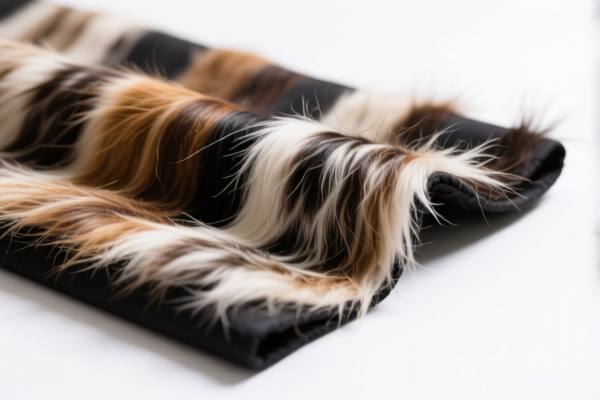
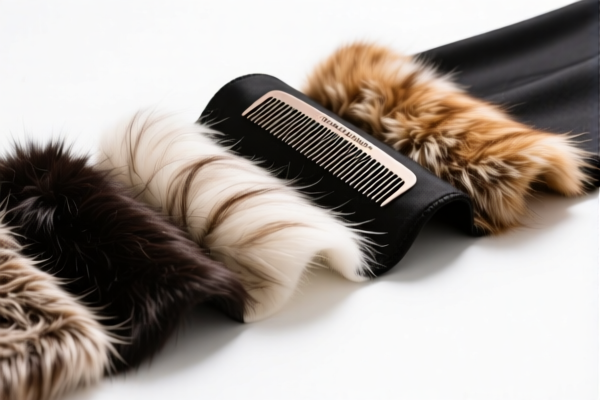
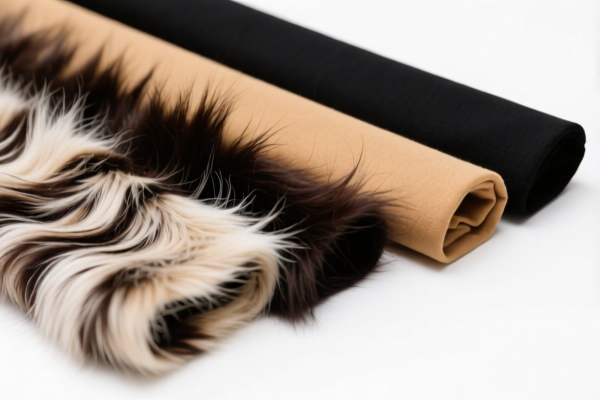
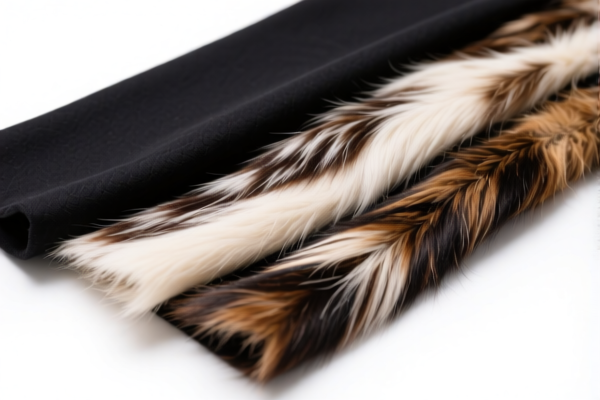
AI Analysis
🧶 Industrial Fabric of Animal Hair (Carded Fine Animal Hair)
🌐 HS Code Reference & Customs Clearance Guide | 2026 Latest Tariff Analysis | Professional Clearance Strategy
📌 I. Product Definition & Classification: Do You Really Understand "Animal Hair Industrial Fabric"?
Animal Hair Industrial Fabric typically refers to woven fabrics made from carded fine animal hair (such as cashmere, alpaca, mohair, or camel hair), used in technical applications, high-end apparel, or specialized textile products.
In international trade, the classification depends on two critical factors:
1. The weave and weight: Is it heavy (>400 g/m²) or light (≤400 g/m²)?
2. The content: Does it contain ≥85% wool/fine animal hair?
⚠️ Key Distinction:
- If the fabric is heavy (>400 g/m²) and contains ≥85% fine animal hair → It is classified as a technical/high-weight woven fabric.
- If the fabric is light (≤400 g/m²) and contains ≥85% fine animal hair → It is classified as a lightweight woven fabric.
- If it contains <85% fine animal hair, it falls under different subheadings (not listed in the provided data).
- If it is not woven (e.g., felt, knitted), it does not fit these codes.
📦 II. HS Code Classification Details (2026 Latest Tariff Authority Comparison)
| HS Code | Product Description | Applicable Scenario | Weight Condition | Tax Rate |
|---|---|---|---|---|
5111.19.60.80 |
Woven fabrics of carded wool or fine animal hair (≥85%): Other: Other: Other: Weighing more than 400 g/m² | Heavy industrial fabrics, coats, upholstery, technical textiles | > 400 g/m² | 0.0% |
5111.19.60.60 |
Woven fabrics of carded wool or fine animal hair (≥85%): Other: Other: Other: Weighing not more than 400 g/m² | Lightweight clothing, linings, delicate apparel, fashion fabrics | ≤ 400 g/m² | 0.0% |
🔍 Critical Note:
- Both codes require the fabric to be woven and contain ≥85% by weight of carded wool or fine animal hair.
- The primary differentiator is weight per square meter (g/m²).
- No additional tariffs (25% US Section 301 duties) are applied to these specific wool/hair fabrics in the provided data, unlike some other textile categories.
💰 III. 2026 Latest Tariff Rate Details (Including Additional Taxes)
✅ Applicable Country: United States (US)
✅ Origin: China (CN)
✅ Effective Time: 2025 onwards
🎯 1. 5111.19.60.80 —— Heavy Weight Woven Fabric of Fine Animal Hair
| Item | Content |
|---|---|
| Base Tariff Rate | 0.0% (ad valorem) |
| USITC Additional Duty | 0.0% (None applied) |
| IEEPA Additional Duty | 0.0% (None applied) |
| Total Tariff Rate | 0.0% |
| Tax Calculation | CIF Value × 0% = $0 |
| De Minimis Eligible? | ✅ Yes (if under $800, though wool may have specific restrictions, check current CBP rules) |
| Legal Basis | HTSUS 5111.19.60.80 |
📌 Explanation:
- Unlike electronics or steel, fine animal hair fabrics do not attract the 25% Section 301 additional duty in this specific classification.
- This makes them highly competitive for import into the US.
🎯 2. 5111.19.60.60 —— Lightweight Woven Fabric of Fine Animal Hair
| Item | Content |
|---|---|
| Base Tariff Rate | 0.0% |
| USITC Additional Duty | 0.0% |
| IEEPA Additional Duty | 0.0% |
| Total Tariff Rate | 0.0% |
| Tax Calculation | CIF Value × 0% = $0 |
| De Minimis Eligible? | ✅ Yes (subject to CBP discretion) |
| Legal Basis | HTSUS 5111.19.60.60 |
📌 Note:
- Same tax treatment as heavy fabric; the key is accurate weight declaration.
- Misdeclaring weight can lead to corrected classification and back taxes.
🛠️ IV. Customs Clearance Practical Advice (Real-World Pitfall Guide)
✅ 1. Required Documentation Checklist (All Required)
| Document | Mandatory | Description |
|---|---|---|
| ✅ Product Specification Sheet | ✔️ | Must specify fiber content (% wool/fine hair), weave type, weight (g/m²), width, and end-use. |
| ✅ Laboratory Test Report | ✔️ | Critical: Must prove fiber content is ≥85% fine animal hair and confirm weight is >400 or ≤400 g/m². |
| ✅ Commercial Invoice | ✔️ | Clearly state "Woven Fabric of Carded Fine Animal Hair, 85%+, Weight: XX g/m²". |
| ✅ Packing List | ✔️ | Include dimensions and gross/net weight for volume calculation. |
| ✅ Bill of Lading/Air Waybill | ✔️ | Standard shipping documents. |
| ✅ Certificate of Origin (CO) | ✔️ | If claiming preferential treatment under other FTAs (though US has limited FTAs for textiles). |
✅ 2. Declaration Tips (Key Mantra)
🔥 “Fiber Content, Weight, and Weave: Declare All Three Accurately!”
| Scenario | Correct Declaration | Wrong Practice |
|---|---|---|
| Fabric is 90% cashmere, 350 g/m² | 5111.19.60.60 |
Misdeclare as 5111.19.60.80 (Wrong weight) → Audit risk |
| Fabric is 85% alpaca, 450 g/m² | 5111.19.60.80 |
Misdeclare as 5111.19.60.60 → Potential penalty |
| Fabric is 50% wool, 400 g/m² | Not listed in data | Using 5111.19.60 codes incorrectly → Incorrect Classification |
| Fabric is knitted (not woven) | Not listed in data | Using woven codes → Severe Misclassification |
✅ 3. Special Case Handling
| Scenario | Handling Advice |
|---|---|
| Mixed Fibers (e.g., Wool + Polyester) | Must verify if fine animal hair ≥85%. If not, different HS code applies (not in provided data). |
| Processed/Treated Fabric | If coated or treated for technical use (e.g., oil press filtering), check Chapter 59 (e.g., 5911.40.01.00), which may have different rules. |
| Small Sample Shipments | Ensure accurate weight declaration; even small batches must meet the g/m² criteria for correct classification. |
🌍 V. Global Market Comparison (2026 Latest)
| Country/Region | Recommended HS Code | Tariff (China Origin) | Certification Required | Notes |
|---|---|---|---|---|
| 🇺🇸 USA | 5111.19.60.80 / 60 |
0.0% | None (Standard) | Zero tariff advantage |
| 🇨🇳 China | 5111.19.60.80 / 60 |
~5-10% | None | Domestic production |
| 🇪🇺 EU | 5111.19.60.80 / 60 |
~4-12% | CE (if consumer goods) | Varies by member state |
| 🇬🇧 UK | 5111.19.60.80 / 60 |
~4-12% | UKCA | Post-Brexit rules |
| 🇯🇵 Japan | 5111.19.60.80 / 60 |
~4-7% | JIS | No additional duties |
📌 Conclusion:
- USA offers 0% tariff for these specific fine animal hair woven fabrics, providing a significant cost advantage over other markets.
- Ensure fiber content is accurately tested to qualify for this zero-tariff rate.
📌 VI. Common Errors & Pitfalls (Lessons Learned)
❌ Error 1: Assuming all "wool fabrics" are 0% duty
👉 Consequence: If fiber content is <85% fine animal hair, different (higher) duties may apply.
❌ Error 2: Misdeclaring weight (g/m²)
👉 Consequence: Customs may reclassify and apply correct rate + penalties. Weight must be verified by test report.
❌ Error 3: Using "Textile" as a generic description
👉 Consequence: Leads to delays; specific HS Code must be declared.
❌ Error 4: Confusing woven vs. non-woven
👉 Consequence: Woven codes (5111.xxxx) do not apply to felt, knitted, or non-woven fabrics.
✅ Correct Practice:
"Woven Fabric, Carded Fine Animal Hair, 90% Cashmere, Weight: 380 g/m², Width: 150cm, For Apparel Use"
🎯 VII. Conclusion: Professional Declaration, Cost Savings!
🎯 Remember the Mantra:
🔹 "Fiber ≥85%, Weight Key, Woven Only, Zero Duty in US!"
🔹 "HS Code Dictates Tax, Weight Determines Code, Declare Accurately, Save Thousands!"
📌 Tip:
If your fabric is not ≥85% fine animal hair, or is not woven, it does not qualify for these codes.
- For technical fabrics (e.g., oil press filters), see 5911.40.01.00 (0% duty).
- For abrasive materials, see 6805.10.00.00 or 6805.30.10.00 (25% duty).
📣 Immediate Action:
📞 Contact professional customs brokers + Provide fiber test reports + Apply for HS Code Advance Ruling
🚀 Ensure smooth clearance, zero tariff, and maximize profit margins!
✨ Professional Customs Clearance Starts with Accurate Classification!
💼 Every tariff saved is pure profit!
Customer Reviews
About HS Code Classification
The Harmonized System (HS) is an internationally standardized nomenclature developed by the World Customs Organization (WCO) to classify traded products. Over 200 countries use the HS system as the basis for customs tariffs, trade statistics, and import/export regulations.
Each HS code follows a hierarchical structure:
- Chapter (2 digits) — Broad category of goods (e.g., Chapter 84: Machinery and Mechanical Appliances)
- Heading (4 digits) — More specific grouping within the chapter
- Subheading (6 digits) — Internationally standardized breakdown, used by all WCO member countries
- National subdivisions (8-10 digits) — Country-specific extensions for further classification, such as US HTSUS 10-digit codes
Correct HS code classification is essential for smooth customs clearance, accurate duty payment, and compliance with trade regulations. Misclassification can lead to customs delays, overpayment of duties, or penalties.
When importing from CN to US, the applicable tariff rates may include:
- Most-Favored-Nation (MFN) rate — The standard duty rate applied to WTO members
- General rate — Applied to countries without trade agreements
- Trade remedy duties — Additional tariffs such as Section 301 (anti-dumping), Section 232 (national security), or countervailing duties
The information provided on this page is for reference purposes only. For official classification, please consult with your local customs authority or a licensed customs broker.