Animal Hair Knitted Dress Fabric
CN → US| HS Code | Tariff Rate | Origin | Destination | Doc |
|---|---|---|---|---|
| 5112116030 | 60.0% | CN | US | Official Doc |
| 5112199510 | 60.0% | CN | US | Official Doc |
| 5111117030 | 60.0% | CN | US | Official Doc |
Product Images
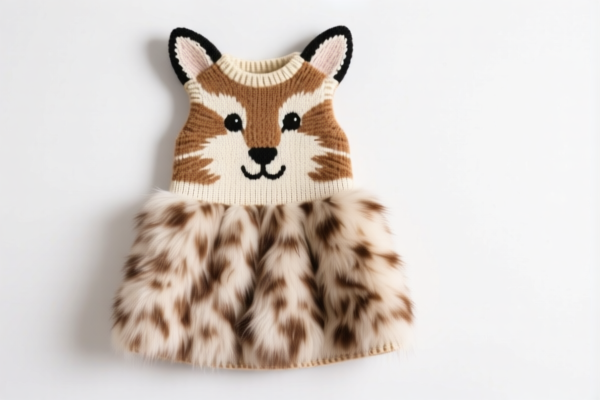
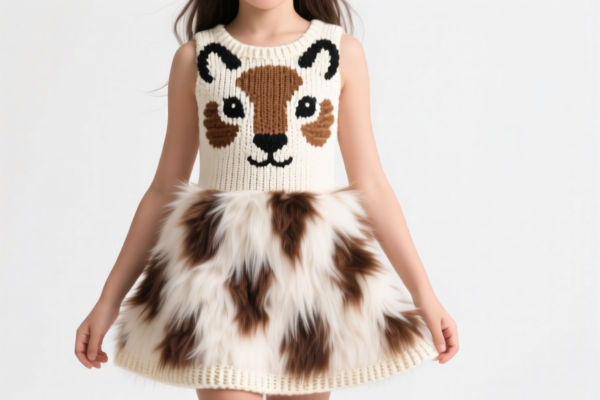
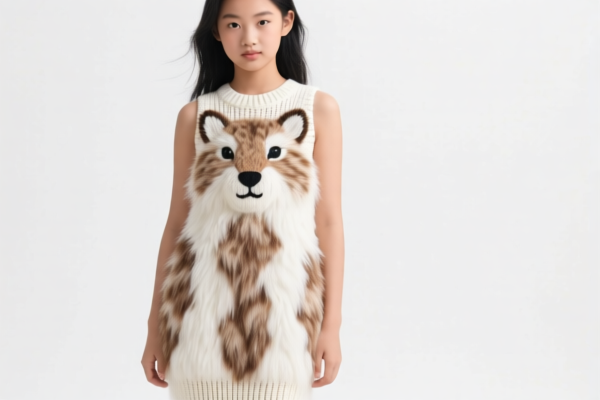

AI Analysis
🧵 Animal Hair Knitted Dress Fabric (Fine Animal Hair Woven Fabric)
🌐 HS Code Reference & Customs Clearance Guide | 2026 Latest Tariff Analysis | Professional Entry Strategy
📌 I. Product Definition & Classification: Decoding "Animal Hair Fabric"
"Animal Hair Knitted Dress Fabric" is a common trade term, but it contains a critical technical contradiction that determines its HS Code and tax liability.
The Core Contradiction:
* Your Input: "Knitted" (针织)
* Data Provided: All target HS codes describe "Woven" (梭织) fabrics.
* 5112.11.60.30: Fine animal hair woven fabric...
* 5112.19.95.10: Fine animal hair woven fabric...
* 5111.11.70.30: Fine animal hair woven fabric...
⚠️ Critical Distinction:
In Customs Classification, Knitted (Chapter 60) and Woven (Chapter 51/52) are mutually exclusive.
- If the fabric is truly Knitted → It belongs in Chapter 60 (e.g.,6104or6006), which is NOT in the provided DATA.
- If the fabric is Woven (as per the DATA) → The term "Knitted" in your product name is likely a misnomer or marketing error. The correct classification falls under Chapter 51 (Animal Hair).
Based strictly on the provided , we assume the product is technically "Woven" (梭织) despite the user input saying "Knitted". This is a common scenario where suppliers confuse "knit structure" with "woven texture."
📦 II. HS Code Classification Details (2026 Latest Tariff Alignment)
The provided data points to three specific HS Codes, all belonging to Chapter 51: Animal Hair, Yarn, and Fabric.
| HS Code | Product Description (from DATA) | Key Characteristics | Woven vs. Knitted |
|---|---|---|---|
5112.11.60.30 |
Fine animal hair woven fabric, consistent with characteristics of combed fine animal hair fabrics | Combed, high-quality, fine hair content | ✅ Woven |
5112.19.95.10 |
Fine animal hair woven fabric, material and form match without conflict | General fine hair woven, non-combed or specific subtype | ✅ Woven |
5111.11.70.30 |
Fine animal hair woven fabric, core material consistent, no form conflict | Likely finer gauge or specific blend within fine hair category | ✅ Woven |
🔍 Why these codes?
- Chapter 51 covers "Animal Hair."
- Heading 51.11/51.12 covers "Woven fabrics of animal hair."
- Subheadings distinguish between combed (5112) and uncarded/uncarded (5111), and fiber fineness.
- The Data Constraints: The summary explicitly states "Woven" (梭织). If you submit this as "Knitted," customs may reject it or reclassify it incorrectly.
💰 III. 2026 Latest Tariff Rate Breakdown (Including Surtaxes)
✅ Applicable Country: United States (US)
✅ Origin: China (CN)
✅ Total Tax Rate: 60.0%
✅ Effective Date: Current (Post-2025 adjustments)
🎯 Breakdown of the 60.0% Total Tax
| Tax Component | Rate | Legal Basis | Description |
|---|---|---|---|
| Base Duty (MFN) | 25.0% | USITC General Rate | The standard Most Favored Nation duty for woven animal hair fabrics. |
| Section 301 Surcharge | 25.0% | USITC Footnote 9903.88.01 | Additional tariff imposed on Chinese goods under the "Section 301" investigation. |
| IEEPA / Section 122 Tariff | 10.0% | IEEPA / Section 122 | Additional levy under the International Emergency Economic Powers Act or specific Section 122 provisions. |
| TOTAL | 60.0% | Cumulative Ad Valorem Tax |
📌 Interpretation:
- This is a HIGH-TAX category.
- The base duty (25%) is already high for textiles.
- The additional 35% (25% + 10%) is significant punitive/surcharges.
- No De Minimis Exemption: Small packages do NOT escape this tax.
🛠️ IV. Customs Clearance Practical Advice (Pitfall Avoidance)
✅ 1. Documentation Checklist (Mandatory)
| Document | Required? | Notes |
|---|---|---|
| Commercial Invoice | ✅ Yes | Must clearly state "Woven Fabric" NOT "Knitted." |
| Product Specification | ✅ Yes | Must specify: Fiber composition (e.g., 100% Wool, Cashmere blend), Weight (GSM), Weave type (Plain, Twill, etc.). |
| Origin Certificate | ✅ Yes | Proof of Chinese origin is required to calculate the correct surcharges. |
| Material Test Report | ✅ Yes | To verify it is indeed Animal Hair (not synthetic imitation). |
| Photos of Fabric | ✅ Yes | Close-up of weave structure to prove it is Woven (interlaced threads), not Knitted (loops). |
✅ 2. Classification Strategy (Key Advice)
🔥 CRITICAL WARNING:
If you declare "Knitted," customs will look for Chapter 60 codes.
If you declare "Woven," they will look for Chapter 51 codes (5111,5112).
Action: Verify with your supplier if the fabric is truly Woven (梭织). If it is knitted, the provided DATA is INVALID for you, and you must find a Chapter 60 code. If it is woven, correct the product name to "Woven Animal Hair Fabric".
| Scenario | Correct Declaration | Risk if Wrong |
|---|---|---|
| Truly Woven | "Woven Animal Hair Fabric" + HS Code 5112.xxxx |
✅ Correct |
| Truly Knitted | "Knitted Animal Hair Fabric" + HS Code 6006/6104 |
❌ High Risk |
| Confused by Supplier | Clarify with Supplier → Use Woven HS Codes | ⚠️ Medium Risk |
✅ 3. Tax Calculation Example
Scenario: Import $10,000 USD worth of Woven Animal Hair Fabric from China.
Base Value: $10,000
Base Duty (25%): $2,500
301 Surcharge (25%): $2,500
IEEPA/122 (10%): $1,000
Total Tax: $6,000
Total Landed Cost: $16,000📌 Note: The tax is calculated on the CIF Value (Cost, Insurance, Freight).
🌍 V. Global Market Comparison (2026)
| Region | HS Code (Approx.) | Base Duty | Surcharges | Total Effective Rate | Notes |
|---|---|---|---|---|---|
| 🇺🇸 USA | 5112.11.60.30 etc. |
25% | 35% | 60% | Highest cost due to 301 & IEEPA |
| 🇨🇳 China | 5112.11.60.30 |
5-15% | 0% | ~5-15% | Low import tax into China |
| 🇪🇺 EU | 5112.11.00 |
8-10% | 0% | ~8-10% | No Section 301 equivalent |
| 🇬🇧 UK | 5112.11.00 |
8-10% | 0% | ~8-10% | Post-Brexit alignment with EU |
| 🇯🇵 Japan | 5112.11.90 |
8-10% | 0% | ~8-10% | JETEP/CPTPP benefits may apply |
📌 Conclusion:
- The USA is the most expensive market for Chinese animal hair fabrics due to trade wars.
- Diversification to Vietnam or Bangladesh for weaving may reduce US tariffs if "substantial transformation" occurs.
📌 VI. Common Errors & Pitfalls
❌ Error 1: Using "Knitted" in the description for Woven Fabric
👉 Consequence: Customs may reject the entry or force a reclassification, causing delays and potential penalties.
👉 Solution: Always match the physical structure (Woven/Knitted) with the HS Code chapter.
❌ Error 2: Under-declaring Fiber Content
👉 Consequence: If it’s labeled "Wool Blend" but contains 50% Synthetic, it may be misclassified.
👉 Solution: Provide accurate fiber analysis reports.
❌ Error 3: Ignoring the 10% IEEPA/122 Tariff
👉 Consequence: Unexpected tax bill at customs.
👉 Solution: Budget for the full 60% in your cost model.
✅ Best Practice:
"Declare Woven, not Knitted. Verify with Sample. Provide Lab Test."
🎯 VII. Conclusion: Professional Clearance Starts with Accurate Classification
🎯 Key Takeaway:
🔹 The provided data applies ONLY to Woven (梭织) Animal Hair Fabrics.
🔹 Total Tax is 60% (25% Base + 25% 301 + 10% IEEPA/122).
🔹 If your fabric is truly Knitted, this DATA is NOT APPLICABLE. You must find a Chapter 60 HS Code.
📌 Pro Tip:
If you are unsure whether your fabric is Woven or Knitted, send a swatch to a customs broker or testing lab. The cost of a $50 test is far less than the $6,000 tax error on a $10,000 shipment.
📣 Immediate Action:
📞 Verify Weave Structure with Supplier.
📄 Update Invoice Description to "Woven Animal Hair Fabric."
🧮 Calculate Landed Cost including 60% tax.
✨ Precision in Classification, Profit in Clearance!
💼 Every thread counts, every tariff matters.
Customer Reviews
About HS Code Classification
The Harmonized System (HS) is an internationally standardized nomenclature developed by the World Customs Organization (WCO) to classify traded products. Over 200 countries use the HS system as the basis for customs tariffs, trade statistics, and import/export regulations.
Each HS code follows a hierarchical structure:
- Chapter (2 digits) — Broad category of goods (e.g., Chapter 84: Machinery and Mechanical Appliances)
- Heading (4 digits) — More specific grouping within the chapter
- Subheading (6 digits) — Internationally standardized breakdown, used by all WCO member countries
- National subdivisions (8-10 digits) — Country-specific extensions for further classification, such as US HTSUS 10-digit codes
Correct HS code classification is essential for smooth customs clearance, accurate duty payment, and compliance with trade regulations. Misclassification can lead to customs delays, overpayment of duties, or penalties.
When importing from CN to US, the applicable tariff rates may include:
- Most-Favored-Nation (MFN) rate — The standard duty rate applied to WTO members
- General rate — Applied to countries without trade agreements
- Trade remedy duties — Additional tariffs such as Section 301 (anti-dumping), Section 232 (national security), or countervailing duties
The information provided on this page is for reference purposes only. For official classification, please consult with your local customs authority or a licensed customs broker.