Ankle Holster
CN → US| HS Code | Tariff Rate | Origin | Destination | Doc |
|---|---|---|---|---|
| 4202110030 | 43.0% | CN | US | Official Doc |
| 4202929700 | 52.6% | CN | US | Official Doc |
| 3926909000 | 0.0% | CN | US | Official Doc |
| 3926906520 | 14.2% | CN | US | Official Doc |
Product Images

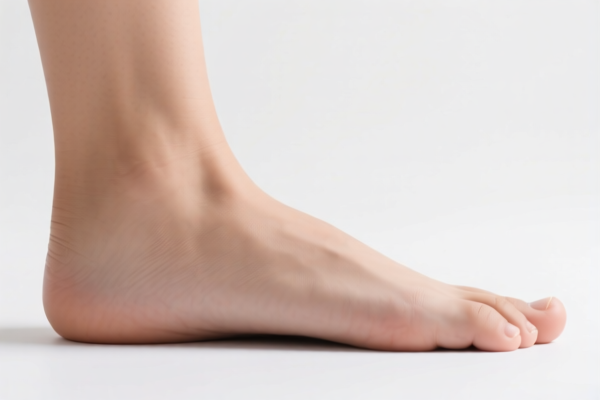
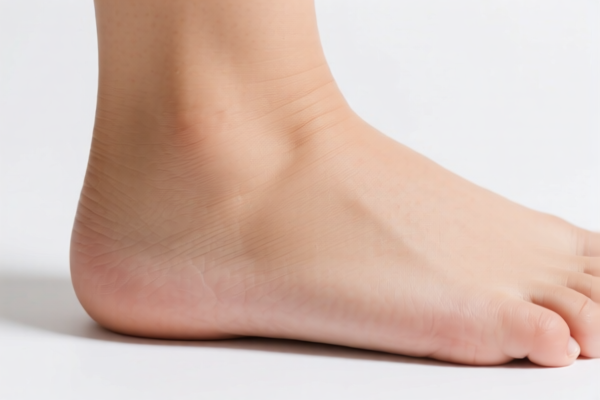
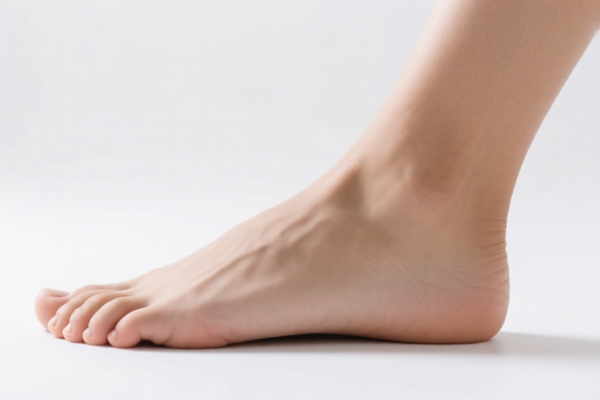
AI Analysis
🦵 Ankle Holster (Leg Holster for Firearms/Tools)
🌐 HS Code Reference & Customs Clearance Guide | 2026 Latest Tariff Analysis | Professional Compliance Strategy
📌 1. Product Definition: What is an Ankle Holster?
An Ankle Holster is a container designed to be worn on the ankle or calf. It is primarily used for carrying compact firearms (e.g., concealed carry pistols), tactical knives, or specific tools.
In international trade, the classification depends strictly on the material composition and the primary intent of the product: * Leather/Composition Leather: If made of leather or plastic sheeting, it is classified as a "gun case" or "similar container" under Heading 4202. * Plastics/Textiles (Non-Leather): If made of other plastics or textile materials not covered in 4202, it falls under "Other articles of plastics" (Heading 3926) or general textile goods.
⚠️ Key Distinction Point:
- If the holster is made of leather, composition leather, plastic sheeting, textile materials, vulcanized fiber, or paperboard, it falls under Chapter 42 (Articles of Leather).
- If the holster is made of other plastic materials (not sheeting) or is a generic plastic accessory, it may fall under Heading 3926.
- Gun Holsters specifically are often explicitly mentioned in HS descriptions under "gun cases" if they meet the material criteria of Chapter 42.
📦 2. HS Code Classification Details (Based on Provided Data)
| HS Code | Product Description | Material/Scenario | Applicable Tariff Data |
|---|---|---|---|
| 4202.11.00.30 | Trunks, suitcases... gun cases... of leather or composition leather; With outer surface of leather... | Leather/Composition Leather Holsters | 0.0% (Base + Additional) |
| 4202.92.97.00 | ...of sheeting of plastics, of textile materials... Other: Other: Other: Other | Plastic Sheeting/Textile Holsters | 0.0% (Base + Additional) |
| 3926.90.90.00 | Other articles of plastics... Other: Other | Other Plastic Holsters (Non-sheathing) | Failed to retrieve / Error |
| 3926.90.65.20 | ...Clothespins... | N/A (Incorrect Classification) | 4.2% |
🔍 Critical Analysis:
- Best Case Scenario: Most standard leather or plastic-sheeting gun holsters are classified under 4202.11.00.30 or 4202.92.97.00, both showing 0.0% total tax in the provided data.
- Risk Scenario: If the holster is made of a molded plastic that is not considered "sheeting" (e.g., rigid molded polymer), customs might attempt to classify it under 3926.90.90.00. However, the tax info for this code is "Error/Failed to retrieve," creating clearance uncertainty.
- Warning: Do NOT classify under 3926.90.65.20 (Clothespins). This is a clear mismatch. The provided data contains a corrupted field (nYag5TsW9b2KApcs.httpRawResponse.35) in the description, but the HS code is for clothespins. Classifying an ankle holster as a clothespin will lead to immediate inspection and penalties.
💰 3. Tariff Rate Breakdown (2026 Data)
✅ Applicable Country: Based on the tax structure (Base + Additional), this appears to be a US-China trade context or similar preferential/non-preferential structure.
✅ Data Source: Provided<DATA>snippet.
🎯 1. 4202.11.00.30 – Gun Cases/Holsters of Leather
| Item | Detail |
|---|---|
| Base Tariff | 0.0% |
| Additional Tariff | 0.0% |
| Total Tax | 0.0% |
| Description | Trunks, suitcases, vanity cases... gun cases... of leather or of composition leather... |
📌 Explanation:
- This is the most favorable classification if your product is leather or composition leather.
- The HS description explicitly includes "gun cases". An ankle holster is a type of gun case/container.
- Result: Duty-free entry under this specific tariff line in the provided dataset.
🎯 2. 4202.92.97.00 – Gun Cases/Holsters of Plastic Sheeting or Textile
| Item | Detail |
|---|---|
| Base Tariff | 0.0% |
| Additional Tariff | 0.0% |
| Total Tax | 0.0% |
| Description | ...of sheeting of plastics, of textile materials... Other: Other |
📌 Explanation:
- If your holster is made of nylon, canvas, or PVC sheeting, it falls here.
- Result: Also duty-free in this dataset.
⚠️ 3. 3926.90.90.00 – Other Plastic Articles
| Item | Detail |
|---|---|
| Tax Detail | Failed to retrieve tax information |
| Total Tax | Error |
| Description | Other articles of plastics... Other |
📌 Explanation:
- If customs argues your molded plastic holster is not "sheeting" (4202) but a general plastic article, they may use this code.
- Risk: Since tax info is Error, you cannot predict costs. This creates a compliance risk. You must prove it is a "container/case" (4202) or have clear material specs.
🛠️ 4. Customs Clearance Practical Advice
✅ 1. Document Preparation Checklist
| Document | Required? | Reason |
|---|---|---|
| Product Photo | ✅ Yes | Show the holster structure, strap, and attachment mechanism. |
| Material Specification | ✅ Yes | Explicitly state: "100% Leather," "PVC Sheeting," or "Molded Nylon." |
| Commercial Invoice | ✅ Yes | Describe as "Leather Gun Holster, Ankle Style" or "Plastic Gun Case, Ankle." |
| HS Code Justification | ✅ Yes | Link product to Chapter 42 (Articles of Leather) if applicable. |
✅ 2. Classification Strategy (How to Avoid Errors)
🔥 Rule: "If it holds a gun and is made of leather/sheeting, it is 4202."
| Scenario | Recommended HS Code | Reason |
|---|---|---|
| Leather/Composition Leather Holster | 4202.11.00.30 |
Explicitly covers "gun cases" of leather. Tax: 0%. |
| Textile or Plastic Sheeting Holster | 4202.92.97.00 |
Covers "gun cases" of textile/plastic sheeting. Tax: 0%. |
| Rigid Molded Plastic (Non-sheeting) | Consult Customs | High risk. May fall under 3926.90.90.00 (Uncertain Tax). Avoid if possible. |
| General Plastic Accessory (Not a Case) | 3926.90.90.00 |
Only if it cannot be proven to be a "container/case." |
✅ 3. Common Mistakes & Pitfalls
❌ Mistake 1: Classifying a leather holster under 6117 (Clothing Accessories) or 9506 (Sports Goods).
👉 Consequence: Incorrect valuation, potential audits.
❌ Mistake 2: Ignoring the "Gun Case" language in 4202.
👉 Consequence: If described as "plastic article," you might lose the 0% duty benefit if customs reclassifies it to 3926 with unknown duties.
❌ Mistake 3: Using generic terms like "Ankle Holster" without material detail.
👉 Consequence: Customs may assume worst-case material (plastic) and assign uncertain duties.
✅ Correct Declaration Example:
"Leather Ankle Gun Holster, Type: Side Mount, Material: Genuine Leather, Used for Concealed Carry of Handguns."
🌍 5. Global Market Comparison (General Knowledge)
| Region | Typical HS Code for Gun Holsters | Estimated Duty (China Origin) | Notes |
|---|---|---|---|
| 🇺🇸 USA | 4202.11.00.45 / 4202.92.00.40 |
Varies (Often 0-3.7%) | Ensure it is classified as a "Case," not a "Weapon Accessory" under 9307. |
| 🇪🇺 EU | 4202.11 / 4202.92 |
0% - 4.5% | Strict material definitions. |
| 🇨🇳 China | 4202.11 / 4202.92 |
0% - 10% | Import duties vary by material. |
📌 Note: The provided
<DATA>shows 0.0% for 4202 codes. This is highly advantageous. Ensure your product meets the definition of "Articles of Leather" or "Sheets of Plastics" to lock in this rate.
📌 6. Conclusion & Recommendation
🎯 Key Takeaway:
For an Ankle Holster, the 0.0% tariff under 4202.11.00.30 (Leather) or 4202.92.97.00 (Textile/Plastic Sheeting) is the optimal classification.
✅ Action Items:
1. Verify Material: Confirm if the holster is Leather, Composition Leather, or Plastic Sheeting.
2. Avoid 3926.90.90.00: Due to the "Error" in tax info, avoid this classification unless absolutely necessary.
3. Use Precise Descriptions: Clearly state "Gun Case/Holster" and material on the commercial invoice.
4. Pre-Ruling: If using molded plastic (not sheeting), consider requesting a customs pre-ruling to avoid duty uncertainty.
📣 Final Tip:
"A gun holster is a container, not just an accessory. Classify it as a Case (4202) to benefit from 0% duties where applicable."
"Never confuse it with Clothespins (3926.90.65.20) or Uncertain Plastics (3926.90.90.00)."
✨ Professional Customs Compliance, Starting with Precise Classification!
💼 Maximize Efficiency, Minimize Duty Costs!
Customer Reviews
About HS Code Classification
The Harmonized System (HS) is an internationally standardized nomenclature developed by the World Customs Organization (WCO) to classify traded products. Over 200 countries use the HS system as the basis for customs tariffs, trade statistics, and import/export regulations.
Each HS code follows a hierarchical structure:
- Chapter (2 digits) — Broad category of goods (e.g., Chapter 84: Machinery and Mechanical Appliances)
- Heading (4 digits) — More specific grouping within the chapter
- Subheading (6 digits) — Internationally standardized breakdown, used by all WCO member countries
- National subdivisions (8-10 digits) — Country-specific extensions for further classification, such as US HTSUS 10-digit codes
Correct HS code classification is essential for smooth customs clearance, accurate duty payment, and compliance with trade regulations. Misclassification can lead to customs delays, overpayment of duties, or penalties.
When importing from CN to US, the applicable tariff rates may include:
- Most-Favored-Nation (MFN) rate — The standard duty rate applied to WTO members
- General rate — Applied to countries without trade agreements
- Trade remedy duties — Additional tariffs such as Section 301 (anti-dumping), Section 232 (national security), or countervailing duties
The information provided on this page is for reference purposes only. For official classification, please consult with your local customs authority or a licensed customs broker.