Antenna Base
CN → USProduct Images
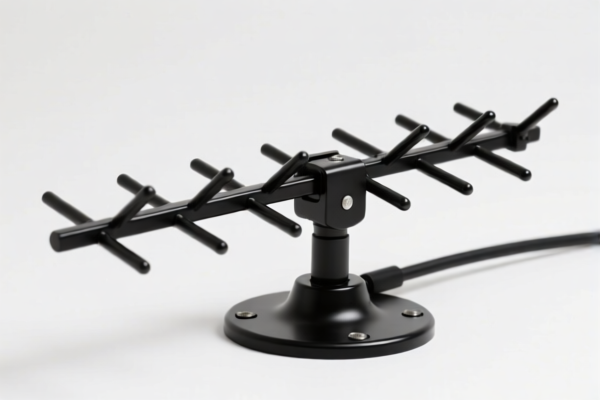
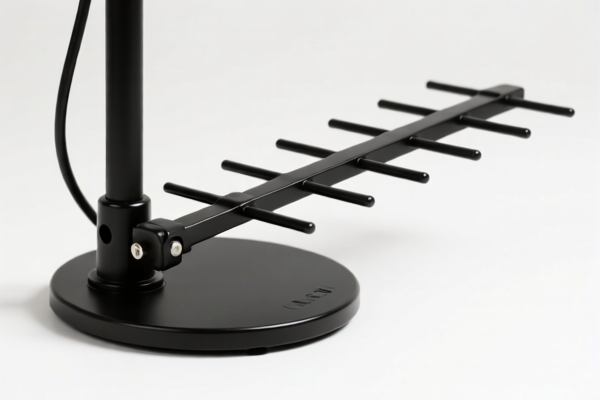
AI Analysis
📡 Antenna Base (Antenna Supports & Structural Mounting Components)
🌐 HS Code Reference & Customs Clearance Guide | 2026 Latest Tariff Analysis | Professional Clearance Strategy
📌 I. Product Definition & Classification: Do You Really Understand "Antenna Bases"?
An Antenna Base is a critical mechanical component used to support, mount, and stabilize wireless communication antennas (such as Wi-Fi, cellular 5G/4G, satellite, or broadcasting antennas). In international trade, its classification depends heavily on whether it is specifically designed for antenna support or if it is a generic structural part.
Key Distinction:
- Antenna Supports/Bases (HS 8517.62/8529.90): Parts specifically designed for use with antenna apparatuses (e.g., mast mounts, base plates, radomes).
- General Structural Metal Parts (HS 7326/7616): Generic brackets, pipes, or plates that are not specifically identified as antenna parts.
- Radio Transmitters/Receivers (HS 8517.62): If the "base" includes integrated electronics (amplifiers, connectors) that form part of the transmission system.
⚠️ Critical Classification Point:
- If the base is purely mechanical (metal/plastic structure) and specifically identifiable as a part of an antenna → HS 8529.90.
- If the base is a generic bracket not specifically described as an antenna part → HS 7326.90 (Metal articles) or HS 7616.99 (Aluminum articles).
- Do NOT classify as "Antenna" (8517) unless it includes active electronic components.
📦 II. HS Code Classification Details (2026 Latest Tariff Authority Comparison)
| HS Code | Product Description | Application Scenario | Electronic Components? |
|---|---|---|---|
8529.90.90.00 |
Parts of apparatus for radio-telephony, radio-telegraphy, radio-broadcasting, or television (including antenna supports) | Specific antenna mounts, radomes, base plates for cellular/Wi-Fi antennas | ❌ No (Mechanical only) |
8517.62.00.00 |
Machines for the reception, conversion and transmission or regeneration of voice, images or other data, including switching and routing apparatus | Antennas with integrated low-noise amplifiers (LNAs) or active base units | ✅ Yes (Active electronics) |
7326.90.88.00 |
Other articles of iron or steel (non-specific) | Generic steel brackets, poles, or bases not specifically described for antennas | ❌ No (Generic metal) |
7616.99.50.00 |
Other articles of aluminum | Generic aluminum mounting structures or poles | ❌ No (Generic metal) |
3926.90.98.90 |
Other articles of plastics | Plastic antenna bases or covers (non-specific) | ❌ No (Plastic) |
🔍 Key Reminder:
- Specificity Rule: Customs authorities prefer HS 8529.90 if the product is clearly marketed and documented as an "Antenna Base" or "Antenna Support." Generic brackets are often misclassified here, leading to higher tariffs or delays.
- Active vs. Passive: If the base contains power supplies or amplifiers, it may fall under 8517.62, which has different tariff implications.
💰 III. 2026 Latest Tariff Rate Details (Including Additional Duties & Policy Add-ons)
✅ Applicable Country: United States (US)
✅ Origin: China (CN)
✅ Effective Date: From November 10, 2025 (including subsequent imports)
🎯 1. 8529.90.90.00 —— Parts of Antenna Apparatus (Mechanical Support)
| Item | Content |
|---|---|
| Base Tariff Rate | 0% (ad valorem) |
| USITC Additional Duty | +25% (from USITC Footnote 9903.88.01) |
| IEEPA Additional Duty | +10% (against China/HK products, from Nov 10, 2025) |
| Total Tariff Rate | 35% |
| Tax Calculation | CIF Value × 35% |
| De Minimis Exemption? | ❌ Not Eligible (deny_de_minimis) |
| Legal Basis Path | IEEPA:9903.01.25 → IEEPA:9903.01.24 → USITC:8529.90.90.00 → FOOTNOTE:9903.88.01 |
📌 Explanation:
- "USITC Additional Duty 25%" comes from Section 301 of the U.S. Trade Act.
- "IEEPA 10%" is the additional tariff against Chinese products under the International Emergency Economic Powers Act.
- Total 35%: High tariff burden. Accurate classification as "Parts of Antenna" (8529) vs. "Metal Parts" (7326) is crucial. Note: Metal parts (7326) may also face 25% USITC duties, so the cost difference may be minimal, but 8529 is the correct technical classification.
🎯 2. 7326.90.88.00 —— Other Articles of Iron or Steel (Generic Brackets)
| Item | Content |
|---|---|
| Base Tariff Rate | 2.5% - 5.6% (varies by specific subheading) |
| USITC Additional Duty | +25% (Section 301) |
| IEEPA Additional Duty | +10% (China origin) |
| Total Tariff Rate | ~37.5% - 40.6% |
| Tax Calculation | CIF Value × ~39% |
| De Minimis Exemption? | ❌ Not Eligible |
📌 Note:
- Even if classified as generic metal parts, the 25% USITC + 10% IEEPA still applies, resulting in similar total costs.
- However, misclassification can lead to penalties if customs audits reveal the part is specifically for antennas.
🛠️ IV. Customs Clearance Practical Advice (Real-World Pitfall Guide)
✅ 1. Required Documentation Checklist (All Required)
| Document | Must Provide | Description |
|---|---|---|
| ✅ Product Specification Sheet | ✔️ | Material (steel/aluminum/plastic), dimensions, weight, mounting hole pattern |
| ✅ Technical Drawing | ✔️ | Highlighting its role as an antenna support/base |
| ✅ Product Photos | ✔️ | Clear view of the item, including any brand/model labels |
| ✅ Commercial Invoice | ✔️ | Must clearly state: "Antenna Base/Support, No Electronic Components" |
| ✅ Packing List | ✔️ | Weight and dimensions for accurate freight classification |
| ✅ Certification | ✔️ | RoHS, REACH, or FCC (if marketed as telecom equipment) |
| ✅ Statement of Non-Electronic Nature | ✔️ | Explicitly state: "This product contains no electronic circuits or active components" |
✅ 2. Declaration Tips (Key Mnemonic)
🔥 "Specify Purpose, No Electronics, Correct Subheading Avoids Penalties!"
| Scenario | Correct Declaration | Incorrect Practice |
|---|---|---|
| Specific Antenna Base | 8529.90.90.00 |
Misclassified as "Metal Bracket" (7326) |
| Generic Metal Pole | 7326.90.88.00 |
Misclassified as "Antenna Part" (8529) |
| Active Base with Amp | 8517.62.00.00 |
Declared as "Passive Base" |
| Plastic Antenna Cover | 3926.90.98.90 |
Declared as "Metal Part" |
⚠️ Warning:
- Do not declare as "Antenna" (8517.10/8517.18) if it is just a base. This is a common error leading to rejection.
- Clearly distinguish between "Part of Antenna" (8529) and "Generic Hardware" (7326/7616) based on design specificity.
✅ 3. Special Case Handling
| Case | Handling Advice |
|---|---|
| OEM Custom Antenna Bases | Provide customer drawings and POs to prove specific design for antennas |
| Base with Cable Clamps | If clamps are integral, still classify as 8529.90 (Part of Antenna) |
| Shipped with Antennas | Do not split declaration. Declare as a set. The main component (Antenna) dictates the classification, usually 8517.18. |
| Raw Material Components | If unassembled parts are shipped for local assembly, still classify as 8529.90 if they are specifically adapted for antennas |
🌍 V. Global Market Clearance Comparison (2026 Latest)
| Country/Region | Recommended HS Code | Tariff (China Origin) | Certification Required | Notes |
|---|---|---|---|---|
| 🇺🇸 USA | 8529.90.90.00 |
35% (25% USITC + 10% IEEPA) | FCC (if marketed) | High duties due to Section 301 |
| 🇨🇳 China | 8529.90.90.00 |
5% - 8% | CCC (if applicable) | Standard import duty |
| 🇪🇺 EU | 8529.90 |
0% - 4% | CE, RoHS | Generally lower tariffs, strict EMC/RED if active |
| 🇦🇺 Australia | 8529.90 |
5% | RCM | Standard rates |
| 🇯🇵 Japan | 8529.90 |
0% - 3% | PSE (if active) | Low tariffs |
📌 Conclusion:
- USA has the highest effective tariff (35%) for antenna bases due to trade policies.
- EU, Japan, Australia are more favorable.
- China Origin products face significant additional duties in the US regardless of whether classified as8529or7326, but8529is the legally correct classification.
📌 VI. Common Errors & Pitfalls (Lessons Learned)
❌ Error 1: Classifying "Antenna Base" as "Antenna" (8517.10)
👉 Consequence: Rejection by US Customs (CBP) because bases are "parts," not "apparatuses." Delays and penalties.
❌ Error 2: Declaring "Steel Bracket" (7326) when it is clearly an "Antenna Base" (8529)
👉 Consequence: Audit risk. Customs may reassess and apply penalties for incorrect classification, even if tariffs are similar.
❌ Error 3: Failing to declare "No Electronics"
👉 Consequence: Customs may suspect active components, requiring detailed technical documentation, delaying clearance by weeks.
❌ Error 4: Not specifying Material
👉 Consequence: If material is Aluminum (7616) vs. Steel (7326), base tariffs differ. Ambiguity leads to provisional duty rates.
✅ Correct Practice:
"Antenna Base Support, Aluminum, Model XYZ, for 5G Base Station, No Electronic Components, Non-Active Part of Antenna System"
🎯 VII. Conclusion: Precision Classification, Cost Efficiency, Risk Mitigation
🎯 Remember the Mnemonic:
🔹 "Base is Part, Not Antenna; 8529 is Key, No Electronics; 35% in US, Plan Ahead; Generic Brackets Risk Audit Trails!"
🔹 "HS Code Determines Duty; Misclassification Costs Time and Money!"
📌 Pro Tip:
If your antenna bases are originally manufactured in Vietnam, Thailand, or Malaysia, you may qualify for lower or zero IEEPA/USITC duties under specific trade rules (e.g., de minimis exceptions or free trade agreements).
Recommend Advance Ruling (Ruling Request) from US CBP to confirm classification and duty liability before shipment.
📣 Immediate Action:
📞 Contact a licensed customs broker + Provide Technical Diagrams + Request Pre-Ruling for
8529.90.90.00
🚀 Ensure smooth customs clearance, minimize tax risks, and protect your profit margins!
✨ Professional Clearance Starts with Accurate Classification!
💼 Every dollar saved in correct duty planning is pure profit!
Customer Reviews
About HS Code Classification
The Harmonized System (HS) is an internationally standardized nomenclature developed by the World Customs Organization (WCO) to classify traded products. Over 200 countries use the HS system as the basis for customs tariffs, trade statistics, and import/export regulations.
Each HS code follows a hierarchical structure:
- Chapter (2 digits) — Broad category of goods (e.g., Chapter 84: Machinery and Mechanical Appliances)
- Heading (4 digits) — More specific grouping within the chapter
- Subheading (6 digits) — Internationally standardized breakdown, used by all WCO member countries
- National subdivisions (8-10 digits) — Country-specific extensions for further classification, such as US HTSUS 10-digit codes
Correct HS code classification is essential for smooth customs clearance, accurate duty payment, and compliance with trade regulations. Misclassification can lead to customs delays, overpayment of duties, or penalties.
When importing from CN to US, the applicable tariff rates may include:
- Most-Favored-Nation (MFN) rate — The standard duty rate applied to WTO members
- General rate — Applied to countries without trade agreements
- Trade remedy duties — Additional tariffs such as Section 301 (anti-dumping), Section 232 (national security), or countervailing duties
The information provided on this page is for reference purposes only. For official classification, please consult with your local customs authority or a licensed customs broker.