Anti Mold Agent Granules
CN → US| HS Code | Tariff Rate | Origin | Destination | Doc |
|---|---|---|---|---|
| 3402903000 | 39.0% | CN | US | Official Doc |
| 3808594000 | 40.0% | CN | US | Official Doc |
| 3808990800 | 41.5% | CN | US | Official Doc |
| 3402905050 | 38.7% | CN | US | Official Doc |
| 3824994900 | 41.5% | CN | US | Official Doc |
Product Images
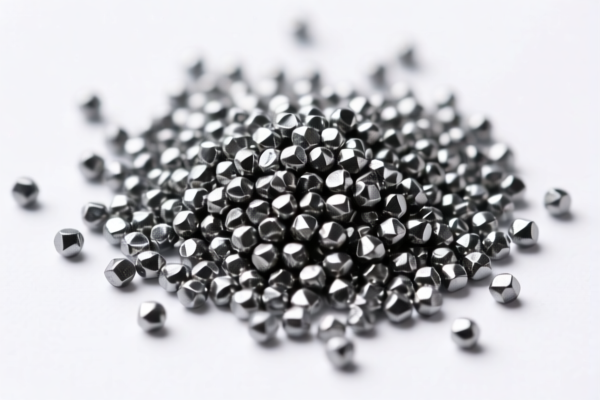
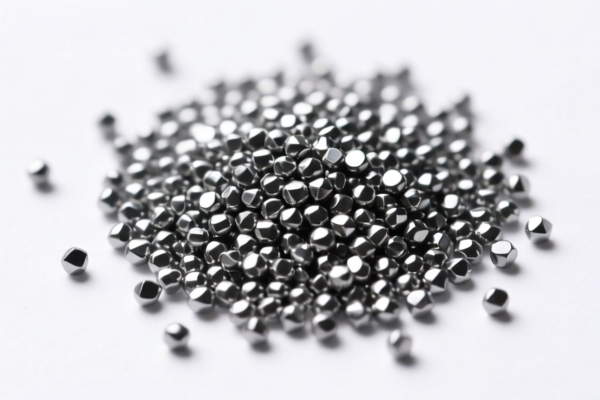
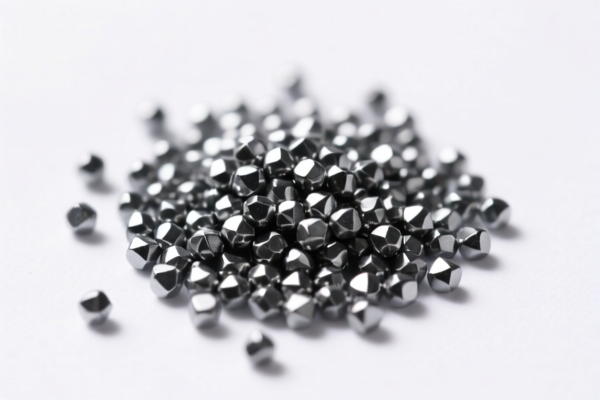
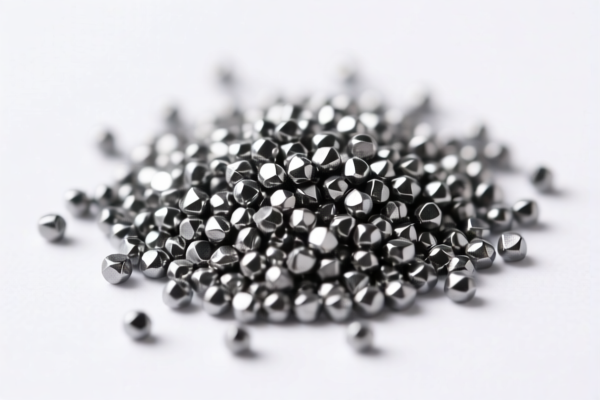
AI Analysis
🛡️ Anti-Mold Agent Granules (Anti-Fungal & Dust Control Agents)
🌐 HS Code Reference & Customs Clearance Guide | 2026 Latest Tariff Analysis | Professional Clearance Strategy
📌 I. Product Definition & Classification: What Exactly Are "Anti-Mold Agent Granules"?
Anti-mold agents are chemical preparations designed to prevent or inhibit the growth of mold, fungi, and mildew. The granular form suggests a solid-state application, often used in agriculture, storage, industrial manufacturing, or construction materials.
Key Functional Indicators: * Primary Function: Anti-mold/Anti-fungal ("防霉") + Dust Control ("抑尘"). * Chemical Nature: Chemical preparations/modifications. * State: Granules (Solid).
⚠️ Critical Distinction Point:
- If classified as a surfactant or general chemical modifier → Chapter 34.
- If classified as a pesticide/fungicide (biocide) → Chapter 38.
- The exact code depends on whether the primary intent is considered "pest control" (biological) or "chemical surface modification" (physical/chemical).
📦 II. HS Code Classification Details (Based on Provided Data)
| HS Code | Summary & Rationale | Total Tax Rate | Tax Breakdown |
|---|---|---|---|
| 3402.90.30.00 | Surfactant Logic: Inferred as a chemical preparation containing surfactants. Its functional use (anti-mold, dust control) is viewed as a chemical modification purpose, fitting the "Other" category under surfactant preparations. | 39.0% | Base Tariff: 4.0% Section 301 Tariff: 25.0% Section 301 (122 Clause): 10% |
| 3808.59.40.00 | Disinfectant/Fungicide Logic: Matches the "anti-mold" function, falling under disinfectants, fungicides, and similar products. Material inference: Such chemical preparations usually exist in liquid or powder/granule forms, consistent with this classification. | 40.0% | Base Tariff: 5.0% Section 301 Tariff: 25.0% Section 301 (122 Clause): 10% |
| 3808.99.08.00 | Pesticide/Agrochemical Logic: "Anti-mold" is considered a sterilizing/disinfecting purpose. The "agent" form fits the "preparation" state. Based on common sense, it is a chemical preparation, falling under the "Other" category in the兜底 (catch-all) clause for "Pesticides containing aromatic or modified aromatic compounds." | 41.5% | Base Tariff: 6.5% Section 301 Tariff: 25.0% Section 301 (122 Clause): 10% |
| 3402.90.50.50 | Chemical Modifier Logic: Inferred as a chemical preparation. This category falls under "Other." The granular form ("agent") has no obvious material or state conflict with the chemical product attributes of Chapter 34. | 38.7% | Base Tariff: 3.7% Section 301 Tariff: 25.0% Section 301 (122 Clause): 10% |
| 3824.99.49.00 | General Chemical Mixture Logic: Belongs to chemical preparations. Its use (anti-mold, dust control) is a chemical industrial function. Inferred as a chemical mixture, fitting the classification description of "Chemical Products and Preparations." | 41.5% | Base Tariff: 6.5% Section 301 Tariff: 25.0% Section 301 (122 Clause): 10% |
🔍 Key Takeaway:
- Lowest Tax Option:3402.90.50.50(38.7%)
- Highest Tax Option:3808.99.08.00&3824.99.49.00(41.5%)
- Most Common "Safe" Classification:3808.59.40.00(40.0%) if explicitly marketed as a fungicide.
- Note on "122 Clause": This refers to additional tariffs under Section 301 (specifically Trade Action 122), adding 10% on top of the standard 25% for Chinese goods.
💰 III. Detailed Tariff Rate Explanation (2026 Latest)
✅ Applicable Country: USA (US)
✅ Origin: China (CN)
✅ Effective Date: From Nov 10, 2025 (including subsequent imports)
🎯 1. 3402.90.30.00 & 3402.90.50.50 —— Surfactant/Chemical Preparation Category
| Item | Content |
|---|---|
| Base Tariff | 3.7% - 4.0% (Ad Valorem) |
| USITC Additional Tariff | +25% (Under USITC Footnote 301) |
| IEEPA Additional Tariff | +10% (Targeted at China/HK products, effective Nov 10, 2025) |
| Total Tax Rate | 38.7% - 39.0% |
| Tax Calculation | CIF Value × Total Rate |
| De Minimis Exemption | ❌ Not Eligible (High tariff threshold) |
| Legal Path | IEEPA:9903.01.25 → IEEPA:9903.01.24 → USITC:3402.xxxxx → FOOTNOTE:301 |
📌 Explanation:
- These codes fall under Chapter 34 (Soap, Organic Surface-Active Agents, Washing Preparations).
- The 35% additional tariff (25% + 10%) significantly impacts cost.
- Classification relies on proving the product is a "surface-active agent" or "chemical mixture" rather than a "biocide."
🎯 2. 3808.59.40.00 —— Fungicide/Disinfectant Category
| Item | Content |
|---|---|
| Base Tariff | 5.0% (Ad Valorem) |
| USITC Additional Tariff | +25% |
| IEEPA Additional Tariff | +10% |
| Total Tax Rate | 40.0% |
| Tax Calculation | CIF Value × 40.0% |
| De Minimis Exemption | ❌ Not Eligible |
| Legal Path | IEEPA:9903.01.25 → IEEPA:9903.01.24 → USITC:3808.59.40.00 → FOOTNOTE:301 |
📌 Note:
- Chapter 38 covers "Pharmaceutical, Pesticide, and Other Chemical Preparations."
- If the product is registered as a fungicide with the EPA (Environmental Protection Agency), this code is mandatory. Misclassifying an EPA-registered pesticide as a surfactant can lead to serious legal penalties.
🎯 3. 3808.99.08.00 & 3824.99.49.00 —— Other Chemical/Pesticide Preparations
| Item | Content |
|---|---|
| Base Tariff | 6.5% (Ad Valorem) |
| USITC Additional Tariff | +25% |
| IEEPA Additional Tariff | +10% |
| Total Tax Rate | 41.5% |
| Tax Calculation | CIF Value × 41.5% |
| De Minimis Exemption | ❌ Not Eligible |
| Legal Path | IEEPA:9903.01.25 → IEEPA:9903.01.24 → USITC:38xx/3824 → FOOTNOTE:301 |
📌 Warning:
- These are "catch-all" categories. Using them may trigger deeper customs scrutiny.
-3808.99.08.00specifically mentions "aromatic compounds," implying a specific chemical structure.
🛠️ IV. Customs Clearance Practical Advice (Pitfall Avoidance Guide)
✅ 1. Document Preparation Checklist (Mandatory)
| Document | Required | Purpose |
|---|---|---|
| ✅ Product Specification Sheet | ✔️ | Must list ingredients, concentration, form (granules), and primary function. |
| ✅ Safety Data Sheet (SDS) | ✔️ | Crucial. Must clearly state if the product is hazardous or regulated by EPA. |
| ✅ EPA Registration Number (if applicable) | ✔️ | If marketed as a pesticide/fungicide, EPA Reg. No. is required. |
| ✅ Commercial Invoice | ✔️ | Clearly state "Anti-Mold Chemical Preparation" or "Fungicide." Avoid vague terms. |
| ✅ Packing List | ✔️ | Detail gross/net weight, dimensions. |
| ✅ Product Photos | ✔️ | Show granule size, packaging label, and any hazard symbols. |
| ✅ Certificate of Origin | ✔️ | Confirm China origin for tariff calculation. |
✅ 2. Declaration Strategy (Key Tips)
🔥 “Function Determines Code, EPA Determines Compliance!”
| Scenario | Recommended HS Code | Reason |
|---|---|---|
| Not EPA Registered, General Chemical | 3402.90.50.50 |
Lowest tax (38.7%). Argue as "chemical surface modifier." |
| EPA Registered Fungicide | 3808.59.40.00 |
Mandatory. Must use accurate pesticide code. Tax: 40.0%. |
| Unclear/Agricultural Use | 3808.99.08.00 |
Higher risk, higher tax (41.5%). Use only if other codes don't fit. |
| Industrial Dust Control Agent | 3402.90.30.00 |
If primarily for dust, with secondary anti-mold. Tax: 39.0%. |
⚠️ Warning:
- Do NOT declare an EPA-registered pesticide as a simple chemical mixture (3402) to save tax. This is considered fraud.
- Do NOT use "Dust Control" if the primary function is anti-mold. Customs may reclassify based on principal use.
✅ 3. Special Cases
| Case | Handling Advice |
|---|---|
| Granules vs. Powder | Ensure the description matches "Granules." If it's fine powder, 3808.59.40.00 still applies, but physical form may affect handling. |
| Mixtures with Other Products | If mixed with fertilizers, it may be classified as a plant protectant. Consult an expert. |
| Sample/Shipment Value | For low-value shipments, consider if the total cost (tax + compliance) makes it viable. |
🌍 V. Global Market Comparison (2026 Latest)
| Country/Region | Recommended HS Code | Tariff (China Origin) | Certification | Notes |
|---|---|---|---|---|
| 🇺🇸 USA | 3808.59.40.00 or 3402.90.50.50 |
38.7% - 41.5% | EPA Reg. (if pesticide) | High tariffs due to Section 301. |
| 🇨🇳 China | 3808.59.40.00 |
~5-10% | Domestic Registration | Lower entry barrier. |
| 🇪🇺 EU | 3808.94.00 |
0-6.5% | BPR Registration | Strict biocide regulations. |
| 🇯🇵 Japan | 3808.92.00 |
0-6.5% | Fertilizer Control Law | Varies by composition. |
📌 Conclusion:
- USA is the most expensive market due to the 35% additional tariff.
- Compliance is key: EPA registration is non-negotiable for fungicides.
- Optimization: If possible, adjust formulation to fall under3402(surfactants) only if it doesn't claim pesticidal effects.
📌 VI. Common Mistakes & Pitfalls (Lessons Learned)
❌ Mistake 1: Declaring a Pesticide as a "Surfactant" (3402)
👉 Consequence: Customs reclassification + Penalty. Tax may increase, and goods may be seized.
✅ Fix: Check EPA status first. If registered, use 3808.
❌ Mistake 2: Ignoring the "122 Clause" (10% Additional Tariff)
👉 Consequence: Under-declared tax. You will pay back-tariffs + interest.
✅ Fix: Always include the 10% in your cost calculation for China-origin goods post-Nov 2025.
❌ Mistake 3: Vague Description "Anti-Mold Agent"
👉 Consequence: Customs officer discretion leads to higher tax code (3808.99.08.00 at 41.5%).
✅ Fix: Provide detailed chemical composition and SDS.
🎯 VII. Conclusion: Professional Declaration for Cost Saving & Compliance
🎯 Remember:
🔹 "EPA Registered? Use 3808. Not Registered? Try 3402 (if possible)."
🔹 "Tariff is 35% on top of Base. Don't ignore it!"
🔹 "Granules don't matter as much as Function. Function determines Code."
📌 Pro Tip:
- If your product is not EPA-registered, provide a Letter of Non-Regulation from the manufacturer. This supports classification under 3402 (lower tax).
- Apply for Pre-Ruling (HS Code Pre-classification) with US Customs if the product is new. This provides legal certainty.
📣 Immediate Action:
📞 Contact a Customs Broker + Provide SDS + EPA Status
🚀 Ensure Smooth Clearance, Avoid Delays, and Maximize Profit!
✨ Professional Clearance Starts with Accurate Classification!
💼 Every Percent of Tax Counts in Today's Trade Environment!
Customer Reviews
About HS Code Classification
The Harmonized System (HS) is an internationally standardized nomenclature developed by the World Customs Organization (WCO) to classify traded products. Over 200 countries use the HS system as the basis for customs tariffs, trade statistics, and import/export regulations.
Each HS code follows a hierarchical structure:
- Chapter (2 digits) — Broad category of goods (e.g., Chapter 84: Machinery and Mechanical Appliances)
- Heading (4 digits) — More specific grouping within the chapter
- Subheading (6 digits) — Internationally standardized breakdown, used by all WCO member countries
- National subdivisions (8-10 digits) — Country-specific extensions for further classification, such as US HTSUS 10-digit codes
Correct HS code classification is essential for smooth customs clearance, accurate duty payment, and compliance with trade regulations. Misclassification can lead to customs delays, overpayment of duties, or penalties.
When importing from CN to US, the applicable tariff rates may include:
- Most-Favored-Nation (MFN) rate — The standard duty rate applied to WTO members
- General rate — Applied to countries without trade agreements
- Trade remedy duties — Additional tariffs such as Section 301 (anti-dumping), Section 232 (national security), or countervailing duties
The information provided on this page is for reference purposes only. For official classification, please consult with your local customs authority or a licensed customs broker.