Anti corrosion Outdoor Pine Wood
CN → US| HS Code | Tariff Rate | Origin | Destination | Doc |
|---|---|---|---|---|
| 4403210165 | 35.0% | CN | US | Official Doc |
| 4409104090 | 35.0% | CN | US | Official Doc |
| 4403110060 | 35.0% | CN | US | Official Doc |
| 4409104010 | 35.0% | CN | US | Official Doc |
| 4403210112 | 35.0% | CN | US | Official Doc |
Product Images
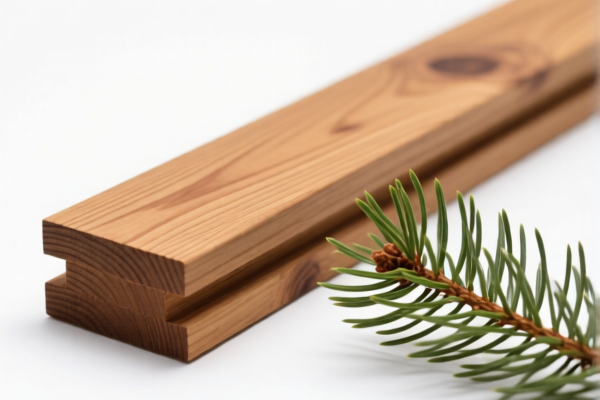
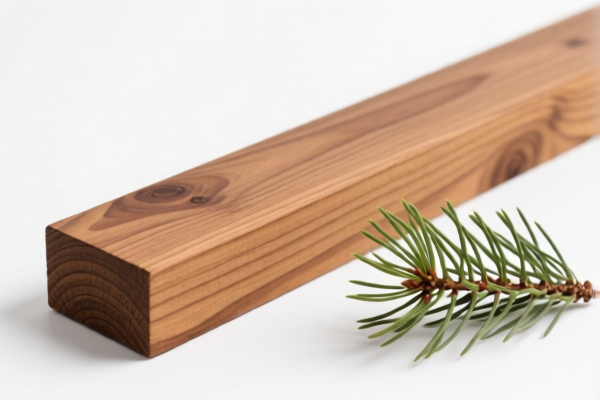
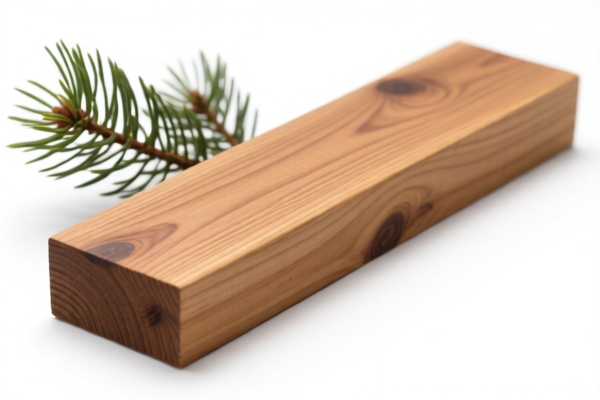
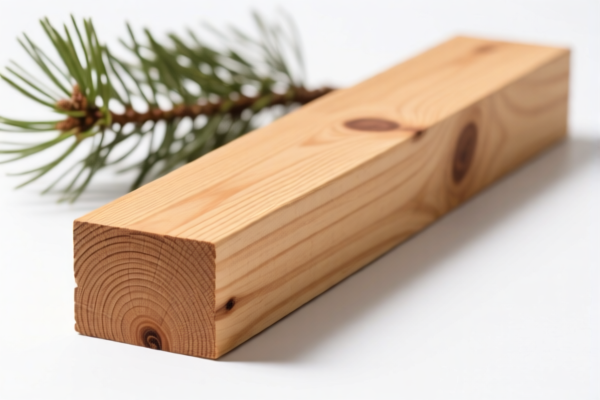
AI Analysis
🌲 Anti-corrosion Outdoor Pine Wood (Preserved Timber)
🌐 HS Code Reference & Customs Clearance Guide | 2026 Tariff Code Analysis | Professional Clearance Strategy for US Imports
📌 I. Product Definition & Classification: What Exactly is "Anti-corrosion Pine Wood"?
Anti-corrosion pine wood (also known as pressure-treated pine or chemically preserved timber) is pine wood that has undergone a treatment process to resist decay, fungi, and insect attacks. It is primarily used for outdoor applications such as decking, fencing, landscaping, and structural posts.
In international trade, the classification depends heavily on whether the wood is in its raw log form (unsawn or simply squared) or in its processed form (sawn, planed, or tongue-and-groove). The "anti-corrosion" treatment adds a significant layer of complexity and tariff liability, particularly for imports into the United States.
⚠️ Key Distinction Point:
- If the wood is unsawn, merely debarked, or roughly squared logs → It falls under Chapter 44, Heading 4403.
- If the wood is sawn, planed, tongued, grooved, or sanded → It falls under Chapter 44, Heading 4409.
- Crucial Note: All entries in the provided data indicate a 35% total tariff rate due to the combination of base duties and US specific trade remedies (Section 301 and Section 122).
📦 II. HS Code Classification Details (2026 Latest Tariff Schedule)
The following table maps the specific HS Codes from your data to their physical characteristics and customs descriptions.
| HS Code | Product Description (Summary) | Physical Form & Characteristics | Key Usage Inference |
|---|---|---|---|
4403.21.01.65 |
Preserved Pine, Coniferous Log (Catch-all) | Unsawn or roughly squared; Coniferous (Pine); Preserved with anti-corrosion agents. | General purpose raw timber; "Catch-all" for preserved pine logs not fitting specific sub-categories. |
4409.10.40.90 |
Preserved Pine, Wood Profiled (Catch-all) | Sawn, planed, tongued, grooved, or sanded; Non-coniferous profiled wood catch-all (but applied here due to specific material match). | Finished timber ready for construction (e.g., decking boards); Material characteristics match. |
4403.11.00.60 |
Preserved Pine, Coniferous (Rough Sawing Default) | Unsawn or merely sawn along its length; Coniferous (Pine). | Rough-sawn lumber; Default classification for preserved coniferous wood that isn't fully processed. |
4409.10.40.10 |
Preserved Pine, Profiled Wood (Material Match) | Sawn, planed, tongued, grooved, or sanded; Material characteristics confirmed with no conflicts. | Processed timber where material traits are verified; "No conflict" status implies clear classification. |
4403.21.01.12 |
Outdoor Pine Log, Post/Pole Use | Unsawn or roughly squared; Coniferous (Pine); Specifically inferred for poles, posts, or piles. | Landscape stakes, fence posts, utility poles; Strong "outdoor use" inference. |
🔍 Focus Reminder:
- Chapter 44 (4403 vs. 4409): The split is binary. 4403 = Raw/Sawn Logs (less processed). 4409 = Profiled Wood (finished for immediate use).
- Preservation Status: All listed codes explicitly mention "Anti-corrosion" or "Preserved," which triggers specific US trade restrictions.
💰 III. 2026 Latest Tariff Rate Breakdown (Including Additional Duties & Policy Levies)
✅ Applicable Country: United States (US)
✅ Country of Origin: China (CN) (Implied by the tax structure: Base 0% + Section 301 + Section 122)
✅ Effective Date: Current tariffs apply under Section 122 and Section 301 authorities.
🎯 1. All Listed HS Codes (4403.21.01.65, 4409.10.40.90, 4403.11.00.60, 4409.10.40.10, 4403.21.01.12)
| Item | Content |
|---|---|
| Base Tariff | 0.0% (ad valorem) Note: Standard MFN duty for many wood products is often low or zero. |
| Section 301 Tariff (USITC) | +25.0% Based on US Trade Act Section 301, targeting Chinese goods. |
| Section 122 Tariff | +10.0% Based on Trade Act Section 122 (short-term emergency authority), applicable to specific imported goods. |
| Total Tariff Rate | 35.0% |
| Tax Calculation | CIF Value × 35% |
| De Minimis Exemption | ❌ Not Applicable Section 301 and Section 122 duties do not qualify for the $800 de minimis exemption (Type 86/87 shipments). |
| Legal Basis Path | USITC:4403.xxxx.xxxx → FOOTNOTE:301 → Section 122 Authority → Total 35% |
📌 Explanation:
- "Base Tariff 0%": The World Trade Organization (WTO) base duty for many pine logs/planks is often set at 0%.
- "Section 301: 25%": This is the heavy lift. Almost all wood products of Chinese origin are subject to this additional duty to address trade imbalances and unfair practices.
- "Section 122: 10%": This is a unique, often temporary surcharge applied to certain imported goods to protect domestic industries. It applies in conjunction with Section 301.
- Total 35%: This is a high-cost barrier. Importers must factor this heavily into landed cost calculations.
🛠️ IV. Customs Clearance Practical Advice (Battle-Tested Pitfall Avoidance Guide)
✅ 1. Required Documentation Checklist (Non-Negotiable)
| Document | Mandatory? | Description |
|---|---|---|
| ✅ Commercial Invoice | ✔️ | Must clearly state "Preserved/Anti-corrosion Pine Wood" and the specific HS Code. |
| ✅ Packing List | ✔️ | Detail net/gross weight, number of bundles, and dimensions. |
| ✅ Treatment Certificate | ✔️ | Proof of anti-corrosion treatment (e.g., ACQ, CCA, or Micronized Copper). Customs may inspect for compliance with ISPM 15 if packaging is wood, but here the product is the treated wood. |
| ✅ Bill of Lading (B/L) | ✔️ | Original B/L or Telex Release. |
| ✅ Country of Origin Certificate | ✔️ | Essential for proving origin as China (to apply correct 35% rate vs. potential duty evasion risks). |
| ✅ Customs Entry Summary | ✔️ | Filed by the US Customs Broker. |
⚠️ Critical Warning:
- Do NOT attempt to misdeclare "Anti-corrosion" as "Untreated" to avoid tariffs. Customs labs can easily detect chemical preservatives. Penalties for fraud include seizure of goods and heavy fines.
- Ensure the HS Code matches the physical form. If you ship sawn decking boards but declare them as "logs" (4403), you risk an audit and reclassification.
✅ 2. Declaration Tips (Key Mantras)
🔥 "Form Matters, Treatment Matters, Origin Matters!"
| Scenario | Correct Declaration Strategy | Wrong Practice |
|---|---|---|
| Raw Posts/Poles | 4403.21.01.12 (Outdoor Use) |
Declaring as general lumber 4403.21.01.65 without specifying use (risk of misclassification). |
| Sawn Decking Boards | 4409.10.40.90 or 4409.10.40.10 |
Declaring as raw logs 4403 → Audit Flag! |
| Untreated Pine (Not Applicable Here) | N/A | Claiming "Untreated" for treated wood → Fraud. |
| Wood Packaging Material | ISPM 15 Marking | Confusing the product with pallets. Ensure pallets are also compliant. |
✅ 3. Special Case Handling
| Situation | Handling Advice |
|---|---|
| Mix of Form (Logs + Sawn) | Do not mix HS codes in one line item. Declare raw logs and processed wood separately. Mixed shipments complicate valuation and duty calculation. |
| Partially Processed | If wood is squared but not planed, it likely falls under 4403 (e.g., 4403.21.01.60). Consult a broker for "roughly squared" definitions. |
| Section 122 Exclusions | Section 122 tariffs can change frequently. Check the latest Customs Notice before shipment. Some specific wood products may have temporary exclusions, but pine preservation is rarely excluded. |
| ISPM 15 Compliance | Even though the wood is chemically treated, the packaging pallets/crates must bear the ISPM 15 stamp. Failure to do so results in fumigation costs or rejection at the port. |
🌍 V. Global Market Comparison (2026 Latest)
| Country/Region | Recommended HS Code | Estimated Duty | Certification Requirements | Notes |
|---|---|---|---|---|
| 🇺🇸 USA | 4403.21.01.xx / 4409.10.40.xx |
35% (Base 0% + 301 25% + 122 10%) | None specific to pine, but ISPM 15 for packaging. | Highest Barrier. The 35% rate is a major cost driver. |
| 🇨🇳 China | 4403.21.00.00 / 4409.10.10.00 |
0% - 5% | None. | Domestic trade. Low duty. |
| 🇪🇺 EU | 4403.21.00 / 4409.10.10 |
0% (FCL) or up to 6.5% (Non-FCL) | Fumigation/Heat Treatment if untreated, but chemical treatment is accepted. | EU has different rules for "preserved" wood. Often lower total duty than US. |
| 🇬🇧 UK | 4403.21.00 / 4409.10.10 |
0% | UKCA Marking not required for timber, but safety data sheets may be needed. | Post-Brexit rules align closely with EU but require separate paperwork. |
| 🇯🇵 Japan | 4403.21.00 / 4409.10.10 |
5% | Fumigation certificate (for wood packaging). | No significant trade war tariffs. |
📌 Conclusion:
- The US market is uniquely expensive for Chinese-origin treated pine due to the cumulative effect of Section 301 and Section 122.
- Importers to the US must budget for 35% duty in their margin calculations.
- Consider diversifying sourcing to non-China origins (e.g., Southeast Asia, Russia, or North America) if possible to mitigate tariff risk, though "anti-corrosion" treatment adds complexity globally.
📌 VI. Common Errors & Pitfall Avoidance (Lessons Learned)
❌ Error 1: Misclassifying sawn wood as raw logs
👉 Consequence: Customs may reject the entry for misdeclaration, leading to delays, storage fees, and potential penalties.
Fix: Accurately describe the physical form. Sawn/Planed = 4409. Rough/Squared = 4403.
❌ Error 2: Ignoring the Section 122 Tariff
👉 Consequence: Under-paying duties by 10%.
Fix: Always include the 10% Section 122 surcharge in your landed cost model for Chinese pine imports to the US.
❌ Error 3: Failing to declare "Anti-corrosion" or "Preserved"
👉 Consequence: If customs discovers the chemical treatment during inspection, they may classify it differently or impose fines for false declaration.
Fix: Be transparent. Use keywords like "Pressure-Treated," "Chemically Preserved," or "Anti-corrosion" in the description.
❌ Error 4: Confusing Product Treatment with Packaging Treatment
👉 Consequence: Rejection at the border due to non-compliant pallets.
Fix: Ensure the pine wood itself is treated for durability, and the pallets are heat-treated/ISPM 15 compliant. They are two separate compliance requirements.
✅ Correct Declaration Example:
"PINE WOOD, PRESSURE TREATED WITH ANTI-CORROSION AGENT, SAWN INTO DECKING BOARDS, HS CODE: 4409.10.40.90, ORIGIN: CHINA, SUBJECT TO SECTION 301 & 122 DUTIES"
🎯 VII. Conclusion: Professional Declaration, Cost Control, and Efficiency
🎯 Remember the Mantra:
🔹 "Raw Logs 4403, Sawn Wood 4409, Preserved 35% Total, De Minimis Denied!"
🔹 "Form Determines Code, Treatment Determines Risk, Origin Determines Duty!"
📌 Pro Tip:
- Given the 35% total tariff, calculate the Landed Cost precisely.
- If the volume is large, consider applying for an Exclusion under Section 301 (if available for specific treated wood products) or consult a trade attorney to explore Section 122 exemption possibilities.
- Pre-shipment Inspection: Hire a third-party inspector to verify the "Anti-corrosion" certification and wood grade before shipping to avoid US port delays.
📣 Immediate Action:
📞 Contact your US Customs Broker with the exact dimensions, treatment type, and form (sawn vs. log) of your pine wood.
📄 Prepare the Treatment Certificate and ISPM 15 Packaging Proof.
🚀 Secure your supply chain with accurate duty costing to protect your profit margins!
✨ Precision in Classification, Power in Clearance!
💼 Your Wood, Your Value, Your Duty—Get it Right the First Time!
Customer Reviews
About HS Code Classification
The Harmonized System (HS) is an internationally standardized nomenclature developed by the World Customs Organization (WCO) to classify traded products. Over 200 countries use the HS system as the basis for customs tariffs, trade statistics, and import/export regulations.
Each HS code follows a hierarchical structure:
- Chapter (2 digits) — Broad category of goods (e.g., Chapter 84: Machinery and Mechanical Appliances)
- Heading (4 digits) — More specific grouping within the chapter
- Subheading (6 digits) — Internationally standardized breakdown, used by all WCO member countries
- National subdivisions (8-10 digits) — Country-specific extensions for further classification, such as US HTSUS 10-digit codes
Correct HS code classification is essential for smooth customs clearance, accurate duty payment, and compliance with trade regulations. Misclassification can lead to customs delays, overpayment of duties, or penalties.
When importing from CN to US, the applicable tariff rates may include:
- Most-Favored-Nation (MFN) rate — The standard duty rate applied to WTO members
- General rate — Applied to countries without trade agreements
- Trade remedy duties — Additional tariffs such as Section 301 (anti-dumping), Section 232 (national security), or countervailing duties
The information provided on this page is for reference purposes only. For official classification, please consult with your local customs authority or a licensed customs broker.