Anti corrosion Pine Outdoor Wood
CN → US| HS Code | Tariff Rate | Origin | Destination | Doc |
|---|---|---|---|---|
| 4403210165 | 35.0% | CN | US | Official Doc |
| 4409104090 | 35.0% | CN | US | Official Doc |
| 4403110060 | 35.0% | CN | US | Official Doc |
| 4409104010 | 35.0% | CN | US | Official Doc |
| 4403210112 | 35.0% | CN | US | Official Doc |
Product Images
AI Analysis
🌲 Anti-Corrosion Pine Outdoor Wood
🌐 HS Code Reference & Customs Clearance Guide | 2026 Latest Tariff Analysis | Professional Export Strategy
📌 I. Product Definition: What Exactly is "Anti-Corrosion Pine"?
Anti-Corrosion Pine refers to timber (specifically from the Pinaceae family, primarily pine) that has undergone chemical treatment (preservation) to resist decay, fungi, and insect attacks. It is predominantly used for outdoor applications such as decking, fencing, landscaping, and construction.
In international trade, the classification depends heavily on the form of the wood: 1. Raw/Logs: Unworked or roughly sawn wood (Logs, poles, posts). 2. Sawn/Joined: Processed wood (Planks, boards, battens).
⚠️ Key Distinction:
- If the wood is in its natural log state or roughly sawn → It falls under Chapter 4403 (Wood in the rough).
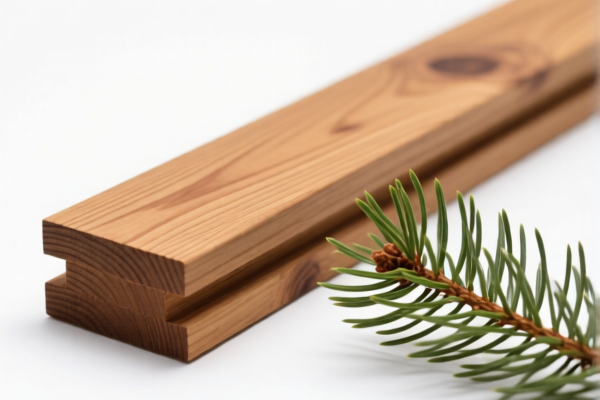
- If the wood is planed, tongued, grooved, or finished → It falls under Chapter 4409 (Wood continuously shaped).
- Crucial Note: All HS codes below assume Chinese Origin and import into the USA, triggering significant trade war tariffs.
📦 II. HS Code Classification Details (2026 Latest Tariff Schedule)
| HS Code | Product Description | Specific Condition/Summary from Data | Wood Type |
|---|---|---|---|
4403.21.01.65 |
Preserved Pine Wood (Logs/In the Rough) | Raw/Log State: Pine, treated, generic "other" category | 🌲 Pine (Coniferous) |
4409.10.40.90 |
Continuously Shaped Pine Wood | Undefined Form but Treated: Pine, processed, generic "other" category | 🌲 Pine (Coniferous) |
4403.11.00.60 |
Preserved Pine Wood (Sawn/Rough) | Roughly Sawn: Pine, treated, assumed sawn timber | 🪵 Pine (Coniferous) |
4409.10.40.10 |
Continuously Shaped Pine Wood | Profiled/Fitted: Pine, treated, no end-joining described | 🪵 Pine (Coniferous) |
4403.21.01.12 |
Preserved Pine Wood (Poles/Posts) | Specific Use: Pine, treated, inferred for poles/posts/trellises | 🏗️ Pine (Coniferous) |
🔍 Key Insight:
- 4403.xxxx codes are for wood that is not continuously shaped (e.g., plain planks, logs, rough-sawn).
- 4409.xxxx codes are for wood that is continuously shaped (e.g., tongue-and-groove, rounded edges).
- All items listed are treated (anti-corrosion) and classified under Pine (Pinus spp.).
💰 III. 2026 Latest Tariff Rate Breakdown (Including Surcharges & Policy Add-ons)
✅ Applicable Country: United States (US)
✅ Country of Origin: China (CN)
✅ Effective Date: 2025/2026 (Current Trade Policy)
🎯 1. General Tariff Structure for All Listed HS Codes
For ALL the HS codes listed above (4403.21.01.65, 4409.10.40.90, 4403.11.00.60, 4409.10.40.10, 4403.21.01.12), the tariff structure is identical:
| Item | Content |
|---|---|
| Base MFN Rate | 0.0% (Ad Valorem) |
| Section 301 Tariff | +25.0% (Additional Duty) |
| Section 122 Tariff | +10.0% (Additional Duty) |
| Total Tariff Rate | 35.0% |
| Tax Calculation | CIF Value × 35% |
| De Minimis Exemption | ❌ NOT Eligible (Section 301 & 122 duties apply regardless of value) |
| Legal Basis Path | USITC:4403/4409 → Section 301: 25% → Section 122: 10% |
📌 Explanation:
- "Base 0%": Pine wood generally has a low base duty under Most Favored Nation (MFN) status.
- "Section 301 (25%)": This is the standard "Trade War" tariff on Chinese wood products.
- "Section 122 (10%)": This refers to specific U.S. trade provisions (often related to national security or specific country lists, e.g., Title III of the Trade Expansion Act) that add an extra 10% for Chinese-origin goods.
- Total 35%: This is a high barrier. It applies uniformly across all the provided Pine HS codes.
🛠️ IV. Customs Clearance Practical Advice (Battle-Tested Guide)
✅ 1. Required Documentation Checklist
| Document | Mandatory? | Notes |
|---|---|---|
| ✅ Commercial Invoice | ✔️ | Must clearly state: "Anti-Corrosion Treated Pine Wood", HS Code, Country of Origin. |
| ✅ Packing List | ✔️ | Detail dimensions, weight, and volume. Crucial for calculating CIF. |
| ✅ Bill of Lading (B/L) | ✔️ | Standard shipping document. |
| ✅ Fumigation/Preservation Certificate | ✔️ | Critical for Wood: Must prove treatment (e.g., CCA, ACQ, or Borate) to meet ISPM 15 or USDA APHIS requirements. |
| ✅ Wood Treatment Report | ✔️ | Detailed chemical composition to ensure no banned substances (e.g., Cr, Cu, As limits). |
| ✅ Certificate of Origin (CO) | ✔️ | To prove Chinese origin (which triggers the 35% tariff). |
| ✅ Product Specification Sheet | ✔️ | Clarify dimensions (rough-sawn vs. planed) to justify HS code choice. |
✅ 2. Classification Strategy (How to Choose the Right Code)
🔥 "Shape Defines Code, Treatment Defines Origin!"
| Scenario | Recommended HS Code | Reasoning |
|---|---|---|
| Logs or Rough Sawn Planks (No edge profiling) | 4403.21.01.65 or 4403.11.00.60 |
"In the rough" or "Sawn but not continuously shaped". |
| Decking Boards with Tongue & Groove | 4409.10.40.90 |
"Continuously shaped" edges. |
| Poles, Posts, or Trellises | 4403.21.01.12 |
Specific use-case inference (poles/posts). |
| Framing Lumber (2x4s, etc.) | 4403.21.01.65 |
Usually classified as rough-sawn or generic pine unless specifically milled to tight tolerances. |
⚠️ Warning:
- Do NOT misclassify4409(shaped) as4403(rough). If customs suspects shaping, they may penalize.
- Do NOT under-declare value. The 35% tax is on the CIF (Cost, Insurance, Freight) value.
✅ 3. Special Handling for Anti-Corrosion Wood
| Issue | Solution |
|---|---|
| Chemical Compliance | Ensure the preservative (e.g., Creosote, CCA, Copper Azole) is listed on the US EPA-approved list. Some treatments are restricted. |
| ISPM 15 Compliance | If the wood is not chemically treated but heat-treated, it needs an ISPM 15 stamp. Anti-corrosion chemical treatment usually exempts it from ISPM 15, but the treatment certificate must be clear. |
| Pest Risk | Pine is susceptible to bark beetles. Ensure wood is debarked or treated to prevent invasive species claims. |
🌍 V. Global Market Comparison (2026)
| Market | Recommended HS Code | Total Tariff | Key Requirement |
|---|---|---|---|
| 🇺🇸 USA | 4403.21.01.65 / 4409.10.40.90 |
35% | EPA Treatment Report, COO |
| 🇨🇳 China | 4403.21.01.65 / 4409.10.40.90 |
0% - 5% | Fumigation Certificate |
| 🇪🇺 EU | 4403.21.01.65 / 4409.10.40.90 |
0% - 2.5% | FSC/PEFC Certification (Optional but recommended) |
| 🇬🇧 UK | 4403.21.01.65 / 4409.10.40.90 |
0% - 2.5% | Same as EU post-Brexit |
| 🇯🇵 Japan | 4403.21.01.65 / 4409.10.40.90 |
3.2% - 5.0% | Phytosanitary Certificate |
📌 Conclusion:
- The USA is the most expensive market due to the 35% combined tariff.
- Europe and Asia offer significantly lower entry barriers, but require strict phytosanitary and chemical safety documentation.
📌 VI. Common Pitfalls & How to Avoid Them
❌ Mistake 1: Ignoring the "Section 122" 10% tariff
👉 Consequence: Budget shortfall. Many exporters only account for Section 301 (25%) and forget the additional 10%. Total is 35%!
❌ Mistake 2: Misclassifying "Shaped" wood as "Rough"
👉 Consequence: Customs may reclassify and delay shipment. If wood has tongue-and-groove, it must be 4409.
❌ Mistake 3: No Chemical Safety Data Sheet (SDS)
👉 Consequence: US Customs and Border Protection (CBP) or EPA may seize the cargo if the preservative is unregistered or hazardous.
❌ Mistake 4: Assuming "Wood" is exempt from De Minimis
👉 Consequence: Unlike small gifts, all wood products (even under $800) are subject to full Section 301/122 duties if from China.
✅ Correct Approach:
"Treated Pine Lumber, 2x4x8ft, Anti-Corrosion Preservative [Name], HS Code 4403.21.01.65, Origin: China, CIF Value: $X"
🎯 VII. Conclusion: Professional Clearance for Cost Efficiency
🎯 Key Takeaways:
1. Tariff is Fixed at 35%: For all anti-corrosion pine from China to the US, expect a 35% duty load.
2. Classification Matters: Use 4403 for rough/sawn, 4409 for shaped.
3. Documentation is Key: Without a valid treatment certificate, the cargo may be rejected for pest/chemical reasons.
📣 Action Plan:
📞 Contact your customs broker 2 weeks before shipment to verify the specific HS code based on the wood's profile.
📄 Prepare EPA-compliant treatment reports to avoid EPA seizures.
💰 Factor 35% into your pricing model to maintain profitability in the US market.
✨ Smart Clearance, Higher Profits!
💼 Don't let 35% tariff eat your margin. Plan ahead!
Customer Reviews
About HS Code Classification
The Harmonized System (HS) is an internationally standardized nomenclature developed by the World Customs Organization (WCO) to classify traded products. Over 200 countries use the HS system as the basis for customs tariffs, trade statistics, and import/export regulations.
Each HS code follows a hierarchical structure:
- Chapter (2 digits) — Broad category of goods (e.g., Chapter 84: Machinery and Mechanical Appliances)
- Heading (4 digits) — More specific grouping within the chapter
- Subheading (6 digits) — Internationally standardized breakdown, used by all WCO member countries
- National subdivisions (8-10 digits) — Country-specific extensions for further classification, such as US HTSUS 10-digit codes
Correct HS code classification is essential for smooth customs clearance, accurate duty payment, and compliance with trade regulations. Misclassification can lead to customs delays, overpayment of duties, or penalties.
When importing from CN to US, the applicable tariff rates may include:
- Most-Favored-Nation (MFN) rate — The standard duty rate applied to WTO members
- General rate — Applied to countries without trade agreements
- Trade remedy duties — Additional tariffs such as Section 301 (anti-dumping), Section 232 (national security), or countervailing duties
The information provided on this page is for reference purposes only. For official classification, please consult with your local customs authority or a licensed customs broker.