Anti corrosion Pine Railway Sleeper
CN → US| HS Code | Tariff Rate | Origin | Destination | Doc |
|---|---|---|---|---|
| 4407110002 | 35.0% | CN | US | Official Doc |
| 4407190056 | 35.0% | CN | US | Official Doc |
| 4407190055 | 35.0% | CN | US | Official Doc |
Product Images
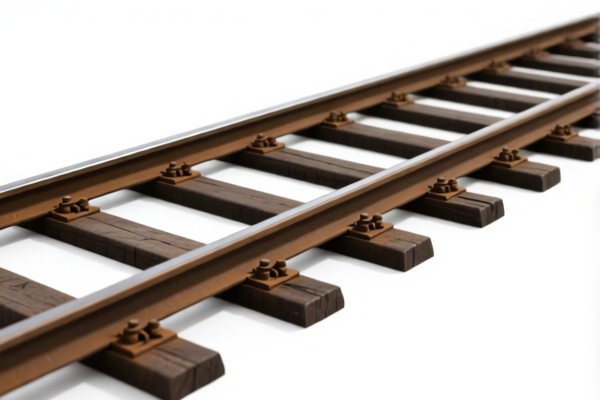
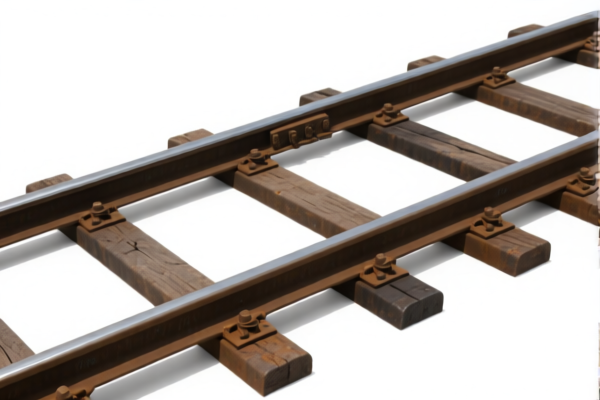
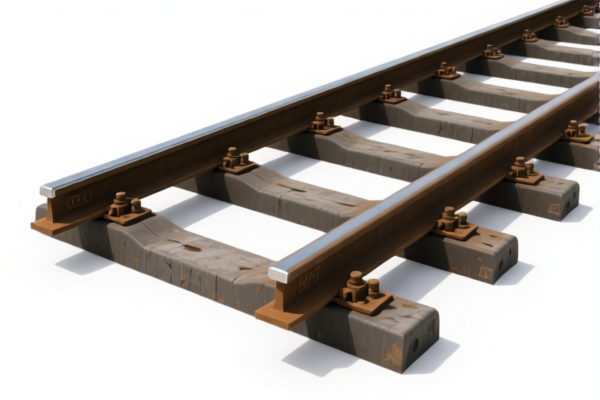
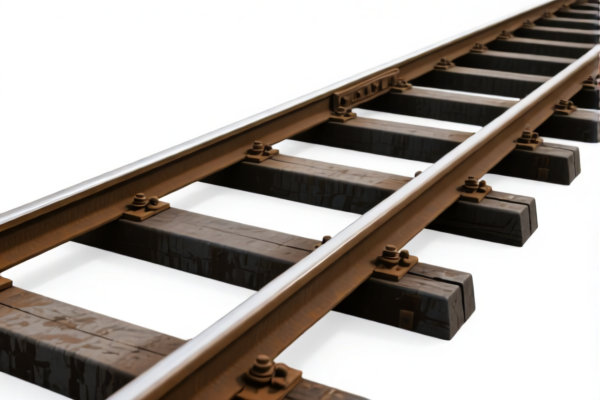
AI Analysis
🚂 Anti-Corrosion Pine Railway Sleepers (Sleeper Ties)
🌐 HS Code Classification & Customs Clearance Guide | 2026 Latest Tariff Analysis | Professional Clearance Strategy
📌 I. Product Definition & Classification: Are You Sure You Know "Railway Sleepers"?
Railway Sleepers (also known as sleeper ties) are the long transverse supports placed on the ground between the rails of a railway track. They are essential for holding the rails in place, distributing the load to the track bed, and maintaining gauge.
In international trade, specifically when imported into the United States from China, these products fall under Chapter 44: Wood and articles of wood. The classification depends heavily on the specific wood species and the level of processing.
⚠️ Critical Distinction:
- If the wood is Pine (a softwood/conifer) and has been preservative-treated (anti-corrosion), it is generally classified under specific pine wood codes.
- If the wood is generic "Wooden" (broadly defined, often implying non-pine conifers or unspecified wood in HS terminology contexts) and matches the physical form of longitudinally sawn or roughly hewn timber, it falls under general coniferous wood codes.
- Key Processing Factor: "Anti-corrosion treatment" (preservative impregnation) does not change the chapter (still Chapter 44) but may affect the specific subheading if the HS code structure distinguishes between "treated" and "untreated" (Note: In the provided US HTS data, the distinction is primarily based on the Pine vs. Other Coniferous wood definitions and specific subheadings 4407.11 vs 4407.19).
📦 II. HS Code Classification Details (Based on Provided Data)
| HS Code | Product Description | Material | Key Characteristics | Tax Rate |
|---|---|---|---|---|
| 4407.11.00.02 | Anti-corrosion Pine Railway Sleepers | Pine Wood | Made of pine, underwent anti-corrosion treatment, used for railway tracks. | 35% |
| 4407.19.00.56 | Wooden Railway Sleepers | Wood (Coniferous) | Material is wood, form matches longitudinal sawing or rough processing characteristics. | 35% |
| 4407.19.00.55 | Wooden Railway Sleepers | Wood (Coniferous) | Material is wood, processed form, matches coniferous wood characteristics. | 35% |
🔍 Important Note on Classification:
- 4407.11.00.02 is the most precise fit if the material is explicitly Pine. Pine is a type of softwood/conifer.
- 4407.19.00.55 and 4407.19.00.56 cover other coniferous woods or broader "wooden" categories that fit the description of processed timber for railway use but are not specifically listed under the "Pine" subheading (4407.11).
- All three codes result in the same total tax rate of 35% in the provided data.
💰 III. 2026 Latest Tariff Rate Breakdown (Including Surcharges)
✅ Applicable Country: United States (US)
✅ Country of Origin: China (CN)
✅ Effective Time: Current rates apply (based on provided data)
🎯 All HS Codes: 4407.11.00.02, 4407.19.00.56, 4407.19.00.55
| Item | Detail |
|---|---|
| Base Tariff Rate | 0.0% (Ad Valorem) |
| Additional Tariff (Section 301) | +25% |
| 122-Clause Tariff (IEEPA) | +10% |
| Total Tax Rate | 35% |
| Tax Calculation | CIF Value × 35% |
| De Minimis Exemption | ❌ Not Applicable |
| Legal Authority Path | Base: 4407... → Section 301: 25% → IEEPA Sec 122: 10% |
📌 Explanation:
- "Base Tariff 0%": Wood products generally have low base tariffs under the Harmonized Tariff Schedule.
- "+25% Additional Tariff": This is the Section 301 tariff imposed on many Chinese wood products.
- "+10% 122-Clause Tariff": This refers to tariffs imposed under the International Emergency Economic Powers Act (IEEPA), specifically related to Section 122 of the Trade Act or similar emergency powers targeting specific Chinese imports.
- Total 35%: This is a very high effective tax rate for wood products. Importers must calculate landed costs carefully.
🛠️ IV. Customs Clearance Practical Advice (Avoid Pitfalls)
✅ 1. Required Documentation Checklist
| Document | Mandatory? | Purpose |
|---|---|---|
| Product Specification Sheet | ✔️ | Must state material (Pine vs. Other Wood), dimensions, weight, and anti-corrosion treatment details (chemical type, pressure level). |
| Commercial Invoice | ✔️ | Must clearly describe goods as "Railway Sleepers" and specify wood type (e.g., "Southern Yellow Pine" vs. "Generic Coniferous Wood"). |
| Packing List | ✔️ | Detailed weight and quantity. Sleepers are heavy; accurate weights are crucial for duty calculation. |
| Phytosanitary Certificate | ✔️ | CRITICAL: Wood products often require ISPM 15 compliance to prevent pest introduction. Ensure stamps are visible. |
| Treatment Certificate | ✔️ | Proof of anti-corrosion treatment (e.g., CCA, ACQ, or Creosote treatment) may be required by certain agencies or for specific use cases. |
| Bill of Lading / Air Waybill | ✔️ | Standard shipping document. |
✅ 2. Declaration Tips (Key Mantra)
🔥 "Material First, Treatment Second, Description Precise!"
| Scenario | Correct Declaration | Wrong Practice |
|---|---|---|
| Explicitly Pine wood | Use 4407.11.00.02 | Misdeclare as generic wood → Potential misclassification risk |
| Other Coniferous Wood (e.g., Spruce, Fir) | Use 4407.19.00.55 or .56 | Misdeclare as Pine → Penalty for false declaration |
| Untreated Wood | Check if different HS code applies (data suggests treated, but verify) | Claiming anti-corrosion treatment when none exists → Fraud |
| Mixed Load (Sleepers + Other Wood Products) | Declare separately | Combining into one line → Complexity in valuation and duty |
✅ 3. Special Considerations
| Issue | Handling Advice |
|---|---|
| Phytosanitary Compliance | Ensure wood is heat-treated or fumigated per ISPM 15. Marks must be legible. Non-compliance leads to rejection or destruction. |
| Anti-Corrosion Chemicals | If chemicals are hazardous (e.g., Creosote), additional EPA or DOT regulations may apply. Check for Restricted Substance Lists. |
| Weight Discrepancy | Sleepers are dense. Ensure declared weight matches actual. Under-declaring weight leads to severe penalties. |
| Origin Marking | "Made in China" must be clearly marked on the wood or packaging. |
🌍 V. Global Market Comparison (2026 Update)
| Country/Region | Recommended HS Code | Tariff (China Origin) | Key Requirements | Notes |
|---|---|---|---|---|
| 🇺🇸 United States | 4407.11.00.02 / 4407.19.00.5X |
35% (Total) | ISPM 15, Detailed Description | High tariffs due to trade tensions. |
| 🇨🇳 China (Export) | See Above | 0% (Export Duty) | Phytosanitary Cert | China is a major exporter of such products. |
| 🇪🇺 European Union | 4407.10 (General) |
Check Specific Nomenclature | FSC/PEFC Certification (often required) | EU has strict sustainability standards. |
| 🇦🇺 Australia | 4407.10 |
Varies | Biosecurity Permits | Strict biosecurity controls on wood. |
📌 Conclusion:
- The US market has the highest tariff burden for these products (35%).
- Phytosanitary compliance is equally critical as duty costs; failure to comply can result in shipment rejection.
📌 VI. Common Mistakes & Pitfalls (Lessons Learned)
❌ Mistake 1: Misidentifying the wood species.
👉 Consequence: If declared as generic wood but found to be Pine, or vice versa, while the tax rate is the same in this specific data, incorrect documentation can lead to audits or delays. More importantly, if future HS codes change, specificity will matter.
❌ Mistake 2: Ignoring Phytosanitary Certificates.
👉 Consequence: Shipment held at port for fumigation or destroyed. Costly delays.
❌ Mistake 3: Vague Description ("Wooden Blocks").
👉 Consequence: Customs may classify under a different, potentially higher-duty code, or request extensive clarification, leading to storage fees.
❌ Mistake 4: Assuming "Anti-corrosion" exempts from base tariffs.
👉 Consequence: It does not. The base tariff is 0%, but the 35% surcharges apply regardless of treatment.
✅ Correct Practice:
"Railway Sleepers, Pine Wood (Pinus spp.), Pressure-Treated with [Chemical Name], Dimensions: [L]x[W]x[H], ISPM 15 Compliant, Made in China"
🎯 VII. Conclusion: Professional Declaration, Cost Control, Efficiency
🎯 Remember the Mantra:
🔹 "Pine vs. Other Wood: Be Specific.
35% is the Total Price: Base is 0%, Surcharge is 35%.
ISPM 15 is Mandatory: No Stamp, No Entry."🔹 "HS Code Accuracy Saves Money, Phytosanitary Compliance Saves Shipments!"
📌 Pro Tip:
If your supply chain allows, consider transshipment or assembly in a third country (e.g., Vietnam, Mexico) to potentially avoid Section 301 and IEEPA tariffs, provided the substantial transformation rules are met. However, for pure wood products, this is difficult due to origin rules.
Always apply for a Binding Tariff Information (BTI) or Advance Ruling from US Customs (CBP) if importing large volumes.
📣 Immediate Action:
📞 Contact a licensed customs broker.
📄 Prepare ISPM 15 certificates.
🧮 Calculate landed cost including the 35% total tax.
🚀 Ensure smooth clearance, avoid penalties, and protect your margins!
✨ Professional Clearance Starts with Accurate Classification!
💼 Every percent of tax matters in global trade!
Customer Reviews
About HS Code Classification
The Harmonized System (HS) is an internationally standardized nomenclature developed by the World Customs Organization (WCO) to classify traded products. Over 200 countries use the HS system as the basis for customs tariffs, trade statistics, and import/export regulations.
Each HS code follows a hierarchical structure:
- Chapter (2 digits) — Broad category of goods (e.g., Chapter 84: Machinery and Mechanical Appliances)
- Heading (4 digits) — More specific grouping within the chapter
- Subheading (6 digits) — Internationally standardized breakdown, used by all WCO member countries
- National subdivisions (8-10 digits) — Country-specific extensions for further classification, such as US HTSUS 10-digit codes
Correct HS code classification is essential for smooth customs clearance, accurate duty payment, and compliance with trade regulations. Misclassification can lead to customs delays, overpayment of duties, or penalties.
When importing from CN to US, the applicable tariff rates may include:
- Most-Favored-Nation (MFN) rate — The standard duty rate applied to WTO members
- General rate — Applied to countries without trade agreements
- Trade remedy duties — Additional tariffs such as Section 301 (anti-dumping), Section 232 (national security), or countervailing duties
The information provided on this page is for reference purposes only. For official classification, please consult with your local customs authority or a licensed customs broker.