Anti fall Chain
CN → US| HS Code | Tariff Rate | Origin | Destination | Doc |
|---|---|---|---|---|
| 7117909000 | 28.5% | CN | US | Official Doc |
| 7315891000 | 86.5% | CN | US | Official Doc |
| 7315895000 | 88.9% | CN | US | Official Doc |
Product Images
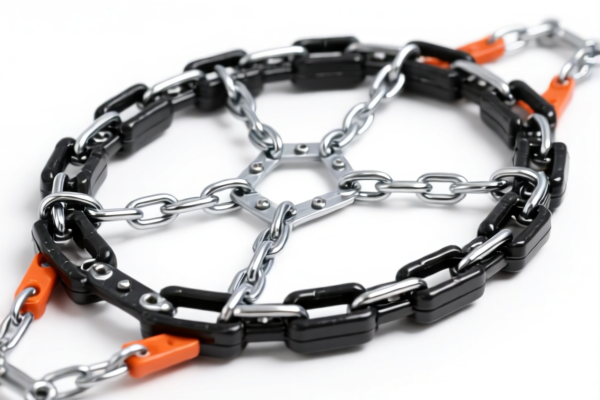
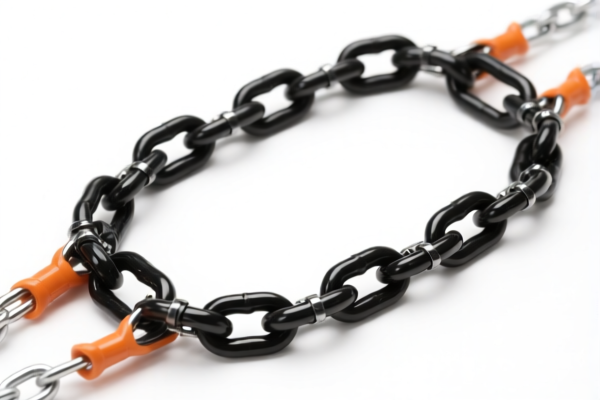
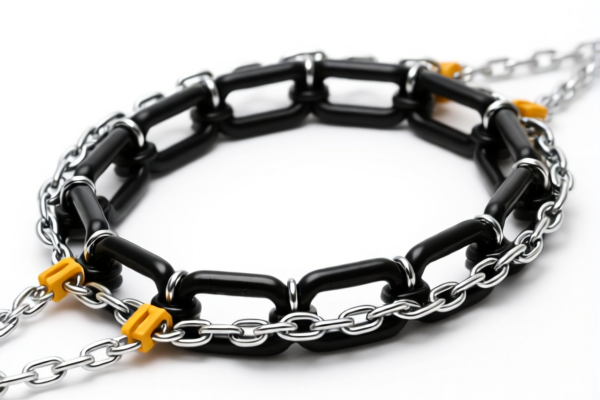
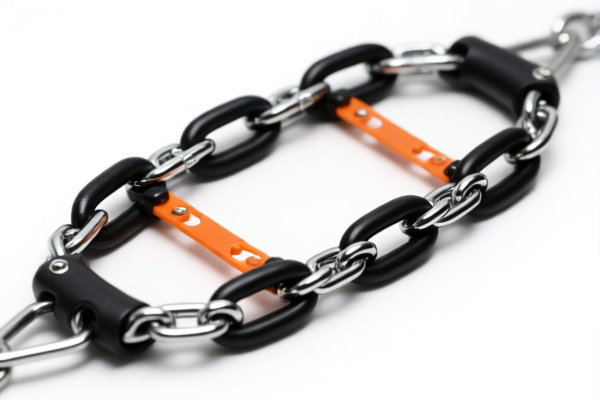
AI Analysis
🔗 Anti-Fall Chain (Keychain / Security Tether)
🌐 HS Code Reference & Customs Clearance Guide | 2026 Latest Tariff Analysis | Professional Clearance Strategy
📌 I. Product Definition & Classification: Do You Really Understand "Anti-Fall Chain"?
An Anti-Fall Chain (often called a lanyard, safety tether, or keychain protector) is primarily an accessory designed to prevent loss of items like keys, badges, or phones. In international trade, its classification hinges on two critical factors: Material and Function.
Metal Chains (Iron/Steel): If made of metal, it is treated as a general metal article. The customs view is often strict, categorizing it under steel/iron chains rather than jewelry due to its utilitarian nature.
Imitation Jewelry (Metal/Plastic): If the chain is decorative, made of non-precious metals, or combined with plastic/resin components, it may be classified as "Imitation Jewelry" (Faux Jewelry).
⚠️ Key Distinction Point:
- If the item is purely functional, made of iron/steel, and resembles a standard chain → Chapter 73 (Iron/Steel Articles).
- If the item is decorative, made of mixed materials (plastic/metal alloys not strictly steel), or marketed as fashion accessories → Chapter 71 (Jewelry & Imitation Jewelry).
- Conflict Note: Misclassifying a steel chain as jewelry can lead to huge tariff discrepancies due to "Section 301" and "122 Clauses" (U.S. specific trade policies).
📦 II. HS Code Classification Details (2026 Latest Tariff Authority Comparison)
Based on the provided data, there are three potential classifications. The choice depends on the specific material composition and marketing description.
| HS Code | Product Description | Applicable Scenario | Material & Form |
|--------|--------------------------|-------------|
| 7117.90.90.00 | Imitation Jewelry: Other | Decorative anti-fall chains, mixed materials (plastic/metal), non-precious | ✅ Non-Steel Alloy / Plastic / Mixed |
| 7315.89.10.00 | Chains and Parts, of Iron or Steel: Other | Pure metal (Iron/Steel) anti-fall chains, generic utilitarian design | ✅ Iron/Steel |
| 7315.89.50.00 | Chains and Chain Parts, of Iron or Steel: Other | Iron chains and parts, specifically "Other Chains" | ✅ Iron/Steel |
🔍 Critical Reminder:
-7117.90.90.00has the lowest total tax rate (28.5%) but requires the item to be convincingly classified as "Imitation Jewelry." This often means it must look like a fashion accessory, not an industrial chain.
-7315.89.10.00and7315.89.50.00have extremely high tax rates (86.5% - 88.9%) because they are classified as steel/iron products subject to heavy U.S. trade sanctions (Section 301, IEEPA, etc.).
- Material Conflict: If you declare it as7117(Jewelry) but the customs inspection finds it is 99% steel, you will be reclassified to7315, triggering massive back-taxes and penalties.
💰 III. 2026 Latest Tariff Rate Breakdown (Including Surcharges & Policy Add-ons)
✅ Applicable Country: United States (US)
✅ Origin: China (CN)
✅ Effective Date: 2025/2026 (Current Trade Policy Period)
🎯 1. 7117.90.90.00 —— Imitation Jewelry (Other)
| Item | Detail |
|---|---|
| Base Duty Rate | 11.0% (ad valorem) |
| Section 301 Additional Tariff | +7.5% |
| Section 122 Tariff | +10.0% |
| Total Tax Rate | 28.5% |
| Tax Calculation | CIF Value × 28.5% |
| De Minimis Exemption | ❌ Generally Not Applicable for Section 301/122 goods in many contexts, or highly scrutinized. Check current CBP rulings on de minimis for jewelry. |
| Legal Basis | HTSUS 7117.90.90 → Section 301 Footnote → Section 122 Authority |
📌 Explanation:
- This is the most cost-effective classification.
- Condition: The product must be clearly distinguishable as "Imitation Jewelry" (fashion item), not a functional steel chain.
- Risk: If the chain is heavy, industrial-grade steel, Customs may reject this code.
🎯 2. 7315.89.10.00 —— Chains of Iron or Steel (Other)
| Item | Detail |
|---|---|
| Base Duty Rate | 1.5% |
| Section 301 Additional Tariff | +25.0% |
| Section 122 Tariff | +10.0% |
| Steel/Aluminum/Copper Surtax | +50.0% (Specific surtax for steel/aluminum/copper products from China) |
| Total Tax Rate | 86.5% |
| Tax Calculation | CIF Value × 86.5% |
| De Minimis Exemption | ❌ Not Applicable |
| Legal Basis | HTSUS 7315.89.10 → Section 301 → Section 122 → Steel Surtax 50% |
📌 Explanation:
- This rate is prohibitive for most commercial imports.
- The +50% surtax is the key driver. It applies to specific steel, aluminum, and copper products from China.
- Warning: Do not use this code unless you are prepared to pay nearly double the product value in taxes.
🎯 3. 7315.89.50.00 —— Chains of Iron or Steel (Other)
| Item | Detail |
|---|---|
| Base Duty Rate | 3.9% |
| Section 301 Additional Tariff | +25.0% |
| Section 122 Tariff | +10.0% |
| Steel/Aluminum/Copper Surtax | +50.0% |
| Total Tax Rate | 88.9% |
| Tax Calculation | CIF Value × 88.9% |
| De Minimis Exemption | ❌ Not Applicable |
| Legal Basis | HTSUS 7315.89.50 → Section 301 → Section 122 → Steel Surtax 50% |
📌 Explanation:
- Similar to7315.89.10.00, this is heavily penalized.
- The slight difference in base duty (3.9% vs 1.5%) doesn't offset the massive surtaxes.
- Avoid this classification unless there is no alternative and you are not shipping to the US.
🛠️ IV. Customs Clearance Practical Advice (Real-World Pitfall Guide)
✅ 1. Documentation Checklist (Missing = Delay/Confiscation)
| Document | Required | Notes |
|---|---|---|
| ✅ Product Specification Sheet | ✔️ | Must specify material composition (e.g., "Zinc Alloy + Plastic" vs. "Stainless Steel"). |
| ✅ Product Photos (Clear) | ✔️ | Show links, clasps, and overall design. Does it look like jewelry or an industrial chain? |
| ✅ Commercial Invoice | ✔️ | Description should match HS Code logic: "Fashion Anti-Fall Keychain" vs. "Steel Security Chain". |
| ✅ Material Certificate | ✔️ | If claiming 7117 (Jewelry), prove it is NOT pure iron/steel. |
| ✅ Packing List | ✔️ | Include packaging details to show it's a retail/consumer product. |
✅ 2. Declaration Strategy (Key Mnemonic)
🔥 "Look Like Jewelry, Declare as Jewelry; Look Like Steel, Brace for High Tax!"
| Scenario | Correct Declaration | Error Consequence |
|---|---|---|
| Decorative Chain (Plastic/Mixed/Matte Metal) | 7117.90.90.00 (28.5%) |
If misdeclared as Steel → 88.9% |
| Industrial Steel Chain (Shiny, Heavy, Functional) | 7315.89.10.00 / 50.00 (86.5%+) |
If misdeclared as Jewelry → Penalty + Back Taxes |
| Mixed Package (Jewelry + Steel Parts) | Split Declaration | Complex; requires detailed breakdown to avoid "General Rule of Interpretation" traps. |
✅ 3. Special Handling Tips
| Situation | Recommendation |
|---|---|
| OEM Custom Chains | Provide design files showing decorative elements to support 7117 classification. |
| Heavy-Duty Safety Tethers | Likely 7315. Consider markets other than the US due to high tariffs, or absorb the cost. |
| Small Sample Shipments | De Minimis ($800): Check if current CBP enforcement allows $800 exemption for these HS codes. Note: Section 301 goods are often excluded from de minimis by specific rulings. |
| Plastic-Coated Steel | If the plastic coating is significant, argue for 7117 (Imitation Jewelry) rather than pure steel. |
🌍 V. Global Market Customs Comparison (2026 Update)
| Country/Region | Recommended HS Code | Tariff | Certification | Notes |
|---|---|---|---|---|
| 🇺🇸 USA | 7117.90.90.00 |
28.5% | N/A | Avoid 7315 due to 86%+ tax. |
| 🇨🇳 China | 7117.90.90.00 |
~10-15% | N/A | Lower taxes, but focus on domestic sales. |
| 🇪🇺 EU | 7117.90.00 |
2.7% | CE/REACH | No Section 301/122 surcharges. Much cheaper. |
| 🇬🇧 UK | 7117.90.00 |
2.7% | UKCA | Similar to EU. |
| 🇦🇺 Australia | 7117.90.00 |
5% | N/A | No heavy steel surcharges. |
📌 Conclusion:
- The US market is the most hostile for anti-fall chains due to the "Steel Surtax" if misclassified or genuinely steel.
- EU/UK/Australia offer significantly lower tariffs (~2.7% - 5%) for the same product, making them more attractive if supply chain allows.
- Strategy: If shipping to the US, ensure the product is marketed and visually classified as "Imitation Jewelry" to utilize7117.90.90.00.
📌 VI. Common Mistakes & Pitfall Guide (Blood-Teaching Lessons)
❌ Mistake 1: Declaring a heavy steel chain as "Imitation Jewelry" without visual evidence.
👉 Consequence: Customs inspects, finds 100% steel, reclassifies to 7315. Tax jumps from 28.5% to 88.9%. Penalty applies!
❌ Mistake 2: Ignoring the "Steel Surtax" (50%).
👉 Consequence: You calculated 26.5% (Base + 301 + 122) but missed the 50% steel surtax. You underpaid by half the value!
❌ Mistake 3: Using "Chain" as the generic description.
👉 Consequence: Ambiguity leads to arbitrary classification by Customs. Always specify "Anti-Fall Keychain" or "Fashion Tether".
✅ Correct Approach:
"Fashion Anti-Fall Keychain, Zinc Alloy & Plastic, Decorative Design, Model XYZ, HS 7117.90.90.00"
🎯 VII. Conclusion: Professional Declaration, Save Costs, Boost Profit!
🎯 Remember the Mnemonic:
🔹 "Jewelry Look, 28.5% Tax; Steel Look, 88.9% Tax!"
🔹 "Material Matters, Description Saves, Steel Surtax is the Killer!"
📌 Pro Tip:
- For US Imports, insist on decorative elements (colorful plastics, enamel, non-industrial finishes) to justify
7117.90.90.00.- If the product is purely functional steel, consider non-US markets (EU/UK) where steel tariffs are lower.
- Always request a Pre-Ruling from CBP if the shipment value is high.
📣 Immediate Action:
📞 Contact your Customs Broker + Provide Product Photos + Verify Material Composition
🚀 Clear Customs Smoothly, Maximize Profit Margins, Avoid Surprise Tariffs!
✨ Professional Clearance Starts with Accurate Classification!
💼 Every Percentage Point of Tax Difference is Directly Impacting Your Bottom Line!
Customer Reviews
About HS Code Classification
The Harmonized System (HS) is an internationally standardized nomenclature developed by the World Customs Organization (WCO) to classify traded products. Over 200 countries use the HS system as the basis for customs tariffs, trade statistics, and import/export regulations.
Each HS code follows a hierarchical structure:
- Chapter (2 digits) — Broad category of goods (e.g., Chapter 84: Machinery and Mechanical Appliances)
- Heading (4 digits) — More specific grouping within the chapter
- Subheading (6 digits) — Internationally standardized breakdown, used by all WCO member countries
- National subdivisions (8-10 digits) — Country-specific extensions for further classification, such as US HTSUS 10-digit codes
Correct HS code classification is essential for smooth customs clearance, accurate duty payment, and compliance with trade regulations. Misclassification can lead to customs delays, overpayment of duties, or penalties.
When importing from CN to US, the applicable tariff rates may include:
- Most-Favored-Nation (MFN) rate — The standard duty rate applied to WTO members
- General rate — Applied to countries without trade agreements
- Trade remedy duties — Additional tariffs such as Section 301 (anti-dumping), Section 232 (national security), or countervailing duties
The information provided on this page is for reference purposes only. For official classification, please consult with your local customs authority or a licensed customs broker.