Anti freeze Cement Additive
CN → US| HS Code | Tariff Rate | Origin | Destination | Doc |
|---|---|---|---|---|
| 3824401000 | 41.5% | CN | US | Official Doc |
| 3824405000 | 40.0% | CN | US | Official Doc |
| 381590 | 0.0% | CN | US | Official Doc |
| 380894 | 0.0% | CN | US | Official Doc |
Product Images
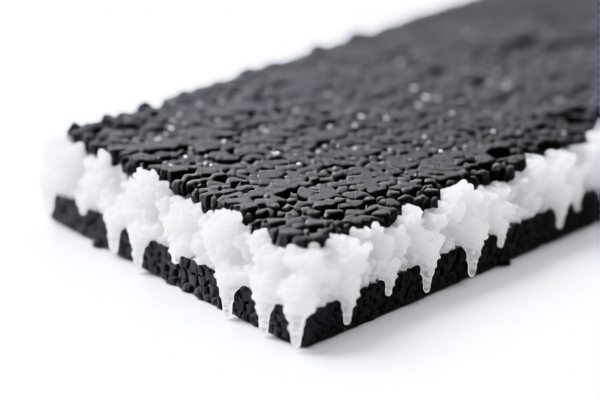
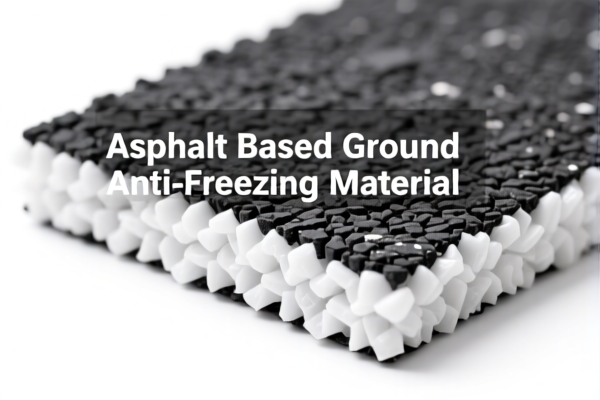
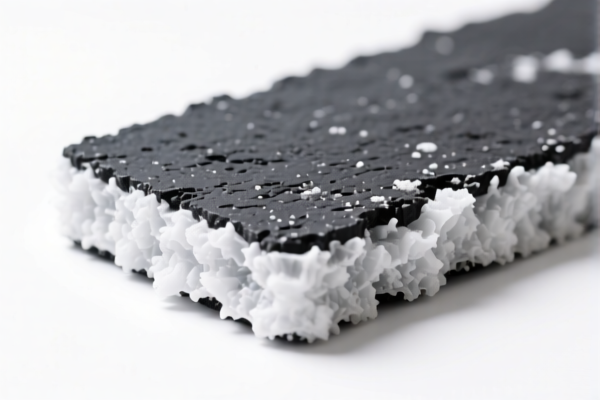
AI Analysis
🧪 Anti-Freeze Cement Additive (Construction Chemicals)
🌐 HS Code Reference & Customs Clearance Guide | 2026 Latest Tariff Analysis | Professional Clearance Strategy
📌 Part 1: Product Definition & Classification: Do You Really Know "Anti-Freeze Cement Additives"?
Anti-freeze cement additives are specialized chemical preparations used in construction to prevent the freezing of mixing water during the curing process in cold weather conditions. They ensure concrete hydration continues even at sub-zero temperatures. In international trade, these products are categorized based on their chemical composition, function, and specific application (foundry vs. construction).
Key Distinction:
- Cement Additives (3824): Specifically prepared for cements, mortars, or concretes. This is the most common and accurate classification for general construction anti-freeze agents.
- Other Chemical Products (3815/3808): If the product does not fit the specific definition of "prepared additives for cements" or lacks the specific aromatic content required for 3824.40, it may fall into broader chemical categories, though this is less common for standard construction anti-freeze.
⚠️ Critical Classification Point:
- If the additive contains ≥5% by weight of aromatic or modified aromatic substances → Must be classified under 3824.40.10.00.
- If it is a "prepared additive for cements" but does not meet the aromatic threshold → Must be classified under 3824.40.50.00.
- If it is a generic chemical product not specified elsewhere, potentially misclassified as 3815.90 or 3808.94, though 3824 is strongly preferred for cement-specific preparations.
📦 Part 2: HS Code Classification Details (2026 Latest Tariff Authority Comparison)
| HS Code | Product Description | Application Scenario | Key Condition | Tax Status |
|---|---|---|---|---|
3824.40.10.00 |
Prepared additives for cements, mortars or concretes: Containing 5% or more by weight of aromatic or modified aromatic substances | High-performance cold-weather concrete agents with aromatic components | ✅ Aromatic content ≥ 5% | Retrieved (See Tax Details Below) |
3824.40.50.00 |
Prepared additives for cements, mortars or concretes: Other | Standard anti-freeze additives without high aromatic content | ✅ No aromatic ≥ 5% | Retrieved (See Tax Details Below) |
3815.90 |
Other chemical products not elsewhere specified (includes anti-freeze additives for cement) | Generic chemical mixtures not fitting 3824 specifically | ❌ Failed to retrieve tax info | Error |
3808.94 |
Other chemical products for use in construction (including cement additives) | Construction chemicals not fitting other specific subheads | ❌ Failed to retrieve tax info | Error |
🔍 Key Reminder:
- The 3824.40 series is the primary classification for "Prepared additives for cements."
- The distinction between3824.40.10.00and3824.40.50.00hinges on the aromatic substance content.
- Codes3815.90and3808.94are considered fallback or less accurate categories for cement-specific additives and have failed tax retrieval, indicating they may not be the recommended primary classification for standard anti-freeze cement additives in this context.
💰 Part 3: 2026 Latest Tariff Rate Details (Including Additional Taxes)
✅ Applicable Country: United States (US)
✅ Origin: China (CN) (Inferred from tax retrieval results showing "Additional Tax")
✅ Effective Date: Current US Tariff Schedule
🎯 1. 3824.40.10.00 —— Prepared Cement Additives (Aromatic ≥ 5%)
| Item | Content |
|---|---|
| Basic Tariff | 6.5% (ad valorem) |
| Additional Tax (Section 301) | +25.0% |
| Total Tax Rate | 31.5% |
| Tax Calculation | CIF Value × 31.5% |
| Legal Basis Path | HTSUS:3824.40.10.00 → Section 301 Footnote |
📌 Explanation:
- The 6.5% is the base Most Favored Nation (MFN) rate for prepared chemical mixtures for cements.
- The 25% additional tax is imposed under Section 301 of the Trade Act of 1974 on specified Chinese products.
- Total 31.5% is a significant cost factor. Importers must confirm if the product contains ≥5% aromatic substances to avoid under/over-classification.
🎯 2. 3824.40.50.00 —— Prepared Cement Additives (Other)
| Item | Content |
|---|---|
| Basic Tariff | 5.0% (ad valorem) |
| Additional Tax (Section 301) | +25.0% |
| Total Tax Rate | 30.0% |
| Tax Calculation | CIF Value × 30.0% |
| Legal Basis Path | HTSUS:3824.40.50.00 → Section 301 Footnote |
📌 Explanation:
- The 5.0% base rate is slightly lower than the aromatic version.
- The 25% additional tax remains the same.
- Total 30.0% is still high but 1.5% lower than the aromatic variant.
- Crucial: Misclassifying an aromatic product (≥5%) as "Other" (3824.40.50.00) to save 1.5% constitutes customs fraud. Accurate chemical analysis is required.
⚠️ Note on 3815.90 and 3808.94
- Tax Status: Failed to retrieve tax information / Error.
- Implication: These codes may not be actively tracked or may require specific HTSUS updates. Relying on these codes for customs declaration is risky due to the inability to verify the exact tax liability. It is strongly recommended to use 3824.40 codes for cement additives to ensure accurate tax calculation and compliance.
🛠️ Part 4: Customs Clearance Practical Advice (Real-World Pitfall Avoidance)
✅ 1. Required Documentation Checklist (No Exceptions)
| Document | Must Provide | Description |
|---|---|---|
| ✅ Product Specification Sheet | ✔️ | Must detail chemical composition, including aromatic content percentage. |
| ✅ Formula/Composition Analysis | ✔️ | Independent lab report confirming % of aromatic substances to determine between 3824.40.10.00 and 3824.40.50.00. |
| ✅ Product Photos (Labeling) | ✔️ | Clear image of the label showing "Cement Additive," "Anti-Freeze," and any safety warnings. |
| ✅ Safety Data Sheet (SDS) | ✔️ | Required for chemical clearance; must list ingredients and hazard classifications. |
| ✅ Commercial Invoice | ✔️ | Must explicitly state "Prepared Additives for Cements" or "Cement Anti-Freeze Agent." |
| ✅ Bill of Lading/Air Waybill | ✔️ | Standard shipping documents. |
| ✅ Certificate of Origin | ✔️ | To confirm origin (China) for Section 301 tax application. |
✅ 2. Declaration Tips (Key Mantras)
🔥 "Chemical Make-Up Determines Code, Aromatics Change the Rate!"
| Scenario | Correct Declaration | Error to Avoid |
|---|---|---|
| Cement Anti-Freeze with High Aromatics | 3824.40.10.00 |
Misclassifying as 3824.40.50.00 → Risk of penalty for under-taxing. |
| Standard Cement Anti-Freeze | 3824.40.50.00 |
Misclassifying as 3815.90 → Unverified tax, potential clearance delay. |
| General Construction Chemical | 3824.40.xxxx |
Using 3808.94 → Tax retrieval error, non-compliant declaration. |
| Mixed with Other Non-Cement Chemicals | Analyze primary purpose | If primarily for cement, keep in 3824. If mixed and purpose unclear, consult customs broker. |
✅ 3. Special Handling Cases
| Situation | Handling Advice |
|---|---|
| OEM/Private Label Products | Provide supplier’s technical data sheet showing identical composition to established HS codes. |
| Liquid vs. Powder | Both fall under 3824.40 regardless of physical state, but SDS must be clear. |
| Customs Inquiry on Aromatic Content | Be prepared to provide a chromatographic analysis report proving ≥5% or <5% aromatic content. |
| Misclassification Risk | If unsure, use 3824.40.50.00 ("Other") only if you can prove aromatic content is <5%. If >5%, use 3824.40.10.00. |
🌍 Part 5: Global Market Clearance Comparison (2026 Latest)
| Country/Region | Recommended HS Code | Tariff (China Origin) | Certification Requirements | Remarks |
|---|---|---|---|---|
| 🇺🇸 USA | 3824.40.10.00 or 3824.40.50.00 |
31.5% or 30.0% | SDS, TSCA Compliance | High Section 301 tax. Precise classification critical. |
| 🇨🇳 China | 3824.40 |
Varies (Check Local) | N/A | Domestic use. |
| 🇪🇺 EU | 3824.40 |
~0-6.5% (Check EU Tariff) | REACH Registration | No Section 301 equivalent, but REACH is strict. |
| 🇯🇵 Japan | 3824.40 |
~5-6.5% | JIS Standards | Standard MFN rate applies. |
| 🇰🇷 South Korea | 3824.40 |
~0-5% (if FTA) | KOSHA Standards | Check KORUS/ROK-FTA benefits. |
📌 Conclusion:
- USA is the most challenging market due to the 30%+ total tax rate.
- Classification accuracy is paramount to avoid 1.5% differential penalties or delays.
- EU and Asia generally offer lower or more predictable tariff structures, but REACH (EU) is a major compliance hurdle.
📌 Part 6: Common Errors & Pitfall Avoidance (Lessons Learned)
❌ Error 1: Declaring "Cement Additive" under 3815.90
👉 Consequence: Tax retrieval failure, customs hold for manual review, potential reclassification to 3824 with back taxes.
❌ Error 2: Ignoring Aromatic Content for 3824.40 subheadings
👉 Consequence: Underpaying 1.5% tax if ≥5% aromatic. Customs may audit chemical composition, leading to fines and penalties.
❌ Error 3: Providing Incomplete SDS
👉 Consequence: Customs cannot verify chemical nature, leading to detention or refusal of entry.
❌ Error 4: Using Generic Names like "Concrete Mixer Chemicals"
👉 Consequence: Vague description leads to classification disputes. Use precise terms: "Prepared Additive for Cements."
✅ Correct Practice:
"Prepared Additive for Cements, Anti-Freeze Type, Aromatic Content: 8%, Model XYZ, SDS Provided, TSCA Compliant"
🎯 Part 7: Conclusion: Precise Classification Saves Money!
🎯 Remember the Mantra:
🔹 "Cement Additive goes to 3824, Aromatics Change the Rate!"
🔹 "≥5% Aromatic = 31.5%, <5% Aromatic = 30.0%, Error = Delay + Fine!"
📌 Pro Tip:
- For US Imports, ensure your supplier provides a detailed chemical breakdown confirming aromatic content.
- If the product is not primarily for cement (e.g., general purpose construction chemical), consider if 3824 is still applicable. If not, investigate 3808/3815 with a customs broker, but note the tax retrieval errors.
- Always request a Pre-Ruling (Advance Ruling) from US Customs (CBP) if the aromatic content is borderline or if the product formulation changes.
📣 Immediate Action:
📞 Contact your customs broker + Provide SDS + Confirm Aromatic Content %
🚀 Ensure accurate HS Code to avoid 31.5% surprises and customs delays!
✨ Professional Clearance Starts with Precise Classification!
💼 Every Percentage Point of Tax Matters in Cold Weather Concrete!
Customer Reviews
About HS Code Classification
The Harmonized System (HS) is an internationally standardized nomenclature developed by the World Customs Organization (WCO) to classify traded products. Over 200 countries use the HS system as the basis for customs tariffs, trade statistics, and import/export regulations.
Each HS code follows a hierarchical structure:
- Chapter (2 digits) — Broad category of goods (e.g., Chapter 84: Machinery and Mechanical Appliances)
- Heading (4 digits) — More specific grouping within the chapter
- Subheading (6 digits) — Internationally standardized breakdown, used by all WCO member countries
- National subdivisions (8-10 digits) — Country-specific extensions for further classification, such as US HTSUS 10-digit codes
Correct HS code classification is essential for smooth customs clearance, accurate duty payment, and compliance with trade regulations. Misclassification can lead to customs delays, overpayment of duties, or penalties.
When importing from CN to US, the applicable tariff rates may include:
- Most-Favored-Nation (MFN) rate — The standard duty rate applied to WTO members
- General rate — Applied to countries without trade agreements
- Trade remedy duties — Additional tariffs such as Section 301 (anti-dumping), Section 232 (national security), or countervailing duties
The information provided on this page is for reference purposes only. For official classification, please consult with your local customs authority or a licensed customs broker.