Anti germination Agent Emulsion
CN → US| HS Code | Tariff Rate | Origin | Destination | Doc |
|---|---|---|---|---|
| 3802905000 | 39.8% | CN | US | Official Doc |
| 3802902000 | 37.5% | CN | US | Official Doc |
| 3824991100 | 35.0% | CN | US | Official Doc |
| 3824992900 | 41.5% | CN | US | Official Doc |
| 3808931500 | 41.5% | CN | US | Official Doc |
| 3808935040 | 40.0% | CN | US | Official Doc |
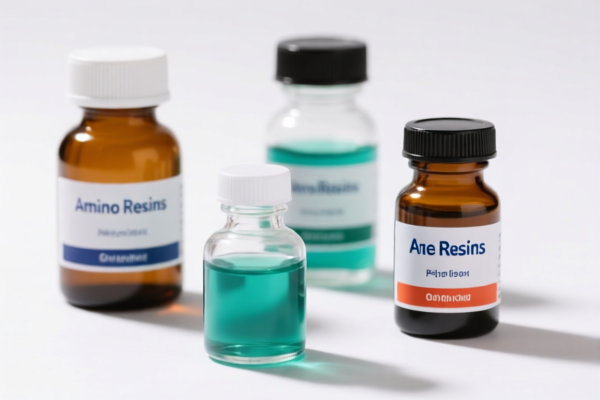
Product Images



AI Analysis
🧪 Anti-Germination Agent Emulsion: The Ultimate HS Code & Tax Guide (2026 Edition)
🌐 Professional Customs Classification & Clearance Strategy for Chemical Imports
⚠️ Critical Warning: Incorrect classification of "Anti-Germination Agent Emulsions" can result in unexpected tax jumps from 0% to 31.5%, leading to massive cost overruns or cargo seizure.
📦 I. Product Definition: What is an "Anti-Germination Agent Emulsion"?
An Anti-Germination Agent Emulsion is a specialized chemical preparation used primarily in the storage and transport of agricultural commodities (potatoes, onions, garlic, cereals, etc.) to prevent sprouting (germination) during storage.
- Key Characteristic: It is an emulsion (liquid mixture), usually containing active ingredients like Maleic Hydrazide (MH), Chlormequat Chloride, or synthetic growth regulators.
- Form: Liquid, often mixed with solvents or surfactants to ensure even coating on the crop.
- Packaging: Typically put up in forms for retail sale or as industrial preparations (drums, pails, or bulk containers).
⚠️ Classification Trap:
Many traders mistakenly classify these as simple "fertilizers" or "non-specific chemicals." However, if the product contains aromatic substances (common solvents like benzene derivatives or modified aromatics) as a major component, the tax rate doubles or more due to specific trade restrictions.
🏷️ II. HS Code Classification Matrix (Based on Provided Data)
Based on your provided dataset, there are two primary pathways for classification. The choice depends entirely on the chemical composition (specifically the presence of aromatic substances) and the specific active ingredient.
🟢 Scenario A: Standard Herbicide/Regulator (Non-Aromatic or Low Aromatic Content)
| HS Code | Description | Tax Detail (Total) | 适用场景 (Applicable Scenario) |
|---|---|---|---|
3808.93.15.00 |
Insecticides, rodenticides, fungicides, herbicides, antisprouting products... ...Herbicides, anti-sprouting products and plant-growth regulators: ...Containing any aromatic or modified aromatic herbicide/anti-sprouting agent: ...Other |
0.0% (Base: 0% + Added: 0%) |
✅ Ideal Case Used when the active anti-germination ingredient is an aromatic substance (e.g., certain modified Maleic Hydrazide derivatives), but the formulation itself is not considered a "mixture containing >5% aromatic solvents" under the specific "other" category rules. Note: This code captures the "Aromatic Herbicide" category specifically. |
🔍 Deep Dive: Why 0%?
This code specifically targets anti-sprouting agents containing aromatic active ingredients. If the product fits this description exactly and is put up for retail sale or as a prepared article, the tax rate is 0%.
🔴 Scenario B: Chemical Mixture with High Aromatic Solvent Content (>5%)
| HS Code | Description | Tax Detail (Total) | 适用场景 (Applicable Scenario) |
|---|---|---|---|
3824.99.29.00 |
Prepared binders... chemical products... not elsewhere specified... ...Other: ...Other: ...Mixtures containing 5 percent or more by weight of one or more aromatic or modified aromatic substances |
31.5% (Base: 6.5% + Added: 25.0%) |
⚠️ High Risk Case If your emulsion is a "miscellaneous chemical preparation" (not fitting the specific 3808 header) AND contains >5% aromatic solvents (e.g., Benzene, Toluene, Xylene) as a carrier or additive. Example: A generic anti-sprouting liquid mixed with heavy aromatic solvents that pushes the aromatic content above the 5% threshold. |
⚠️ The "Added Tax" Shock:
- Base Duty: 6.5%
- Additional Duty (Trade War/Section 301): 25.0%
- Total: 31.5%
This classification triggers the highest penalty rate in your data set.
❓ What about the other codes in your data?
3802.90.50.00(Activated Carbon): Not applicable (Solid filter, not liquid emulsion).3802.90.20.00(Activated Clays): Not applicable (Mineral adsorbent).3824.99.11.00(Binders/Other): Possible (0% total), but only if it does NOT contain >5% aromatics and doesn't fit the specific "Herbicide/Regulator" definition of 3808.93.15.00.3808.93.50.40(Other Herbicides): 30.0% (Base 5% + 25%). This applies if the agent is not an aromatic herbicide/anti-sprouting agent but still fits the "Other" category. (Less common for standard anti-germination agents which usually fall into 3808.93.15).
💰 III. 2026 Tax Rate Breakdown & Legal Basis
🎯 Case 1: The "Golden" Rate (0%)
- HS Code:
3808.93.15.00 - Product Type: Anti-sprouting agent containing aromatic active ingredients.
- Tax Calculation:
- Base Duty: 0.0%
- Additional Duty: 0.0%
- Total: 0.0%
- Legal Logic: This code is a specific exclusion for aromatic anti-sprouting agents, likely exempted from the heavy "301" tariffs that hit other chemical mixtures.
🎯 Case 2: The "Trap" Rate (31.5%)
- HS Code:
3824.99.29.00 - Product Type: Miscellaneous chemical mixture with >5% aromatic solvents.
- Tax Calculation:
- Base Duty: 6.5%
- Additional Duty: 25.0% (Section 301 / Trade Measures)
- Total: 31.5%
- Legal Logic: This falls under "Prepared chemical products not elsewhere specified." The 25% Additional Duty is the critical component here, often applied to chemical mixtures containing specific aromatic compounds to discourage certain import flows.
🛠️ IV. Customs Clearance Strategy: How to Avoid the 31.5% Penalty
✅ 1. Document Preparation (The "Golden" Trio)
To prove your product qualifies for 0.0% (3808.93.15.00) and avoid 3824.99.29.00, you MUST provide:
| Document | Requirement | Why? |
|---|---|---|
| Safety Data Sheet (SDS) | Must list all ingredients and % by weight. | Customs officers check if Aromatic Solvents > 5%. If yes, you go to 3824.99.29.00 (31.5%). |
| Technical Formula Sheet | Explicitly state the Active Ingredient (e.g., Maleic Hydrazide). | Proves it fits the "Anti-sprouting/Herbicide" definition of 3808, not "Other Chemicals" (3824). |
| Certificate of Analysis (COA) | Confirm purity and composition. | Validates the "Aromatic" status of the active ingredient vs. the solvent. |
✅ 2. The "5% Aromatic" Rule - Critical Check
🔥 Danger Zone: If your emulsion uses Benzene, Toluene, Xylene, or Modified Aromatics as a solvent, check the weight percentage. * < 5% Aromatic Solvents: You likely avoid the
3824.99.29.00trap. * > 5% Aromatic Solvents: You are automatically pushed into 31.5% Tax (3824.99.29.00). * Action: Reformulate the solvent system to use non-aromatic carriers (e.g., water, ethanol, aliphatic solvents) if possible, to stay under the 5% threshold.
✅ 3. Packaging Declaration
- Retail Sale vs. Bulk: Ensure your invoice clearly states if the product is "put up in forms or packings for retail sale" or "as preparations."
- Specific Description: Use the term "Anti-Sprouting Agent" (not just "Chemical Liquid") in the commercial invoice to align with HS Code 3808.
🚨 V. Common Pitfalls & Solutions
| ❌ Mistake | ✅ Consequence | 🛡️ Solution |
|---|---|---|
| "Generic Chemical" Label | Declared as 3824.99.29.00 → 31.5% Tax |
Specific Naming: Use "Anti-Germination Agent" or "Plant Growth Regulator" to target 3808.93.15.00. |
| Ignoring Solvent % | Overlooking that aromatic solvents >5% triggers the penalty | Check SDS: Ensure aromatic solvent content is <5% (or reformulate). |
| Misclassifying as "Other" | Missing the specific "Herbicide/Regulator" subheading | Use 3808 Header: Always try to fit under "Insecticides, Rodenticides, Herbicides..." first. |
| Ignoring "Retail Pack" | Declaring bulk chemical without "retail" context | Clarify Form: If it's bulk, ensure it still fits the "Preparation" definition of 3808. |
📢 VI. Final Recommendation
🎯 Strategic Goal: Secure the 0.0% Tax Rate via HS Code
3808.93.15.00.Action Plan: 1. Audit your formula: Does it contain >5% aromatic solvents? If YES, prepare for 31.5% tax or reformulate. 2. Verify Active Ingredient: Is it an aromatic anti-sprouting agent? If YES,
3808.93.15.00is your best bet. 3. Documentation: Prepare SDS and Technical Data Sheets highlighting the <5% Aromatic Solvent rule and the Active Ingredient type. 4. Labeling: Ensure the commercial invoice uses the exact phrase "Anti-Sprouting Agent Emulsion" to align with 3808.
🚀 Bottom Line: A tiny change in chemical composition (aromatic content >5%) can cost you 31.5% of your shipment value. Precision in classification and documentation is your best defense!
Disclaimer: This guide is based on the provided data and general trade principles. Always consult a licensed customs broker for the final HS Code determination, as local enforcement and specific trade agreements may vary.
Customer Reviews
About HS Code Classification
The Harmonized System (HS) is an internationally standardized nomenclature developed by the World Customs Organization (WCO) to classify traded products. Over 200 countries use the HS system as the basis for customs tariffs, trade statistics, and import/export regulations.
Each HS code follows a hierarchical structure:
- Chapter (2 digits) — Broad category of goods (e.g., Chapter 84: Machinery and Mechanical Appliances)
- Heading (4 digits) — More specific grouping within the chapter
- Subheading (6 digits) — Internationally standardized breakdown, used by all WCO member countries
- National subdivisions (8-10 digits) — Country-specific extensions for further classification, such as US HTSUS 10-digit codes
Correct HS code classification is essential for smooth customs clearance, accurate duty payment, and compliance with trade regulations. Misclassification can lead to customs delays, overpayment of duties, or penalties.
When importing from CN to US, the applicable tariff rates may include:
- Most-Favored-Nation (MFN) rate — The standard duty rate applied to WTO members
- General rate — Applied to countries without trade agreements
- Trade remedy duties — Additional tariffs such as Section 301 (anti-dumping), Section 232 (national security), or countervailing duties
The information provided on this page is for reference purposes only. For official classification, please consult with your local customs authority or a licensed customs broker.