Anti knock agent for internal combustion engines
CN → US| HS Code | Tariff Rate | Origin | Destination | Doc |
|---|---|---|---|---|
| 3811190000 | 41.5% | CN | US | Official Doc |
| 3811115000 | 35.0% | CN | US | Official Doc |
| 2942003500 | 41.5% | CN | US | Official Doc |
| 2942005000 | 38.7% | CN | US | Official Doc |
| 3811190000 | 41.5% | CN | US | Official Doc |
Product Images
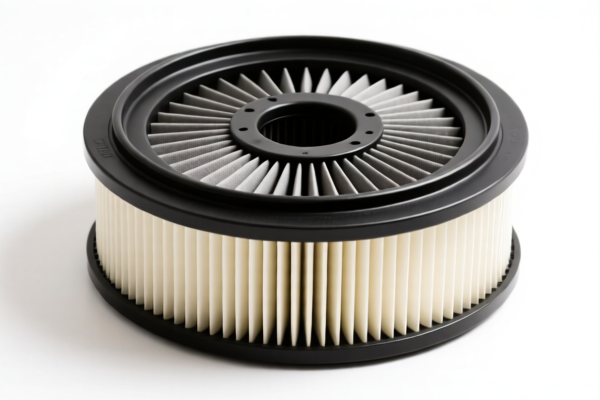
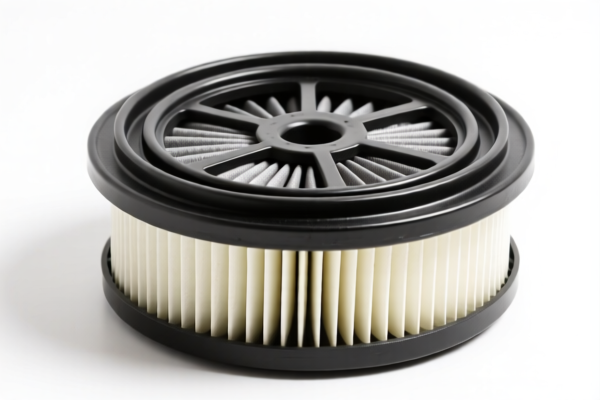
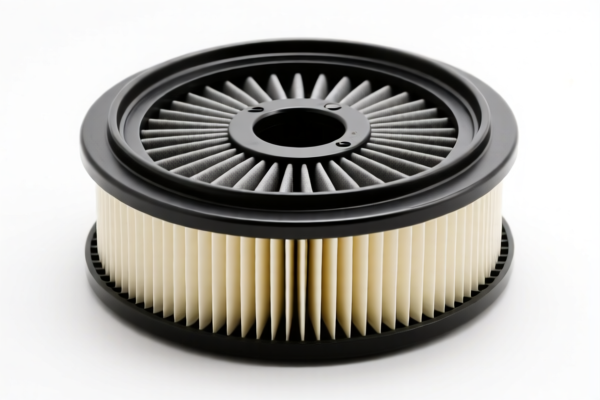
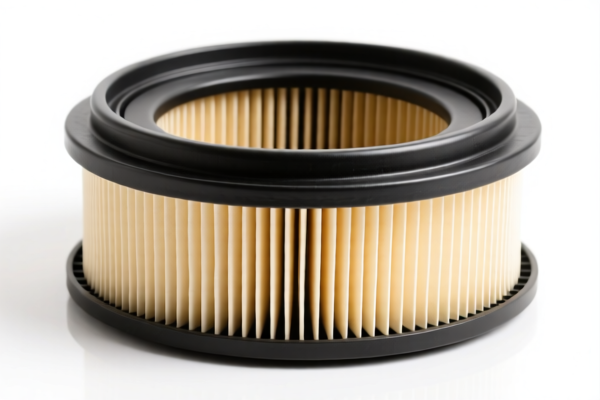
AI Analysis
⛽ Anti-Knock Agent for Internal Combustion Engines (Chemical Additives)
🌐 HS Code Reference & Customs Clearance Guide | 2026 Latest Tariff Analysis | Professional Clearance Strategy
📌 I. Product Definition & Classification: What Exactly is an "Anti-Knock Agent"?
Anti-knock agents (also known as octane boosters or detonation suppressants) are chemical additives used in internal combustion engine fuels. Their primary purpose is to prevent engine knocking (pre-ignition), thereby improving engine performance and efficiency.
Key Characteristics for Classification: * Function: Anti-knock / Detonation suppression. * State: Typically liquid or soluble in mineral oils/fuels. * Composition: Can be organic compounds (e.g., ethers, aromatics) or inorganic/other chemical mixtures (historically lead-based, though largely phased out; now often MTBE, ETBE, or proprietary organic blends).
⚠️ Critical Distinction:
- If the product is explicitly classified as an "Anti-knock Agent" by function → It falls under Heading 3811.
- If the product is primarily sold as a specific Organic Compound (e.g., pure MTBE, pure Toluene) without claiming specific "anti-knock" utility in the HS text context → It may fall under Heading 2942 ("Other organic compounds").
- Customs Warning: Misclassification between "Chemical Products" (3811) and "Organic Chemicals" (2942) is the most common error, leading to significant tariff discrepancies.
📦 II. HS Code Classification Details (Based on Provided Data)
The following classifications are derived from the provided dataset. Note that two HS Codes appear with the same code 3811.19.00.00 but different descriptions, reflecting slight variations in naming conventions ("Anti-knock agent" vs. "Anti-knock performance improver").
| HS Code | Product Description (from Data) | Summary of Logic | Total Tax Rate | Tax Details Breakdown |
|---|---|---|---|---|
3811.19.00.00 |
Anti-knock Agent | ✅ Match Success. The product name "Anti-knock agent" perfectly matches the classification use "Anti-knock agent." It aligns with the attribute of a liquid additive with no material or form conflicts. | 41.5% | Base Tariff: 6.5% Section 301 Tariff: 25.0% 122 Section Tariff: 10% |
3811.11.50.00 |
Anti-knock Agent (Inferred Material) | 🧠 Use Match. Matches use (Anti-knock agent). Since material is unspecified, it is reasonably inferred as a lead compound or other chemical anti-knock agent based on common sense and the "catch-all" principle. No material conflict. | 35.0% | Base Tariff: 0.0% Section 301 Tariff: 25.0% 122 Section Tariff: 10% |
2942.00.35.00 |
Anti-knock Performance Improver (Organic) | 🧪 Material Inference. Anti-knock performance improvers are typically organic chemical additives. Their chemical nature belongs to organic compounds, fitting the "Other organic compounds" material attribute. No obvious material or form conflicts. | 41.5% | Base Tariff: 6.5% Section 301 Tariff: 25.0% 122 Section Tariff: 10% |
2942.00.50.00 |
Anti-knock Performance Improver (Organic) | 🧪 Inference. Infer the product as an organic chemical additive, fitting the "Other organic compounds" material attribute. No obvious form or use conflicts. | 38.7% | Base Tariff: 3.7% Section 301 Tariff: 25.0% 122 Section Tariff: 10% |
3811.19.00.00 |
Anti-knock Performance Improver | ✅ Match Success. Product name "Anti-knock performance improver" is highly consistent in use with the classification "Anti-knock agent." It is reasonably inferred to be a chemical additive for mineral oils or liquids. No material or form conflicts. | 41.5% | Base Tariff: 6.5% Section 301 Tariff: 25.0% 122 Section Tariff: 10% |
💰 III. 2026 Latest Tariff Rate Details (Detailed Breakdown)
✅ Applicable Country: United States (US)
✅ Origin: China (CN) (Implied by Section 301 and 122 Tariffs)
✅ Effective Time: 2025-2026 (Current Trade War Policies)
🎯 1. Category A: Chemical Preparations (Heading 3811)
Includes HS Codes: 3811.19.00.00 and 3811.11.50.00
📌 Sub-case 1: 3811.19.00.00 (General Anti-Knock Agents/Improvers)
- Base Tariff: 6.5%
- Standard MFN rate for anti-knock preparations.
- Section 301 Tariff: 25.0%
- Additional duty on Chinese imports under US Trade Act Section 301.
- Section 122 Tariff: 10.0%
- Additional duty under 19 U.S.C. § 1862(j) (often applied to specific chemical categories or as a temporary measure).
- 🔴 TOTAL RATE: 41.5%
💡 Interpretation:
This is the standard classification for "Anti-knock agents" explicitly named as such. The high base rate (6.5%) combined with trade war tariffs makes this expensive. However, it is the most legally accurate if the product is marketed primarily as an "anti-knock agent."
📌 Sub-case 2: 3811.11.50.00 (Lead or Other Specific Anti-Knock Agents)
- Base Tariff: 0.0%
- Some specific sub-categories of anti-knock agents may have preferential base rates, though rare for Chinese origin.
- Section 301 Tariff: 25.0%
- Section 122 Tariff: 10.0%
- 🔴 TOTAL RATE: 35.0%
💡 Interpretation:
This classification assumes a specific material (like lead compounds or specific inorganic mixtures) that enjoys a 0% base tariff. This results in a 6.5% savings compared to3811.19.00.00. However, customs may challenge this if the material is not clearly a "lead compound" or specific inorganic type.
🎯 2. Category B: Organic Compounds (Heading 2942)
Includes HS Codes: 2942.00.35.00 and 2942.00.50.00
📌 Sub-case 3: 2942.00.35.00 (Other Organic Compounds)
- Base Tariff: 6.5%
- Section 301 Tariff: 25.0%
- Section 122 Tariff: 10.0%
- 🔴 TOTAL RATE: 41.5%
💡 Interpretation:
Classifying as an "organic compound" does not reduce the total rate in this specific scenario because the base tariff (6.5%) is the same as3811.19.00.00. The logic here is based on chemical nature rather than function.
📌 Sub-case 4: 2942.00.50.00 (Other Organic Compounds - Specific Subheading)
- Base Tariff: 3.7%
- A lower base rate for certain unspecified organic compounds.
- Section 301 Tariff: 25.0%
- Section 122 Tariff: 10.0%
- 🔴 TOTAL RATE: 38.7%
💡 Interpretation:
This offers a partial savings. The base rate is lower (3.7% vs 6.5%), resulting in a 2.8% lower total rate compared to the standard3811.19.00.00classification. This is the cheapest option among the organic compound classifications provided. However, it requires proving the product is primarily an "organic compound" and not just a "chemical preparation" (3811).
🛠️ IV. Customs Clearance Practical Advice (Risk Mitigation Guide)
✅ 1. Documentation Checklist (Must-Have)
| Document | Requirement | Purpose |
|---|---|---|
| ✅ MSDS (Safety Data Sheet) | ✔️ Mandatory | Proves chemical composition (Organic vs. Inorganic, Lead content, etc.). Critical for distinguishing between 3811 and 2942. |
| ✅ Product Label | ✔️ Mandatory | Must clearly state "Anti-knock Agent" OR specific chemical name (e.g., "MTBE Blend"). |
| ✅ Composition Analysis | ✔️ Recommended | Lab report showing % of active ingredients. Helps justify "Organic Compound" (2942) vs. "Preparation" (3811). |
| ✅ Commercial Invoice | ✔️ Mandatory | Description must match HS Code logic. E.g., if using 2942, use "Organic Chemical Compound" instead of just "Anti-knock Agent." |
| ✅ Bill of Lading | ✔️ Mandatory | Clean title, proper packaging description. |
✅ 2. Classification Strategy & Tips
🔥 "Function vs. Nature: Choose Wisely!"
| Scenario | Recommended HS Code | Reason | Tax Rate |
|---|---|---|---|
| Product is marketed as "Anti-Knock Agent" | 3811.19.00.00 |
Customs prefers functional classification for additives. Safe but expensive. | 41.5% |
| Product is a specific Organic Chemical (e.g., pure ether) | 2942.00.50.00 |
If it's a pure compound, not a mixture/preparation. Lowest tax in organic category. | 38.7% |
| Product contains Lead Compounds (Rare/Restricted) | 3811.11.50.00 |
Only if explicitly a lead-based agent. Lowest base rate (0%). | 35.0% |
| Ambiguous "Performance Improver" | 2942.00.35.00 |
If it's an organic blend and you want to argue it's a compound. | 41.5% |
📌 Key Advice:
- Avoid3811.19.00.00if possible: It has the same rate as2942.00.35.00but higher risk of being flagged if you try to downplay the "anti-knock" function.
- Consider2942.00.50.00: If your product is primarily an organic chemical, this saves you 2.8% (38.7% vs 41.5%).
- Beware of3811.11.50.00: This is the cheapest (35.0%), but only applicable if you can prove it fits the specific "lead or other" sub-category. Customs often rejects this for general organic anti-knock agents.
✅ 3. Special Considerations
| Situation | Handling Advice |
|---|---|
| Mixed Packaging | If sold with fuel, it may be classified as a fuel additive, not pure additive. Check HS for "Prepared fuels." |
| Lead-Based Agents | ⚠️ High Risk. Lead-based anti-knock agents are heavily restricted/banned in many markets. Ensure compliance with EPA/EU regulations. |
| Proprietary Blends | If the blend is unique, classify as "Other Chemical Products" (3811) unless you can isolate a specific organic compound. |
| Pre-Ruling | 🚀 Strongly Recommended. Apply for an Advance Ruling from US CBP to lock in 2942.00.50.00 or 3811.11.50.00 if your product qualifies. |
🌍 V. Global Market Comparison (2026)
| Market | Recommended HS Code | Estimated Duty (China Origin) | Notes |
|---|---|---|---|
| 🇺🇸 USA | 2942.00.50.00 |
38.7% | Lowest among provided options. Avoid 3811.19 if possible. |
| 🇨🇳 China | 3811.19.00.00 |
~6-10% | No Section 301/122 tariffs. Import duties apply. |
| 🇪🇺 EU | 3811.10.00 |
6.5% | No Section 301/122. VAT applies separately. |
| 🇬🇧 UK | 3811.10.00 |
6.5% | Post-Brexit tariffs similar to EU. |
📌 Conclusion:
- The USA is the most challenging market due to Section 301 and 122 tariffs.
- Optimization Strategy: Try to classify as2942.00.50.00(Organic Compound) to save 2.8% compared to standard anti-knock agent classification.
- Legal Risk: Do not misclassify a "Preparation" (3811) as a "Compound" (2942) without strong chemical evidence.
📌 VI. Common Mistakes & Pitfalls (Blood Lessons)
❌ Mistake 1: Using "Anti-Knock Agent" on the invoice but declaring 2942 (Organic Compound)
👉 Consequence: Customs mismatch → Seizure, Penalty, or Forced Re-classification to 3811 (41.5%).
❌ Mistake 2: Assuming all anti-knock agents are the same HS Code
👉 Consequence: Overpaying taxes. 3811.11.50.00 (35.0%) is cheaper than 3811.19.00.00 (41.5%).
❌ Mistake 3: Ignoring Section 122 Tariff (10%)
👉 Consequence: Unexpected cost at border. Some chemical products are subject to this additional 10% duty.
❌ Mistake 4: No MSDS or Composition Report
👉 Consequence: Customs cannot verify organic nature → Delayed clearance, storage fees.
✅ Correct Practice:
Product Name: "Ethyl Tertiary Butyl Ether (ETBE) - Organic Chemical Compound"
HS Code:2942.00.50.00
Declaration: "Organic chemical compound used as fuel additive, not a prepared anti-knock formulation."
Docs: Attach MS
🎯 VII. Conclusion: Professional Classification Saves Money!
🎯 Remember the Strategy:
🔹 "If it's Organic, go 2942; If it's Mixture, go 3811."
🔹 "38.7% vs 41.5%: A small shift saves money!"
🔹 "Always check Section 301 + 122: They add 35% on top of base rates!"
📌 Pro Tip:
If your anti-knock agent is manufactured in Vietnam, Mexico, or Thailand, you may qualify for IEEPA Exemptions or lower Section 301 rates.
Recommendation: Apply for an Advance Ruling with US CBP before shipment to lock in the most favorable HS Code (2942.00.50.00 or 3811.11.50.00).
📣 Immediate Action:
📞 Consult with a licensed customs broker.
📄 Prepare MSDS and chemical composition reports.
🚀 Clear customs smoothly, reduce tax burden, and maximize profit!
✨ Professional Clearance Starts with Precise Classification!
💼 Every percentage point counts in the age of trade wars!
Customer Reviews
About HS Code Classification
The Harmonized System (HS) is an internationally standardized nomenclature developed by the World Customs Organization (WCO) to classify traded products. Over 200 countries use the HS system as the basis for customs tariffs, trade statistics, and import/export regulations.
Each HS code follows a hierarchical structure:
- Chapter (2 digits) — Broad category of goods (e.g., Chapter 84: Machinery and Mechanical Appliances)
- Heading (4 digits) — More specific grouping within the chapter
- Subheading (6 digits) — Internationally standardized breakdown, used by all WCO member countries
- National subdivisions (8-10 digits) — Country-specific extensions for further classification, such as US HTSUS 10-digit codes
Correct HS code classification is essential for smooth customs clearance, accurate duty payment, and compliance with trade regulations. Misclassification can lead to customs delays, overpayment of duties, or penalties.
When importing from CN to US, the applicable tariff rates may include:
- Most-Favored-Nation (MFN) rate — The standard duty rate applied to WTO members
- General rate — Applied to countries without trade agreements
- Trade remedy duties — Additional tariffs such as Section 301 (anti-dumping), Section 232 (national security), or countervailing duties
The information provided on this page is for reference purposes only. For official classification, please consult with your local customs authority or a licensed customs broker.