Anti lost device
CN → US| HS Code | Tariff Rate | Origin | Destination | Doc |
|---|---|---|---|---|
| 8526925000 | 35.0% | CN | US | Official Doc |
| 8526910020 | 35.0% | CN | US | Official Doc |
| 8543706000 | 35.0% | CN | US | Official Doc |
| 8517620090 | 35.0% | CN | US | Official Doc |
| 8543709860 | 37.6% | CN | US | Official Doc |
Product Images
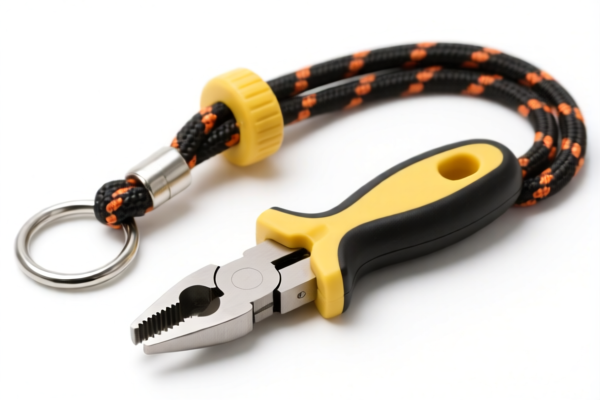
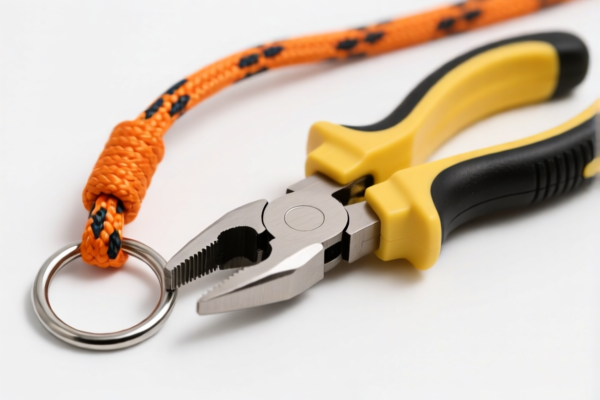
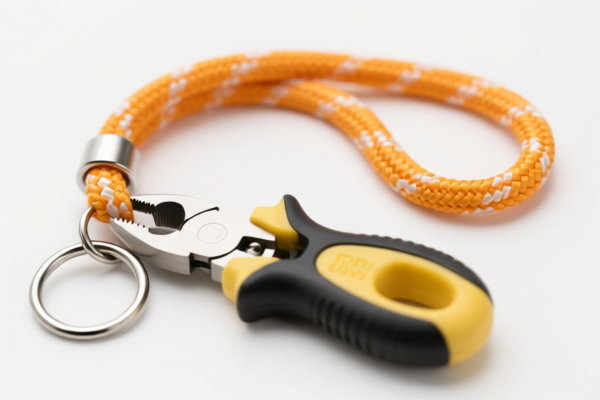
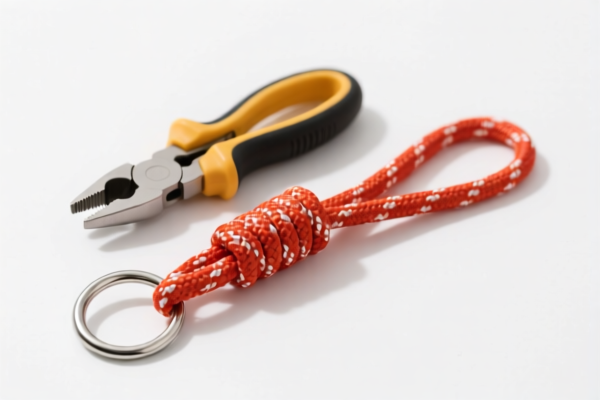
AI Analysis
📡 Anti-Lost Device (Tracking Tags & Locators)
🌐 HS Code Reference & Customs Clearance Guide | 2026 Latest Tariff Analysis | Professional Level Strategy
📌 I. Product Definition: What is an "Anti-Lost Device"?
Anti-lost devices (also known as Bluetooth trackers, GPS locators, or Item Trackers) are small electronic gadgets designed to help users locate misplaced items (keys, wallets, bags) or people/pets. They typically use Bluetooth Low Energy (BLE), Wi-Fi, or Cellular signals to transmit location data to a smartphone app.
In international trade, these devices are tricky because they blur the lines between navigation, communication, and general-purpose electronic devices. The correct HS Code classification depends heavily on their primary function and technical architecture.
⚠️ Key Classification Challenge:
- Is it a radio navigation aid (GNSS/GPS)? → 8526.91
- Is it a radio remote control/transmitter? → 8526.92
- Is it a general electronic apparatus with network connectivity? → 8543.70
- Is it a data processing/communication device? → 8517.62
📦 II. HS Code Classification Details (2026 Latest Tariff Authoritative Comparison)
| HS Code | Product Description | Key Characteristics | Tax Rate (China Origin to US) |
|---|---|---|---|
8526.92.50.00 |
Radio Remote Control/Signal Transmission Apparatus | Functions like a remote; primarily transmits signals without complex navigation algorithms. | 35% |
8526.91.00.20 |
Radio Navigation or Direction Finding Apparatus | Uses GPS/GNSS for positioning; acts as a navigation aid. | 35% |
8543.70.60.00 |
Electronic Apparatus with Individual Functions | Designed to connect to networks/specific devices; generic electronic tracker. | 35% |
8517.62.00.90 |
Other Apparatus for Transmission/Reception of Data | Classified under communications equipment; handles data reception/conversion/transmission. | 35% |
8543.70.98.60 |
Other Electronic Machines/Apparatus (General Purpose) | Standalone electronic device; combination of electronic components + plastic casing. | 37.6% |
🔍 Critical Distinction:
- 8526 Series is preferred if the device’s primary function is radio signaling or navigation.
- 8543 Series is used if the device is a "catch-all" for electronic apparatus not specified elsewhere.
- 8517 Series applies if the device is heavily integrated into communication networks (e.g., cellular LTE trackers).
💰 III. 2026 Latest Tariff Rate Breakdown (Including Surcharges & Policy Add-ons)
✅ Applicable Country: United States (US)
✅ Origin: China (CN)
✅ Effective Date: November 10, 2025 (and subsequent imports)
🎯 1. Codes with 35% Total Tax: 8526.92.50.00, 8526.91.00.20, 8543.70.60.00, 8517.62.00.90
| Item | Content |
|---|---|
| Base MFN Rate | 0.0% (Ad Valorem) |
| Section 301 Tariff (USITC) | +25.0% (Footnote 9903.88.01) |
| IEEPA Tariff (Section 122/EO) | +10.0% (Specific to Chinese products) |
| Total Effective Rate | 35.0% |
| Calculation Basis | CIF Value × 35% |
| De Minimis Exemption? | ❌ NO (Denied) |
| Legal Basis Path | IEEPA:9903.01.24 → USITC:8526/8543/8517 → FOOTNOTE:9903.88.01 |
📌 Explanation:
- The 25% is the standard "Section 301" punitive tariff on many Chinese electronics.
- The 10% is an additional layer imposed under the International Emergency Economic Powers Act (IEEPA).
- Total 35% is a significant cost burden. Misclassification to avoid this is high-risk.
🎯 2. Code with 37.6% Total Tax: 8543.70.98.60
| Item | Content |
|---|---|
| Base MFN Rate | 2.6% (Ad Valorem) |
| Section 301 Tariff (USITC) | +25.0% |
| IEEPA Tariff (Section 122/EO) | +10.0% |
| Total Effective Rate | 37.6% |
| Calculation Basis | CIF Value × 37.6% |
| De Minimis Exemption? | ❌ NO (Denied) |
| Legal Basis Path | IEEPA:9903.01.24 → USITC:8543 → FOOTNOTE:9903.88.01 |
📌 Note:
- This code attracts a higher base duty (2.6%), pushing the total to 37.6%.
- It is often used for "general purpose" electronic devices that don't fit neatly into communication or navigation categories.
- Recommendation: Avoid this code if possible; prefer 35% codes if the device has clear navigation or transmission functions.
🛠️ IV. Customs Clearance Practical Advice (Battle-Tested Pitfall Avoidance)
✅ 1. Documentation Checklist (Non-Negotiable)
| Document | Required? | Purpose |
|---|---|---|
| ✅ Product Specifications | YES | Must detail: Bluetooth version, GPS capability, battery type, connectivity (LTE/Wi-Fi). |
| ✅ Circuit Diagrams/Block Schemes | YES | Critical to prove if it’s a "navigation aid" (8526) vs. "general electronics" (8543). |
| ✅ Product Photos (with Label) | YES | Show model number, input/output specs, and any certifications (FCC ID). |
| ✅ FCC Certification | YES | Mandatory for any radio-emitting device in the US. Include FCC ID in docs. |
| ✅ Commercial Invoice | YES | Clearly state: "Bluetooth GPS Tracker" or "Wireless Location Tag". Do not use vague terms like "Gadget". |
| ✅ Packing List | YES | Ensure quantity and weight match the invoice. |
✅ 2. Declaration Strategy (Key Mantras)
🔥 "Function First, Tech Second, Name Precise, Tax Lower!"
| Scenario | Correct Declaration | Wrong Approach |
|---|---|---|
| GPS + Bluetooth Tracker | 8526.91.00.20 (Navigation Aid) |
Claiming as "Toy" → Smuggling suspicion |
| Simple Bluetooth Tag (No GPS) | 8526.92.50.00 (Radio Signal Transmitter) |
Claiming as "8543" → Potential audit for lower base duty |
| Cellular LTE Tracker | 8517.62.00.90 (Data Transmission) |
Claiming as "Phone" → Incorrect classification |
| Generic Electronic Locator | 8543.70.60.00 |
8543.70.98.60 → Higher tax (37.6% vs 35%) |
📌 Pro Tip:
- If your device has GPS chips, argue for 8526.91.00.20 (Navigation Aid).
- If it only uses Bluetooth/UWB to communicate with a phone, argue for 8526.92.50.00 (Signal Transmission).
- Both carry 35%, but 8526 is technically more accurate for "tracking."
✅ 3. Special Cases & Edge Scenarios
| Case | Handling Advice |
|---|---|
| OEM/White Label | Provide original equipment manufacturer (OEM) design docs to prove function. |
| Combined Packaging | If sold with a keychain or adhesive, declare as a single unit. Do not split. |
| App-Dependent Device | Emphasize that the device itself is a hardware transmitter/receiver. The app is just an interface. |
| FCC ID Missing | CRITICAL: Without FCC ID, US Customs may seize the shipment or require costly re-export. |
🌍 V. Global Market Comparison (2026 Latest)
| Country/Region | Recommended HS Code | Tariff (China Origin) | Certification | Remarks |
|---|---|---|---|---|
| 🇺🇸 USA | 8526.91.00.20 or 8526.92.50.00 |
35% | FCC + RoHS | High barrier due to 301/IEEPA taxes. |
| 🇨🇳 China | 8526.92.50.00 |
0% (MFN) | SRRC (MIIT) | Low entry tax, but domestic competition fierce. |
| 🇪🇺 EU | 8526.92.50.00 |
2.3% | CE + RED Directive | No major punitive tariffs, but strict RED compliance. |
| 🇬🇧 UK | 8526.92.50.00 |
2.3% | UKCA + Ofcom | Post-Brexit, requires UKCA marking. |
| 🇯🇵 Japan | 8526.92.50.00 |
0% | TELEC + PSE | Very low tariffs, but rigorous technical standards. |
📌 Conclusion:
- The USA is the most expensive market for Chinese anti-lost devices due to the 35% combined tariff.
- EU/UK/Japan offer much better cost structures (0–2.3%) if compliance certifications are met.
📌 VI. Common Mistakes & Pitfall Guide (Blood & Tears Lessons)
❌ Mistake 1: Declaring as "Electronics Accessory" (Generic)
👉 Result: Customs may assign 8543.70.98.60 → 37.6% Tax instead of 35%.
👉 Fix: Be specific about the radio function (Navigation vs. Transmission).
❌ Mistake 2: Ignoring FCC Certification
👉 Result: Shipment detained at port. Return to China or destroy. Cost > Product Value.
👉 Fix: Ensure FCC ID is printed on the device and listed in the invoice.
❌ Mistake 3: Claiming "De Minimis" (Under $800) Exemption
👉 Result: Denied. Anti-lost devices from China are not eligible for de minimis entry under current IEEPA/301 rules.
👉 Fix: Plan for full duty payment even for small parcels.
❌ Mistake 4: Mislabeling as "Bluetooth Speaker" or "Remote"
👉 Result: Audit for misclassification. Penalties + Back Taxes.
👉 Fix: Use accurate terms: "GPS Tracker," "Bluetooth Locator," "Item Finder."
✅ Correct Declaration Example:
"Wireless Bluetooth GPS Item Tracker, Model X1, FCC ID: ABC-X1, Plastic Casing, Lithium Battery, For Personal Use"
🎯 VII. Conclusion: Precision Classification Saves Money!
🎯 Remember the Mantra:
🔹 "GPS = Navigation (8526.91), Bluetooth = Transmission (8526.92), Cellular = Communication (8517). All carry 35% in the US."
🔹 "Avoid 8543.70.98.60 (37.6%) unless absolutely necessary."
🔹 "FCC ID is your passport to the US market. No ID = No Entry."
📌 Pro Tip:
If you are exporting to the US, consider supply chain diversification (e.g., assembling in Vietnam or Malaysia) to potentially avoid the Section 301 (25%) and IEEPA (10%) surcharges, bringing the total tax down to 0%–2.3%.
Note: This requires substantial operational changes and compliance with "Substantial Transformation" rules.
📣 Immediate Action:
📞 Contact a licensed US Customs Broker + Provide FCC ID + Request Pre-Ruling if volume is high.
🚀 Ensure Smooth Customs Clearance, Reduce Tax Burden, Maximize Profit!
✨ Professional Customs Clearance Starts with Accurate Classification!
💼 Every Percent of Tax Saved is Pure Profit!
Customer Reviews
About HS Code Classification
The Harmonized System (HS) is an internationally standardized nomenclature developed by the World Customs Organization (WCO) to classify traded products. Over 200 countries use the HS system as the basis for customs tariffs, trade statistics, and import/export regulations.
Each HS code follows a hierarchical structure:
- Chapter (2 digits) — Broad category of goods (e.g., Chapter 84: Machinery and Mechanical Appliances)
- Heading (4 digits) — More specific grouping within the chapter
- Subheading (6 digits) — Internationally standardized breakdown, used by all WCO member countries
- National subdivisions (8-10 digits) — Country-specific extensions for further classification, such as US HTSUS 10-digit codes
Correct HS code classification is essential for smooth customs clearance, accurate duty payment, and compliance with trade regulations. Misclassification can lead to customs delays, overpayment of duties, or penalties.
When importing from CN to US, the applicable tariff rates may include:
- Most-Favored-Nation (MFN) rate — The standard duty rate applied to WTO members
- General rate — Applied to countries without trade agreements
- Trade remedy duties — Additional tariffs such as Section 301 (anti-dumping), Section 232 (national security), or countervailing duties
The information provided on this page is for reference purposes only. For official classification, please consult with your local customs authority or a licensed customs broker.