Anti radiation Rubber Gloves
CN → US| HS Code | Tariff Rate | Origin | Destination | Doc |
|---|---|---|---|---|
| 4014905000 | 14.2% | CN | US | Official Doc |
| 4014901000 | 10.0% | CN | US | Official Doc |
| 6116109500 | 24.5% | CN | US | Official Doc |
| 6116106500 | 24.5% | CN | US | Official Doc |
| 4014905000 | 14.2% | CN | US | Official Doc |
Product Images
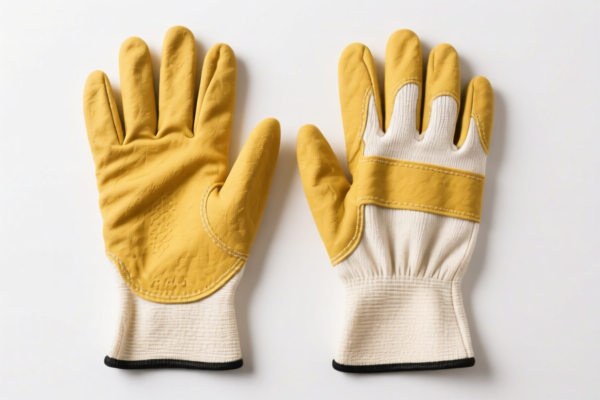
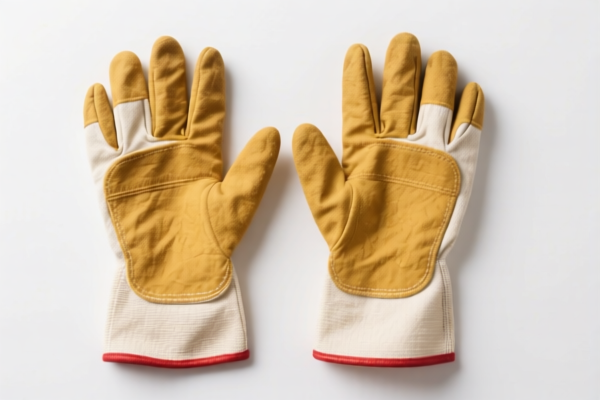
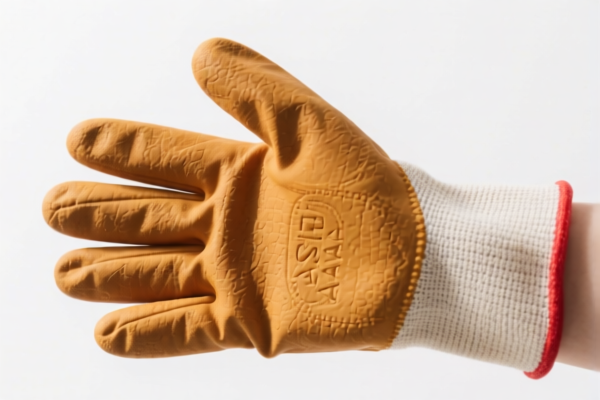
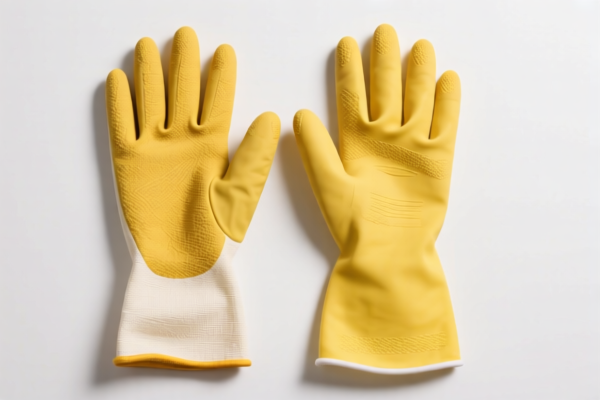
AI Analysis
☢️ Anti-Radiation Rubber Gloves (Protective Gear)
🌐 HS Code Reference & Customs Clearance Guide | 2026 Latest Tariff Analysis | Professional-Level Strategy
📌 I. Product Definition & Classification: Do You Really Understand "Anti-Radiation Gloves"?
Anti-radiation rubber gloves are specialized personal protective equipment (PPE) designed to shield users from ionizing radiation (X-rays, gamma rays) or non-ionizing radiation in medical, industrial, and laboratory settings. In international trade, their classification hinges critically on material composition, intended use, and physical form.
Key Distinction Points: * Medical/Sanitary Purpose: If primarily used for hygiene, medical procedures, or laboratory hygiene, they fall under Chapter 40 (Vulcanized Rubber). * General Protection/Industrial Use: If used for general radiation shielding in industrial contexts without a specific "sanitary" primary function, they may fall under Chapter 61 (Knitted/Crocheted or other made-up articles) or specific protective gear categories. * Material Specifics: "Vulcanized rubber" vs. "Rubber" generally triggers different duty rates depending on the specific HTS subheadings.
⚠️ Critical Classification Logic:
- Hygiene/Medical Focus:归入 4014.90.50.00 (Vulcanized rubber, sanitary/medical).
- General Rubber/Pure Purpose:归入 4014.90.10.00 (Other rubber articles, sanitary/medical or general).
- General Glove Form (Non-Specific):归入 6116.10.95.00 or 6116.10.65.00 (Gloves of rubber, knitted/crocheted or other).
📦 II. HS Code Classification Details (2026 Latest Tariff Reference)
Based on the provided data, here are the specific HS Codes associated with "Anti-Radiation Rubber Gloves" and their corresponding tax profiles:
| HS Code | Product Summary | Key Attributes | Primary Use Case |
|---|---|---|---|
4014.90.50.00 |
Lab Rubber Gloves | Material: Vulcanized Rubber Use: Hygiene/Medical |
Medical labs, surgical settings, high-standard hygiene environments |
4014.90.10.00 |
General Rubber Gloves | Material: Rubber Category: Hygiene/Medical范畴 |
General laboratory use, non-vulcanized specific applications |
6116.10.95.00 |
Rubber Gloves (General) | Form: Gloves Material: Rubber |
Industrial protection, general purpose anti-radiation shielding |
6116.10.65.00 |
Coated/Seamless Gloves | Form: Gloves, Coated or Seamless | Specialized industrial radiation shielding, enhanced durability |
4014.90.50.00 |
Anti-Radiation Rubber Gloves | Material: Rubber Use: Protection |
Specifically labeled for radiation protection, using vulcanized rubber |
🔍 Note on
4014.90.50.00:
This code appears twice in the source data. Once for general "Lab Rubber Gloves" and once specifically for "Anti-Radiation Rubber Gloves." This suggests that vulcanized rubber gloves used for protection are most commonly classified here if they meet sanitary/medical standards or are produced in a sanitary/medical context.
💰 III. 2026 Latest Tariff Rate Breakdown (Including Surcharges & Policy Add-ons)
✅ Applicable Market: United States (US)
✅ Origin: China (CN) (Implied by "122-Clause" and typical 25%/10% surcharge structure)
✅ Effective Time: Current rates as per 2026 tariff data
🎯 1. 4014.90.50.00 —— Anti-Radiation Rubber Gloves (Vulcanized Rubber)
| Item | Detail |
|---|---|
| Base Duty Rate | 4.2% (Ad Valorem) |
| Additional Duty | 0.0% (Standard 301 Section, if not applicable to this specific subheading) |
| Section 122 Duty | 10.0% (Specific surcharge for certain rubber/articles) |
| Total Duty Rate | 14.2% |
| Tax Calculation | CIF Value × 14.2% |
| De Minimis Eligibility | ⚠️ Check Specific Rules: Generally, PPE may be excluded from de minimis if it violates trade remedies, but standard gloves often allow it unless explicitly banned. Consult current CBP guidelines. |
| Legal Basis Path | HTS:4014.90.50.00 → Section 122: 10% → Base: 4.2% |
📌 Explanation:
- The 14.2% total rate is significantly lower than general rubber gloves (24.5%).
- The 10% Section 122 duty is a specific add-on for certain rubber products, likely targeting anti-dumping or specific trade remedy measures.
- Why is it 4.2% base? Vulcanized rubber sanitary articles often have lower base duties than non-sanitary general goods.
🎯 2. 4014.90.10.00 —— General Rubber Gloves (Non-Vulcanized or Specific Category)
| Item | Detail |
|---|---|
| Base Duty Rate | 0.0% |
| Additional Duty | 0.0% |
| Section 122 Duty | 10.0% |
| Total Duty Rate | 10.0% |
| Tax Calculation | CIF Value × 10.0% |
| De Minimis Eligibility | ⚠️ Check Specific Rules |
| Legal Basis Path | HTS:4014.90.10.00 → Section 122: 10% |
📌 Note:
This is the lowest tax rate (10%) among all options. If your anti-radiation gloves can be classified under this subheading (e.g., if they are not "vulcanized" or fall into a different sanitary category), this is the most cost-effective classification.
🎯 3. 6116.10.95.00 & 6116.10.65.00 —— General Rubber Gloves (Industrial/Non-Sanitary)
| Item | Detail |
|---|---|
| Base Duty Rate | 7.0% |
| Additional Duty | 7.5% (Section 301 or similar trade remedy) |
| Section 122 Duty | 10.0% |
| Total Duty Rate | 24.5% |
| Tax Calculation | CIF Value × 24.5% |
| De Minimis Eligibility | ❌ Likely Not Eligible (High-risk category for trade remedies) |
| Legal Basis Path | HTS:6116.10.95.00 / 6116.10.65.00 → Base: 7.0% + Add-on: 7.5% + 122: 10.0% |
📌 Warning:
- These codes carry the highest total tax (24.5%).
- They are typically used for non-sanitary, general-purpose rubber gloves.
- If your gloves are marketed for radiation protection (a medical/industrial safety function), customs may challenge a classification under Chapter 61 if they deem Chapter 40 (Sanitary/Medical Rubber) more appropriate.
- Do not misclassify medical-grade radiation gloves as "general industrial gloves" to avoid penalties.
🛠️ IV. Customs Clearance Practical Advice (Real-World Pitfall Guide)
✅ 1. Required Documentation Checklist
| Document | Must Provide | Explanation |
|---|---|---|
| ✅ Product Specification Sheet | ✔️ | Must detail material composition (Vulcanized vs. Non-Vulcanized), radiation shielding percentage (e.g., Lead Equivalent), and intended use. |
| ✅ Technical Data Sheet (TDS) | ✔️ | Proof of "Anti-Radiation" capability. Essential for justifying medical/industrial safety claims. |
| ✅ Material Safety Data Sheet (MSDS) | ✔️ | Required for chemical handling, especially if rubber contains specific additives. |
| ✅ Commercial Invoice | ✔️ | Clearly state: "Anti-Radiation Rubber Gloves, Vulcanized, for Medical/Lab Use" OR "Industrial Radiation Shielding Gloves." |
| ✅ Certificate of Origin (CO) | ✔️ | Determine country of origin to apply correct base duties. |
| ✅ FDA Registration (if US) | ✔️ | If claimed as "Medical/Sanitary," FDA registration may be required for clearance. |
✅ 2. Declaration Tips (Key Mnemonics)
🔥 “Material Defines Code, Use Defines Duty, Accuracy Saves Money!”
| Scenario | Correct Declaration Strategy | Incorrect Practice |
|---|---|---|
| Vulcanized Rubber, Medical/Lab Use | HS: 4014.90.50.00Tax: 14.2% |
Declare as "Gloves" → 24.5% |
| Non-Vulcanized, General Rubber | HS: 4014.90.10.00Tax: 10.0% |
Declare as "Vulcanized" → 14.2% |
| Industrial, Non-Medical | HS: 6116.10.95.00Tax: 24.5% |
Claim "Medical" → Risk of fraud/penalty |
| Coated/Seamless | HS: 6116.10.65.00Tax: 24.5% |
Generic "Rubber Gloves" → Ambiguity |
✅ 3. Special Case Handling
| Situation | Recommendation |
|---|---|
| Dual-Use (Medical & Industrial) | Provide both FDA documents (if medical) and ISO 9001 (if industrial). Declare based on primary intended use. If for hospitals, use Chapter 40. |
| "Lead-Equivalent" Claims | If the gloves contain lead or barium sulfate for radiation shielding, ensure MSDS is accurate. Some countries restrict heavy metal content. |
| Low-Value Shipments | Check if De Minimis ($800) applies. Note: Items under Section 122 or 301 may still be taxable even if under $800 in some contexts. |
| Origin Tracing | Ensure the rubber source is documented. If made in China, 122 and Base duties apply. If made in Vietnam/Mexico, verify if IEEPA exemptions apply. |
🌍 V. Global Market Comparison (2026 Latest)
| Country/Region | Recommended HS Code | Duty Rate | Certification | Notes |
|---|---|---|---|---|
| 🇺🇸 USA | 4014.90.50.00 |
14.2% | FDA, OSHA | 24.5% if misclassified as general industrial |
| 🇨🇳 China (Import) | 4014.90.50.00 |
5% (Typical MFN) | CCC | No Section 122 equivalent |
| 🇪🇺 EU | 4014.90 |
0% - 3.5% | CE Marking, PPE Regulation | Lower duties, strict PPE compliance |
| 🇬🇧 UK | 4014.90 |
0% - 3.5% | UKCA Mark | Post-Brexit tariffs may vary |
📌 Conclusion:
- The USA imposes a 10% Section 122 duty on rubber goods, making accurate classification crucial.
- Misclassification from4014.90.10.00(10%) can lead to significant overpayment or underpayment (penalties if underpaid).
- Medical/Lab use is the key to accessing lower tax brackets in Chapter 40.
📌 VI. Common Mistakes & Pitfalls (Lessons Learned)
❌ Mistake 1: Declaring "Anti-Radiation Gloves" as generic "Rubber Gloves" under 6116.10.95.00
👉 Consequence: 24.5% tax instead of 10%-14.2%. Overpayment of ~10% on every shipment.
❌ Mistake 2: Claiming "Medical Use" for Industrial Gloves to avoid 24.5%
👉 Consequence: Customs Audit & Penalties. If FDA registration is missing, goods may be detained or rejected.
❌ Mistake 3: Ignoring "Vulcanization" Status
👉 Consequence: 4014.90.50.00 (Vulcanized) and 4014.90.10.00 (Non-Vulcanized) have different base duties. Incorrect declaration leads to underpayment/underpayment penalties.
❌ Mistake 4: Failing to Declare Section 122 Applicability
👉 Consequence: All rubber gloves under these codes seem to carry a 10% Section 122 duty. If not declared, CBSA/HHS may issue a demand for payment upon entry.
✅ Correct Approach:
"Anti-Radiation Rubber Gloves, Vulcanized, Lead-Equivalent 0.5mm, for Medical X-Ray Use, FDA Registered, Model XYZ"
🎯 VII. Conclusion: Precision Classification Saves Money!
🎯 Remember This Mantra:
🔹 "Vulcanized = 14.2%, General Rubber = 10%, Industrial = 24.5%"
🔹 "122 Clause adds 10% to all rubber goods, so choose wisely!"
🔹 "Medical claims need FDA proof, Industrial needs ISO specs!"
📌 Pro Tip:
If your anti-radiation gloves are originally from Vietnam, Mexico, or Malaysia, check if IEEPA exemptions apply. You might reduce the total duty from 14.2% or 24.5% to 0% - 5%.
Always apply for an Advance Ruling from CBP to lock in your HS Code and duty rate before shipping.
📣 Immediate Action:
📞 Contact a licensed customs broker + Provide Product Specs + Request HS Code Advance Ruling
🚀 Ensure compliant, cost-effective, and smooth clearance for your anti-radiation gloves!
✨ Professional clearance starts with precise classification!
💼 Every percentage point saved is profit earned!
Customer Reviews
About HS Code Classification
The Harmonized System (HS) is an internationally standardized nomenclature developed by the World Customs Organization (WCO) to classify traded products. Over 200 countries use the HS system as the basis for customs tariffs, trade statistics, and import/export regulations.
Each HS code follows a hierarchical structure:
- Chapter (2 digits) — Broad category of goods (e.g., Chapter 84: Machinery and Mechanical Appliances)
- Heading (4 digits) — More specific grouping within the chapter
- Subheading (6 digits) — Internationally standardized breakdown, used by all WCO member countries
- National subdivisions (8-10 digits) — Country-specific extensions for further classification, such as US HTSUS 10-digit codes
Correct HS code classification is essential for smooth customs clearance, accurate duty payment, and compliance with trade regulations. Misclassification can lead to customs delays, overpayment of duties, or penalties.
When importing from CN to US, the applicable tariff rates may include:
- Most-Favored-Nation (MFN) rate — The standard duty rate applied to WTO members
- General rate — Applied to countries without trade agreements
- Trade remedy duties — Additional tariffs such as Section 301 (anti-dumping), Section 232 (national security), or countervailing duties
The information provided on this page is for reference purposes only. For official classification, please consult with your local customs authority or a licensed customs broker.