Anti slip Belt
CN → US| HS Code | Tariff Rate | Origin | Destination | Doc |
|---|---|---|---|---|
| 6212200010 | 37.5% | CN | US | Official Doc |
| 6117809570 | 32.1% | CN | US | Official Doc |
| 6117808500 | 32.1% | CN | US | Official Doc |
| 9506996080 | 21.5% | CN | US | Official Doc |
| 9506910030 | 22.1% | CN | US | Official Doc |
Product Images


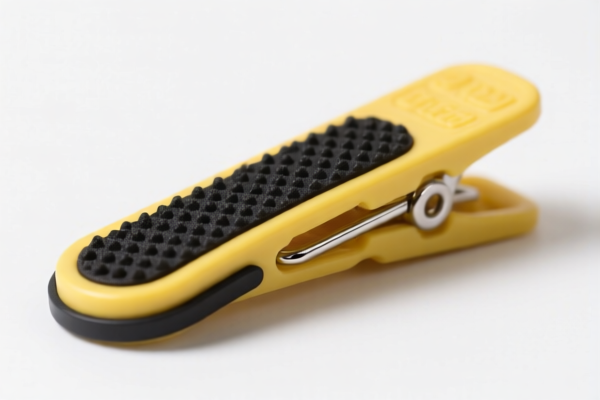

AI Analysis
🛡️ Anti-Slip Belt: Ultimate HS Code Guide & US Customs Strategy (2026)
🌐 HS Code Classification & Duty Breakdown | The "Anti-Slip Belt" Conundrum | Professional Clearance Strategy
📌 I. Product Definition: What is an "Anti-Slip Belt"?
In international trade, an Anti-Slip Belt is a versatile item often found in fitness, sports training, and construction. Its classification is highly ambiguous because it can be viewed through three different lenses: 1. The Sports Angle: An accessory for weightlifting or gym training (e.g., lifting straps). 2. The Apparel Angle: A functional undergarment or clothing fastener (e.g., suspenders, shapewear, or waist support). 3. The General Utility Angle: A non-specific tool for securing loads or safety.
⚠️ Critical Classification Trap:
- Is it Sportswear (Chapter 95) or Textile Apparel (Chapter 61/62)?
- Is it Woven or Knitted?
- Is it Textile or Rubber/Other Material?
The answer determines whether your duty is 4% or 37.5%.
📦 II. HS Code Classification Matrix (2026 US Tariff Schedule)
Based on the provided data, here are the 5 Potential Classifications with their specific tax burdens.
| HS Code | Classification Category | Material/Feature Summary | Total Duty Rate | Tax Breakdown (The "3-Tier" Trap) |
|---|---|---|---|---|
| 9506.91.00.30 | Sports Equipment | Woven/Synthetic, for Fitness/Gym | 22.1% | Base: 4.6% + Add'l: 7.5% + Sec 232 (Steel/Al/Cu): 50% |
| 9506.99.60.80 | Other Sports Gear | Fabric/Rubber, General Outdoor | 21.5% | Base: 4.0% + Add'l: 7.5% + Sec 232 (Steel/Al/Cu): 50% |
| 6117.80.95.70 | Other Knitted Accessories | Not Cotton/Wool, Knitted | 32.1% | Base: 14.6% + Add'l: 7.5% + Section 301: 10% |
| 6117.80.85.00 | Other Knitted Accessories | Knitted/Hooked, Textile | 32.1% | Base: 14.6% + Add'l: 7.5% + Section 301: 10% |
| 6212.20.00.10 | Textile Belts | Cotton/Other, Woven Apparel | 37.5% | Base: 20.0% + Add'l: 7.5% + Section 301: 10% |
💰 III. Deep Dive: The 3-Tier Tax Structure Explained
The "Total Tax" is not a single number. It is a layered stack of duties that can explode your cost if misclassified.
🔴 The "Section 232" Steel/Aluminum Trap (HS Codes 9506...)
Applicable to: 9506.91.00.30 & 9506.99.60.80
| Layer | Description | Rate | Why it applies? |
|---|---|---|---|
| 1. Base MFN | Most Favored Nation Duty | 4.0% - 4.6% | Standard duty for sports goods. |
| 2. Section 301 | China-Specific Add-on | 7.5% | Mandatory "Section 301" tariff on Chinese imports. |
| 3. Section 232 | Steel/Aluminum/Copper | 50% | ⚠️ CRITICAL: If the anti-slip belt contains metal components (buckles, hooks, rivets) classified under Section 232, the duty on those components is 50%. In some interpretations, if the primary material is deemed to include these, the whole item gets hit. |
| TOTAL | 21.5% - 22.1% | High risk if metal parts are present. |
📌 Explanation:
- Section 232 (Steel/Aluminum) is a "get out of jail free" card for US manufacturers but a death sentence for importers if misjudged.
- If your belt has metal buckles, steel reinforcement, or copper wiring, US Customs may apply the 50% rate on the entire value.
- Strategy: If the belt is 100% fabric/rubber with plastic buckles, you might avoid this tier.
🟠 The "Textile & Apparel" Trap (HS Codes 6117 & 6212)
Applicable to: 6117.80... & 6212.20...
| Layer | Description | Rate | Why it applies? |
|---|---|---|---|
| 1. Base MFN | Standard Apparel Duty | 14.6% - 20.0% | Textile duties are significantly higher than sports goods. |
| 2. Section 301 | China-Specific Add-on | 7.5% - 10% | The 7.5% is standard; the 10% is an additional Section 301 surcharge often applied to apparel. |
| 3. No Section 232 | Steel/Al Tax | 0% | Textile belts usually avoid the 50% steel tax unless they contain heavy metal hardware. |
| TOTAL | 32.1% - 37.5% | Very High. |
📌 Explanation:
-6212.20.00.10(Woven): The most expensive at 37.5%. If your belt is made of cotton or woven synthetic fabric used as a belt, this is the default.
-6117.80...(Knitted): Slightly cheaper at 32.1%, but still very high compared to sports goods.
- Key Distinction: If the belt is used as a waist support (medical/sports),9506is better. If it's a fashion belt or underwear,61/62applies.
🛠️ IV. Customs Clearance Strategy: How to Avoid the 50% Pitfall
✅ 1. Material Declaration is King
🔥 The "Metal Buckle" Rule:
If you classify under9506(Sports), you MUST prove the product is NOT a steel/aluminum product.
- Action: Use Plastic or Nylon buckles. Avoid steel/aluminum/rivets.
- Declaration: Explicitly state "100% Polyester/Nylon, Plastic Buckle" in the commercial invoice.
✅ 2. Define the "Primary Use" in the Description
For
9506.91.00.30/9506.99.60.80:
Description: "Gym Lifting Strap, Anti-Slip, Woven Synthetic, for Weight Training."
Why: This clearly categorizes it as "Sporting Goods" (Chapter 95), avoiding the high textile tariffs.For
6212.20.00.10:
Description: "Women's Cotton Waist Belt, Fashion Accessory."
Why: If you call it a "Waist Support" but it looks like a fashion belt, Customs will reclassify to6212and charge you 37.5%.
✅ 3. Avoid the "Section 301" Double Tax
- If the belt is Knitted (
6117), you pay 14.6% base + 7.5% + 10% = 32.1%.- If the belt is Woven (
6212), you pay 20% base + 7.5% + 10% = 37.5%.- Recommendation: Do not classify as
6117or6212unless it is strictly a fashion item. Always aim for9506if there is any sports usage.
📋 V. Clearance Checklist: Required Documents
| Document | Requirement | Purpose |
|---|---|---|
| Commercial Invoice | Must state "Anti-Slip Gym Belt" (Not just "Belt") | Proves intended use (Sports vs. Fashion) |
| Technical Spec Sheet | List Material Composition: e.g., "95% Nylon, 5% Elastic, Plastic Buckle" | Proves NO Steel/Aluminum (Avoids 50% tax) |
| Product Photos | Show the belt being used for lifting or exercise | Visual proof of Chapter 95 classification |
| Labeling | "Made in China" + "Intended for Sports" | Prevents re-classification as apparel |
| Origin Certificate | Standard CO Form | Required for Section 301 verification |
🌍 VI. Market Comparison & Cost Impact
| Classification | HS Code | Duty Rate | Cost Impact on $100 Item | Risk Level |
|---|---|---|---|---|
| Sports (Best) | 9506.91.00.30 |
22.1% | $22.10 | ⚠️ High (If metal present) |
| Sports (Safe) | 9506.99.60.80 |
21.5% | $21.50 | ⚠️ High (If metal present) |
| Knitted Textile | 6117.80.95.70 |
32.1% | $32.10 | ✅ Moderate |
| Woven Textile | 6212.20.00.10 |
37.5% | $37.50 | ✅ High (Most Expensive) |
📌 The "Math" of Misclassification:
- Correct (9506): $22.10 duty.
- Wrong (6212): $37.50 duty.
- Disaster (Metal +9506): $50+ duty.
Difference: $15 - $30 per $100 item. This kills your margin!
🎯 VII. Expert Advice: The "Golden Rule" for Anti-Slip Belts
🚨 DO NOT: Ship a belt with metal buckles and declare it as
9506without a detailed material breakdown. Customs will seize it and charge the 50% steel tariff.✅ DO: 1. Eliminate Metal: Use plastic, nylon, or resin buckles. 2. Be Specific: In your invoice, write "Synthetic Anti-Slip Lifting Straps" (Sporting Goods). 3. Target
9506.91.00.30: This is your lowest duty path IF you avoid the steel trap. 4. Prepare for61/62: If the item is a fashion belt, accept the 32-37% cost and classify accordingly to avoid fraud.
📌 VIII. Summary of Tax Clauses
| Clause Type | HS Code Range | Rate | Condition |
|---|---|---|---|
| Base MFN | 9506 | 4.0% - 4.6% | Standard |
| Base MFN | 6117/6212 | 14.6% - 20.0% | Standard |
| Section 301 | All (China) | 7.5% - 10% | Mandatory |
| Section 232 | 9506 | 50% | ONLY IF Steel/Al/Cu parts exist |
🚀 Final Verdict: How to Ship Smoothly
- Is it a gym belt? → Yes. Remove all metal parts → Classify
9506.91.00.30→ Pay ~22%. - Is it a fashion belt? → Yes. Classify
6212.20.00.10→ Pay ~37.5%. - Is it a medical waist support? → Maybe. Try
9506.99.60.80(if rubber/fabric) → Pay ~21.5%.
💡 Pro Tip: If you are importing 1,000 units with metal buckles, the $15,000 extra cost (from 22% to 37%) or $28,000 cost (from 50% steel) could bankrupt the shipment. Rethink your hardware design TODAY.
✨ Clearance Success = Precise Description + Material Integrity.
📦 Don't let a metal buckle cost you a fortune!
Customer Reviews
About HS Code Classification
The Harmonized System (HS) is an internationally standardized nomenclature developed by the World Customs Organization (WCO) to classify traded products. Over 200 countries use the HS system as the basis for customs tariffs, trade statistics, and import/export regulations.
Each HS code follows a hierarchical structure:
- Chapter (2 digits) — Broad category of goods (e.g., Chapter 84: Machinery and Mechanical Appliances)
- Heading (4 digits) — More specific grouping within the chapter
- Subheading (6 digits) — Internationally standardized breakdown, used by all WCO member countries
- National subdivisions (8-10 digits) — Country-specific extensions for further classification, such as US HTSUS 10-digit codes
Correct HS code classification is essential for smooth customs clearance, accurate duty payment, and compliance with trade regulations. Misclassification can lead to customs delays, overpayment of duties, or penalties.
When importing from CN to US, the applicable tariff rates may include:
- Most-Favored-Nation (MFN) rate — The standard duty rate applied to WTO members
- General rate — Applied to countries without trade agreements
- Trade remedy duties — Additional tariffs such as Section 301 (anti-dumping), Section 232 (national security), or countervailing duties
The information provided on this page is for reference purposes only. For official classification, please consult with your local customs authority or a licensed customs broker.