Anti slip Set
CN → US| HS Code | Tariff Rate | Origin | Destination | Doc |
|---|---|---|---|---|
| 4016910000 | 37.7% | CN | US | Official Doc |
| 3919905060 | 40.8% | CN | US | Official Doc |
| 5907001500 | 43.0% | CN | US | Official Doc |
| 4016996050 | 37.5% | CN | US | Official Doc |
| 3919102055 | 40.8% | CN | US | Official Doc |
Product Images
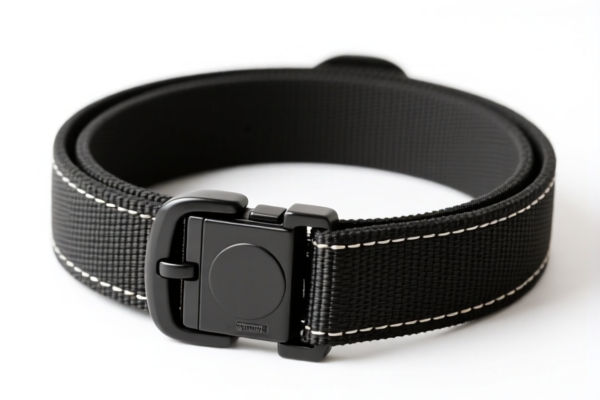
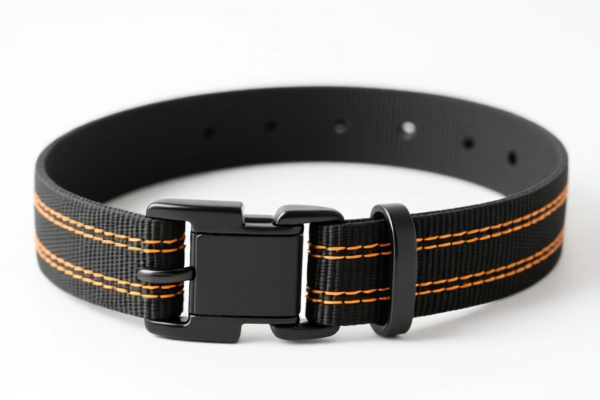
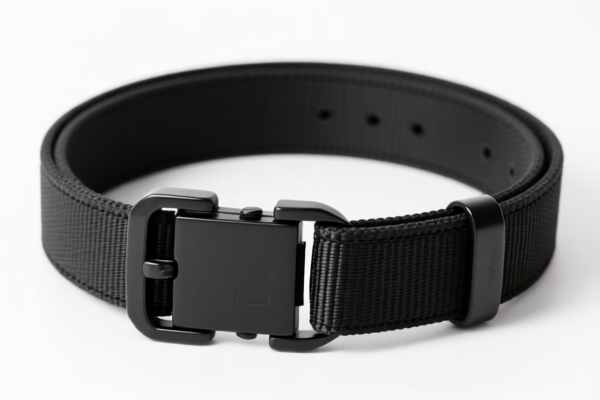
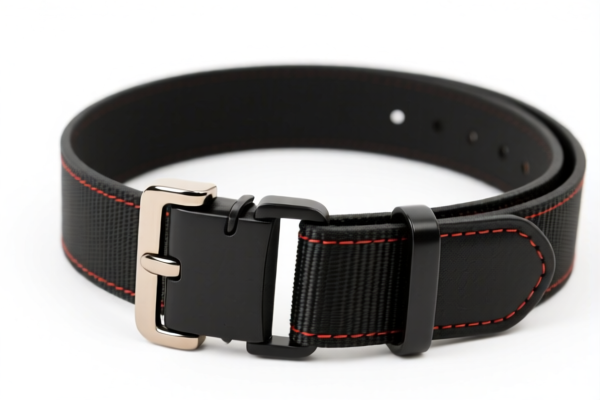
AI Analysis
🛑 Anti-slip Set (防滑贴)
🌐 HS Code Reference & Customs Clearance Guide | 2026 Latest Tariff Analysis | Professional Level通关策略
📌 I. Product Definition & Classification: Do You Really Understand "Anti-slip Sets"?
An "Anti-slip Set" (防滑贴) typically refers to adhesive pads, mats, or strips designed to prevent slipping on smooth surfaces (floors, stairs, tools, or containers). In international trade, the classification depends heavily on the material and form of the product. Since "Anti-slip Set" is a functional description rather than a material specification, it can fall into multiple HS Code categories depending on whether it is made of rubber, plastic, or textile.
⚠️ Key Classification Differentiators:
- If the material is Rubber/Elastomer (flexible, elastic) → Likely falls under Chapter 40.
- If the material is Plastic/PVC/PE (flat, self-adhesive) → Likely falls under Chapter 39.
- If the material is Textile/Fabric (coated or impregnated) → Likely falls under Chapter 59.
📦 II. HS Code Classification Details (2026 Latest Tariff Authority Comparison)
Based on common market materials, here are the four most likely HS Codes for "Anti-slip Sets," along with their specific tax implications for shipments from China (CN) to the USA (US).
| HS Code | Product Description | Material Assumption | Key Classification Feature |
|---|---|---|---|
4016.91.00.00 |
Other vulcanized rubber articles; floor coverings and mats | Rubber | Anti-slip mats/pads classified as "floor coverings/mats." |
4016.99.60.50 |
Other vulcanized rubber articles | Rubber/Elastomer | General rubber anti-slip pads (non-specific use). |
3919.90.50.60 |
Self-adhesive plates, sheets, film, foil, tape, and other flat shapes | Plastic (PVC/PE) | Flat, self-adhesive plastic anti-slip strips/pads. |
3919.10.20.55 |
Self-adhesive plates, sheets, film, etc., in rolls | Plastic | Self-adhesive plastic in roll form. |
5907.00.15.00 |
Textile fabrics impregnated, coated, covered or laminated with plastics | Textile/Synthetic | Textile-based anti-slip pads with coating/impregnation. |
🔍 Critical Note:
- Material is King: You must verify the exact material composition. A "rubber" anti-slip pad declared as "plastic" will face severe penalties.
- Self-Adhesive Feature: Codes3919.xxand5907.xxoften highlight the self-adhesive nature or coated nature.
💰 III. 2026 Latest Tariff Rate Breakdown (Including Additional Duties)
✅ Applicable Country: United States (US)
✅ Country of Origin: China (CN)
✅ Effective Date: November 10, 2025 (and subsequent imports)
🎯 1. 4016.91.00.00 & 4016.99.60.50 — Rubber Anti-Slip Articles
These codes apply if the anti-slip set is made of vulcanized rubber.
| Item | Details |
|---|---|
| Base Tariff Rate | 2.7% (for .91.00) / 2.5% (for .99.60.50) |
| Section 301 Additional Duty | +25.0% |
| IEEPA Additional Duty | +10.0% (122 Clause Tariff for China) |
| Total Effective Tax Rate | 37.7% (Code .91.00) 37.5% (Code .99.60.50) |
| Calculation Basis | CIF Value × Total Rate |
| De Minimis Exemption? | ❌ NO (Strictly denied) |
| Legal Authority Path | USITC:4016.91.00.00 → FOOTNOTE:9903.88.01 → IEEPA:9903.01.25 |
📌 Explanation:
- Rubber anti-slip products are subject to the standard 25% Section 301 tariff.
- The additional 10% IEEPA tariff applies to specific Chinese-origin goods.
- Total ~37.5%-37.7% is a significant cost factor.
🎯 2. 3919.90.50.60 & 3919.10.20.55 — Plastic Self-Adhesive Anti-Slip Strips
These codes apply if the product is primarily plastic (PVC, PE, etc.) and self-adhesive.
| Item | Details |
|---|---|
| Base Tariff Rate | 5.8% |
| Section 301 Additional Duty | +25.0% |
| IEEPA Additional Duty | +10.0% |
| Total Effective Tax Rate | 40.8% |
| Calculation Basis | CIF Value × 40.8% |
| De Minimis Exemption? | ❌ NO (Strictly denied) |
| Legal Authority Path | USITC:3919.xx → FOOTNOTE:9903.88.01 → IEEPA:9903.01.25 |
📌 Explanation:
- Plastic self-adhesive products have a higher base tariff (5.8%) compared to rubber.
- The combined rate of 40.8% is higher than the rubber classification.
🎯 3. 5907.00.15.00 — Textile/Coated Anti-Slip Pads
This code applies if the anti-slip set is made of textile fabric that is impregnated, coated, or covered with plastics/rubber.
| Item | Details |
|---|---|
| Base Tariff Rate | 8.0% |
| Section 301 Additional Duty | +25.0% |
| IEEPA Additional Duty | +10.0% |
| Total Effective Tax Rate | 43.0% |
| Calculation Basis | CIF Value × 43.0% |
| De Minimis Exemption? | ❌ NO (Strictly denied) |
| Legal Authority Path | USITC:5907.00.15.00 → FOOTNOTE:9903.88.01 → IEEPA:9903.01.25 |
📌 Explanation:
- Textile-based coated products have the highest base tariff among the three material types (8.0%).
- Total Rate: 43.0%, making this the most expensive classification from a tariff perspective.
🛠️ IV. Customs Clearance Practical Advice (Battle-Tested Pitfall Avoidance)
✅ 1. Mandatory Documentation Checklist
| Document | Required | Explanation |
|---|---|---|
| ✅ Product Specification Sheet | ✔️ | Must clearly state Material Composition (e.g., 100% Natural Rubber, PVC, etc.). |
| ✅ Material Safety Data Sheet (MSDS) | ✔️ | Proves material type and chemical composition. |
| ✅ Product Photos | ✔️ | Clear images showing texture, adhesive backing, and packaging. |
| ✅ Commercial Invoice | ✔️ | Use precise descriptions: e.g., "Vulcanized Rubber Anti-Slip Mat" vs. "Plastic Self-Adhesive Strip." |
| ✅ Packing List | ✔️ | Detail contents to avoid ambiguity. |
| ✅ Certificate of Origin | ✔️ | Essential for proving Chinese origin to apply correct additional tariffs. |
✅ 2. Declaration Tips (Key Mantra)
🔥 "Material First, Function Second, Be Precise, Avoid Audits!"
| Scenario | Correct Declaration | Wrong Action | Consequence |
|---|---|---|---|
| Rubber Mats | 4016.91.00.00 "Rubber Floor Mat" |
Declare as "Plastic Mat" | Misclassification → Audit + Penalties |
| Plastic Strips | 3919.90.50.60 "Self-adhesive Plastic Sheet" |
Declare as "Rubber" | Misclassification → Audit + Penalties |
| Mixed Materials | Analyze dominant component | Vague "Anti-slip Set" | Customs may assign highest duty or hold shipment |
✅ 3. Special Handling for "Sets"
- Complete Sets: If an "Anti-slip Set" includes multiple items (e.g., strips + adhesive + cleaning cloth), declare as a single set under the primary material component. Do not split them into multiple line items unless they are clearly separate articles.
- OEM Customization: Provide design drawings or customer orders to prove the specific intended use and material.
🌍 V. Global Market Comparison (2026 Latest)
| Country/Region | Recommended HS Code | Total Tariff (China Origin) | Certification Requirements | Notes |
|---|---|---|---|---|
| 🇺🇸 USA | 4016.91.00.00 / 3919.xx / 5907.xx |
37.5% – 43.0% | None Specific | High additional duties (301 + IEEPA) apply. |
| 🇨🇳 China | Same HS Codes | 2.5% – 8.0% | CCC (if applicable) | No additional tariffs. |
| 🇪🇺 EU | Similar Chapter Codes | 0% – 6.5% | CE (if electrical) | No Section 301 equivalent. |
| 🇬🇧 UK | Similar Chapter Codes | 0% – 6.5% | UKCA | Post-Brexit standards apply. |
📌 Conclusion:
- The USA is the most challenging market due to the 37.5%-43% total tariff burden.
- Material accuracy is critical to avoid paying higher rates (e.g., 43% instead of 37.5%).
📌 VI. Common Mistakes & Pitfall Guide (Lessons Learned)
❌ Mistake 1: Declaring "Anti-slip Set" without specifying material.
👉 Result: Customs assigns a default higher tariff code or holds shipment for inspection.
❌ Mistake 2: Misidentifying Rubber as Plastic.
👉 Result: If rubber is declared as plastic, you pay 40.8% instead of 37.5%. If plastic is declared as rubber, you face fraud penalties.
❌ Mistake 3: Ignoring the "Self-Adhesive" feature in description.
👉 Result: If the product is self-adhesive, 3919 or 5907 might be more accurate than general 4016. Incorrect classification leads to delays.
✅ Correct Practice:
"Vulcanized Rubber Anti-Slip Mat, Self-Adhesive Backing, 100% Rubber, For Industrial Use"
OR
"PVC Self-Adhesive Anti-Slip Strip, 100% Plastic"
🎯 VII. Conclusion: Professional Declaration, Cost Optimization
🎯 Remember the Mantra:
🔹 "Rubber ~37.5%, Plastic ~40.8%, Textile ~43.0%"
🔹 "Check Material, Check Adhesive, Check Origin – Avoid the 301 Trap!"📌 Pro Tip:
If your anti-slip sets are originating from Vietnam, Mexico, Thailand, or Malaysia, you may apply for IEEPA Exemptions, reducing the tariff to 0%~5%.
Recommendation: Apply for Advance Ruling if the material composition is mixed or ambiguous.
📣 Immediate Action:
📞 Contact a professional customs broker + Provide Material Test Report + Apply for HS Code Pre-ruling
🚀 Ensure your Anti-slip Sets clear customs smoothly, efficiently, and cost-effectively!
✨ Professional Customs Clearance Starts with Accurate Classification!
💼 Every Cent of Cost Deserves Precision Calculation!
Customer Reviews
About HS Code Classification
The Harmonized System (HS) is an internationally standardized nomenclature developed by the World Customs Organization (WCO) to classify traded products. Over 200 countries use the HS system as the basis for customs tariffs, trade statistics, and import/export regulations.
Each HS code follows a hierarchical structure:
- Chapter (2 digits) — Broad category of goods (e.g., Chapter 84: Machinery and Mechanical Appliances)
- Heading (4 digits) — More specific grouping within the chapter
- Subheading (6 digits) — Internationally standardized breakdown, used by all WCO member countries
- National subdivisions (8-10 digits) — Country-specific extensions for further classification, such as US HTSUS 10-digit codes
Correct HS code classification is essential for smooth customs clearance, accurate duty payment, and compliance with trade regulations. Misclassification can lead to customs delays, overpayment of duties, or penalties.
When importing from CN to US, the applicable tariff rates may include:
- Most-Favored-Nation (MFN) rate — The standard duty rate applied to WTO members
- General rate — Applied to countries without trade agreements
- Trade remedy duties — Additional tariffs such as Section 301 (anti-dumping), Section 232 (national security), or countervailing duties
The information provided on this page is for reference purposes only. For official classification, please consult with your local customs authority or a licensed customs broker.