Anti slip Strap
CN → US| HS Code | Tariff Rate | Origin | Destination | Doc |
|---|---|---|---|---|
| 6212200010 | 37.5% | CN | US | Official Doc |
| 6117809570 | 32.1% | CN | US | Official Doc |
| 6117808500 | 32.1% | CN | US | Official Doc |
| 9506996080 | 21.5% | CN | US | Official Doc |
| 9506910030 | 22.1% | CN | US | Official Doc |
Product Images
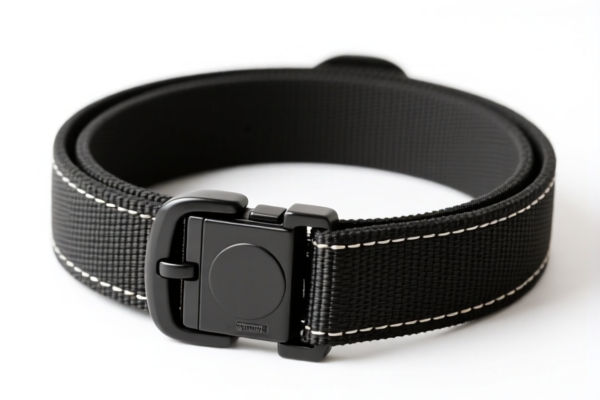
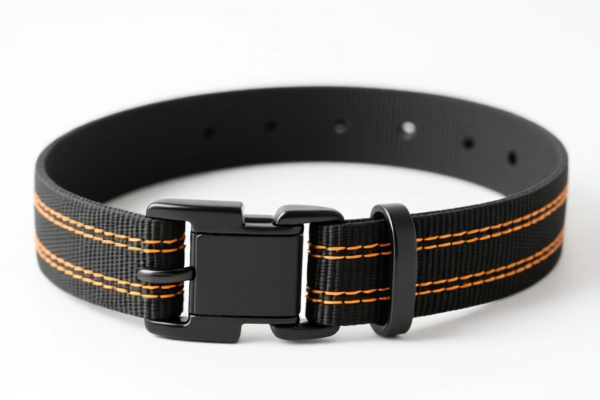
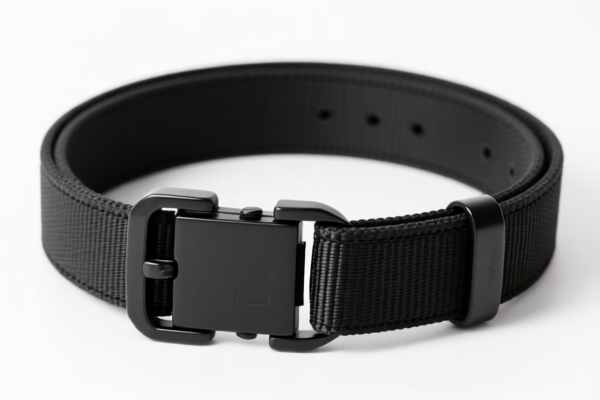
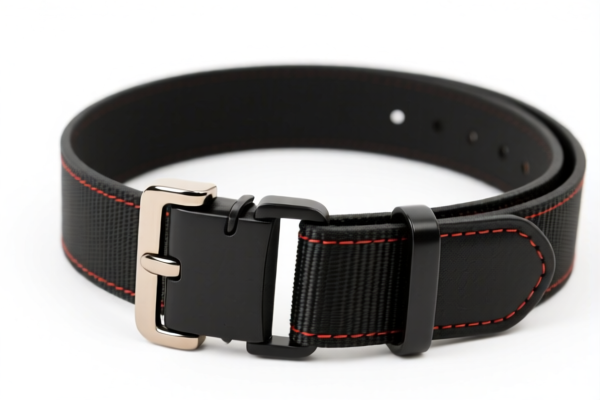
AI Analysis
🧗 Anti-Slip Strap (Resistance Training Bands / Stabilizers)
🌐 HS Code Reference & Customs Clearance Guide | 2026 Latest Tariff Analysis | Professional Clearance Strategy
📌 Part 1: Product Definition & Classification: What is an "Anti-Slip Strap"?
The term "Anti-Slip Strap" is a broad functional description, not a precise technical term. In international trade, its classification depends entirely on its material structure and intended use. It typically falls into one of three categories: 1. Woven/Rubber Fitness Accessories: Elastic bands used for resistance training or gym stabilization. 2. Garment Accessories: Non-elastic or semi-elastic straps attached to clothing (e.g., yoga pants, athletic wear) to prevent slipping. 3. Sports Equipment Components: Parts of larger sports apparatus.
⚠️ Key Distinction Point:
- If it is a separate elastic band sold for gym use → Likely Chapter 95 (Sports Equipment).
- If it is knitted/hooked fabric attached to garments → Likely Chapter 61 (Knitted Apparel Accessories).
- If it is a woven belt-like item used as a fitness aid → Likely Chapter 62 (Non-Knitted Apparel Accessories).
- If it is considered a general exercise aid (e.g., balance trainer) → Likely Chapter 95 (Generic Sports Gear).
📦 Part 2: HS Code Classification Details (2026 Latest Tariff Cross-Reference)
Based on the provided data, here are the four most likely HS Codes for "Anti-Slip Straps," along with their specific tax implications.
| HS Code | Product Description | Application Scenario | Material/Structure |
|---|---|---|---|
9506.99.60.80 |
Sports appliances & equipment (Anti-slip strap) | Gym resistance bands, balance stabilizers | Fabric or Rubber |
9506.91.00.30 |
General exercise training aids | Fitness accessories, stabilizers | Fabric or Synthetic |
6212.20.00.10 |
Anti-slip belt (Apparel Accessory) | Fashion belts, non-stretch waistbands | Cotton or Other Material |
6117.80.95.70 |
Other made-up clothing accessories | Knitted/Hooked straps, athletic wear parts | Non-cotton, Non-wool |
6117.80.85.00 |
Knitted/Hooked clothing accessories | Knitted elastic bands, sports wear attachments | Knitted or Crocheted |
🔍 Critical Note:
- Chapter 95 items are classified as Sports Equipment, which generally has lower base tariffs but may attract specific additional duties depending on the origin.
- Chapter 61/62 items are classified as Apparel Accessories, which often have higher base tariffs due to textile regulations.
- Misclassification Risk: Declaring a rubber fitness band as a "Clothing Accessory" (Ch. 61/62) may lead to disputes. Conversely, declaring a cotton waistband as "Sports Equipment" may be rejected if it doesn't meet the definition of a sports appliance.
💰 Part 3: 2026 Latest Tariff Rate Breakdown (Including Additional Taxes)
✅ Applicable Country: United States (US)
✅ Origin: China (CN)
✅ Effective Date: 2025-11-10 onwards (for subsequent imports)
🎯 1. 9506.99.60.80 — Sports Appliances & Equipment (Likely Low Base)
| Item | Content |
|---|---|
| Base Tariff | 4.0% |
| Additional Tariff (Sec 301) | +7.5% |
| IEEPA Additional Tariff | +10% (Targeting China/HK products) |
| Special Metal Tariff | +50% (If made of Steel, Aluminum, or Copper) |
| Total Tariff Rate | 21.5% (Standard) 71.5% (If Steel/Al/Cu components) |
| Tax Calculation | CIF Value × 21.5% |
| De Minimis Exemption | ❌ Not Applicable (Subject to strict inspection) |
| Legal Path | USITC:9506.99.60.80 → FOOTNOTE:50% (if metal) |
📌 Interpretation:
- This code offers the lowest base tariff (4.0%).
- However, if the strap contains metal buckles, clips, or frames, the 50% additional tariff on steel/aluminum/copper may apply to the metal components, significantly increasing costs.
- Best for: Rubber bands, pure fabric bands without metal parts.
🎯 2. 9506.91.00.30 — General Exercise Training Aids
| Item | Content |
|---|---|
| Base Tariff | 4.6% |
| Additional Tariff (Sec 301) | +7.5% |
| IEEPA Additional Tariff | +10% (Targeting China/HK products) |
| Special Metal Tariff | +50% (If made of Steel, Aluminum, or Copper) |
| Total Tariff Rate | 22.1% (Standard) 72.1% (If Steel/Al/Cu components) |
| Tax Calculation | CIF Value × 22.1% |
| De Minimis Exemption | ❌ Not Applicable |
| Legal Path | USITC:9506.91.00.30 → FOOTNOTE:50% (if metal) |
📌 Interpretation:
- Very similar to9506.99.60.80but categorized under "General Training Aids."
- Use this if the product is marketed as a "stabilizer" or "balance aid" rather than a specific "sports appliance."
- Caution: The 50% metal tariff is a major cost driver if the strap has metal hardware.
🎯 3. 6212.20.00.10 — Anti-Slip Belt (Non-Knitted Apparel Accessory)
| Item | Content |
|---|---|
| Base Tariff | 20.0% |
| Additional Tariff (Sec 301) | +7.5% |
| IEEPA Additional Tariff | +10% (Targeting China/HK products) |
| Total Tariff Rate | 37.5% |
| Tax Calculation | CIF Value × 37.5% |
| De Minimis Exemption | ❌ Not Applicable |
| Legal Path | USITC:6212.20.00.10 |
📌 Interpretation:
- This code assumes the item is a belt-like accessory made of cotton or other woven materials.
- Higher Base Tariff (20%) makes this more expensive than Chapter 95 options.
- Best for: Cotton waistbands, non-elastic fashion straps, or belts sold separately as fashion items.
🎯 4. 6117.80.95.70 & 6117.80.85.00 — Knitted/Crocheted Apparel Accessories
| Item | Content |
|---|---|
| Base Tariff | 14.6% |
| Additional Tariff (Sec 301) | +7.5% |
| IEEPA Additional Tariff | +10% (Targeting China/HK products) |
| Total Tariff Rate | 32.1% |
| Tax Calculation | CIF Value × 32.1% |
| De Minimis Exemption | ❌ Not Applicable |
| Legal Path | USITC:6117.80.95.70 / 6117.80.85.00 |
📌 Interpretation:
- These codes apply to knitted or crocheted items that are not cotton (for95.70) or are specific knitted accessories (85.00).
- Lower Base Tariff (14.6%) compared to non-knitted belts, but still higher than Chapter 95.
- Best for: Elastic bands attached to yoga pants, knitted stabilizer cuffs, or fabric straps that are part of a garment ensemble.
🛠️ Part 4: Customs Clearance Practical Advice (Avoid Pitfalls)
✅ 1. Documentation Checklist (Mandatory)
| Document | Required? | Description |
|---|---|---|
| ✅ Product Specification Sheet | ✔️ | Must specify: Material (Rubber, Cotton, Spandex), Length, Width, Intended Use (Gym vs. Fashion). |
| ✅ Product Photos | ✔️ | Clear images of the strap, labels, and any hardware (buckles, clips). |
| ✅ Commercial Invoice | ✔️ | Describe item accurately: e.g., "Rubber Resistance Band for Gym Use" vs. "Cotton Waist Belt." |
| ✅ Certificate of Origin (CO) | ✔️ | Essential for proving Chinese origin to apply correct additional tariffs. |
| ✅ Third-Party Test Report | ✔️ | If claiming "Sports Equipment," lab tests proving fitness use may be requested. |
✅ 2. Classification Strategy (Key Tips)
🔥 "Material & Use Determine Code! Don't Guess!"
| Scenario | Recommended HS Code | Reason |
|---|---|---|
| Pure Rubber/Elastic Band for gym | 9506.99.60.80 or 9506.91.00.30 |
Classified as sports equipment, lowest base tariff (4-4.6%). |
| Fabric Strap with Metal Buckle | 9506.99.60.80 ⚠️ Watch for Metal Tax |
Base tariff is low, but 50% tariff may apply to metal parts. Consider splitting declaration if possible. |
| Knitted Elastic Band for clothes | 6117.80.85.00 |
Knitted structure defines it as apparel accessory. |
| Cotton/Woven Belt for fashion | 6212.20.00.10 |
Non-knitted, belt-like form factor. |
| Strap Attached to Garment | Same HS as Garment | Do not declare separately if sold as one unit. |
✅ 3. Special Handling for Metal Components
| Issue | Solution |
|---|---|
| Metal Buckles/Clips | If the strap has significant metal content, the 50% additional tariff on steel/aluminum/copper may apply. Strategy: Declare the metal parts separately if feasible, or ensure the product is marketed as "non-metal" (e.g., plastic clips) to avoid this high rate. |
| Mixed Materials | If the strap is 90% rubber and 10% metal, customs may still apply the metal tariff to the entire item. Strategy: Use plastic or coated metal hardware to avoid triggering the 50% rule. |
✅ 4. Common Errors & Penalties
❌ Error 1: Declaring a rubber resistance band as "Clothing Accessory" (6117 or 6212).
👉 Consequence: Higher base tariff (14.6-20%) instead of 4-4.6%. Unnecessary cost increase of ~18%.
❌ Error 2: Declaring a cotton waistband as "Sports Equipment" (9506).
👉 Consequence: Customs may reject the classification, delay shipment, and assess penalties for misdeclaration.
❌ Error 3: Ignoring the 50% Metal Tariff.
👉 Consequence: If your strap has steel buckles, you could pay 71.5% instead of 21.5%. Huge profit margin erasure.
✅ Correct Approach:
"Rubber Anti-Slip Resistance Band, for Gym Use, No Metal Parts, 150cm Length" →
9506.99.60.80
🌍 Part 5: Global Market Comparison (2026 Update)
| Country/Region | Recommended HS Code | Total Tariff (China Origin) | Key Certification | Remarks |
|---|---|---|---|---|
| 🇺🇸 USA | 9506.99.60.80 |
21.5% (No Metal) 71.5% (With Metal) |
None required for basic import | Highest additional tariffs; Metal content is critical. |
| 🇨🇳 China | 9506.99.60.80 |
~10-15% (Import Duty) | CCC (if applicable) | Lower additional taxes compared to US. |
| 🇪🇺 EU | 9506.99.60.80 |
~4-7% | CE (if safety-critical) | No Section 301/IEEPA style tariffs. |
| 🇦🇺 Australia | 9506.99.60.80 |
~5% | ACMA (if electronic) | Moderate tariffs. |
| 🇯🇵 Japan | 9506.99.60.80 |
~5-10% | PSE (if electronic) | Stable tariff environment. |
📌 Conclusion:
- The US market is the most complex due to additional tariffs (301 + IEEPA + Metal).
- China-origin goods face significant cost pressures in the US.
- Non-knitted/Sports Equipment (9506) is generally the most tax-efficient classification for anti-slip straps, provided they do not contain significant metal parts.
📌 Part 6: Final Clearance Strategy & Recommendations
🎯 Strategic Recommendations
- Optimize for Chapter 95: If your product is a standalone fitness strap, classify under
9506to benefit from the 4-4.6% base tariff. - Avoid Metal: Use plastic, coated, or rubberized buckles to avoid the 50% additional metal tariff. This can save you 30-50% in total duties.
- Precise Description: In your commercial invoice, clearly state:
> "Elastic Rubber Anti-Slip Strap for Gym Resistance Training, No Metal Components, 100% Natural Rubber."
This supports the9506classification and mitigates metal tax risks. - Knitted vs. Woven: If the strap is knitted (e.g., for yoga pants), use
6117. If woven (e.g., cotton belt), use6212. Misclassifying knitted as woven can lead to delays. - Pre-Ruling: For large shipments, consider applying for a Binding Tariff Information (BTI) or Pre-Ruling from US Customs to confirm the HS Code and tariff rate before shipping.
🎯 Conclusion: Precision Classification, Maximized Profit
🎯 Remember the Golden Rules:
🔹 "Sports Equipment (9506) is King for Cost"
🔹 "Metal Buckles are the Enemy (50% Tax!)"
🔹 "Knitted = 6117, Woven = 6212"
🔹 "Describe Accurately to Avoid Penalties"
📌 Pro Tip:
If you are exporting to the US, audit your bill of materials for metal content. A simple switch from steel clips to plastic clips can reduce your total tariff from 71.5% to 21.5%, preserving your profit margin.
📣 Immediate Action:
📞 Consult with a licensed customs broker.
📤 Provide detailed product photos and material composition.
🚀 Secure the lowest possible tariff through precise classification!
✨ Professional Clearance Starts with Accurate Classification!
💼 Every percentage point saved is pure profit!
Customer Reviews
About HS Code Classification
The Harmonized System (HS) is an internationally standardized nomenclature developed by the World Customs Organization (WCO) to classify traded products. Over 200 countries use the HS system as the basis for customs tariffs, trade statistics, and import/export regulations.
Each HS code follows a hierarchical structure:
- Chapter (2 digits) — Broad category of goods (e.g., Chapter 84: Machinery and Mechanical Appliances)
- Heading (4 digits) — More specific grouping within the chapter
- Subheading (6 digits) — Internationally standardized breakdown, used by all WCO member countries
- National subdivisions (8-10 digits) — Country-specific extensions for further classification, such as US HTSUS 10-digit codes
Correct HS code classification is essential for smooth customs clearance, accurate duty payment, and compliance with trade regulations. Misclassification can lead to customs delays, overpayment of duties, or penalties.
When importing from CN to US, the applicable tariff rates may include:
- Most-Favored-Nation (MFN) rate — The standard duty rate applied to WTO members
- General rate — Applied to countries without trade agreements
- Trade remedy duties — Additional tariffs such as Section 301 (anti-dumping), Section 232 (national security), or countervailing duties
The information provided on this page is for reference purposes only. For official classification, please consult with your local customs authority or a licensed customs broker.