Anti static Cardboard Support
CN → US| HS Code | Tariff Rate | Origin | Destination | Doc |
|---|---|---|---|---|
| 4819600000 | 35.0% | CN | US | Official Doc |
| 4823908680 | 35.0% | CN | US | Official Doc |
| 4819504040 | 35.0% | CN | US | Official Doc |
Product Images
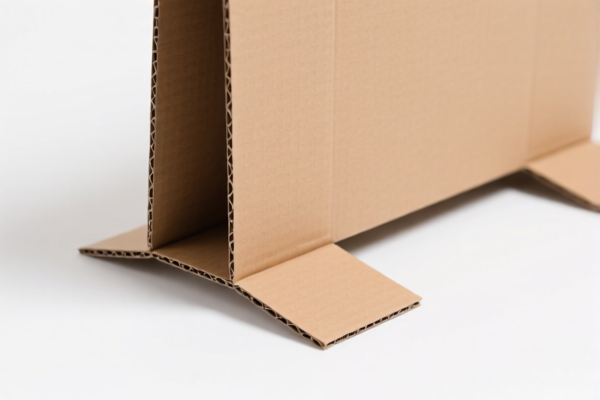
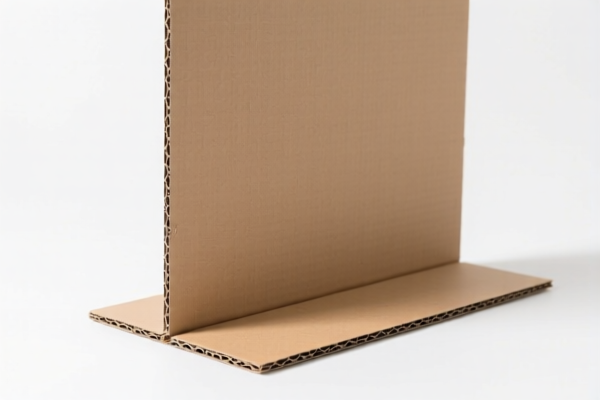
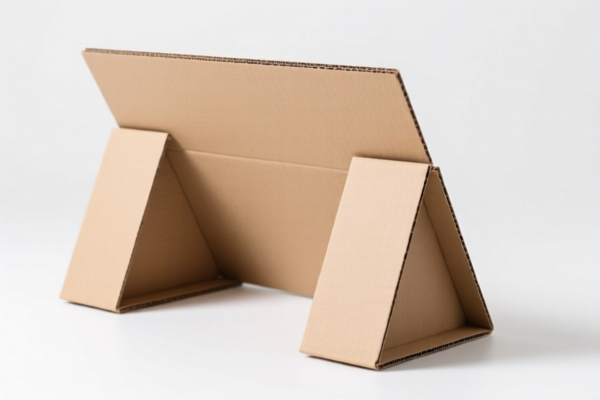
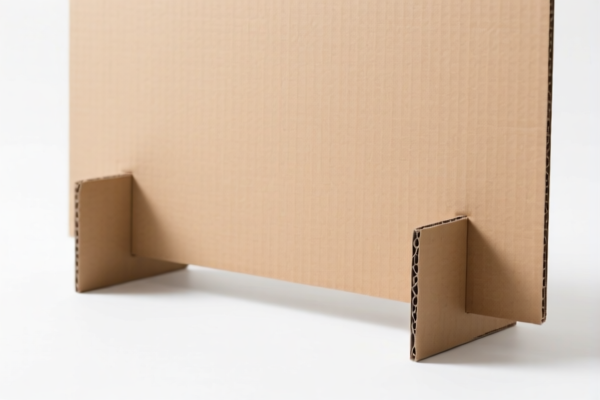
AI Analysis
📦 Anti-Static Cardboard Support (Paperboard Components)
🌐 HS Code Reference & Customs Clearance Guide | 2026 Latest Tariff Analysis | Professional Classification Strategy
📌 I. Product Definition & Classification: What is an "Anti-Static Cardboard Support"?
An Anti-Static Cardboard Support is a specialized packaging or structural component made primarily of paperboard/paper. Its key functional characteristic is anti-static properties (ESD protection), often used in electronics packaging, archival storage, or industrial assembly lines to prevent electrostatic discharge damage.
In international trade, this product is categorized based on its material (paper/paperboard) and its form/function (support/structural piece/packaging accessory). Since it is not a finished container itself but a component, it often falls under "other paper articles" or "packaging accessories."
⚠️ Key Classification Logic:
- If viewed as part of a packaging system (e.g., inside a box): It may be classified under packaging accessories (4819.50).
- If viewed as a generic paper product used for support: It may be classified under other paper articles (4823.90).
- If viewed as a specific archival/storage component: It may be classified under paper file boxes/supports (4819.60).
📊 II. HS Code Classification Details (2026 Latest Tariff Authority Reference)
The provided data indicates three possible HS Codes for this product, all sharing the same total tax rate but with different descriptive justifications.
| HS Code | Product Description & Justification | Application Scenario | Material/Function Match |
|---|---|---|---|
4819.60.00.00 |
Paperboard Support Pieces (Anti-static): Classified as file box/classification products. Material: Paperboard. Form: Support piece. No material or usage conflict. | Archival storage, document organization, ESD-safe file dividers. | ✅ Paperboard, Structural Support |
4823.90.86.80 |
Other Paper Products: Classified as other paper products. Material: Paper/Paperboard. Form: Support piece. Fits default matching rule for spare parts/accessories. | General industrial packaging support, custom-shaped paper inserts, generic ESD spacers. | ✅ Paper/Paperboard, Generic Support |
4819.50.40.40 |
Packaging Containers: Classified as other components/parts of packaging containers. Material: Paperboard. Form: Support piece. Fits fallback logic for packaging accessories. | Inserts inside shipping boxes, protective dividers in pallets, ESD packaging internals. | ✅ Paperboard, Packaging Accessory |
🔍 Important Note:
- All three codes result in the same total tax rate of 35% for US imports from China.
- The choice of HS Code may depend on the specific end-use or customs officer’s interpretation of whether the item is a "file box accessory" (4819.60), "general paper product" (4823.90), or "packaging part" (4819.50).
- Anti-static feature does not change the material classification (still paper) but may require additional documentation to prove the feature if requested.
💰 III. 2026 Latest Tariff Rate Breakdown (Including Surcharges & Policy Add-ons)
✅ Applicable Country: United States (US)
✅ Origin: China (CN)
✅ Effective Date: From November 10, 2025 (including subsequent imports)
🎯 1. All Listed HS Codes (4819.60.00.00, 4823.90.86.80, 4819.50.40.40)
| Item | Content |
|---|---|
| Base Tariff Rate | 0.0% (ad valorem) |
| Section 301 Supplementary Tariff | +25.0% (Under USITC Footnote for Chinese goods) |
| Section 122 Supplementary Tariff | +10.0% (Specific clause applied to certain paper products/accessories from China) |
| Total Tax Rate | 35.0% |
| Tax Calculation | CIF Value × 35% |
| De Minimis Exemption Eligible? | ❌ No (High tariff rate exceeds de minimis thresholds for duty-free entry; Section 301 and 122 duties are fully applicable) |
| Legal Authority Path | USITC:4819/4823 → Section 301: +25% → Section 122: +10% |
📌 Explanation:
- The 25% is the standard Section 301 tariff on many Chinese goods, including paper products.
- The 10% is a specific "Section 122" tariff, which may apply to certain packaging or paper support items deemed sensitive or strategic.
- Combined 35% is a significant cost factor. Businesses must account for this in pricing and supply chain decisions.
- Unlike some low-duty items, no de minimis exemption applies here due to the high combined rate.
🛠️ IV. Customs Clearance Practical Advice (Avoiding Pitfalls)
✅ 1. Required Documentation Checklist (Mandatory)
| Document | Required | Description |
|---|---|---|
| ✅ Product Specification Sheet | ✔️ | Must clearly state: Material (Paperboard), Dimensions, Weight, and Anti-Static Feature (e.g., surface resistivity value). |
| ✅ Material Declaration | ✔️ | Confirm no plastic coating or metal components that would change classification (e.g., to plastics or metal parts). |
| ✅ Commercial Invoice | ✔️ | Clearly describe as "Anti-Static Cardboard Support" or "Paperboard Packaging Insert." Avoid vague terms like "Cardboard." |
| ✅ Packing List | ✔️ | Show unit count and total weight. Ensure consistency with invoice. |
| ✅ Certificate of Origin (CO) | ✔️ | Proves Chinese origin, triggering the 35% tariff. If re-exported, ensure no "substantial transformation" occurred. |
| ✅ Third-Party Test Report (Optional but Recommended) | ✔️ | Report confirming anti-static properties (e.g., <10^9 ohms surface resistivity). Helps if customs questions the "anti-static" claim. |
✅ 2. Declaration Tips (Key Strategy)
🔥 “Be Specific, Be Accurate: Name it Right, Avoid Delays!”
| Scenario | Correct Declaration | Incorrect Practice |
|---|---|---|
| For Packaging Use | 4819.50.40.40 - "Cardboard packaging support/insert, anti-static" |
Describe as "Cardboard Box" → Incorrect classification |
| For Archival Use | 4819.60.00.00 - "Anti-static paperboard file support" |
Describe as "Plastic Divider" → Misclassification |
| Generic Use | 4823.90.86.80 - "Other paperboard support, anti-static" |
Describe as "Other Paper Products" without specifying "support" → Ambiguity |
📌 Note:
- If the product is custom-cut into specific shapes for electronics, lean towards 4823.90.86.80 (other paper products).
- If it’s part of a file storage system, use 4819.60.00.00.
- If it’s purely a shipping box insert, use 4819.50.40.40.
✅ 3. Special Cases & Risk Management
| Scenario | Handling Advice |
|---|---|
| Anti-Static Certification | If customs questions the "anti-static" claim, provide a test report. Failure to prove it may lead to reclassification or penalties. |
| Coated Paperboard | If the cardboard has a plastic or metallic anti-static coating, ensure no significant change in material composition. If >50% plastic by weight, classification may shift to plastics (Chapter 39), changing the tariff. |
| Small Quantities | Even for small shipments, the 35% tariff applies. No de minimis exemption. Plan accordingly. |
| Re-export from China | If the product is made in China but shipped from a third country, ensure the country of origin remains China. Otherwise, tariff rates may differ. |
🌍 V. Global Market Comparison (2026 Latest)
| Country/Region | Recommended HS Code | Tariff Rate | Certification Requirements | Notes |
|---|---|---|---|---|
| 🇺🇸 USA | 4819.50.40.40 / 4819.60.00.00 / 4823.90.86.80 |
35% (0% base + 25% Sec 301 + 10% Sec 122) | None specific for paper, but anti-static proof recommended | High tariff impact; plan accordingly |
| 🇨🇳 China | 4819.60.00.00 / 4823.90.86.80 |
0-5% (Domestic trade) | None | No export duty for paper products |
| 🇪🇺 EU | 4819.60.00 / 4823.90.80 |
0-6.5% | CE (if applicable for ESD standards) | No Section 301/122 equivalent |
| 🇯🇵 Japan | 4819.60.00 / 4823.90.80 |
0-3% | PSE (if electrical, but paper usually exempt) | Low tariffs for paper products |
| 🇬🇧 UK | 4819.60.00 / 4823.90.80 |
0-6.5% | UKCA (if applicable) | Post-Brexit rules similar to EU |
📌 Conclusion:
- USA has the highest tariff burden due to Section 301 and Section 122.
- EU, Japan, and UK have significantly lower or zero tariffs on similar paper products.
- For US-bound goods, cost optimization strategies (e.g., supply chain relocation to Vietnam/Mexico) should be evaluated to avoid the 35% tariff.
📌 VI. Common Mistakes & Pitfalls (Lessons Learned)
❌ Mistake 1: Declaring as "Cardboard Box" instead of "Support/Insert"
👉 Consequence: Misclassification → Potential penalties + delays in clearance.
❌ Mistake 2: Ignoring the "Anti-Static" feature in documentation
👉 Consequence: Customs may question the product’s nature, leading to additional inspections or reclassification.
❌ Mistake 3: Assuming de minimis exemption applies
👉 Consequence: Small shipments still incur 35% duty → Unexpected costs.
❌ Mistake 4: Using vague descriptions like "Paper Parts"
👉 Consequence: Increased risk of audit or request for further information → Delays.
✅ Correct Approach:
"Anti-Static Cardboard Support, Model XYZ, Paperboard Material, Surface Resistivity <10^9 Ohms, for Electronics Packaging, HS Code: 4819.50.40.40"
🎯 VII. Conclusion: Professional Classification Saves Money!
🎯 Remember the Key Takeaways:
🔹 "Paper + Support = 35% Total Tax in USA"
🔹 "Anti-Static Feature Must Be Documented"
🔹 "Choose HS Code Based on End-Use: Packaging (4819.50), File (4819.60), or General (4823.90)"
📌 Pro Tip:
If your cardboard supports are originally manufactured in China but assembled or significantly transformed in Vietnam or Mexico, you may qualify for preferential tariffs under USMCA or other FTAs. Consider supply chain restructuring to mitigate the 35% tariff.
📣 Immediate Action:
📞 Consult a Customs Broker + Provide Product Specs & Anti-Static Test Report
🚀 Optimize HS Code Selection to ensure accurate classification and avoid delays.
💡 Evaluate Supply Chain Alternatives to reduce tariff impact for US-bound goods.
✨ Professional Customs Clearance Starts with Accurate Classification!
💼 Every Percentage Point of Tariff Matters!
Customer Reviews
About HS Code Classification
The Harmonized System (HS) is an internationally standardized nomenclature developed by the World Customs Organization (WCO) to classify traded products. Over 200 countries use the HS system as the basis for customs tariffs, trade statistics, and import/export regulations.
Each HS code follows a hierarchical structure:
- Chapter (2 digits) — Broad category of goods (e.g., Chapter 84: Machinery and Mechanical Appliances)
- Heading (4 digits) — More specific grouping within the chapter
- Subheading (6 digits) — Internationally standardized breakdown, used by all WCO member countries
- National subdivisions (8-10 digits) — Country-specific extensions for further classification, such as US HTSUS 10-digit codes
Correct HS code classification is essential for smooth customs clearance, accurate duty payment, and compliance with trade regulations. Misclassification can lead to customs delays, overpayment of duties, or penalties.
When importing from CN to US, the applicable tariff rates may include:
- Most-Favored-Nation (MFN) rate — The standard duty rate applied to WTO members
- General rate — Applied to countries without trade agreements
- Trade remedy duties — Additional tariffs such as Section 301 (anti-dumping), Section 232 (national security), or countervailing duties
The information provided on this page is for reference purposes only. For official classification, please consult with your local customs authority or a licensed customs broker.