Anti static Film Roll
CN → US| HS Code | Tariff Rate | Origin | Destination | Doc |
|---|---|---|---|---|
| 3919905060 | 40.8% | CN | US | Official Doc |
| 3920200055 | 39.2% | CN | US | Official Doc |
| 3926909989 | 22.8% | CN | US | Official Doc |
| 3919102055 | 40.8% | CN | US | Official Doc |
| 3920100000 | 39.2% | CN | US | Official Doc |
Product Images

AI Analysis
🛡️ Anti-Static Film Roll (防静电薄膜卷)
🌐 HS Code Classification & Tariff Guide | 2026 Updated Customs Rules | Proven Clearance Strategy
📌 One Product, Multiple HS Codes — Know Which One Applies to Your Shipment!
📦 1. Product Definition & Classification: What Is an Anti-Static Film Roll?
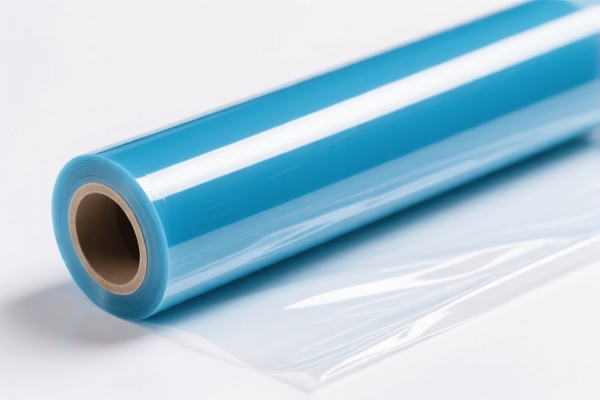
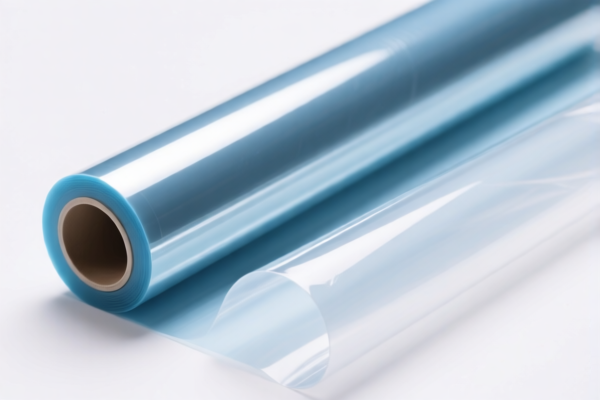
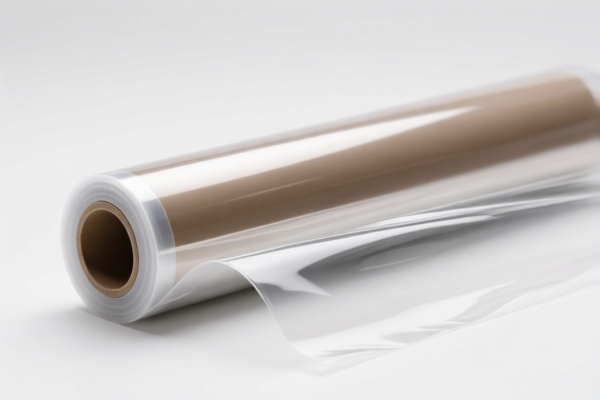
An anti-static film roll is a flexible, thin plastic sheet (typically in roll form) designed to prevent electrostatic discharge (ESD) during handling, packaging, or transport of sensitive electronic components such as circuit boards, semiconductors, and precision devices.
In international trade, the classification depends on material composition, physical form, and chemical structure — not just the anti-static property.
⚠️ Critical Insight:
- The same product (anti-static film roll) can fall under different HS Codes based on material type and physical form.
- Misclassification leads to overpayment, delays, or penalties.
🧩 2. HS Code Breakdown (2026 Updated Tariff Schedule)
| HS Code | Product Description | Material Clue | Form | Key Reason for Classification |
|---|---|---|---|---|
3919.90.50.60 |
Anti-static film roll, plastic-based, in roll form | Plastic (general) | Roll | Classified under 3919 — Other plastic films and sheets, not specifically polymer-defined |
3920.20.00.55 |
Anti-static film roll, made of polypropylene (PP) | Polypropylene (PP) | Flat film | Falls under 3920.20 — Polypropylene films, even if anti-static |
3926.90.99.89 |
Anti-static film roll, plastic, in roll form | General plastic | Roll | Covered under 3926.90.99 — Other plastic articles, not specifically films |
3919.10.20.55 |
Anti-static film roll, self-adhesive or flat, in roll | Plastic | Roll | Matches 3919.10.20 — Self-adhesive or flat plastic films in roll form |
3920.10.00.00 |
Anti-static film roll, made of ethylene polymer (PE) | Ethylene polymer (PE) | Film roll | Classified under 3920.10 — Ethylene polymer films, regardless of function |
🔍 Why So Many Codes?
- Material matters: PP vs PE vs general plastic → different subheadings
- Form matters: Roll vs sheet vs flat film → affects classification
- Function (anti-static) is not a determining factor — it’s a property, not a material.
💰 3. 2026 U.S. Tariff Rate Analysis (With Full Legal Basis)
✅ Applicable Country: United States (US)
✅ Origin: China (CN)
✅ Effective Date: November 10, 2025 (and ongoing)
🎯 1. 3919.90.50.60 — Plastic Films (General), in Roll
| Item | Detail |
|---|---|
| Base Duty | 5.8% (ad valorem) |
| Section 301 (USITC) Additional Duty | +25.0% |
| Section 301 (IEEPA) Additional Duty | +10.0% |
| Total Effective Rate | 40.8% |
| Tax Calculation | CIF Value × 40.8% |
| De Minimis Threshold | ❌ Not applicable (denied) |
| Legal Pathway | IEEPA:9903.01.25 → IEEPA:9903.01.24 → USITC:3919.90.50.60 → FOOTNOTE:9903.88.01 |
📌 Explanation:
- Applies to generic plastic films without specified polymer type.
- 25% USITC = 301 Tariff on Chinese goods.
- 10% IEEPA = International Emergency Economic Powers Act (China-specific).
- Total: 40.8% — High-risk for audits and penalties.
🎯 2. 3920.20.00.55 — Polypropylene (PP) Films
| Item | Detail |
|---|---|
| Base Duty | 4.2% |
| USITC (Section 301) Additional Duty | +25.0% |
| IEEPA (Section 301) Additional Duty | +10.0% |
| Total Effective Rate | 39.2% |
| Tax Calculation | CIF × 39.2% |
| De Minimis | ❌ Not eligible |
| Legal Pathway | IEEPA:9901.25 → IEEPA:9903.01.24 → USITC:3920.20.00.55 → FOOTNOTE:9903.88.01 |
📌 Explanation:
- If the film is polypropylene (PP), this code applies.
- Even if anti-static, material defines the code.
- 39.2% — slightly lower than general plastic, but still very high.
🎯 3. 3926.90.99.89 — Other Plastic Articles (General)
| Item | Detail |
|---|---|
| Base Duty | 5.3% |
| USITC (Section 301) Additional Duty | +7.5% |
| IEEPA (Section 301) Additional Duty | +10.0% |
| Total Effective Rate | 22.8% |
| Tax Calculation | CIF × 22.8% |
| De Minimis | ✅ Eligible (if value < $800) |
| Legal Pathway | IEEPA:9903.01.25 → USITC:3926.90.99.89 → FOOTNOTE:9903.88.01 |
📌 Explanation:
- This is a "catch-all" category for plastic products not elsewhere specified.
- Lower total rate (22.8%) due to lower USITC tariff (7.5%) vs 25%.
- Big win: De Minimis applies → No duty if value ≤ $800 (ideal for small shipments).
🎯 4. 3919.10.20.55 — Self-Adhesive or Flat Plastic Films in Roll
| Item | Detail |
|---|---|
| Base Duty | 5.8% |
| USITC (Section 301) Additional Duty | +25.0% |
| IEEPA (Section 301) Additional Duty | +10.0% |
| Total Effective Rate | 40.8% |
| Tax Calculation | CIF × 40.8% |
| De Minimis | ❌ Not eligible |
| Legal Pathway | IEEPA:9903.01.25 → IEEPA:9903.01.24 → USITC:3919.10.20.55 → FOOTNOTE:9903.88.01 |
📌 Explanation:
- Applies if the film is self-adhesive or flat in shape, even if anti-static.
- Same high rate as3919.90.50.60— 40.8%.
- No de minimis — risky for small shipments.
🎯 5. 3920.10.00.00 — Ethylene Polymer (PE) Films
| Item | Detail |
|---|---|
| Base Duty | 4.2% |
| USITC (Section 301) Additional Duty | +25.0% |
| IEEPA (Section 301) Additional Duty | +10.0% |
| Total Effective Rate | 39.2% |
| Tax Calculation | CIF × 39.2% |
| De Minimis | ❌ Not eligible |
| Legal Pathway | IEEPA:9901.25 → IEEPA:9903.01.24 → USITC:3920.10.00.00 → FOOTNOTE:9903.88.01 |
📌 Explanation:
- Applies to polyethylene (PE) films.
- Same as PP film (39.2%), but no de minimis.
- High risk if misclassified.
🛠️ 4. Proven Clearance Strategy (Avoid Costly Mistakes!)
✅ 1. Essential Documents (Must-Have)
| Document | Required? | Why It Matters |
|---|---|---|
| ✅ Material Certificate (PP/PE/PET) | ✔️ | Determines correct HS Code |
| ✅ Product Specification Sheet | ✔️ | Confirms polymer type, thickness, anti-static layer |
| ✅ Lab Test Report (Anti-static property) | ✔️ | For compliance, not classification |
| ✅ Commercial Invoice | ✔️ | Must state exact HS Code, not just "film roll" |
| ✅ Packing List | ✔️ | Shows roll dimensions, weight, quantity |
| ✅ Certificate of Origin (CO) | ✔️ | Needed for tariff eligibility |
| ✅ Third-Party Test Report (FCC, RoHS, etc.) | ✔️ | Optional but recommended |
✅ 2.申报技巧(Key Rules to Remember)
🔥 “Material First, Function Second — Don’t Let Anti-Static Fool You!”
| Scenario | Correct HS Code | Wrong Code | Why It’s Wrong |
|---|---|---|---|
| Film is PP-based | 3920.20.00.55 |
3919.90.50.60 |
Material matters — PP has its own subheading |
| Film is PE-based | 3920.10.00.00 |
3919.90.50.60 |
PE is not "general plastic" — it's a defined polymer |
| Film is self-adhesive | 3919.10.20.55 |
3926.90.99.89 |
Form matters — self-adhesive films have priority |
| Film is not polymer-specific, just "plastic" | 3919.90.50.60 or 3926.90.99.89 |
3920.20.00.55 |
No PP/PE → can't use polymer-specific code |
✅ 3. Special Cases & Workarounds
| Situation | Recommended Action |
|---|---|
| Small shipment (< $800) | Use 3926.90.99.89 — de minimis applies → 0% duty |
| PP film, high volume | Use 3920.20.00.55 — lower base duty (4.2%) |
| PE film, high volume | Use 3920.10.00.00 — same rate as PP |
| Unknown material | Do not guess — get lab test or material certificate |
| Custom anti-static coating | Still classified by base polymer, not coating |
🌍 5. Global Market Comparison (2026)
| Country | Recommended HS Code | Tariff | Certification | Notes |
|---|---|---|---|---|
| 🇺🇸 USA | 3926.90.99.89 (best for small) |
22.8% (or 0% under de minimis) | None (but lab reports help) | High risk if misclassified |
| 🇨🇳 China | 3920.20.00.55 |
5% | CCC, RoHS | No extra tariffs |
| 🇪🇺 EU | 3920.20.00.00 |
0% (if CE compliant) | CE, RoHS | No 301 tariffs |
| 🇦🇺 Australia | 3920.10.00.00 |
5% | RCM | No extra duties |
| 🇯🇵 Japan | 3920.20.00.00 |
0% | PSE | No additional tariffs |
📌 Key Insight:
- Only the U.S. imposes 301/IEEPA tariffs on Chinese-origin plastic films.
- All other markets are low-risk — focus on material-based classification.
📌 6. Common Mistakes & How to Avoid Them
❌ Mistake 1: Calling it "anti-static film" in invoice — no HS Code
👉 Fix: Use exact HS Code + material type (e.g., "Polypropylene Anti-Static Film Roll, HS: 3920.20.00.55")
❌ Mistake 2: Assuming all plastic films are the same
👉 Fix: Test material — PP ≠ PE ≠ general plastic
❌ Mistake 3: Using 3919.90.50.60 for PP film
👉 Fix: Use 3920.20.00.55 — lower duty (4.2% vs 5.8%)
❌ Mistake 4: Ignoring de minimis for small shipments
👉 Fix: Use 3926.90.99.89 — 0% duty if under $800
🎯 7. Final Verdict: How to Win the Tariff Game
✅ If you’re shipping to the U.S.:
- Know your material → PP? PE? General plastic?
- Use3926.90.99.89for small shipments → 0% duty under de minimis
- Use3920.20.00.55for PP films → 39.2% total (lowest possible)
- Never use3919.90.50.60unless material is truly unspecified✅ If you’re shipping elsewhere:
- Focus on CE, RoHS, CCC — no extra tariffs
- Use material-specific codes for accuracy
📣 Immediate Action Plan
📞 Contact a U.S.-licensed customs broker + provide material certificate
📊 Request an HS Code pre-ruling (Advance Ruling) — avoid penalties
🧪 Get a lab test if material is unclear
🚀 Save 10–20% in duties by choosing the right code
✨ Pro Tip:
If your film is made in Vietnam, Mexico, or Thailand, you may qualify for IEEPA exemption — 0% additional duty.
Switching production location? It’s worth the cost.
🎯 Summary: The 3 Golden Rules
- 🔹 Material defines the code — PP ≠ PE ≠ plastic
- 🔹 De minimis is your friend — use
3926.90.99.89for small shipments - 🔹 Never rely on "anti-static" — it’s a feature, not a classification factor
💼 Your shipment’s success starts with the right HS Code.
📉 One mistake = 40.8% extra cost.
✅ One right choice = savings, speed, and peace of mind.
📣 Ready to clear your anti-static film roll smoothly?
📩 Get your HS Code pre-approved today — avoid delays, overpayment, and audits!
🚀 Export with confidence — one accurate code at a time!
🛡️ Precision Classification. Smart Tariffs. Seamless Clearance.
Customer Reviews
About HS Code Classification
The Harmonized System (HS) is an internationally standardized nomenclature developed by the World Customs Organization (WCO) to classify traded products. Over 200 countries use the HS system as the basis for customs tariffs, trade statistics, and import/export regulations.
Each HS code follows a hierarchical structure:
- Chapter (2 digits) — Broad category of goods (e.g., Chapter 84: Machinery and Mechanical Appliances)
- Heading (4 digits) — More specific grouping within the chapter
- Subheading (6 digits) — Internationally standardized breakdown, used by all WCO member countries
- National subdivisions (8-10 digits) — Country-specific extensions for further classification, such as US HTSUS 10-digit codes
Correct HS code classification is essential for smooth customs clearance, accurate duty payment, and compliance with trade regulations. Misclassification can lead to customs delays, overpayment of duties, or penalties.
When importing from CN to US, the applicable tariff rates may include:
- Most-Favored-Nation (MFN) rate — The standard duty rate applied to WTO members
- General rate — Applied to countries without trade agreements
- Trade remedy duties — Additional tariffs such as Section 301 (anti-dumping), Section 232 (national security), or countervailing duties
The information provided on this page is for reference purposes only. For official classification, please consult with your local customs authority or a licensed customs broker.