Anti static Label Paper
CN → US| HS Code | Tariff Rate | Origin | Destination | Doc |
|---|---|---|---|---|
| 3919905060 | 40.8% | CN | US | Official Doc |
| 3919102055 | 40.8% | CN | US | Official Doc |
| 3921905050 | 39.8% | CN | US | Official Doc |
| 3921190090 | 41.5% | CN | US | Official Doc |
| 3919905060 | 40.8% | CN | US | Official Doc |
Product Images
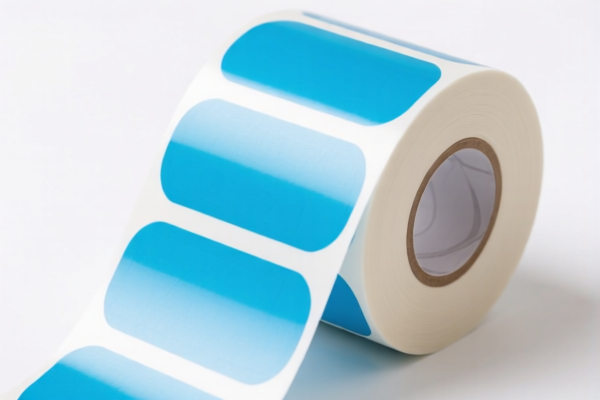
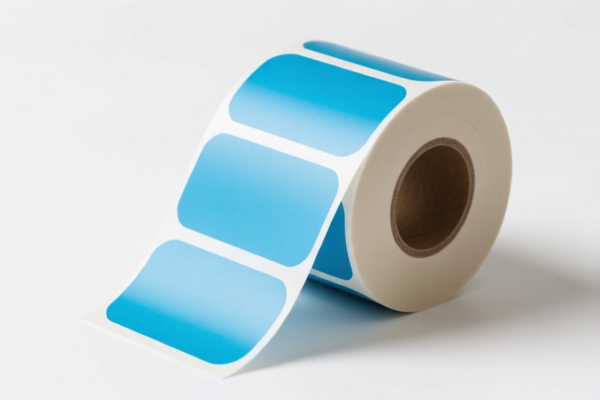
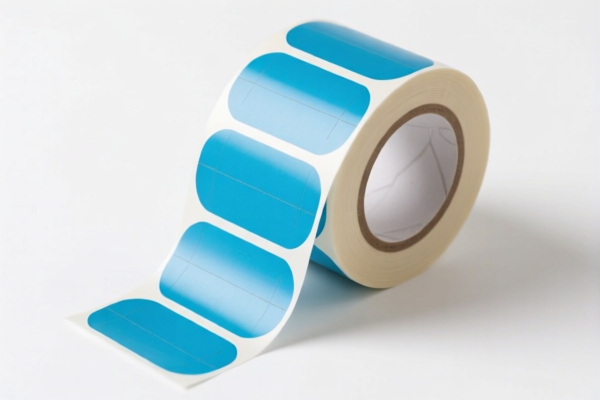

AI Analysis
🏷️ Anti-Static Label Paper (Anti-Static Stickers/Sheets)
🌐 HS Code Reference & Customs Clearance Guide | 2026 Latest Tariff Analysis | Professional Clearance Strategy for US Imports
📌 1. Product Definition & Classification: What is "Anti-Static Label Paper"?
Anti-static label paper, also known as ESD (Electrostatic Discharge) labels or static-dissipative self-adhesive films, is a specialized packaging and labeling material used in the electronics industry. Its primary function is to prevent the accumulation of static electricity, which can damage sensitive electronic components during manufacturing, storage, and transportation.
In international trade, these products are classified based on their physical form (self-adhesive sheets vs. sheets/films not self-adhesive) and material composition (plastic/polymer-based).
⚠️ Key Distinction Point:
- If the product is self-adhesive (comes with a backing and peel-off liner) → Classified under Heading 3919.
- If the product is non-adhesive (plain sheets, films, or strips used for lining or wrapping) → Classified under Heading 3921.
- Material: All items in are made of plastic/polymers.
📦 2. HS Code Classification Details (2026 Latest Tariff Authority)
Based on the provided , there are four distinct HS Code entries. Note that some codes are duplicated with identical tax details.
| HS Code | Product Description (from DATA) | Physical Form | Adhesive Type | Tax Category |
|---|---|---|---|---|
3919.90.50.60 |
Anti-static label, self-adhesive form, plastic material | Self-adhesive roll/sheet | ✅ Yes (Self-adhesive) | 40.8% |
3919.10.20.55 |
Anti-static label, flat shape, plastic self-adhesive | Flat self-adhesive sheet | ✅ Yes (Self-adhesive) | 40.8% |
3921.90.50.50 |
Anti-static label, sheet/film form, other plastic sheets/films | Non-adhesive Sheet/Film | ❌ No (General plastic sheet) | 39.8% |
3921.19.00.90 |
Anti-static label, strip/film form, other plastic-made | Non-adhesive Strip/Film | ❌ No (General plastic strip) | 41.5% |
🔍 Critical Note:
- Heading 3919: Covers products in rolls, sheets, or flat shapes, whether or not in rectangular (including square), of plastics, self-adhesive.
- Heading 3921: Covers other plates, sheets, film, foil, and strip, of plastics (not self-adhesive).
- Why the difference? If your anti-static product has an adhesive backing (like a sticker), it MUST go to 3919. If it is just a plain plastic sheet used for ESD protection without adhesive, it goes to 3921.
💰 3. 2026 Latest Tariff Rate Breakdown (Including Surcharges & Policy Add-ons)
✅ Applicable Country: United States (US)
✅ Country of Origin: China (CN)
✅ Effective Date: November 10, 2025 (and onwards)
🎯 1. 3919.90.50.60 & 3919.10.20.55 —— Self-Adhesive Anti-Static Labels
These two codes both carry the same total tax rate due to identical tariff structures.
| Item | Content |
|---|---|
| Base Tariff | 5.8% (Most Favored Nation rate) |
| Section 301 Surcharge | +25.0% (USITC Footnote 9903.88.01 / Trade Act Section 301) |
| IEEPA Surcharge (122 Clause) | +10.0% (Bipartisan Policy on China, effective Nov 2025) |
| Total Tax Rate | 40.8% |
| Tax Calculation | CIF Value × 40.8% |
| De Minimis Eligibility | ❌ No (deny_de_minimis) |
| Legal Basis Path | IEEPA:9903.01.25 → USITC:3919.90.50.60 / 3919.10.20.55 → FOOTNOTE:301 |
📌 Explanation:
- The 25% is the standard Section 301 tariff on Chinese plastic products.
- The 10% is the additional IEEPA tariff applied to a wide range of Chinese goods starting in late 2025.
- Total 40.8% is a very high burden for low-margin labeling products.
🎯 2. 3921.90.50.50 —— Non-Adhesive Anti-Static Sheets/Films
This code applies to anti-static plastic films or sheets that do not have an adhesive backing.
| Item | Content |
|---|---|
| Base Tariff | 4.8% |
| Section 301 Surcharge | +25.0% |
| IEEPA Surcharge (122 Clause) | +10.0% |
| Total Tax Rate | 39.8% |
| Tax Calculation | CIF Value × 39.8% |
| De Minimis Eligibility | ❌ No |
| Legal Basis Path | IEEPA:9903.01.24 → USITC:3921.90.50.50 → FOOTNOTE:301 |
📌 Note:
- Slightly cheaper than self-adhesive versions (39.8% vs 40.8%) because the base duty is lower (4.8% vs 5.8%).
- Still subject to the full 35% in additional tariffs.
🎯 3. 3921.19.00.90 —— Non-Adhesive Anti-Static Strips/Films
This code applies to anti-static plastic strips or films that do not have an adhesive backing.
| Item | Content |
|---|---|
| Base Tariff | 6.5% |
| Section 301 Surcharge | +25.0% |
| IEEPA Surcharge (122 Clause) | +10.0% |
| Total Tax Rate | 41.5% |
| Tax Calculation | CIF Value × 41.5% |
| De Minimis Eligibility | ❌ No |
| Legal Basis Path | IEEPA:9903.01.25 → USITC:3921.19.00.90 → FOOTNOTE:301 |
📌 Note:
- This is the highest tariff rate (41.5%) in the dataset.
- The higher base rate (6.5%) makes this category less cost-effective than3921.90.50.50.
🛠️ 4. Customs Clearance Practical Advice (Real-World Pitfall Guide)
✅ 1. Documentation Checklist (Must-Have)
| Document | Required | Explanation |
|---|---|---|
| ✅ Product Specification Sheet | ✔️ | Must specify: Material (e.g., PET, PVC, PE), Thickness, Surface Resistivity (e.g., 10^6–10^9 ohms), Adhesive Type. |
| ✅ Product Photos | ✔️ | Must clearly show if it is self-adhesive (with liner) or non-adhesive plain sheet. |
| ✅ Commercial Invoice | ✔️ | Description must match HS Code logic: "ESD Self-Adhesive Label, Plastic" vs. "ESD Plastic Film, Non-Adhesive". |
| ✅ Bill of Lading | ✔️ | Ensure weight and dimensions match the invoice. |
| ✅ FCC Certification (if applicable) | ✔️ | If the labels are part of a larger electronic assembly, FCC may apply. For pure labels, usually not required, but good to have ESD test reports. |
| ✅ CE/RoHS Reports | ✔️ | Proves material safety for electronic manufacturing environments. |
✅ 2. Declaration Strategy (Key Tips)
🔥 "Check the Back: Adhesive or No? Declare Correctly!"
| Scenario | Correct HS Code | Risk of Misclassification |
|---|---|---|
| Self-Adhesive Label (with peel-off liner) | 3919.90.50.60 or 3919.10.20.55 |
Declaring as 3921 (non-adhesive) → Seizure/Fraud |
| Plain ESD Sheet/Film (no adhesive) | 3921.90.50.50 or 3921.19.00.90 |
Declaring as 3919 (adhesive) → Overpayment/Rejection |
| Strip/Film (narrow form) | 3921.19.00.90 |
Narrow strips may be scrutinized as "tape" (3919) if adhesive. |
| Kit (Label + Dispenser) | 3919 (Main item) |
Do not split; declare as a set if sold together. |
✅ 3. Special Cases & Handling
| Situation | Handling Advice |
|---|---|
| OEM Custom Labels | Provide customer PO and design specs. Ensure the description matches the generic HS category, not brand-specific marketing terms. |
| Mixed Shipment | If shipping both adhesive and non-adhesive items in one container, separate HS Codes must be declared on different lines of the bill of entry. Do not consolidate into one generic code. |
| Valuation | Ensure the declared value includes freight and insurance (CIF). Anti-static labels are low value but high volume; ensure packaging weight is correctly declared to avoid under-valuation penalties. |
🌍 5. Global Market Comparison (2026 Latest)
| Country/Region | Recommended HS Code | Tariff (China Origin) | Certification Requirements | Remarks |
|---|---|---|---|---|
| 🇺🇸 USA | 3919.90.50.60 / 3921.90.50.50 |
39.8% – 41.5% | FCC (if part of device), RoHS | High barrier due to 301 + IEEPA tariffs. |
| 🇨🇳 China | 3919.90.50.60 |
~5-10% | CCC (if applicable) | Low entry barrier. |
| 🇪🇺 EU | 3919.90.10 / 3921.90.39 |
0-4% | REACH, RoHS | Lower tariffs, but strict chemical compliance. |
| 🇬🇧 UK | 3919.90.90 |
0-4% | UKCA | Post-Brexit alignment with EU standards. |
| 🇯🇵 Japan | 3919.90.90 |
5-8% | PSE (if electronic) | Moderate tariffs, high quality scrutiny. |
📌 Conclusion:
- USA is the most expensive market for anti-static labels due to the cumulative 35%+ surcharge.
- EU and other markets offer significantly lower duty rates but require strict chemical compliance (REACH).
- Strategy: Consider pricing elasticity. If selling to the US, factor in ~40% duty into your cost structure.
📌 6. Common Mistakes & Pitfalls (Lessons Learned)
❌ Mistake 1: Declaring self-adhesive labels as "Plastic Sheets" (3921) to avoid higher base duty.
👉 Consequence: Customs will detect the adhesive, reclassify, and impose penalties + back taxes.
❌ Mistake 2: Ignoring the "Self-Adhesive" definition.
👉 Consequence: Even if the adhesive is weak or water-activated, if it’s designed to stick, it’s 3919.
❌ Mistake 3: Not specifying "Anti-Static" in documentation.
👉 Consequence: While it doesn’t change the HS code much, it may trigger additional safety or material tests. Clarity helps speed up clearance.
✅ Best Practice Declaration Example:
"ESD Self-Adhesive Label, PET Material, Self-Adhesive, 4x6 inch, Plastic, for Electronics Protection"
HS Code:3919.90.50.60
🎯 7. Conclusion: Professional Declaration, Save Money, Avoid Delays!
🎯 Remember the Rules:
🔹 "Adhesive? Go to 3919. No Adhesive? Go to 3921."
🔹 "US Tariff is ~40%: Plan your pricing accordingly."
🔹 "Never split adhesive from non-adhesive in one line item."
📌 Pro Tip:
If your anti-static labels are originating from Vietnam, Mexico, or Malaysia (not China), you may avoid the 35% surcharge.
👉 Recommendation: Consider supply chain diversification to US markets if volume is high.
📣 Immediate Action:
📞 Consult a licensed customs broker + Provide product photos + Verify adhesive type
🚀 Ensure smooth customs clearance, avoid audits, and protect your margins!
✨ Professional Customs Clearance Starts with Accurate Classification!
💼 Every dollar in duty counts!
Customer Reviews
About HS Code Classification
The Harmonized System (HS) is an internationally standardized nomenclature developed by the World Customs Organization (WCO) to classify traded products. Over 200 countries use the HS system as the basis for customs tariffs, trade statistics, and import/export regulations.
Each HS code follows a hierarchical structure:
- Chapter (2 digits) — Broad category of goods (e.g., Chapter 84: Machinery and Mechanical Appliances)
- Heading (4 digits) — More specific grouping within the chapter
- Subheading (6 digits) — Internationally standardized breakdown, used by all WCO member countries
- National subdivisions (8-10 digits) — Country-specific extensions for further classification, such as US HTSUS 10-digit codes
Correct HS code classification is essential for smooth customs clearance, accurate duty payment, and compliance with trade regulations. Misclassification can lead to customs delays, overpayment of duties, or penalties.
When importing from CN to US, the applicable tariff rates may include:
- Most-Favored-Nation (MFN) rate — The standard duty rate applied to WTO members
- General rate — Applied to countries without trade agreements
- Trade remedy duties — Additional tariffs such as Section 301 (anti-dumping), Section 232 (national security), or countervailing duties
The information provided on this page is for reference purposes only. For official classification, please consult with your local customs authority or a licensed customs broker.