Anti static Paper Label
CN → US| HS Code | Tariff Rate | Origin | Destination | Doc |
|---|---|---|---|---|
| 3921190090 | 41.5% | CN | US | Official Doc |
| 3919905060 | 40.8% | CN | US | Official Doc |
| 3919102055 | 40.8% | CN | US | Official Doc |
| 3921905050 | 39.8% | CN | US | Official Doc |
Product Images
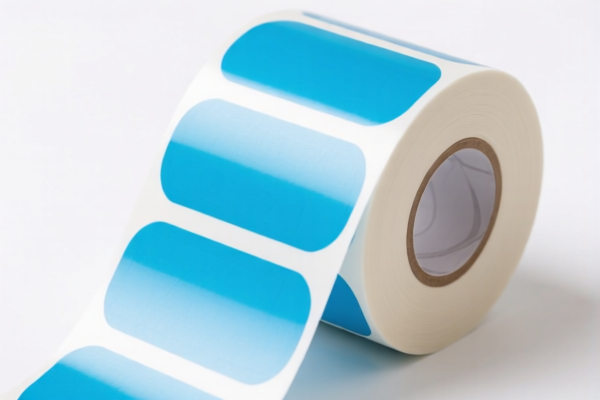
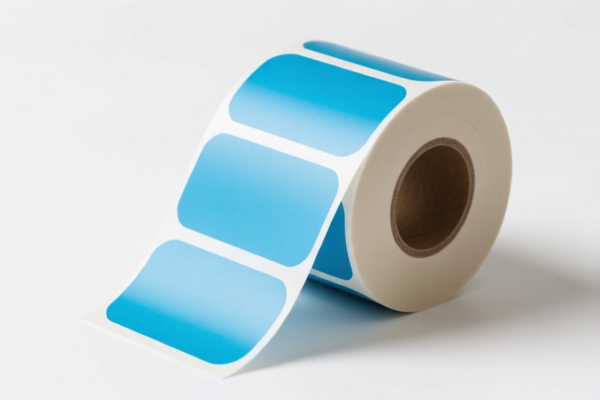
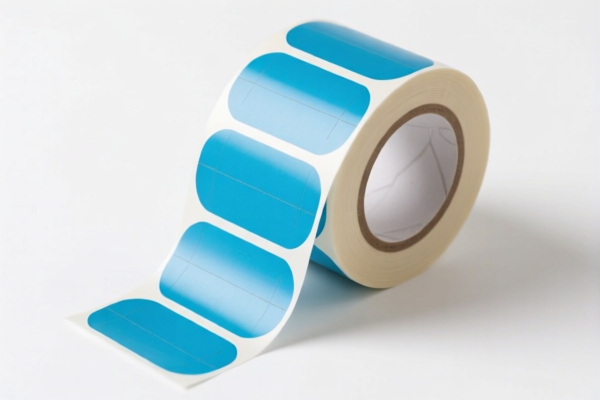

AI Analysis
🏷️ Anti-Static Paper Label (Static Dissipative Labels)
🌐 HS Code Reference & Customs Clearance Guide | 2026 Latest Tariff Analysis | Professional Clearance Strategy
📌 I. Product Definition & Classification: What Exactly is an "Anti-Static Paper Label"?
Anti-static paper labels are specialized adhesive products designed for use in electronics manufacturing, assembly, and packaging where electrostatic discharge (ESD) protection is critical. Despite the name "Paper," the regulatory classification often hinges on the material composition, form, and adhesive properties under the Harmonized System (HS).
In international trade, these labels are typically categorized as Plastic Products rather than Paper, due to the polymer films or coatings used to achieve static-dissipative properties.
⚠️ Key Distinction:
- If the label is primarily self-adhesive plastic film/strip → Classify under Chapter 39 (Plastics).
- If it is truly paper-based with anti-static coating, it might fall under Chapter 48, but customs frequently reclassify based on the dominant functional layer (often plastic/polymer).
- Crucial Point: The provided data indicates classification under HS Code 39xx, implying the product is treated as a plastic/polymer-based self-adhesive or sheet.
📦 II. HS Code Classification Details (Based on Provided Data)
| HS Code | Product Description | Application Scenario | Material/Form | Total Tax Rate |
|---|---|---|---|---|
| 3921.19.00.90 | Other plastic sheets, films, boards, rods, and strips; not self-adhesive | Anti-static liner, backing, or non-adhesive anti-static sheets | Plastic/Polymer, Sheet/Film | 41.5% |
| 3919.90.50.60 | Self-adhesive plates, sheets, film, tape, tape, rods, profiles, and other flat shapes of plastics; other | Self-adhesive anti-static labels (non-electrical insulation specific) | Self-adhesive Plastic Film | 40.8% |
| 3919.10.20.55 | Self-adhesive plates, sheets, film, tape, tape, rods, profiles... in rolls or reels of a width not exceeding 20 cm | Narrow rolls of anti-static adhesive tape/labels | Self-adhesive Plastic, Narrow Roll | 40.8% |
| 3921.90.50.50 | Other plates, sheets, film, foil and strip, of plastics | General anti-static plastic sheets/films (non-adhesive) | Plastic, Sheet/Film | 39.8% |
🔍 Key Insight:
- 3919.xx codes apply if the label is self-adhesive (comes with glue backing).
- 3921.xx codes apply if the label is a plain sheet/film (not self-adhesive, or the adhesive is secondary/external).
- The total tax rate includes Base Duty + Section 301 Tariff (25%) + Section 122 Tariff (10%).
💰 III. 2026 Latest Tariff Rate Breakdown (Including Surtaxes)
✅ Applicable Country: United States (US)
✅ Origin: China (CN)
✅ Effective Date: November 10, 2025 (and subsequent imports)
🎯 1. 3921.19.00.90 – Other Plastic Sheets/Films (Non-Self-Adhesive)
| Item | Content |
|---|---|
| Base Duty Rate | 6.5% |
| Section 301 Surcharge | +25.0% |
| Section 122 Surcharge | +10.0% |
| Total Effective Tax Rate | 41.5% |
| Tax Calculation | CIF Value × 41.5% |
| De Minimis Eligibility | ❌ No (Denied for Section 301/122 goods) |
| Legal Basis Path | USITC:3921.19.00.90 → FOOTNOTE:301 → FOOTNOTE:122 |
📌 Explanation:
- 6.5% is the standard MFN (Most Favored Nation) duty for other plastic sheets.
- 25% is the Section 301 tariff, heavily impacting Chinese-made plastic products.
- 10% is the Section 122 tariff, another layer of protectionism on specific plastic items.
- Total: 41.5%. This is a high-cost classification.
🎯 2. 3919.90.50.60 – Self-Adhesive Plastic Sheets/Films (Other)
| Item | Content |
|---|---|
| Base Duty Rate | 5.8% |
| Section 301 Surcharge | +25.0% |
| Section 122 Surcharge | +10.0% |
| Total Effective Tax Rate | 40.8% |
| Tax Calculation | CIF Value × 40.8% |
| De Minimis Eligibility | ❌ No |
| Legal Basis Path | USITC:3919.90.50.60 → FOOTNOTE:301 → FOOTNOTE:122 |
📌 Explanation:
- 5.8% base duty for other self-adhesive plastic products.
- Same 25% + 10% surcharges apply.
- Total: 40.8%. Slightly cheaper than 3921.xx, but still very high.
🎯 3. 3919.10.20.55 – Self-Adhesive Tape/Roles (≤20cm Width)
| Item | Content |
|---|---|
| Base Duty Rate | 5.8% |
| Section 301 Surcharge | +25.0% |
| Section 122 Surcharge | +10.0% |
| Total Effective Tax Rate | 40.8% |
| Tax Calculation | CIF Value × 40.8% |
| De Minimis Eligibility | ❌ No |
| Legal Basis Path | USITC:3919.10.20.55 → FOOTNOTE:301 → FOOTNOTE:122 |
📌 Explanation:
- Applies to narrow rolls of self-adhesive plastic tape/labels.
- If your anti-static labels come in narrow rolls for dispensers, this is the likely code.
- Total: 40.8%.
🎯 4. 3921.90.50.50 – Other Plastic Sheets/Films (Non-Self-Adhesive)
| Item | Content |
|---|---|
| Base Duty Rate | 4.8% |
| Section 301 Surcharge | +25.0% |
| Section 122 Surcharge | +10.0% |
| Total Effective Tax Rate | 39.8% |
| Tax Calculation | CIF Value × 39.8% |
| De Minimis Eligibility | ❌ No |
| Legal Basis Path | USITC:3921.90.50.50 → FOOTNOTE:301 → FOOTNOTE:122 |
📌 Explanation:
- 4.8% base duty for other plastic sheets.
- Total: 39.8%. The lowest among the provided options, but only if the product is NOT self-adhesive.
🛠️ IV. Customs Clearance Practical Advice (Avoid Pitfalls)
✅ 1. Documentation Checklist (Essential for Clearance)
| Document | Required | Purpose |
|---|---|---|
| ✅ Product Specification Sheet | ✔️ | Must specify: Material (e.g., PET, PP), Thickness, Static Dissipative Value (Resistivity), Adhesive Type. |
| ✅ Material Composition Proof | ✔️ | Certificate of Analysis (COA) proving polymer base. |
| ✅ Product Photos | ✔️ | Clear images of label, backing, and adhesive side. |
| ✅ Commercial Invoice | ✔️ | Must accurately describe as "Plastic Anti-Static Label" not just "Paper Label". |
| ✅ Packing List | ✔️ | Weight, dimensions, roll/roll vs. sheet format. |
⚠️ Critical Warning:
- Do NOT declare as "Paper Label" if the functional layer is plastic. Customs may reclassify, leading to penalties and delays.
- Ensure the invoice states "Anti-Static Plastic Label" or "Self-Adhesive Plastic Film for ESD Protection".
✅ 2. Declaration Tips (Key Mnemonics)
🔥 "Plastic Base, Static Function, Self-Adhesive vs. Flat Sheet!"
| Scenario | Correct Declaration | Incorrect Declaration | Consequence |
|---|---|---|---|
| Self-Adhesive Roll | 3919.90.50.60 or 3919.10.20.55 |
"Paper Label" | Misclassification → 40.8% + Penalties |
| Non-Adhesive Sheet | 3921.90.50.50 |
"Self-Adhesive Label" | Misclassification → 39.8% vs 41.5% |
| Composite Material | Declare dominant material (Plastic) | "Mixed Material" | Customs reclassification → Higher Duty |
✅ 3. Special Case Handling
| Scenario | Recommendation |
|---|---|
| OEM Custom Labels | Provide design files + material spec to prove plastic base. |
| Static Dissipative Value | Include resistivity data (e.g., $10^6 - 10^9$ ohms/sq) to justify "Anti-Static" claim. |
| Small Quantity Samples | Still subject to 40%+ tariffs; De Minimis (Section 321) does NOT apply for Section 301 goods. |
🌍 V. Global Market Comparison (2026)
| Country/Region | Recommended HS Code | Tariff Rate | Notes |
|---|---|---|---|
| 🇺🇸 USA | 3919.90.50.60 / 3921.90.50.50 |
39.8% - 41.5% | High due to 301 & 122 tariffs. |
| 🇨🇳 China | 3919.90.50.60 |
5.8% | Base duty only, no surcharges. |
| 🇪🇺 EU | 3919.90.90 |
6.5% | No Section 301/122. |
| 🇦🇺 Australia | 3919.90.90 |
5% | Low tariff, no surcharges. |
| 🇯🇵 Japan | 3919.90.00 |
0% - 3% | Very low, potential FTA benefits. |
📌 Conclusion:
- USA is the most expensive market for anti-static plastic labels due to political tariffs.
- Consider supply chain adjustment (e.g., sourcing from Vietnam, Mexico) if targeting US market to avoid 35%+ surcharges.
📌 VI. Common Errors & Pitfalls (Blood & Tears)
❌ Error 1: Declaring as "Paper Label"
👉 Result: Customs may reclassify as plastic → 41.5% instead of potential paper duty (lower), but penalties for misdeclaration.
❌ Error 2: Ignoring Section 122 Tariff
👉 Result: Underpayment of 10% → Back taxes + Interest.
❌ Error 3: Assuming De Minimis Applies
👉 Result: Small packages (≤$800) still taxed at 40%+ because Section 301 goods are excluded from Section 321.
❌ Error 4: Vague Description ("Label")
👉 Result: Customs delays, requests additional info, potential detention.
✅ Correct Declaration Example:
"Anti-Static Self-Adhesive Plastic Label, Material: PET Film, Resistivity: $10^8$ Ohms/Sq, Width: 10cm, Roll of 100m"
🎯 VII. Conclusion: Professional Declaration, Cost Saving!
🎯 Remember the Rule:
🔹 "Plastic Base, Not Paper. Self-Adhesive vs. Sheet. Tariff ~40%, No De Minimis!"
🔹 "HS Code Matters: 3919 for Self-Adhesive, 3921 for Sheets. 301+122 = High Cost!"
📌 Pro Tip:
If your anti-static labels are originating from Vietnam, Malaysia, or Thailand, you may avoid the 25% Section 301 and 10% Section 122 tariffs, reducing the total tax to ~5-6%.
Strongly Recommend: Advance Ruling from US Customs to confirm classification and tariff liability.
📣 Action Item:
📞 Contact a licensed customs broker + Provide product specs + Request Advance Ruling
🚀 Ensure Smooth Clearance, Avoid Penalties, Optimize Costs!
✨ Professional Customs Clearance Starts with Accurate Classification!
💼 Your Cost Savings Are Calculated to the Cent!
Customer Reviews
About HS Code Classification
The Harmonized System (HS) is an internationally standardized nomenclature developed by the World Customs Organization (WCO) to classify traded products. Over 200 countries use the HS system as the basis for customs tariffs, trade statistics, and import/export regulations.
Each HS code follows a hierarchical structure:
- Chapter (2 digits) — Broad category of goods (e.g., Chapter 84: Machinery and Mechanical Appliances)
- Heading (4 digits) — More specific grouping within the chapter
- Subheading (6 digits) — Internationally standardized breakdown, used by all WCO member countries
- National subdivisions (8-10 digits) — Country-specific extensions for further classification, such as US HTSUS 10-digit codes
Correct HS code classification is essential for smooth customs clearance, accurate duty payment, and compliance with trade regulations. Misclassification can lead to customs delays, overpayment of duties, or penalties.
When importing from CN to US, the applicable tariff rates may include:
- Most-Favored-Nation (MFN) rate — The standard duty rate applied to WTO members
- General rate — Applied to countries without trade agreements
- Trade remedy duties — Additional tariffs such as Section 301 (anti-dumping), Section 232 (national security), or countervailing duties
The information provided on this page is for reference purposes only. For official classification, please consult with your local customs authority or a licensed customs broker.