Anti static Paper Tube
CN → US| HS Code | Tariff Rate | Origin | Destination | Doc |
|---|---|---|---|---|
| 4819600000 | 35.0% | CN | US | Official Doc |
| 4823908680 | 35.0% | CN | US | Official Doc |
| 4819504040 | 35.0% | CN | US | Official Doc |
Product Images
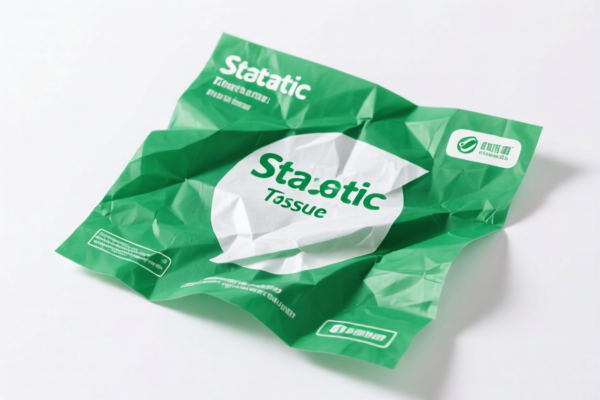
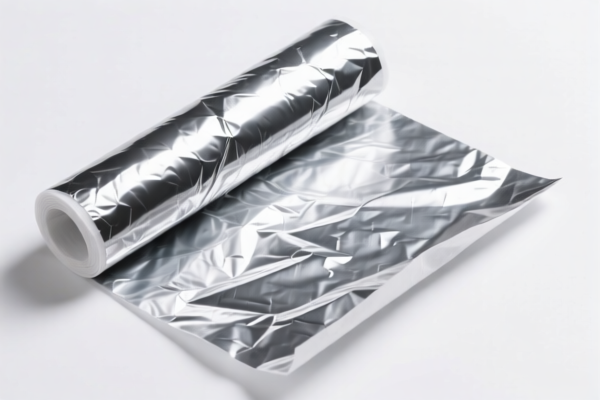
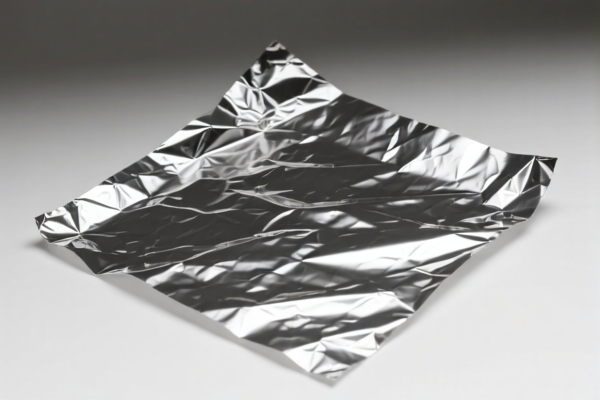
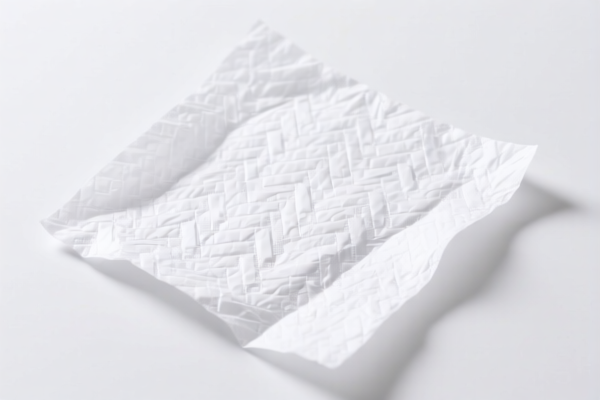
AI Analysis
📦 Anti-Static Paper Tubes (Cardboard Supports)
🌐 HS Code Reference & Customs Clearance Guide | 2026 Latest Tariff Analysis | Professional Entry Strategies
📌 I. Product Definition & Classification: What Exactly Are "Anti-Static Paper Tubes"?
Anti-static paper tubes are cylindrical or supportive structures made primarily from cardboard (paperboard). Unlike standard packaging, they are engineered with anti-static (ESD-safe) coatings or materials to prevent electrostatic discharge. In international trade, they are generally classified as storage/organizational items, packaging components, or other paper products, depending on their specific structural form and usage.
⚠️ Key Distinction Point:
- If used as standalone storage/organizational supports → Classified under 4819.60
- If used as specific packaging components/parts → Classified under 4819.50
- If considered as generic other paper products → Classified under 4823.90
📦 II. HS Code Classification Details (2026 Latest Tariff Authority Comparison)
| HS Code | Product Description | Application Scenario | Material |
|---|---|---|---|
4819.60.00.00 |
Cardboard supports (Anti-static) | Storage/organizational items, protective supports | Cardboard |
4823.90.86.80 |
Other articles of paper/paperboard (Anti-static) | Other paper products, general anti-static paper goods | Paper/Cardboard |
4819.50.40.40 |
Other packaging containers/components/parts (Anti-static) | Packaging components, accessories for containers | Cardboard |
🔍 Important Note:
- All three codes apply to Anti-Static Paper Tubes/Supports.
- The choice depends on whether the item is viewed as a storage support (4819.60), a packaging part (4819.50), or a generic paper article (4823.90).
- Despite different HS Codes, the total tariff burden remains identical due to US trade policies.
💰 III. 2026 Latest Tariff Rate Breakdown (Including Additional Duties & Policy Surcharges)
✅ Applicable Country: United States (US)
✅ Origin: China (CN)
✅ Effective Time: November 10, 2025 (including subsequent imports)
🎯 1. 4819.60.00.00 —— Cardboard Supports (Anti-static)
| Item | Content |
|---|---|
| Base Tariff Rate | 0.0% (ad valorem) |
| Section 301 Additional Tariff | +25.0% |
| Section 122 Tariff | +10.0% |
| Total Tax Rate | 35.0% |
| Tax Calculation | CIF Value × 35% |
| De Minimis Exemption Eligibility | ❌ Not Eligible (deny_de_minimis) |
| Legal Basis Path | Section 301: 25% + Section 122: 10% → USITC: 4819.60.00.00 |
📌 Explanation:
- "Section 301 Additional Tariff 25%": Imposed under the US Trade Act Section 301 against Chinese products.
- "Section 122 Tariff 10%": Imposed under Section 122 of the Trade Act of 1962 (national security/import relief).
- Total 35%: This is a high tariff burden. Pre-calculation of costs is essential!
🎯 2. 4823.90.86.80 —— Other Paper Products (Anti-static)
| Item | Content |
|---|---|
| Base Tariff Rate | 0.0% |
| Section 301 Additional Tariff | +25.0% |
| Section 122 Tariff | +10.0% |
| Total Tax Rate | 35.0% |
| Tax Calculation | CIF × 35% |
| De Minimis Exemption Eligibility | ❌ Not Eligible |
| Legal Basis Path | Section 301: 25% + Section 122: 10% → USITC: 4823.90.86.80 |
📌 Note:
- Identical tariff structure to the above.
- Applies to anti-static paper tubes classified as "other paper articles."
🎯 3. 4819.50.40.40 —— Packaging Components (Anti-static)
| Item | Content |
|---|---|
| Base Tariff Rate | 0.0% |
| Section 301 Additional Tariff | +25.0% |
| Section 122 Tariff | +10.0% |
| Total Tax Rate | 35.0% |
| Tax Calculation | CIF × 35% |
| De Minimis Exemption Eligibility | ❌ Not Eligible |
| Legal Basis Path | Section 301: 25% + Section 122: 10% → USITC: 4819.50.40.40 |
📌 Note:
- Even when classified as packaging components, the same 35% total tariff applies.
- No difference in final duty cost across these three HS codes for Chinese-origin goods.
🛠️ IV. Customs Clearance Practical Advice (Pitfall Avoidance Guide)
✅ 1. Required Documentation Checklist (All Mandatory)
| Document | Must Provide | Description |
|---|---|---|
| ✅ Product Specification Sheet | ✔️ | Material composition, anti-static properties, dimensions, load capacity |
| ✅ Anti-Static Certification/Test Report | ✔️ | ESD test results, resistance values, coating details |
| ✅ Product Photos (with Labels) | ✔️ | Clear view of structure, branding, and anti-static markings |
| ✅ Commercial Invoice | ✔️ | Explicitly state "Anti-Static Cardboard Support/Paper Tube" |
| ✅ Packing List | ✔️ | Detail contents, weight, and volume |
| ✅ Origin Certificate (CO) | ✔️ | Proof of Chinese origin (if applicable) |
✅ 2. Declaration Tips (Key Mantras)
🔥 "Accurate Description, Clear Anti-Static Proof, No Splitting!"
| Scenario | Correct Declaration Method | Wrong Practice |
|---|---|---|
| Anti-static cardboard supports | 4819.60.00.00 or 4819.50.40.40 |
Misdeclaring as "plastic parts" → Higher inspection risk |
| Anti-static paper tubes | 4823.90.86.80 |
Misdeclaring as "wooden supports" → Customs seizure |
| Mixed shipment (ESD + Non-ESD) | Split Declaration | Mixing ESD and non-ESD items → Delays & penalties |
| Packaging components | 4819.50.40.40 |
Misdeclaring as "finished packaging" → Wrong HS code |
✅ 3. Special Case Handling
| Situation | Handling Advice |
|---|---|
| OEM Custom Anti-Static Tubes | Provide design drawings + ESD test reports to prove anti-static nature |
| Combined with Plastic Inserts | Declare as "Composite Packaging," but ensure main material is paper/cardboard |
| High-Value ESD Tubes | Consider Advance Ruling (Pre-classification) to avoid disputes |
| Transshipment via Third Country | Ensure origin tracing remains China; US will still apply 35% |
🌍 V. Global Market Customs Comparison (2026 Latest)
| Country/Region | Recommended HS Code | Tariff Rate | Certification Requirements | Notes |
|---|---|---|---|---|
| 🇺🇸 USA | 4819.60.00.00 / 4819.50.40.40 |
35% (China origin) | None specific | 35% total due to Sec 301 + Sec 122 |
| 🇨🇳 China | 4819.60.00.00 |
5-10% (Import) | None | Low import tariff, but focus on export |
| 🇪🇺 EU | 4819.60.00.00 |
6.5% (MFN) | CE (if applicable) | No Section 301/122 equivalent |
| 🇦🇺 Australia | 4819.60.00.00 |
5% (MFN) | None | No high additional tariffs |
| 🇯🇵 Japan | 4819.60.00.00 |
5% (MFN) | None | No high additional tariffs |
📌 Conclusion:
- USA imposes the highest burden (35%) due to combined Section 301 and Section 122 tariffs.
- EU, Australia, and Japan do not apply these punitive tariffs, resulting in significantly lower costs.
- Supply Chain Strategy: Consider sourcing or assembling in third countries (e.g., Vietnam, Mexico) if targeting the US market, but ensure substantial transformation to avoid origin tracing.
📌 VI. Common Errors & Pitfall Avoidance (Lessons Learned)
❌ Error 1: Misdeclaring as "Plastic Tubes" or "Metal Supports"
👉 Consequence: Customs inspection failure, penalties, and potential seizure.
❌ Error 2: Omitting "Anti-Static" in Description
👉 Consequence: Misclassification risk; customs may reclassify and apply different (potentially higher) rates or reject due to incorrect safety specs.
❌ Error 3: Assuming De Minimis Exemption Applies
👉 Consequence: 35% tariff applies to all shipments, regardless of value. No $800 exemption.
❌ Error 4: Not Providing ESD Test Reports
👉 Consequence: Customs may doubt the "anti-static" claim, leading to delays or reclassification.
✅ Correct Approach:
"Anti-Static Cardboard Support Tube, ESD Safe, for Electronic Component Storage, Model XYZ, Origin China"
🎯 VII. Conclusion: Professional Declaration, Cost Control, Efficiency!
🎯 Remember the Mantra:
🔹 "35% Total for US, Sec 301 + Sec 122, No De Minimis!"
🔹 "HS Code May Vary, But Tax Stays Same!"
🔹 "Declare Anti-Static Clearly, Avoid Inspection Traps!"
📌 Pro Tip:
If your anti-static paper tubes are originating from Vietnam, Mexico, Thailand, or Malaysia, you may qualify for lower tariffs (0-5%) due to free trade agreements or lack of US punitive tariffs on those origins.
Recommendation: Apply for Advance Ruling (Pre-classification) if unsure about HS code, and verify origin carefully.
📣 Immediate Action:
📞 Contact Professional Customs Broker + Provide Product Specs + Verify Origin
🚀 Ensure your anti-static paper tubes clear customs smoothly, reduce costs, and boost margins!
✨ Professional Customs Clearance Starts with Accurate Classification!
💼 Every cent of duty counts!
Customer Reviews
About HS Code Classification
The Harmonized System (HS) is an internationally standardized nomenclature developed by the World Customs Organization (WCO) to classify traded products. Over 200 countries use the HS system as the basis for customs tariffs, trade statistics, and import/export regulations.
Each HS code follows a hierarchical structure:
- Chapter (2 digits) — Broad category of goods (e.g., Chapter 84: Machinery and Mechanical Appliances)
- Heading (4 digits) — More specific grouping within the chapter
- Subheading (6 digits) — Internationally standardized breakdown, used by all WCO member countries
- National subdivisions (8-10 digits) — Country-specific extensions for further classification, such as US HTSUS 10-digit codes
Correct HS code classification is essential for smooth customs clearance, accurate duty payment, and compliance with trade regulations. Misclassification can lead to customs delays, overpayment of duties, or penalties.
When importing from CN to US, the applicable tariff rates may include:
- Most-Favored-Nation (MFN) rate — The standard duty rate applied to WTO members
- General rate — Applied to countries without trade agreements
- Trade remedy duties — Additional tariffs such as Section 301 (anti-dumping), Section 232 (national security), or countervailing duties
The information provided on this page is for reference purposes only. For official classification, please consult with your local customs authority or a licensed customs broker.