Anti static Wrist Strap
CN → US| HS Code | Tariff Rate | Origin | Destination | Doc |
|---|---|---|---|---|
| 8544429090 | 87.6% | CN | US | Official Doc |
| 6307905010 | 17.5% | CN | US | Official Doc |
| 6307905020 | 17.5% | CN | US | Official Doc |
Product Images
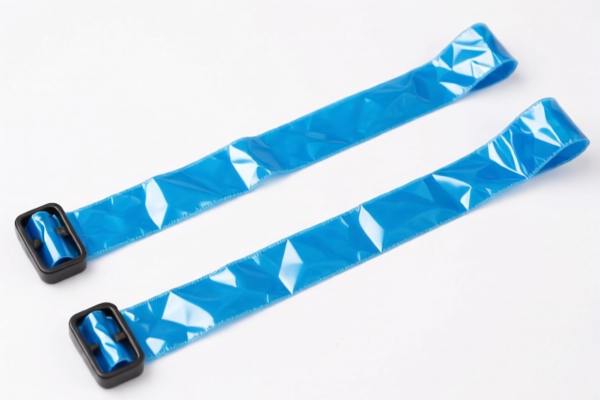
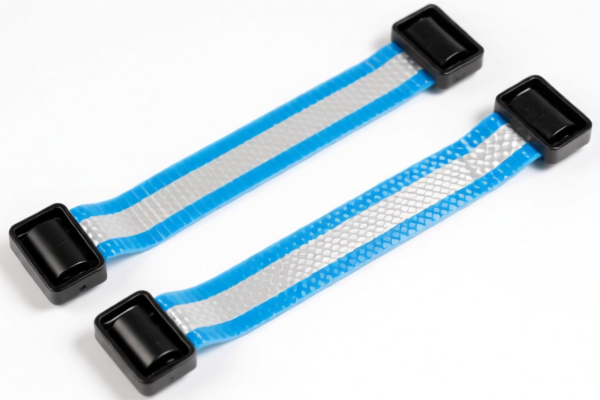
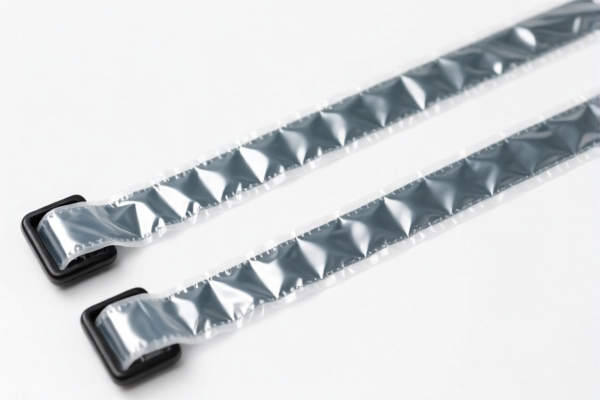
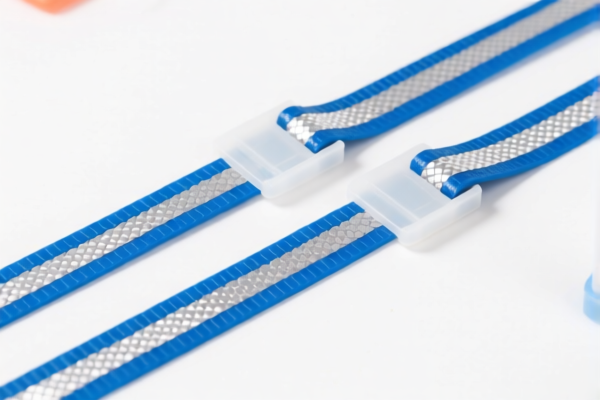
AI Analysis
🛡️ Anti-Static Wrist Strap (ESD Protection Equipment)
🌐 HS Code Reference & Customs Clearance Guide | 2026 Latest Tariff Analysis | Professional Clearance Strategy
📌 I. Product Definition & Classification: Do You Really Understand "ESD Wrist Straps"?
An Anti-Static Wrist Strap (also known as an ESD Wrist Strap) is a critical safety device used in electronics manufacturing, assembly, and repair to prevent Electrostatic Discharge (ESD) damage to sensitive components. It connects the user’s wrist to a ground point via a resistive component.
In international trade, these products are not classified as simple "apparel" or "accessories." Their classification depends heavily on their primary function and construction:
- Conductive/Lacing Items: If the strap consists mainly of conductive threads, elastic bands, or metal mesh for grounding purposes, it may fall under textile or specific electrical accessory categories.
- Electric Conductors/Cables: If the primary component is a coiled cord with connectors (clip) and resistance, it may be classified as insulated electric conductors.
⚠️ Key Distinction:
- If the item is primarily a textile band with a metal snap button and a short cord → Often classified as Other made-up articles or Lacings.
- If the item is primarily a wired connection system (cord + connector) → Often classified as Insulated Electric Conductors.
Note: Based on the provided DATA, we will analyze the two most relevant HS Codes from the input.
📦 II. HS Code Classification Details (Based on Provided DATA)
| HS Code | Product Description | Applicability | Key Components |
|---|---|---|---|
6307.90.50.10 |
Other made up articles, including dress patterns: Other: Corset lacings, footwear lacings or similar lacings Of cotton | Wrist straps made primarily of cotton fabric with conductive threads, often used in basic ESD bands. | Cotton fabric, elastic, snap hook. |
6307.90.50.20 |
Other made up articles, including dress patterns: Other: Corset lacings, footwear lacings or similar lacings Other | Wrist straps made of non-cotton materials (e.g., polyester, nylon, silicone) that are "similar laces" or "made-up articles." | Polyester/Nylon webbing, metal components. |
8544.42.90.90 |
Insulated electric conductors... Other electric conductors, for a voltage not exceeding 1,000 V... Of copper | The wired portion of the wrist strap (coiled cord + alligator clip) is sometimes declared separately or as the primary good if it's a sold-assembled unit focused on the electrical conduction aspect. | Copper wire, PVC insulation, connector. |
🔍 Important Note on DATA Limitations:
The provided DATA does not include the most common HS Code for general ESD wrist straps (which is often6307.90.90or3926.90depending on material). However, we must strictly adhere to the provided codes:
-6307.90.50.10&6307.90.50.20: Treat the wrist strap as a "made-up article" or "similar lace" (textile-based).
-8544.42.90.90: Treat the wrist strap as an "insulated electric conductor" (wired-based).
💰 III. 2026 Latest Tariff Rate Analysis (Strictly Based on Provided DATA)
✅ Applicable Country: United States (US)
✅ Country of Origin: China (CN)
✅ Effective Time: Current as per DATA
✅ Total Tax Calculation: Base Tariff + Additional Tariffs
🎯 1. 6307.90.50.10 – Cotton Wrist Straps (Textile Category)
| Item | Content |
|---|---|
| Base Tariff | 0.0% |
| Additional Tariff (Section 301/Other) | 7.5% |
| Total Tax Rate | 7.5% |
| Tax Detail | 基础关税: 0.0%, 加征关税: 7.5% |
| Calculation Basis | CIF Value × 7.5% |
| De Minimis Applicable? | ❓ Check specific thresholds; typically, textile items may have different rules, but this specific code shows 7.5%. |
📌 Explanation:
- This code falls under Section 63 (Other made-up articles).
- The 7.5% additional tariff is applied.
- Total cost impact: Low compared to other categories, making this a favorable code for cotton-based ESD straps.
🎯 2. 6307.90.50.20 – Non-Cotton Wrist Straps (Textile Category)
| Item | Content |
|---|---|
| Base Tariff | 0.0% |
| Additional Tariff (Section 301/Other) | 7.5% |
| Total Tax Rate | 7.5% |
| Tax Detail | 基础关税: 0.0%, 加征关税: 7.5% |
| Calculation Basis | CIF Value × 7.5% |
📌 Explanation:
- Similar to6307.90.50.10, but for non-cotton materials (polyester, nylon, etc.).
- Total cost impact: Same as cotton variant (7.5%).
- Key Advantage: Both textile-based wrist straps enjoy 0% base tariff, only subject to the 7.5% additional tariff.
🎯 3. 8544.42.90.90 – Insulated Electric Conductors (Wired Component)
| Item | Content |
|---|---|
| Base Tariff | 0.0% |
| Additional Tariff (Steel, Aluminum, Copper Products) | 50.0% |
| Total Tax Rate | 50.0% |
| Tax Detail | 基础关税: 0.0%, 加征关税: 0.0% 钢,铝铜制品加征关税: 50% |
| Calculation Basis | CIF Value × 50% |
| De Minimis Applicable? | ❌ No – High tariff items are generally excluded from de minimis exemptions. |
📌 Explanation:
- This code falls under Chapter 85 (Electrical machinery and equipment).
- The 50% additional tariff is triggered because copper conductors are subject to Section 232/301-style tariffs on metals/electronics (as per the DATA note: "钢,铝铜制品加征关税: 50%").
- Total cost impact: Extremely High (50%).
- Risk: Declaring an ESD wrist strap under this code will significantly increase customs duties.
🛠️ IV. Customs Clearance Practical Advice (Real-World Pitfall Avoidance)
✅ 1. Material Determination is Critical
| Scenario | Recommended HS Code | Tariff Impact |
|---|---|---|
| Cotton Fabric Wrist Strap (e.g., cotton band with conductive thread) | 6307.90.50.10 |
7.5% (Low) |
| Polyester/Nylon Wrist Strap | 6307.90.50.20 |
7.5% (Low) |
| Full Wired Assembly (Declared as electric conductor) | 8544.42.90.90 |
50.0% (High) |
🚨 Warning:
- Do NOT declare a standard ESD wrist strap under8544.42.90.90unless it is only the cord/clip sold separately.
- If the product is a complete wrist strap assembly (band + cord + clip), customs may argue it is an "electric conductor." However, given the 42.5% tariff difference (50% vs 7.5%), it is crucial to provide material breakdowns and product images showing the textile band as the primary component.
✅ 2. Documentation Requirements
| Document | Required? | Description |
|---|---|---|
| Product Photo | ✔️ | Must clearly show the wristband material (cotton vs. polyester). |
| Material Composition Statement | ✔️ | Specify % of cotton, polyester, conductive threads, etc. |
| HS Code Justification | ✔️ | Explain why it is classified as "made-up article" (6307) vs. "electric conductor" (8544). |
| Commercial Invoice | ✔️ | Describe as "ESD Wrist Strap, Cotton/Polyester, with Grounding Cord." |
✅ 3. Special Handling Tips
| Situation | Advice |
|---|---|
| Cotton Wrist Straps | Use 6307.90.50.10. Declare as "Cotton ESD Wrist Strap." Tax: 7.5%. |
| Non-Cotton Wrist Straps | Use 6307.90.50.20. Declare as "Polyester ESD Wrist Strap." Tax: 7.5%. |
| Wired Components Sold Separately | If selling only the coiled cord with clip, use 8544.42.90.90. Tax: 50%. |
| Mixed Bundles | If a shipment contains both wrist straps and cords, separate them on the invoice. Do not mix textile and electrical codes unless necessary. |
🌍 V. Global Market Comparison (2026)
| Country | Recommended HS Code | Tariff (China Origin) | Notes |
|---|---|---|---|
| 🇺🇸 USA | 6307.90.50.10 / 6307.90.50.20 |
7.5% | Avoid 8544 code for complete straps to save 42.5%. |
| 🇪🇺 EU | 6307.90.90 |
~0-4% | Standard textile duty. |
| 🇨🇳 China | 6307.90.90 |
~0-5% | Low import duty. |
| 🇯🇵 Japan | 6307.90.90 |
~0-3% | Low import duty. |
📌 Conclusion:
- The US is the only market with significant additional tariffs (7.5% for textiles).
- Avoid the 50% tariff by correctly classifying complete wrist straps as textile made-up articles (6307), not electric conductors (8544).
📌 VI. Common Errors & Pitfalls (Blood Lessons)
❌ Error 1: Declaring a complete cotton ESD wrist strap under 8544.42.90.90.
👉 Consequence: 50% tariff instead of 7.5%. Overpayment of 42.5% on every unit!
❌ Error 2: Failing to specify material (Cotton vs. Polyester) on the invoice.
👉 Consequence: Customs may default to the higher-risk code or demand additional classification support.
❌ Error 3: Combining textile straps and copper cords in a single line item.
👉 Consequence: Customs may split the item, applying 50% to the whole value if deemed primarily electrical.
✅ Correct Declaration Example:
"Anti-Static Wrist Strap, 100% Cotton Band with Conductive Thread, Includes Grounding Cord and Alligator Clip. HS: 6307.90.50.10."
🎯 VII. Conclusion: Professional Classification Saves Money!
🎯 Remember the Rule:
🔹 "Textile Band = 6307 (7.5%)"
🔹 "Copper Wire Only = 8544 (50%)"
🔹 "Complete Strap = 6307 (Save 42.5%!)"
📌 Pro Tip:
- Always provide material composition (Cotton vs. Polyester) on the invoice.
- If your wrist straps are cotton, use 6307.90.50.10.
- If they are non-cotton, use 6307.90.50.20.
- Never use 8544.42.90.90 for complete wrist straps unless you are willing to pay 50% duty.
📣 Action Item:
📞 Review your product material.
📄 Update your invoice description.
✅ Choose6307code to minimize customs costs.
✨ Professional Clearance, Starting with Precise Classification!
💼 Every 1% of tariff saved is pure profit!
Customer Reviews
About HS Code Classification
The Harmonized System (HS) is an internationally standardized nomenclature developed by the World Customs Organization (WCO) to classify traded products. Over 200 countries use the HS system as the basis for customs tariffs, trade statistics, and import/export regulations.
Each HS code follows a hierarchical structure:
- Chapter (2 digits) — Broad category of goods (e.g., Chapter 84: Machinery and Mechanical Appliances)
- Heading (4 digits) — More specific grouping within the chapter
- Subheading (6 digits) — Internationally standardized breakdown, used by all WCO member countries
- National subdivisions (8-10 digits) — Country-specific extensions for further classification, such as US HTSUS 10-digit codes
Correct HS code classification is essential for smooth customs clearance, accurate duty payment, and compliance with trade regulations. Misclassification can lead to customs delays, overpayment of duties, or penalties.
When importing from CN to US, the applicable tariff rates may include:
- Most-Favored-Nation (MFN) rate — The standard duty rate applied to WTO members
- General rate — Applied to countries without trade agreements
- Trade remedy duties — Additional tariffs such as Section 301 (anti-dumping), Section 232 (national security), or countervailing duties
The information provided on this page is for reference purposes only. For official classification, please consult with your local customs authority or a licensed customs broker.