Anti theft Sensor
CN → US| HS Code | Tariff Rate | Origin | Destination | Doc |
|---|---|---|---|---|
| 8531100025 | 36.3% | CN | US | Official Doc |
| 8531100035 | 36.3% | CN | US | Official Doc |
Product Images
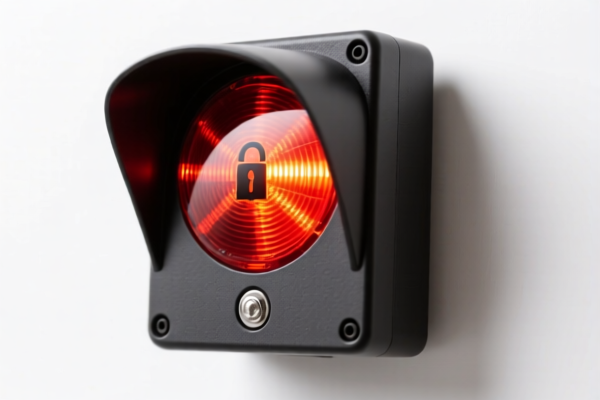
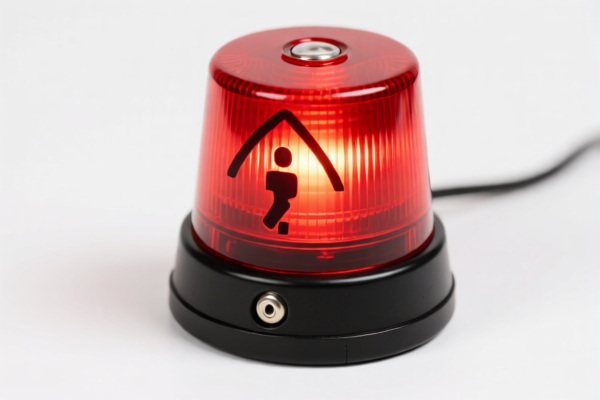
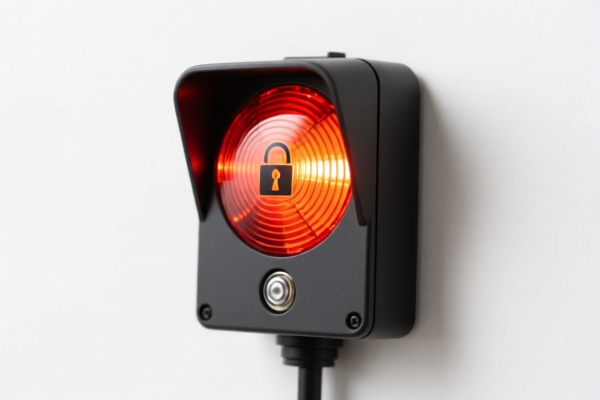
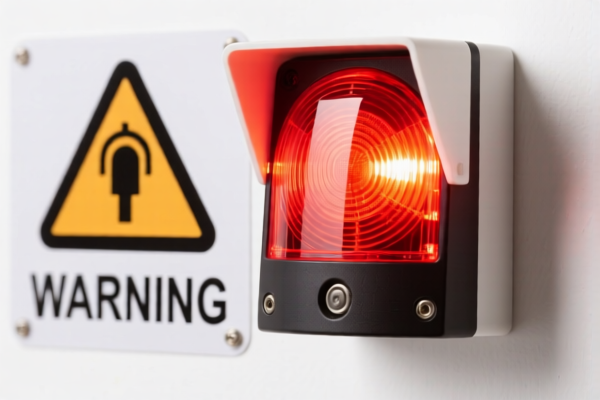
AI Analysis
🚨 Anti-Theft Sensor (Burglar & Fire Alarm Systems)
🌐 HS Code Reference & Customs Clearance Guide | 2026 Latest Tariff Analysis | Professional Clearance Strategy
📌 I. Product Definition & Classification: What Exactly is an "Anti-Theft Sensor"?
An "Anti-Theft Sensor" is a broad commercial term. In international trade and customs classification, it is strictly divided based on its function and technology:
1. Burglar Alarms (Intrusion Detection):
Devices designed to detect unauthorized entry or movement (e.g., magnetic contact switches, PIR motion sensors, glass break detectors). These fall under "Burglar alarms" in Heading 8531.
2. Fire Alarms (Smoke/Heat Detection):
Devices designed to detect fire hazards (e.g., smoke detectors, heat detectors). These also fall under "Burglar or fire alarms" in Heading 8531.
⚠️ Key Distinction:
- If the device is primarily for security/intrusion prevention → It is a Burglar Alarm.
- If the device is primarily for fire safety/smoke detection → It is a Fire Alarm/Smoke Detector.
- Note: Heading 8512 (automotive signaling) and 8530 (alarm systems for vehicles/installations with wiring) are excluded. Most standalone or wired home/business sensors belong to 8531.10.
📦 II. HS Code Classification Details (2026 Latest Tariff Authority)
Based on the provided data, the relevant HS Codes are strictly limited to two subheadings under 8531.10 (Burglar or fire alarms and similar apparatus).
| HS Code | Product Description | Applicable Scenario | Tax Rate (China to US) |
|---|---|---|---|
8531.10.00.25 |
Smoke Detectors | Devices primarily detecting smoke/particulates for fire safety. | 0.0% |
8531.10.00.35 |
Burglar Alarms | Devices primarily detecting intrusion/motion for security. | 0.0% |
🔍 Critical Clarification:
- Both codes fall under Section XVI (Electrical Machinery).
- Both are explicitly classified under Heading 8531 ("Electric sound or visual signaling apparatus... Burglar or fire alarms").
- The description "Other" in the first code (8531.10.00.25) refers to "Other smoke detectors" not otherwise specified, while the second (8531.10.00.35) is explicitly for "Burglar alarms".
💰 III. 2026 Latest Tariff Rate Details (Detailed Breakdown)
✅ Applicable Country: United States (US)
✅ Origin: China (CN)
✅ Effective Time: Current 2026 Rates
🎯 1. 8531.10.00.25 —— Smoke Detectors (Other)
| Item | Content |
|---|---|
| Basic Tariff | 0.0% |
| Section 301 Additional Tariff | 0.0% |
| IEEPA Additional Tariff | 0.0% |
| Total Tax Rate | 0.0% |
| Calculation Method | CIF Value × 0.0% = $0 |
| De Minimis Eligibility | ✅ Yes (Subject to $800 threshold) |
| Legal Basis Path | HTSUS:8531.10.00.25 → USITC:8531.10.00.25 |
📌 Explanation:
- Unlike many electronics (like monitors or chips), smoke detectors currently enjoy a 0% total tariff rate for Chinese-origin goods.
- There are no additional Section 301 or IEEPA surcharges applicable to this specific subheading in the provided data.
- This makes them highly competitive in price compared to other electronic signaling devices.
🎯 2. 8531.10.00.35 —— Burglar Alarms
| Item | Content |
|---|---|
| Basic Tariff | 0.0% |
| Section 301 Additional Tariff | 0.0% |
| IEEPA Additional Tariff | 0.0% |
| Total Tax Rate | 0.0% |
| Calculation Method | CIF Value × 0.0% = $0 |
| De Minimis Eligibility | ✅ Yes (Subject to $800 threshold) |
| Legal Basis Path | HTSUS:8531.10.00.35 → USITC:8531.10.00.35 |
📌 Explanation:
- Burglar alarms (including motion sensors, door/window contacts, glass break sensors) are also classified at 0% total tax.
- No additional tariffs apply.
- This is a significant advantage for security equipment exporters.
🛠️ IV. Customs Clearance Practical Advice (Pitfall Avoidance Guide)
✅ 1. Document Checklist (Mandatory)
| Document | Required | Notes |
|---|---|---|
| ✅ Product Specification Sheet | ✔️ | Must clearly state: "Smoke Detector" OR "Burglar Alarm Sensor". Include detection range, power supply (DC/AC), and connectivity (Zigbee/Wi-Fi/RF). |
| ✅ Technical Diagram/Schematic | ✔️ | Show internal components to prove it is an electrical signaling apparatus (Heading 8531), not a general-purpose electronic component. |
| ✅ Product Photos (Labeled) | ✔️ | Show model number, brand, and input voltage. |
| ✅ Third-Party Certification | ✔️ | UL/ETL (US Safety Standard) is CRITICAL. Without this, customs may detain the goods for safety compliance, even if tariffs are 0%. |
| ✅ Commercial Invoice | ✔️ | Explicitly describe as: "Electric Smoke Detector" or "Electronic Burglar Alarm Sensor". Avoid vague terms like "Security Device". |
| ✅ Packing List | ✔️ | Clearly separate sensors from main control panels if shipped separately. |
✅ 2. Classification Strategy (Key Tips)
🔥 "Function Defines Code: Smoke gets .25, Burglar gets .35. Don't Mix!"
| Scenario | Correct HS Code | Wrong Code | Consequence |
|---|---|---|---|
| Smoke Detector (Photoelectric/Ionization) | 8531.10.00.25 |
8531.10.00.35 |
Misclassification risk. Though tax is same, audit flag for inconsistency. |
| Motion Sensor / Magnetic Contact | 8531.10.00.35 |
8531.10.00.25 |
Same as above. |
| Smart Home Hub / Control Panel | ❌ Not in Data | 8531.10.00.90 (Other) |
Control panels may have different rates. Ensure you are shipping sensors, not full systems. |
| Car Parking Sensor | ❌ Not in Data | 8512.xxxx |
Incorrect heading. Will be rejected. |
📌 Important:
- Do not classify smoke detectors as "Burglar Alarms" or vice versa, even if the tax rate is identical. Customs audits rely on precise product descriptions matching the HTSUS.
- If you sell both, you must file two separate line items on the entry summary.
✅ 3. Special Cases & Compliance
| Situation | Handling Advice |
|---|---|
| Certification (UL/ETL) | Mandatory for smoke alarms and many burglar alarms in the US. Ensure your supplier provides valid UL files. Without it, CBP may seize goods. |
| Wireless Sensors (Zigbee/Wi-Fi) | Still classified under 8531.10 if they are signaling devices. Do not misclassify as "Telecommunications Apparatus" (8517) unless they are primarily communication devices. |
| Battery-Operated vs. Wired | Classification remains 8531.10 for both. Ensure batteries are properly declared (UN38.3 if air freight). |
| ** kits (Sensor + Panel)** | If sold as a complete alarm system, it may still fall under 8531.10. However, if the panel is complex, consult a specialist. Stick to 8531.10.00.35 for the burglar component. |
🌍 V. Global Market Comparison (2026)
| Country/Region | Recommended HS Code | Tariff (China Origin) | Certification Requirement | Notes |
|---|---|---|---|---|
| 🇺🇸 USA | 8531.10.00.25 / .35 |
0.0% | UL/ETL/NFPA | Strict safety enforcement. 0% tariff advantage. |
| 🇨🇳 China | 8531.10.00.25 / .35 |
~10-12% (Import Duty) | CCC | Domestic market requires CCC certification. |
| 🇪🇺 EU | 8531.10.29 / .99 |
0% (Most FTA) | CE Marking | CE certification is mandatory. |
| 🇬🇧 UK | 8531.10.29 / .99 |
0% (Post-Brexit) | UKCA Marking | UKCA required for safety. |
| 🇦🇺 Australia | 8531.10.10 / .90 |
5% | RCM / SAA | Higher duty than US/China export side. |
📌 Conclusion:
- The USA offers the most favorable tariff treatment (0%) for these goods from China.
- The main barrier is not tariff, but safety certification (UL/ETL).
- Ensure your products are UL-listed to avoid customs delays.
📌 VI. Common Mistakes & Pitfalls (Blood & Tears Lessons)
❌ Mistake 1: Labeling all sensors as "Security Sensors" without specifying type.
👉 Consequence: CBP may assign a higher general rate or hold for inspection.
👉 Fix: Always specify "Smoke Detector" or "Burglar Alarm Sensor".
❌ Mistake 2: Using HS Code 8531.10.00.90 (Other) for standard smoke detectors.
👉 Consequence: Audit risk. 8531.10.00.25 is the precise code. Precision saves time.
❌ Mistake 3: Ignoring UL/ETL Certification.
👉 Consequence: Goods detained or destroyed at US port. CBP enforces safety standards strictly for fire/security devices.
❌ Mistake 4: Misclassifying as 8512 (Automotive).
👉 Consequence: Rejection. These are for buildings, not cars.
✅ Correct Practice:
"Smoke Detector, Photoelectric, Battery Operated, UL Listed, Model ABC, for Residential Use"
"Burglar Alarm Sensor, Magnetic Contact, 12V DC, UL Listed, Model XYZ, for Security Systems"
🎯 VII. Conclusion: Professional Clearance, Cost-Free Entry!
🎯 Remember:
🔹 "Smoke gets .25, Burglar gets .35. Both are 0%."
🔹 "Get UL First, Then Ship. No UL, No Entry."
🔹 "Be Specific in Description. Avoid Ambiguity."
📌 Pro Tip:
If you are shipping samples or low-value goods under $800, you can use Section 321 (De Minimis) to enter duty-free. Since the tariff is 0%, this is a seamless process. For bulk shipments, ensure your UL certificates are on file with your customs broker.
📣 Immediate Action:
📞 Verify your UL/ETL File Numbers.
📄 Label your invoices with precise HS Codes:8531.10.00.25or8531.10.00.35.
🚀 Clear Customs Smoothly, Sell Securely, Zero Tariff Cost!
✨ Precision in Classification, Profit in Clearance!
💼 Your Security Device, Zero Burden, Global Reach!
Customer Reviews
About HS Code Classification
The Harmonized System (HS) is an internationally standardized nomenclature developed by the World Customs Organization (WCO) to classify traded products. Over 200 countries use the HS system as the basis for customs tariffs, trade statistics, and import/export regulations.
Each HS code follows a hierarchical structure:
- Chapter (2 digits) — Broad category of goods (e.g., Chapter 84: Machinery and Mechanical Appliances)
- Heading (4 digits) — More specific grouping within the chapter
- Subheading (6 digits) — Internationally standardized breakdown, used by all WCO member countries
- National subdivisions (8-10 digits) — Country-specific extensions for further classification, such as US HTSUS 10-digit codes
Correct HS code classification is essential for smooth customs clearance, accurate duty payment, and compliance with trade regulations. Misclassification can lead to customs delays, overpayment of duties, or penalties.
When importing from CN to US, the applicable tariff rates may include:
- Most-Favored-Nation (MFN) rate — The standard duty rate applied to WTO members
- General rate — Applied to countries without trade agreements
- Trade remedy duties — Additional tariffs such as Section 301 (anti-dumping), Section 232 (national security), or countervailing duties
The information provided on this page is for reference purposes only. For official classification, please consult with your local customs authority or a licensed customs broker.