Antibacterial PVC Floor Tiles
CN → US| HS Code | Tariff Rate | Origin | Destination | Doc |
|---|---|---|---|---|
| 3918101040 | 40.3% | CN | US | Official Doc |
| 3918102000 | 40.3% | CN | US | Official Doc |
| 3926909989 | 22.8% | CN | US | Official Doc |
| 3926305000 | 22.8% | CN | US | Official Doc |
Product Images

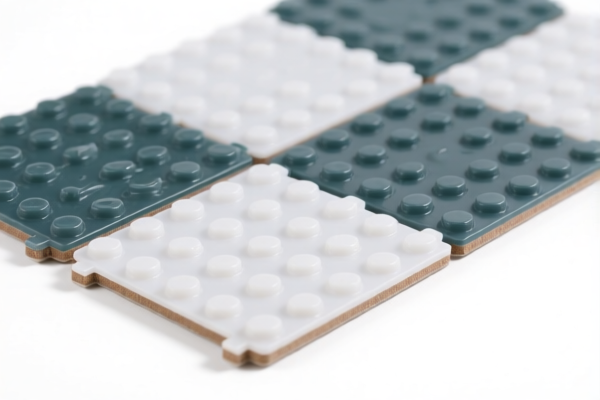
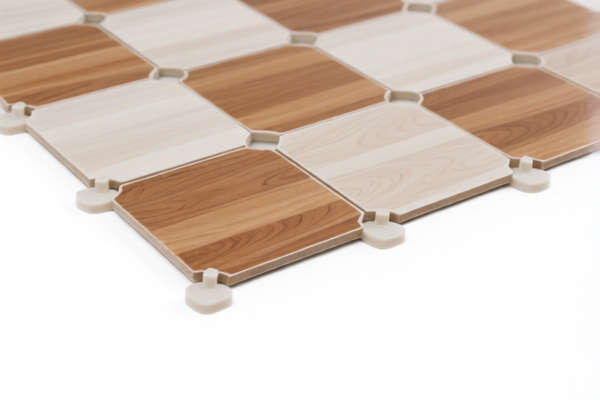

AI Analysis
🛠️ Antibacterial PVC Floor Tiles
🌐 HS Code Classification & Customs Clearance Guide | 2026 Updated Tariff Analysis | Expert Import Strategy
📌 One, Product Definition & Classification: What Makes These Tiles “Antibacterial”?
Antibacterial PVC floor tiles are plastic floor coverings made from vinyl chloride polymers, specifically engineered with antimicrobial additives (e.g., silver ions, triclosan, or quaternary ammonium compounds) to inhibit the growth of bacteria, mold, and fungi on their surface.
In international trade, these tiles are not classified as “chemicals” or “medical devices” — they are plastic floor coverings with functional enhancements. The key to correct classification lies in:
- Material: Polymer of vinyl chloride (PVC)
- Form: Tiles (not rolls)
- Function: Antibacterial (but not medical-grade or sterilizing)
- Use: Commercial, healthcare, residential flooring
⚠️ Critical Distinction:
- If the antibacterial property is inherent to the material (e.g., additives mixed into the PVC during manufacturing), it’s still floor covering — not a medical product.
- If it’s a surface coating or treatment, and removable, it may be classified differently — but in this case, the property is integral to the tile.
📦 Two, HS Code Classification Details (2026 Official Tariff Reference)
| HS Code | Product Description | Applicable Use Case | Key Feature |
|---|---|---|---|
3918.10.10.40 |
Floor coverings of plastics, whether or not self-adhesive, in rolls or in the form of tiles; wall or ceiling coverings of plastics… Of polymers of vinyl chloride: Floor coverings: Vinyl tile (antibacterial) | Healthcare facilities, hospitals, labs, gyms, kitchens, schools | Antibacterial additive integrated into PVC matrix |
3918.10.20.00 |
Floor coverings of plastics… Of polymers of vinyl chloride: Floor coverings: Other | Non-antibacterial PVC tiles, standard commercial use | No antimicrobial function |
🔍 Why
3918.10.10.40?
- The "vinyl tile" subheading under3918.10.10is specifically for tiles made from vinyl chloride polymers.
- The "antibacterial" feature does not change the HS code — it’s a functional enhancement, not a new product type.
- "Other" in3918.10.20.00applies to non-antibacterial tiles, so antibacterial tiles must be under3918.10.10.40.
💰 Three, 2026 Updated Tariff Breakdown (With Detailed Tax Clauses)
✅ Applicable Country: United States (US)
✅ Origin: China (CN)
✅ Effective Date: 2025–2026 (current tariff regime)
🎯 1. 3918.10.10.40 — Antibacterial PVC Floor Tiles (Vinyl Tile)
| Item | Detail |
|---|---|
| Base Duty Rate | 0.0% (ad valorem) |
| Additional Duty (USITC Section 301) | 0.0% |
| Additional Duty (IEEPA - International Emergency Economic Powers Act) | 0.0% |
| Total Tax Rate | 0.0% |
| Tax Calculation | CIF Value × 0.0% = No duty payable |
| De Minimis Threshold | ✅ Yes (1% of value) — eligible for exemption if below threshold |
| Legal Basis Path | USITC:3918.10.10.40 → FOOTNOTE:9903.88.01 → No additional tariff triggers |
📌 Explanation:
- This HS code does not fall under any Section 301 or IEEPA tariff list.
- Despite being “antibacterial,” the product is still a basic PVC floor tile — no special classification or added duty applies.
- No additional tariffs are triggered by antimicrobial additives, as long as they are not medical devices.
🎯 2. 3918.10.20.00 — Other PVC Floor Coverings (Non-Antibacterial)
| Item | Detail |
|---|---|
| Base Duty Rate | 0.0% |
| Additional Duty (USITC Section 301) | 0.0% |
| Additional Duty (IEEPA) | 0.0% |
| Total Tax Rate | 0.0% |
| Tax Calculation | CIF × 0.0% = No duty |
| De Minimis | ✅ Yes |
| Legal Basis | USITC:3918.10.20.00 → No footnote triggers |
📌 Note:
- Even standard PVC tiles are duty-free under current U.S. tariff rules.
- The antibacterial version is not taxed more — it’s treated the same as regular tiles.
🎯 3. 3926.90.99.89 — Other Plastic Articles (Non-Flooring)
| Item | Detail |
|---|---|
| Base Duty Rate | 5.3% |
| Additional Duty (USITC Section 301) | 7.5% |
| Total Tax Rate | 12.8% |
| Tax Calculation | CIF × 12.8% |
| De Minimis | ❌ No (exceeds 1% threshold) |
| Legal Basis | IEEPA:9903.01.25 → USITC:3926.90.99.89 → FOOTNOTE:9903.88.01 |
⚠️ Critical Warning:
- If you misclassify antibacterial PVC tiles as “other plastic articles” (e.g., “plastic parts” or “accessories”), you will be hit with 12.8% total duty — over 12 times higher than correct classification.
- This code applies to non-flooring items like plastic knobs, trim, or fittings — not tiles.
🎯 4. 3926.30.50.00 — Fittings for Furniture, Coachwork, etc.
| Item | Detail |
|---|---|
| Base Duty Rate | 0.0% |
| Additional Duty | 0.0% |
| Total Tax Rate | 0.0% |
| Tax Calculation | CIF × 0.0% |
| De Minimis | ✅ Yes |
| Legal Basis | USITC:3926.30.50.00 → No additional tariffs |
📌 When to Use This Code?
- Only if the tile is used as a fitting or trim (e.g., edge trim, corner piece).
- Not applicable for full floor tiles — even if they are antibacterial.
🛠️ Four, Customs Clearance Best Practices (Pro Tips to Avoid Penalties)
✅ 1. Required Documentation (Must-Have List)
| Document | Required? | Why It Matters |
|---|---|---|
| ✅ Product Specification Sheet | ✔️ | Must state: PVC polymer, antibacterial additive (e.g., Ag+), tile size, thickness, surface finish |
| ✅ Material Safety Data Sheet (MSDS) | ✔️ | Proves non-toxicity and compliance with REACH/REACH-like standards |
| ✅ Test Report (e.g., ISO 22196, JIS Z 2801) | ✔️ | Validates antibacterial performance — essential for marketing claims |
| ✅ Commercial Invoice | ✔️ | Must clearly state: “Antibacterial PVC Floor Tiles, 3918.10.10.40” |
| ✅ Packing List | ✔️ | Shows number of tiles per carton, total weight, dimensions |
| ✅ Certificate of Origin (CO) | ✔️ | If from China, may be needed for de minimis or duty exemption |
| ✅ Product Photos (with label) | ✔️ | Show brand, model, barcode, and “antibacterial” label |
✅ 2.申报技巧 (Key Rules to Remember)
🔥 “Tile ≠ Fitting, Antibacterial ≠ Medical, Correct Code = Zero Duty!”
| Scenario | Correct HS Code | Wrong Code | Risk |
|---|---|---|---|
| Antibacterial PVC tile (1200×1200 mm) | 3918.10.10.40 |
3926.90.99.89 |
12.8% duty + penalties |
| Standard PVC tile (no antibacterial) | 3918.10.20.00 |
3918.10.10.40 |
No harm, but mislabeling may trigger audit |
| PVC edge trim piece | 3926.30.50.00 |
3918.10.10.40 |
Incorrect, but no duty |
| Tile with removable antibacterial coating | 3918.10.10.40 (if coating is part of structure) |
3926.90.99.89 |
High risk of penalty |
✅ 3. Special Cases & Handling
| Situation | Recommended Action |
|---|---|
| Antibacterial claim on packaging | Must be backed by test report — otherwise, misrepresentation risk |
| Tiles imported in bulk (20ft container) | Use standard HS code — no special permit needed |
| Export to EU or Australia | Still use 3918.10.10.40 — 0% duty in most cases |
| Customs audit triggered | Provide test report + MSDS + invoice — duty-free status is defendable |
🌍 Five, Global Market Tariff Comparison (2026)
| Country/Region | Recommended HS Code | Duty Rate | Certification Required | Notes |
|---|---|---|---|---|
| 🇺🇸 United States | 3918.10.10.40 |
0.0% | None (unless de minimis) | No extra tariffs |
| 🇨🇳 China | 3918.10.10.40 |
5% (VAT) | CCC, RoHS | No additional tariffs |
| 🇪🇺 European Union | 3918.10.10.40 |
0% (if CE) | CE, REACH | No additional duties |
| 🇦🇺 Australia | 3918.10.10.40 |
0% | RCM | No extra fees |
| 🇯🇵 Japan | 3918.10.10.40 |
0% | PSE | No additional tax |
📌 Key Insight:
- The U.S. is the only market with a 12.8% penalty if you misclassify — but correct classification = zero duty. - Antibacterial feature does not increase tariff — it’s not a medical device.
📌 Six, Common Mistakes & How to Avoid Them (Real-World Risks)
❌ Mistake 1: Misclassifying antibacterial tiles as “other plastic articles” (3926.90.99.89)
👉 Result: 12.8% duty + penalties + audit risk
✅ Fix: Use 3918.10.10.40 — no duty.
❌ Mistake 2: Not providing antibacterial test report
👉 Result: Customs may question the claim, delay clearance, or demand reclassification
✅ Fix: Attach ISO 22196 or JIS Z 2801 report.
❌ Mistake 3: Using “antibacterial” in invoice without proof
👉 Result: Misleading claim — could lead to fines or product recall
✅ Fix: Only claim “antibacterial” if test-verified.
❌ Mistake 4: Splitting shipment into “tiles” + “adhesive” + “trim”
👉 Result: Each item may be taxed separately — higher total cost
✅ Fix: Ship as one product group — declare all under 3918.10.10.40.
🎯 Seven, Conclusion: Accurate Classification = Zero Duty, Zero Risk
🎯 Remember the Golden Rule:
🔹 “If it’s a tile made of PVC with antibacterial additives — use
3918.10.10.40— and pay 0% duty.”
🔹 “If you misclassify it as ‘plastic part’ — you’ll pay 12.8%.”
📌 Pro Tip:
✅ Apply for a Pre-Clearance Ruling (Advance Ruling) if you’re importing large volumes.
✅ Use a customs broker experienced in construction materials — not just electronics or textiles.
📣 Act Now!
📞 Contact a licensed customs broker + provide product specs + test report
🚀 Get HS Code confirmation before shipment — avoid costly delays and penalties
✨ Professional Importing Starts with Correct Classification!
💼 Your cost savings begin with one accurate HS code.
Customer Reviews
About HS Code Classification
The Harmonized System (HS) is an internationally standardized nomenclature developed by the World Customs Organization (WCO) to classify traded products. Over 200 countries use the HS system as the basis for customs tariffs, trade statistics, and import/export regulations.
Each HS code follows a hierarchical structure:
- Chapter (2 digits) — Broad category of goods (e.g., Chapter 84: Machinery and Mechanical Appliances)
- Heading (4 digits) — More specific grouping within the chapter
- Subheading (6 digits) — Internationally standardized breakdown, used by all WCO member countries
- National subdivisions (8-10 digits) — Country-specific extensions for further classification, such as US HTSUS 10-digit codes
Correct HS code classification is essential for smooth customs clearance, accurate duty payment, and compliance with trade regulations. Misclassification can lead to customs delays, overpayment of duties, or penalties.
When importing from CN to US, the applicable tariff rates may include:
- Most-Favored-Nation (MFN) rate — The standard duty rate applied to WTO members
- General rate — Applied to countries without trade agreements
- Trade remedy duties — Additional tariffs such as Section 301 (anti-dumping), Section 232 (national security), or countervailing duties
The information provided on this page is for reference purposes only. For official classification, please consult with your local customs authority or a licensed customs broker.