Antifreeze for Medical Waste Disposal
CN → US| HS Code | Tariff Rate | Origin | Destination | Doc |
|---|---|---|---|---|
| 3824999397 | 40.0% | CN | US | Official Doc |
| 3820000000 | 24.0% | CN | US | Official Doc |
| 3824992900 | 41.5% | CN | US | Official Doc |
Product Images
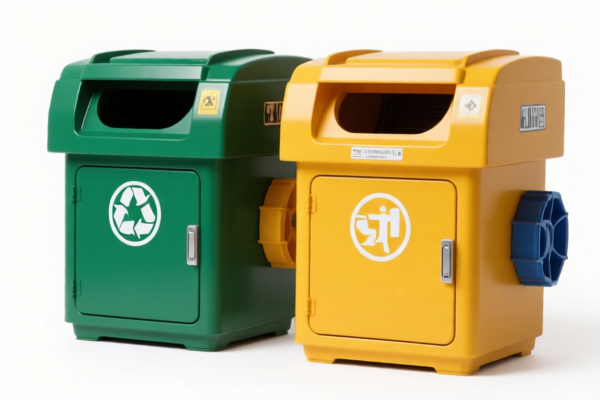
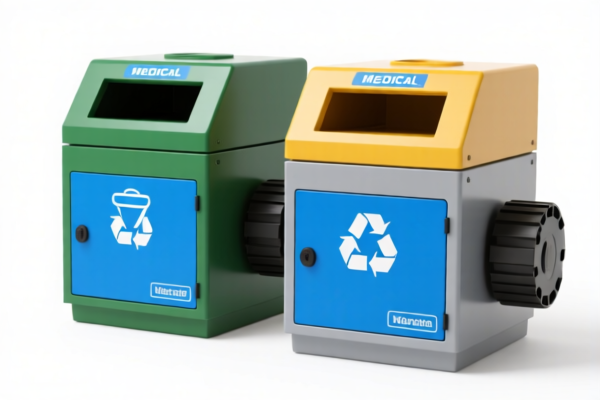
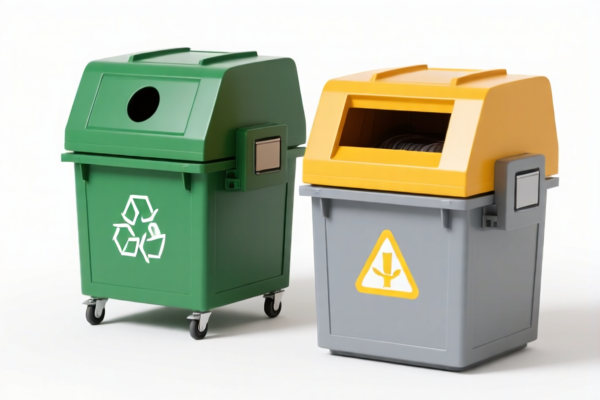

AI Analysis
🚑 Antifreeze for Medical Waste Disposal
🌐 HS Code Reference & Customs Clearance Guide | 2026 Latest Tariff Analysis | Professional Compliance Strategy
📌 I. Product Definition & Classification: Do You Really Understand “Medical Waste Antifreeze”?
Antifreeze for Medical Waste Disposal is a specialized chemical formulation designed to prevent freezing and facilitate the safe handling, transport, or treatment of medical waste in cold climates. It typically contains glycols, salts, or other chemical compounds that lower the freezing point of biological waste fluids.
In international trade, this product is classified based on its chemical composition and function, rather than as a medical device. Since it is a chemical mixture used for waste treatment/preparation, it falls under Chapter 38 (Miscellaneous Chemical Products).
⚠️ Key Classification Distinction:
- If the product is primarily a mixture of chemicals for general anti-freezing purposes without a specific medical device function → Classified under Chapter 38.
- No Material Conflict: The product is a chemical制剂 (preparation), not a raw material or a finished medical device.
- Critical Note: Misclassification as a medical device (Chapter 90) or simple antifreeze for engines (Chapter 38 heading 3809/3810) is common but incorrect. The correct headings are 3824 or 3820.
📦 II. HS Code Classification Details (2026 Latest Tariff Authority Comparison)
| HS Code | Product Description | Application Scenario | Material Conflict |
|---|---|---|---|
3824.99.93.97 |
Chemical preparations and products, not elsewhere specified (Other) | Medical waste disposal antifreeze, inferred as chemical mixture | ❌ No |
3820.00.00.00 |
De-icing and anti-icing preparations | Antifreeze function, chemical preparation | ❌ No |
3824.99.29.00 |
Other chemical products and preparations (Others) | Medical waste antifreeze, inferred as chemical mixture | ❌ No |
🔍 Important Reminder:
- All three HS Codes belong to Chapter 38 (Miscellaneous Chemical Products).
- The product is considered a chemical mixture/preparation.
- There is no material conflict (e.g., it is not a hazardous waste itself, but a chemical agent).
- Selection depends on specific chemical composition details (e.g., whether it fits "de-icing" broadly or "other chemical preparations").
💰 III. 2026 Latest Tariff Rate Breakdown (Including Additional Taxes & Policy Surcharges)
✅ Applicable Country: United States (US)
✅ Origin: China (CN)
✅ Effective Date: November 10, 2025 onwards (including subsequent imports)
🎯 1. 3824.99.93.97 —— Chemical Preparations (Other)
| Item | Content |
|---|---|
| Basic Tariff | 5.0% |
| Section 301 Additional Tariff | +25.0% |
| Section 122 Tariff (IEEPA) | +10.0% |
| Total Tariff Rate | 40.0% |
| Tax Calculation | CIF Value × 40.0% |
| De Minimis Exemption | ❌ Not Available (deny_de_minimis) |
| Legal Basis Path | USITC:3824.99.93.97 → FOOTNOTE:301 → IEEPA:122 |
📌 Explanation:
- The 5.0% is the standard Most Favored Nation (MFN) duty for this subheading.
- The 25.0% is added under U.S. Trade Act Section 301 due to Chinese origin.
- The 10.0% is the Section 122 tariff imposed under the International Emergency Economic Powers Act (IEEPA) on specific Chinese chemical imports.
- Total Cost Impact: High. Must be factored into pricing strategies.
🎯 2. 3820.00.00.00 —— De-icing and Anti-icing Preparations
| Item | Content |
|---|---|
| Basic Tariff | 6.5% |
| Section 301 Additional Tariff | +7.5% |
| Section 122 Tariff (IEEPA) | +10.0% |
| Total Tariff Rate | 24.0% |
| Tax Calculation | CIF Value × 24.0% |
| De Minimis Exemption | ❌ Not Available (deny_de_minimis) |
| Legal Basis Path | USITC:3820.00.00.00 → FOOTNOTE:301 → IEEPA:122 |
📌 Note:
- This is the most cost-effective classification if the product can be definitively categorized as a "de-icing preparation" broadly defined.
- The basic rate (6.5%) is higher than 3824.99.93.97, but the Section 301 rate (7.5%) is significantly lower than the 25% for 3824.99.93.97.
- Total Savings: 16% lower than the 40% rate.
- Caution: Customs may challenge this if the product is not primarily for "de-icing" in the traditional sense (e.g., roads/aircraft) but for medical waste tanks. However, since it prevents freezing, it qualifies.
🎯 3. 3824.99.29.00 —— Other Chemical Products and Preparations (Others)
| Item | Content |
|---|---|
| Basic Tariff | 6.5% |
| Section 301 Additional Tariff | +25.0% |
| Section 122 Tariff (IEEPA) | +10.0% |
| Total Tariff Rate | 41.5% |
| Tax Calculation | CIF Value × 41.5% |
| De Minimis Exemption | ❌ Not Available (deny_de_minimis) |
| Legal Basis Path | USITC:3824.99.29.00 → FOOTNOTE:301 → IEEPA:122 |
📌 Explanation:
- This is a "catch-all" for chemical mixtures not specified elsewhere.
- The Section 301 tariff is 25%, leading to a high total rate of 41.5%.
- Only use this if neither 3820.00.00.00 nor 3824.99.93.97 is appropriate.
- Recommendation: Avoid this classification due to the high Section 301 rate.
🛠️ IV. Customs Clearance Practical Advice (Combat Avoidance Guide)
✅ 1. Required Documentation Checklist (None Can Be Missing)
| Document | Must Provide | Explanation |
|---|---|---|
| ✅ Product Specification Sheet | ✔️ | Detailed chemical composition, function (antifreeze), CAS numbers of key ingredients |
| ✅ Safety Data Sheet (SDS) | ✔️ | Mandatory for chemical imports. Must confirm non-hazardous classification for transport |
| ✅ Commercial Invoice | ✔️ | Must clearly state "Antifreeze for Medical Waste Disposal" and HS Code |
| ✅ Packing List | ✔️ | Net/Gross weight, volume, number of packages |
| ✅ Certificate of Origin | ✔️ | Proves Chinese origin for tariff calculation |
| ✅ Usage Description | ✔️ | Explain how it is used (e.g., "Added to medical waste containers to prevent freezing during transport") |
✅ 2. Declaration Tips (Key Mantra)
🔥 “Be Specific, Be Accurate, Avoid Ambiguity!”
| Scenario | Correct Declaration Method | Incorrect Practice |
|---|---|---|
| Product is a chemical mixture | 3824.99.93.97 or 3824.99.29.00 |
Mislabel as "Medical Device" → Delay/Rejection |
| Product prevents freezing | 3820.00.00.00 (if accepted) |
Label as "Engine Antifreeze" → Wrong Classification |
| Mixed with other chemicals | Clearly list all ingredients | Vague description "Chemical Liquid" → Audit Risk |
| High Value/Shipment | Declare accurately to avoid penalties | Under-declaring value → Seizure/Fines |
✅ 3. Special Case Handling
| Situation | Handling Advice |
|---|---|
| OEM Custom Formulation | Provide formula or CAS numbers. Avoid generic terms like "proprietary blend" if possible. |
| Small Sample Shipment | Still subject to full tariffs. No de minimis exemption. |
| Hazardous Classification | If SDS classifies it as hazardous, additional DOT/UN regulations apply. Ensure proper labeling. |
| Medical Waste Context | Emphasize it is a chemical aid, not a waste treatment device itself. |
🌍 V. Global Market Customs Comparison (2026 Latest)
| Country/Region | Recommended HS Code | Tariff | Certification Requirements | Notes |
|---|---|---|---|---|
| 🇺🇸 USA | 3820.00.00.00 |
24.0% (China) | SDS, EPA/FDA compliance (if applicable) | Cheapest option if accepted. |
| 🇨🇳 China | 3824.99.93.97 |
~5-6% | No major restrictions | Standard export declaration |
| 🇪🇺 EU | 3824.99.93 |
0-4% | REACH Registration | No Section 301/122 tariffs |
| 🇬🇧 UK | 3824.99.93 |
0-5% | UK REACH | Post-Brexit rules apply |
| 🇨🇦 Canada | 3824.99.93 |
0-5% | WHMIS/CEPA | No Section 301 tariffs |
📌 Conclusion:
- USA is the most challenging market due to high Section 301 and 122 tariffs.
-3820.00.00.00is the optimal HS Code for the US market if Customs accepts the "de-icing" classification, saving 16% in duties compared to other Chapter 38 codes.
- Non-US markets have significantly lower tariffs and no punitive Section 301/122 taxes.
📌 VI. Common Errors & Pitfalls Guide (Lessons Learned)
❌ Error 1: Classifying as "Medical Waste" (Chapter 30/90)
👉 Consequence: Rejection, delays, and potential seizure. This is a chemical, not a waste or device.
❌ Error 2: Using "Antifreeze" without specifying application
👉 Consequence: Customs may default to engine antifreeze (Chapter 38 heading 3820), leading to disputes.
❌ Error 3: Ignoring SDS and Chemical Composition
👉 Consequence: Failure to comply with chemical import regulations, leading to fines.
❌ Error 4: Assuming De Minimis Exemption Applies
👉 Consequence: All shipments are subject to full tariffs. No exemption.
✅ Correct Practice:
"Antifreeze Solution for Medical Waste Containers, Chemical Preparation, Contains Ethylene Glycol, HS Code: 3820.00.00.00, SDS Provided"
🎯 VII. Conclusion: Precise Classification, Cost Control, Smooth Clearance!
🎯 Remember the Mantra:
🔹 "Chemical Preparation, Not Device; 3820 Saves 16%; SDS is Key!"
🔹 "HS Code Decides Tax Rate; 24% vs 40% is a Huge Difference!"
📌 Pro Tip:
If your product's primary function is strictly preventing freezing (de-icing), push for 3820.00.00.00. Provide technical data showing its anti-freeze properties. This can save you 16% in total duties.
For US imports, always calculate the 24% vs 40% impact before finalizing the HS code.
📣 Immediate Action:
📞 Consult a licensed customs broker + Provide SDS + Submit for Advance Ruling if unsure.
🚀 Ensure smooth clearance, cost efficiency, and compliance!
✨ Professional customs clearance starts with accurate classification!
💼 Every dollar of duty saved is profit earned!
Customer Reviews
About HS Code Classification
The Harmonized System (HS) is an internationally standardized nomenclature developed by the World Customs Organization (WCO) to classify traded products. Over 200 countries use the HS system as the basis for customs tariffs, trade statistics, and import/export regulations.
Each HS code follows a hierarchical structure:
- Chapter (2 digits) — Broad category of goods (e.g., Chapter 84: Machinery and Mechanical Appliances)
- Heading (4 digits) — More specific grouping within the chapter
- Subheading (6 digits) — Internationally standardized breakdown, used by all WCO member countries
- National subdivisions (8-10 digits) — Country-specific extensions for further classification, such as US HTSUS 10-digit codes
Correct HS code classification is essential for smooth customs clearance, accurate duty payment, and compliance with trade regulations. Misclassification can lead to customs delays, overpayment of duties, or penalties.
When importing from CN to US, the applicable tariff rates may include:
- Most-Favored-Nation (MFN) rate — The standard duty rate applied to WTO members
- General rate — Applied to countries without trade agreements
- Trade remedy duties — Additional tariffs such as Section 301 (anti-dumping), Section 232 (national security), or countervailing duties
The information provided on this page is for reference purposes only. For official classification, please consult with your local customs authority or a licensed customs broker.