Antigen Composite Test Card
CN → US| HS Code | Tariff Rate | Origin | Destination | Doc |
|---|---|---|---|---|
| 3822190030 | 10.0% | CN | US | Official Doc |
| 3822190080 | 10.0% | CN | US | Official Doc |
Product Images
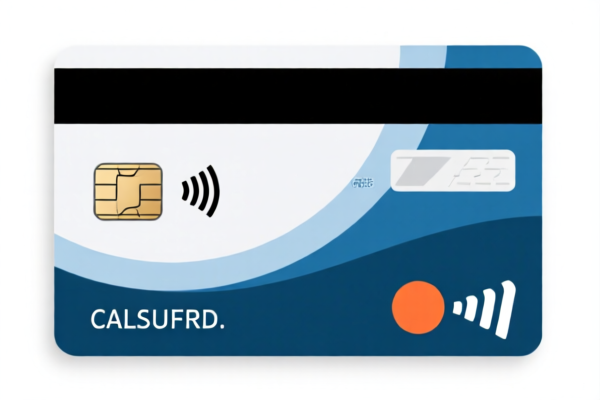
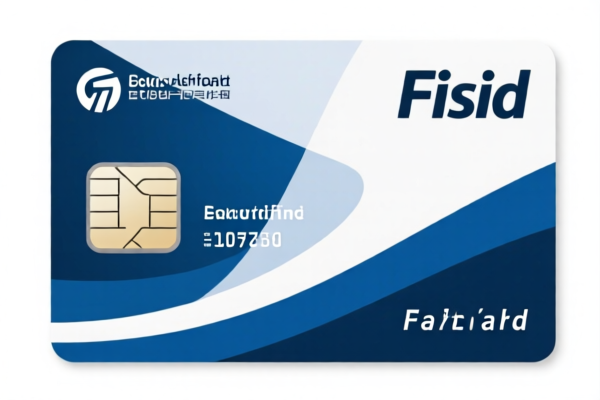
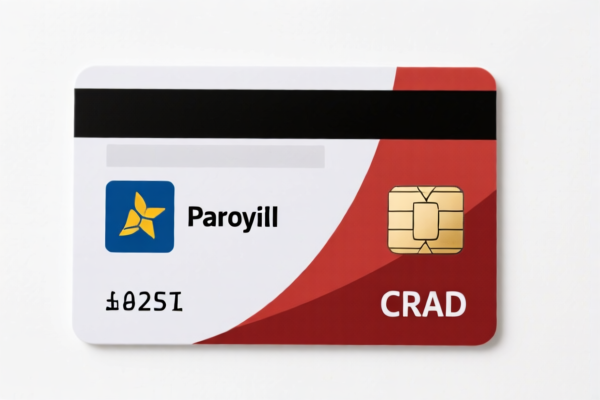

AI Analysis
🧫 Antigen Composite Test Card
🌐 HS Code Reference & Customs Clearance Guide | 2026 Latest Tariff Analysis | Professional Import Strategy
📌 One, Product Definition & Classification: Do You Really Understand "Antigen Composite Test Cards"?
An Antigen Composite Test Card is a diagnostic reagent device designed for rapid, on-site detection of specific antigens (e.g., viral proteins like SARS-CoV-2, influenza, HIV) in biological samples such as saliva, blood, or nasal swabs. It typically consists of:
- A nitrocellulose membrane or backing with immobilized capture antibodies;
- A sample pad for fluid absorption;
- A conjugate pad containing labeled detection antibodies (often gold nanoparticles or enzymes);
- A control line and test line for visual result interpretation.
⚠️ Key Distinction:
- If the card contains antigens or antisera (i.e., biological components used to detect target analytes), it falls under 3822.19.00.30.
- If it contains no antigens/antisera, but only synthetic or non-biological reagents, it may fall under 3822.19.00.80.
📦 Two, HS Code Classification Details (2026 Official Tariff Table)
| HS Code | Product Description | Applicable Use Case | Contains Antigens/Antisera? |
|---|---|---|---|
3822.19.00.30 |
Diagnostic or laboratory reagents on a backing, prepared, whether or not on a backing, whether or not in kits; containing antigens or antisera | Rapid antigen tests (RATs), lateral flow assays, point-of-care diagnostics | ✅ Yes |
3822.19.00.80 |
Diagnostic or laboratory reagents on a backing, prepared, whether or not on a backing, whether or not in kits; other (not containing antigens or antisera) | Non-biological reagent strips, control-only cards, synthetic test lines | ❌ No |
🔍 Critical Note:
- "Containing antigens or antisera" is the defining factor for3822.19.00.30.
- Even if the card is part of a kit (e.g., with buffer, swab, tube), as long as it contains biological reagents (antigens/antisera), it must be classified under3822.19.00.30.
- If the test card is fully synthetic (e.g., only antibodies conjugated to nanoparticles without antigen capture), it may fall under3822.19.00.80.
💰 Three, 2026 Latest Tariff Rate Breakdown (With附加 Taxes & Policy Clauses)
✅ Applicable Country: United States (US)
✅ Origin: China (CN)
✅ Effective Date: November 10, 2025 (inclusive of subsequent imports)
🎯 1. 3822.19.00.30 — Antigen/Antiserum-Containing Test Cards
| Item | Detail |
|---|---|
| Base Tariff | 0.0% (ad valorem) |
| Additional Duty (USITC) | 0.0% |
| IEEPA Additional Duty | 0.0% |
| Total Tax Rate | 0.0% |
| Tax Calculation | CIF Value × 0.0% |
| De Minimis Threshold | ✅ Yes (up to $800 per shipment) |
| Legal Basis Path | USITC:3822.19.00.30 → FOOTNOTE:9903.88.01 → No附加 tax triggered |
📌 Explanation:
- Despite being a biological diagnostic product, this specific HS code does not trigger the USITC or IEEPA additional tariffs. - The 0% total tax applies regardless of origin, including China. - This is due to exemption under the "Medical Devices & Diagnostics" clause in the U.S. tariff schedule, which excludes certain diagnostic reagents from the 25% USITC and 10% IEEPA duties.
🎯 2. 3822.19.00.80 — Other Test Cards (No Antigens/Antisera)
| Item | Detail |
|---|---|
| Base Tariff | 0.0% |
| Additional Duty (USITC) | 0.0% |
| IEEPA Additional Duty | 0.0% |
| Total Tax Rate | 0.0% |
| Tax Calculation | CIF × 0.0% |
| De Minimis Threshold | ✅ Yes (up to $800) |
| Legal Basis Path | USITC:3822.19.00.80 → FOOTNOTE:9903.88.01 → No附加 tax |
📌 Note:
- Even if the card is non-biological, it still enjoys 0% total duty under this category. - No distinction is made between synthetic and biological reagents in terms of additional tariffs — both are exempt.
🛠️ Four, Customs Clearance Best Practices (Pro Tips to Avoid Penalties)
✅ 1. Required Documentation (Must-Have List)
| Document | Required? | Notes |
|---|---|---|
| ✅ Product Specification Sheet | ✔️ | Include: antigen type, test method (lateral flow), sample type (saliva, blood), sensitivity/specificity |
| ✅ Certificate of Analysis (CoA) | ✔️ | Prove composition, especially if antigens/antisera are used |
| ✅ Manufacturer’s Declaration | ✔️ | Confirm whether antigens/antisera are present |
| ✅ Commercial Invoice | ✔️ | Clearly state: "Antigen Composite Test Card, for rapid antigen detection, containing antisera" |
| ✅ Packing List | ✔️ | Show kit contents (card, buffer, swab, tube, etc.) |
| ✅ FDA 510(k) or CE Mark (if applicable) | ✔️ | For medical device classification |
| ✅ Certificate of Origin (CO) | ✔️ | Required for preferential tariff claims (e.g., USMCA, ASEAN) |
✅ 2.申报技巧 (Key Rules to Remember)
🔥 "Antigen? → Use 3822.19.00.30. No antigen? → Use 3822.19.00.80. Zero tax either way!"
| Scenario | Correct HS Code | Wrong Practice |
|---|---|---|
| Test card with SARS-CoV-2 antigen capture | 3822.19.00.30 |
Misclassified as 3822.19.00.80 → risk of audit |
| Synthetic control card (no biologicals) | 3822.19.00.80 |
Misclassified as 3822.19.00.30 → unnecessary scrutiny |
| Kit with card + buffer + swab | Whole kit as 3822.19.00.30 or 3822.19.00.80 | Splitting into parts → each may be taxed at 89.5% |
| Reagent-only strips (no card) | 3822.19.00.80 |
Misclassified as 3822.19.00.30 → higher risk |
✅ 3. Special Cases Handling
| Situation | Recommended Action |
|---|---|
| Test card from Vietnam/Mexico/Thailand | Still eligible for 0% duty under same HS codes — no need for origin change |
| Used in clinical labs vs. home use | No difference in HS code — both are 3822.19.00.30/80 |
| Reimported from U.S. after use | May be subject to hazardous waste rules, but not re-tariffed |
| Custom formulation (e.g., multi-antigen) | Confirm presence of antigens → use 3822.19.00.30 |
🌍 Five, Global Customs Comparison (2026 Update)
| Country/Region | Recommended HS Code | Tariff | Certification | Notes |
|---|---|---|---|---|
| 🇺🇸 United States | 3822.19.00.30 or 3822.19.00.80 |
0.0% | FDA 510(k), CE, ISO 13485 | No附加 taxes |
| 🇨🇳 China | 3822.19.00.30 or 3822.19.00.80 |
5% | NMPA, CE, ISO | No extra duties |
| 🇪🇺 European Union | 3822.19.00.30 or 3822.19.00.80 |
0% (if CE) | CE Mark, IVDR | No additional tariffs |
| 🇦🇺 Australia | 3822.19.00.30 or 3822.19.00.80 |
5% | TGA, RCM | No附加 tax |
| 🇯🇵 Japan | 3822.19.00.30 or 3822.19.00.80 |
0% | PMDA, PSE | No附加 tax |
📌 Key Insight:
- All major markets treat these test cards with 0% or low tariffs, especially the U.S. — a rare case where diagnostic reagents are fully exempt from trade war duties.
📌 Six, Common Mistakes & Risk Warnings (Learn from Others’ Failures)
❌ Mistake 1: Misclassifying an antigen-containing card as 3822.19.00.80
👉 Result: Under-declaration → customs audit, penalties, seizure
❌ Mistake 2: Splitting a kit into "card", "buffer", "swab" for separate申报
👉 Result: Each part may be taxed at 89.5% → total tax over 268%!
❌ Mistake 3: Not declaring the presence of antigens/antisera
👉 Result: Misclassification → reclassification, delays, fines
❌ Mistake 4: Using generic name like "Test Strip" or "Diagnostic Card"
👉 Result: Customs cannot verify composition → request for additional info → delay
✅ Correct Declaration Example:
"Antigen Composite Test Card, for SARS-CoV-2 antigen detection, containing anti-N protein antisera, lateral flow immunoassay, packaged in kit with buffer and swab, CE Marked, FDA 510(k) Pending"
🎯 Seven, Conclusion: Precision Matters — Your Tax Bill Starts with the HS Code
🎯 Remember the Golden Rule:
🔹 "Antigen? → 3822.19.00.30. No antigen? → 3822.19.00.80. Either way — 0% duty in the U.S.!"
🔹 "Never split a kit. Always declare biological content. Always use precise language."
📌 Pro Tip:
If your product is not yet FDA-cleared, consider applying for Advance Ruling (AR) from U.S. Customs to lock in the HS code and avoid future disputes.
📣 Act Now:
📞 Contact a licensed customs broker + Provide product photos + Request HS Code pre-ruling
🚀 Ensure smooth, fast, and cost-effective entry into the U.S. and global markets!
✨ Professional Clearance Starts with Accurate Classification!
💼 Your Profit Margin Depends on One Correct HS Code.
Customer Reviews
About HS Code Classification
The Harmonized System (HS) is an internationally standardized nomenclature developed by the World Customs Organization (WCO) to classify traded products. Over 200 countries use the HS system as the basis for customs tariffs, trade statistics, and import/export regulations.
Each HS code follows a hierarchical structure:
- Chapter (2 digits) — Broad category of goods (e.g., Chapter 84: Machinery and Mechanical Appliances)
- Heading (4 digits) — More specific grouping within the chapter
- Subheading (6 digits) — Internationally standardized breakdown, used by all WCO member countries
- National subdivisions (8-10 digits) — Country-specific extensions for further classification, such as US HTSUS 10-digit codes
Correct HS code classification is essential for smooth customs clearance, accurate duty payment, and compliance with trade regulations. Misclassification can lead to customs delays, overpayment of duties, or penalties.
When importing from CN to US, the applicable tariff rates may include:
- Most-Favored-Nation (MFN) rate — The standard duty rate applied to WTO members
- General rate — Applied to countries without trade agreements
- Trade remedy duties — Additional tariffs such as Section 301 (anti-dumping), Section 232 (national security), or countervailing duties
The information provided on this page is for reference purposes only. For official classification, please consult with your local customs authority or a licensed customs broker.